 A soft property market is no stumbling block for Eco World Development Group Bhd which is roaring ahead with eight new commercial development projects under its Business Masterplan series.
Eco World president and chief executive officer Datuk Chang Khim Wah says that even in the toughest markets, there are still solutions.
The property developer exceeded its sales target of RM3bil with RM3.016bil secured for the financial year ended Oct 31, 2015 and says it is confident of securing RM4bil this year.
“People are definitely still buying – they may be more selective about what they buy but we see that the demand is still there.
“It is just a matter of how you present your product and convince people to come in,” he tells StarBizWeek in an interview.
It is with this in mind that Eco World plans offer business grants to buyers of its commercial property in the Klang Valley, Penang and Iskandar Malaysia this year.
“I think when you start a business, the first 12 months are definitely the most difficult.
“So this is where we think is the best time to offer them assistance.
“Rather than just being a developer that just produces buildings, we want to look at the other side of things as well,” he says.
The aim, he says, is to help make the overall environment conducive for business, as this will ultimately help boost the image of the entire development.
“For our eight new commercial projects, depending on the terms and conditions, we will be offering grants to our buyers. We encourage as many end-users to buy from us as possible, as we are offering pioneer grants.
“If the buyer, who is a end-user, sets up business within six months of taking over the keys of a new development, we will give them business grants of between 2.5% to 3.5% of their property value.
“This will be paid over 12 months from when they start their business,” he says.
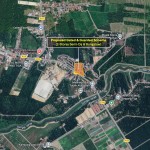
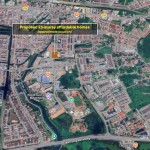
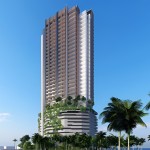
The eight projects under the EcoWorld Business Masterplan Series are The Stride Strata Offices & Serviced Apartments 1 &2 @ Bukit Bintang City Centre, Eco Somerset @ Eco Sanctuary, Retail/Office and Sky Pod @ Eco Sky in the Klang Valley; Eco Bloom @ Eco Meadows in Penang; and Eco Business Park III, Eco Vantage @ Eco Tropics, Eco Palladium @ Eco Spring and Eco Galleria @ Eco Botanic in Iskandar Malaysia.
“When you start business in a new development, the visibility and the number of people coming into that area may not be very good, so we want to provide them with that initial support.
The developer also plans to provide franchising grants of up to 3.5% of the property value, to be disbursed over three months.
“If we feel that the franchise can spur business development within our projects, we will be happy to provide them with these grants.
“As for investors who buy the property and lease them out, we will be providing investment grants.
“If they can bring in a tenant that we like, and that Eco World thinks can contribute to the overall image of the development, we can give the tenant a rental subsidy for the first year.
“This makes it easier for investors to attract tenants as well, instead of leaving the property vacant.
They also plan to offer an investment grant to their customers and investors who lease their commercial units to businesses seen to add value to the project.
This will be in the form of a subsidy equivalent to 50% of one year in rental income.
Chang adds that the location of each project undertaken by Eco World is selected very carefully, and is usually located next to highways, amenities or public transport points. “We are placing the commercial developments within our projects next to highways or facing main roads, so it has high visibility and good accessibility.
“In that sense, for our customers who buy into the commercial areas, the immediate concerns of accessibility and visibility are already solved,” he says.
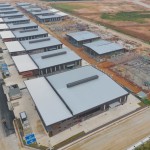
From past experience, he says, many who are purchasing factory units in their business parks were not just from the manufacturing sector. “We find that the trend for business parks today go beyond manufacturing.
“There are people who do catering businesses, or wedding-related businesses.
“They don’t need high visibility, they already have their own clientele, but they find that our factories are in gated and guarded areas, they get their own parking area for customers and a wide surrounding space where they can even put up fashion shows, for example,” he says.
Chang says they also want to “match-make” potential tenants with their commercial unit buyers and had set up a team to do this. “We have also evolved from traditional shop offices to what we call integrated shop offices.
“The back lanes of these shop offices, we convert them into street malls, where our businesses can hold exhibitions – they become centre courts for the offices.
All these additional services and incentives, he says, are the way of the future.
“You cannot sit in the office and wait for your customers anymore.
“You have to bring people to your projects,” he says.
The company currently has 11 projects ongoing and is expecting to complete its Eco Business Park I in Iskandar Malaysia and as well as the Eco Majestic development in the Klang Valley this year.
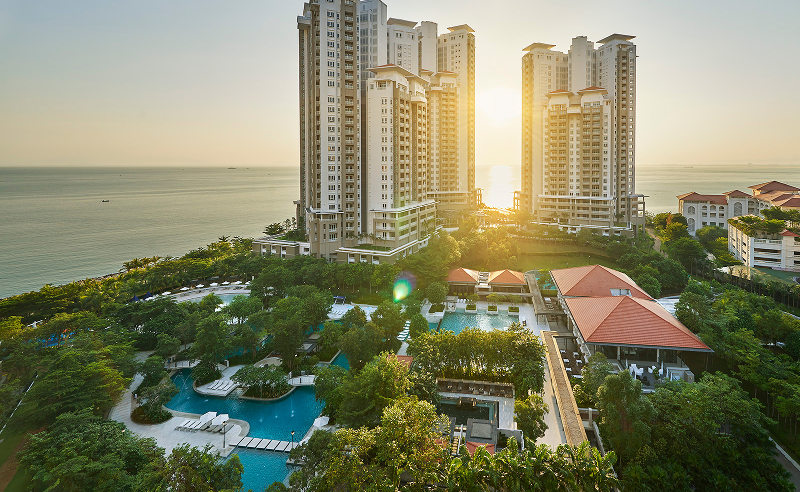
Among their big projects for this year, he says, is the Eco Marina in Penang which is a residential development on 300 acres of land by the sea in Batu Kawan – with over 2km facing the sea.
Behind these homes, Eco World will be building a golf course.
On one of the company’s most anticipated upcoming projects in the Bukit Bintang City Centre (BBCC), Chang says they are close to signing the heads of agreement on the project. “Negotiations are almost completed, so we will probably be launching in the middle of the year,” he says.
The BBCC project, a redevelopment of the 19.4 acre former Pudu jail site, will comprise of a mixed residential and commercial development with a proposed world-class masterplan, consisting strata offices, office towers, a hotel and serviced residences.
“It will have a transit hub – the LRT and monorail already exist and runs along the boundaries of the site.
“We will build a transit hub there that will house the stations for these, and the upcoming MRT will be only about 500m away.
“The shopping mall will have Japanese elements in it and there will be a grand bazaar with Malaysian elements in it.
“It will be a very different kind of experience, compared with any other place in Malaysia,” he says.
Chang says the company will build underground access and exits into the development and onto the main roads to ease traffic, as well as pedestrian walkways across to various points.
“It will be city-defining for us,” he says.
Source: TheStar.com.my

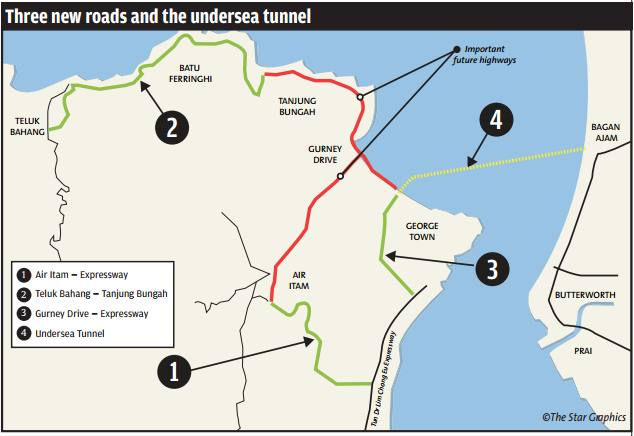 The RM6.3 billion Penang mega project to build three xpressways and an undersea tunnel linking Penang island to the mainland will kick off in June, with the construction of the Air Itam-Tun Dr Lim Chong Eu Expressway bypass.