The EV transition is redefining urban living in Penang
Penang is quietly cementing its reputation as one of Malaysia’s most EV-forward states, and for property buyers and developers, that shift carries real implications.
According to data from the Malaysia Zero Emission Vehicle Association (MyZEVA), Penang has already surpassed its national EV charging deployment target, achieving 105% of its 600-charger goal as of March 2026, one of only two states in Malaysia to have done so, alongside Kuala Lumpur at 160%. Most other states remain at 50% or below.
Yet hitting a charger count target is only part of the story. A peer-reviewed study published in Energy Reports (2025), based on field surveys conducted across Penang last year, paints a more nuanced picture. While Georgetown leads with the highest charger density, the mainland corridor between Penang’s two bridges remains critically underserved, with just 8 public charging bays serving an estimated 480 registered EVs, translating to roughly 60 EVs per charger. Given that EV registrations have grown by over 100% year-on-year into 2026 while charging infrastructure has been built at a far slower pace, the actual ratio today is likely to be significantly worse than what the study recorded. Penang also currently has very limited ultra-fast chargers (350 kW and above), limiting the real-world advantage of higher-end EVs.
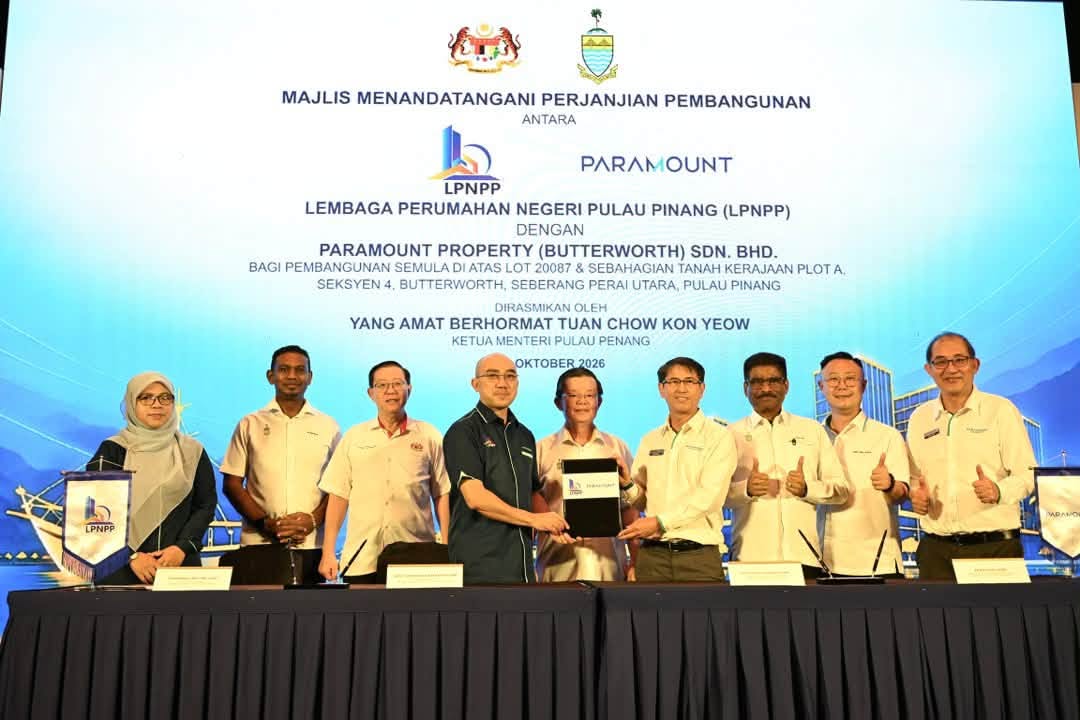
Chow acknowledged that while infrastructure numbers are growing, many users still face challenges with accessibility, connectivity, and waiting times, and that the EV transition requires more than statistics, it demands dependable infrastructure, reliable after-sales support, and a skilled workforce.
For the property sector, these developments matter more than ever. EV readiness is fast becoming a key consideration for homebuyers, particularly those purchasing high-rise residences, serviced apartments, and integrated developments. Properties that offer dedicated EV charging facilities, whether within car park podiums or residential lobbies, are increasingly perceived as future-proof investments. Developers who embed EV charging infrastructure into their projects at the planning stage, rather than retrofitting it later, stand to differentiate themselves meaningfully in a competitive market.
The research paper also highlights a particular challenge relevant to Penang’s dense urban landscape: many condominiums and high-rise buildings lack the electrical infrastructure for individual charger installation. As EV ownership grows, this gap will become more pronounced, and developments that proactively address it, through shared charging hubs, dedicated EV bays, and smart charging management will hold a tangible advantage.
Penang Chief Minister has emphasised that solutions are needed not just along major highways, but within residential areas, commercial centres, and high-density developments where daily charging convenience matters most. That vision aligns closely with what progressive property developments should be delivering today.
The broader message is clear. EV infrastructure is no longer a nice-to-have feature in Penang’s property landscape, it is becoming a baseline expectation. As the state continues to position itself as a model for sustainable urban living, properties that are EV-ready will be better placed to attract quality tenants, command stronger values, and remain relevant in the years ahead.
– Ken Lim
(Founder, PenangPropertyTalk.com)