fbpx

PROPOSED: Gated & guarded homes in Tasek Gelugor

Tasek Gelugor/ 26 September 2026 No comments

proposed-gated-and-guarded-homes

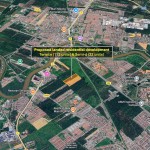
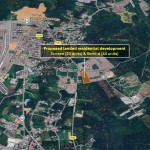
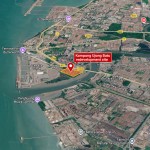
A proposed small gated and guarded residential development along Jalan Gelugor in Tasek Gelugor, on a 3.27-acre site. Located about 1km from the Tasek Gelugor KTM station, the development is also approximately a five-minute drive from Scientex Tasek Gelugor.

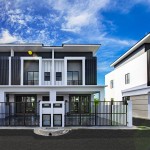
The proposed project will comprise 22 units of two-storey semi-detached houses and one two-storey bungalow, together with a guarded house within the gated and guarded scheme. Four units of two-storey shop offices are also planned outside the strata scheme.

The project is still in its planning stage and more details will be available upon official launch.

Project Name : (to be confirmed)
Location : Tasek Gelugor
Property Type : Gated & guarded scheme
Tenure: (to be confirmed)
Land Area: 3.27 acres
Built-up Size: (to be confirmed)
Total Units : 22 (semi-detached), 1 (bungalow)
Indicative Price : (to be confirmed)
Developer : (Follow us to find out more)

Subscribe here for updates on this project and other property news

(This information will be used to keep you updated on the project and future development.)
*By submitting this Form, you hereby agree to our PDPA Consent Clause.
LOCATION MAP

DISCLAIMER: This article is solely based on research done using publicly available data. This is not an advertisement. Any claim, statistic, quote or other representation about a project or service should be verified with the developer, provider, or party in question.
Penang to move ahead with PSD@5KM+ Campus II

Property News/ 25 September 2026 No comments

shopping-my-next-semicond-chapter

The Penang government will proceed with the development of Penang Silicon Design @5km+ (PSD@5KM+) Campus II, following the full occupancy of its first campus less than two years after its launch.

Chief Minister Chow Kon Yeow said PSD@5KM+ Campus I, established under Batches 1 and 2 at GBS TechSpace, is currently occupied by seven incubatees. The state is now exploring potential locations for Campus II, with GBS@Mayang in Bayan Baru identified as one possible site.

According to Chow, GBS@Mayang already houses several integrated circuit (IC) design companies, providing an existing cluster that could support the expansion of Penang’s silicon design ecosystem. Further details on the location and development of Campus II are expected to be announced later.

Speaking at the Shaping Malaysia’s Next Semiconductor Chapter forum held in conjunction with KL20@Penang 2026 at the Penang Waterfront Convention Centre (PWCC), Chow said the state would also provide additional core funding to strengthen local technology companies.

The funding is intended to help companies gain access to advanced semiconductor tools, infrastructure and technical capabilities, while supporting strategic partnerships, specialised engineering and technology collaboration. The broader objective is to help companies move from technology development towards commercialisation and eventually scale their businesses.

Chow also announced that the Penang state executive council had agreed to establish a Strategic Technology Fund, with a state government commitment of up to RM50 million. The fund is intended to support local technology companies and encourage greater participation from venture capitalists, institutional investors, strategic investors and the private sector.

He said the RM50 million commitment was intended as an anchor for further investment, with the state hoping the Federal Government and private investors would also contribute to expanding the fund.

Chow said sustained efforts over the next five years could help position Penang and Malaysia beyond semiconductor manufacturing, with greater emphasis on chip design, intellectual property ownership, technology development and taking locally developed products to global markets.

Separately, Economy Minister Akmal Nasrullah Mohd Nasir announced that a Malaysia Advanced Testing Equipment (ATE) Campus will also be established in Penang, supported by RM25 million in approved Federal Government funding.

Loan rejection, high prices, unreleased bumi units drive unsold homes

Property News/ 24 September 2026 No comments

gurney-bay

Nearly 60% of property developers surveyed by the Real Estate and Housing Developers’ Association Malaysia (Rehda) reported having unsold completed residential units as of June 30, 2026, with rejected end-financing applications, property prices and unreleased Bumiputera units cited as the main factors.

The findings were revealed during the media briefing on the Rehda Property Industry Survey 1H2026 and Market Outlook for 2H2026 and 1H2027. The survey gathered responses from 181 Rehda members across Peninsular Malaysia, with 59% reporting unsold completed residential units. Loan rejections were mainly attributed to buyers’ income eligibility, lower financing margins and adverse credit history.

Meanwhile, 54 respondents launched a total of 15,834 units during 1H2026, broadly similar to the 15,841 units launched in 2H2025. More than half (53%) of the newly launched units were priced between RM300,001 and RM500,000, with these launches concentrated in Perak, Pahang and Negeri Sembilan.

Sales recorded a modest improvement, with 5,260 units sold during the period compared with 5,098 units in 2H2025, representing a 3.2% increase. The overall take-up rate also edged up from 32.2% to 33.2%.

Apartments and condominiums recorded the highest sales at 3,032 units, followed by serviced residences with 1,114 units and two- to three-storey terrace houses with 610 units.

Rehda president Datuk Zaini Yusoff said the findings indicate that demand remains present, but developers continue to face pressure from rising construction and operational costs, financing constraints and wider economic uncertainties.

3 most expensive residential property transacted in Penang in 1H 2026

Property News/ 23 September 2026 No comments
jalan-york-bungalow

Bungalow lot at Jalan York, transacted for RM12.74mil

Three bungalow houses accounted for the highest-value residential property transactions in Penang during the first half of 2026, with the top transaction exceeding RM12.7 million.

#1 – Jalan York bungalow (RM12.74 million)

The most expensive transaction involved a bungalow along Jalan York, which changed hands for RM12,736,000, translating to approximately RM679 psf based on a land area of about 18,769 sq ft.

The property comprises a long-vacated double-storey structure in visibly poor condition, with a weathered white facade. Given the land size and location, the transaction is widely read as a land-value deal, with the existing structure likely to be torn down for redevelopment.

#2 – Jalan Tunku Abdul Rahman bungalow (RM7.70 million)

The second-highest residential transaction involved a corner-lot bungalow along Jalan Tunku Abdul Rahman, which was sold for RM7.7 million.

The property sits on approximately 13,670 sq ft of land and comprises an existing single-storey bungalow. The transaction represents a sizeable landed residential deal in one of Penang’s established urban areas.

Based on the land area, the transacted price works out to approximately RM563 psf.

#3 – Scott Avenue bungalow (RM7.30 million)

The third-highest transaction involved a bungalow along Scott Avenue, which was transacted at RM7.3 million.

The property has an estimated land area of approximately 12,859 sq ft and comprises an existing bungalow. The transaction works out to about RM568 psf based on the reported land size.

*This article is based on research conducted using open transaction data obtained from NAPIC, and the accompanying photos have been sourced from Google Street View. 

Penang hoteliers call for tighter regulation of short-term rentals

Property News/ 23 September 2026 No comments

komtar-view1

Penang hoteliers are calling for more consistent regulation of short-term rentals and homestays, as the industry continues to face competition from Airbnb and other private accommodation options.

Malaysia Association of Hotels (MAH) vice-president Datuk Khoo Boo Lim said licensed hoteliers had raised concerns over the growing presence of unlicensed homestays, particularly as more travellers opt for short-term rental properties.

He said private accommodation providers should be subject to regulations similar to hotels, including requirements related to fire safety and security. Khoo also called for a uniform regulatory framework covering both hotels and private short-term stays.

The issue comes amid concerns within the hotel industry that tourist arrivals and the number of direct flights into Penang have not translated proportionately into hotel occupancy and revenue.

According to Khoo, the average occupancy rate among MAH members has been around 60% in recent months. While he described the figure as encouraging following the downturn during the pandemic, he said there was still room for improvement.

He also questioned the impact of properties being purchased specifically for Airbnb use, noting that such arrangements could divert tourism-related spending away from conventional hotels, which contribute to employment in the hospitality sector.

An industry source also suggested that Penang’s tourism statistics may not fully reflect the benefits reaching the wider leisure industry, as some passengers arriving via direct flights could be transiting to other destinations. In such cases, the immediate economic benefit may be limited to businesses operating at the airport.

The concerns come as Penang’s accommodation sector continues to expand. There are approximately 894 registered hotels and commercial accommodation establishments listed across major booking platforms, offering around 22,500 rooms.