fbpx

More calls for housing goodies from Budget 2017

Property News/ 4 October 2016 54 comments

p3_bizd_031016_pg03a_tankimbock_1Matrix Concepts Holdings Bhd (MCHB) is the latest property developer to join the call for more incentives for first time buyers of affordable homes in the upcoming Budget 2017.

Although the demand for affordable housing exceeds supply, difficulties in getting financing and unattractive locations have deterred many house buyers from owning these homes, said its chairman, Datuk Mohamad Haslah Mohamad Amin.

“The Government must offer opportunities for more people to own houses, especially in terms of ease in getting loans,” he said in a report by Bernama.

Other major property players, like Mah Sing Group, have also called for the Government to relax lending approvals and provide more incentives for first time house buyers.

Mah Sing Group recently said that it hoped banks would offer the flexibility of 95% financing for first home buyers, 90% for second homes followed by 70% for those buying their third property.

It also wants a higher debt service ratio of 70% to 80% for first home buyers and loan tenure to be extended from 35 years to 40 years.

In its budget wishlist, the developer also suggested that the Government revised the percentage of funds in Employees Provident Fund (EPF) Account One and Two.

“By increasing the funds in Account Two from the current 30% to 40% of EPF balances, contributors can have more funds in Account Two to pay the downpayment of their property, reduce housing loan and pay monthly housing loan instalments,” it had said in a statement.

Real Estate and Housing Developers Association (Rehda) had called for easing in the end-financing regulations for property purchases, with its president Datuk Seri Fateh Iskandar Mohamed Mansor saying this was necessary to help first-time buyers own affordable homes.

Rehda’s Property Industry Survey for the first half of 2016 found that end financing and loan rejection remained a major problem for nearly 70% of the respondents and it had spread to affect almost all price ranges. Property prices ranging from RM250,001 to RM500,000 and RM700,000 to RM1mil faced the highest loan rejections, at 24% and 27% respectively.

Last month, Eco World Development Group Bhd (EcoWorld) chief executive officer and president Datuk Chang Khim Wah said they hoped the Government would introduce measures to assist first-time home buyers in the upcoming budget.

He said the housing industry was in need of a boost. “If the Government can find ways to help first-time home buyers with down payments and end-financing from the banks, it will be very good for the industry,” he had said.

In the Bernama report, Mohamad Haslah said property developers should also be given the incentives to encourage them to build more affordable houses.

Speaking to reporters after an event in Seremban, he said the state’s Affordable Housing Policy, which required housing projects in the state to set 50% for affordable housing, should be extended nationwide. He said it was important that developers build affordable housing in locations closer to the city to suit the needs of the people.

Source: TheStar.com.my
Tags:

An eye for Penang’s prime locations

Property News/ 3 October 2016 No comments
Copy of metn_19a_3009_pcw

Khor with a scale model of Alila 2 under construction in Tanjung Bungah.

Hunza Properties Bhd is undertaking RM1bil worth of projects in strategic locations on Penang island and in Seberang Prai, where the value of properties has risen steadily for the past five to six years.

The projects now under construction are the RM600mil Alila 2 in Tanjung Bungah, and the RM400mil Mekarsari landed property project in Bertam.

Group managing director Datuk Khor Siang Gin said the group’s projects were always located in strategic or prime locations that would provide strong support for the values of properties.

In Bertam, where the group has recently launched the RM400mil Mekarsari project, the sub-sale price of a single-storey terraced house is now RM240,000 compared to about RM130,000 in 2010.

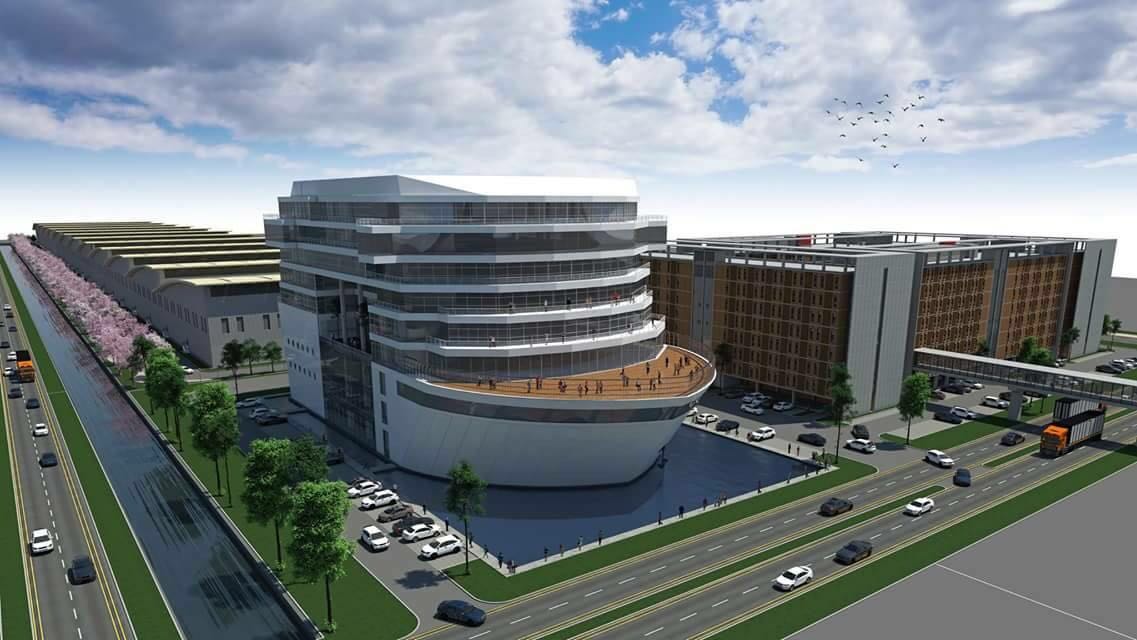
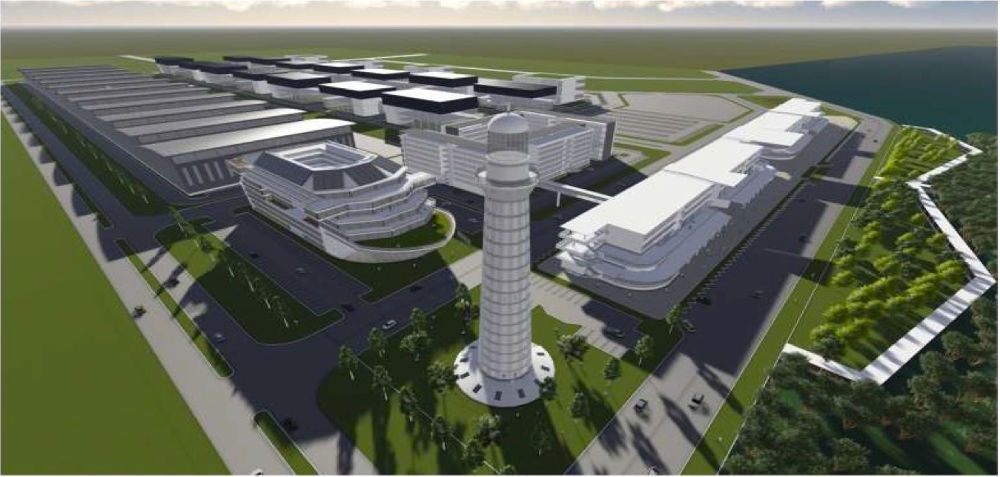
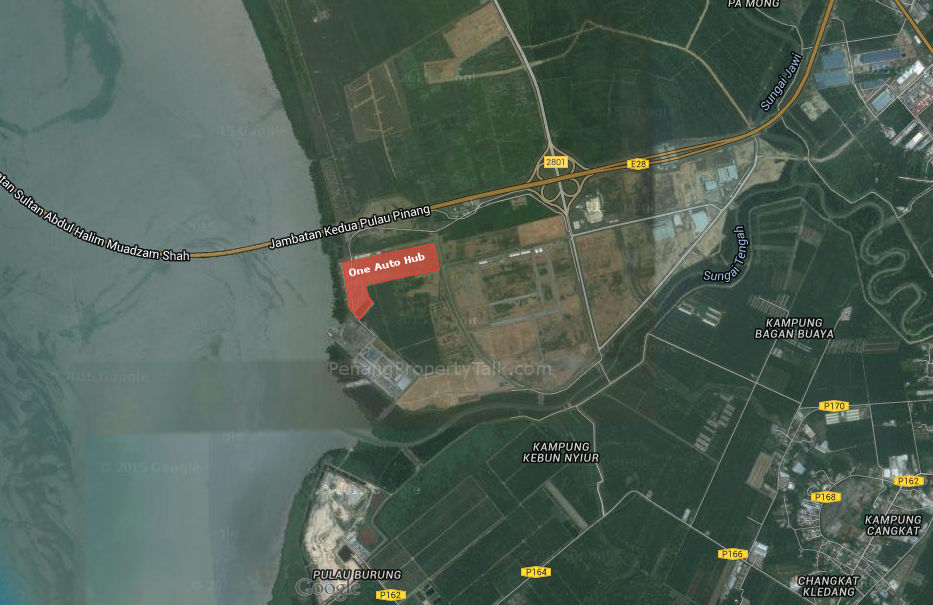
Khor said the value of properties in Bertam has appreciated because it is a growing township with key government offices, education institutions, a golf course, and an automotive hub in place.

In Tanjung Bungah, the first phase of the Alila condominiums with built-up areas between 1,350sq ft and 3,130sq ft is now selling for RM612 per sq ft (psf) compared to RM332psf in 2009, which is an increase of 84%.

Location is only one of the hallmarks of Hunza’s projects.

“Our group does not hold back spending to create green spaces.

“In Alila 2, for example, there is 1.2ha of untouched hill land, which has been allocated as open space for recreational activities within the development.

“We spent about RM12mil to landscape the project,” he said.

Like its other luxurious lifestyle projects on the island, Alila 2’s key selling point is low-density.

“There are only two blocks of condominiums with a total of 270 units. Alila 2, now over 40% sold, is scheduled for completion end of 2017,” Khor said.

For Mekarsari, Hunza is introducing the single-storey zero-lot bungalows for spacious living.

Zero-lot bungalows are built on the boundary line of the land, which are seamlessly connected to the external environment on three sides of the house.

“This unique design allows the owner to enjoy optimised views, great ventilation, natural lighting, and absolute privacy.

“The living and dining rooms are surrounded by mini-gardens, with huge windows and sliding doors to create a nature-inspired living environment and a comfortable, relaxing space for the whole family,” Khor added.

The first phase of Mekarsari, comprising 253 houses, offers an exciting mixture of single-storey semi-detached houses and single- storey zero-lot bungalows.

Hunza has sold more than 20% of the units for the first phase of Mekarsari.

Hunza is also working on its Penang International Commercial City (PICC) project in Bayan Baru.

“It will have a total development of 16 million sq ft.

“We will build, own, manage and lease out the commercial components of the project, such as the retail lots, hotels, hospital, offices and educational institutions.

“We have spent more than RM100mil this year to relocate and compensate 820 squatters to Bukit Nyaman in Bayan Lepas, a recently completed low-cost housing scheme of 690 units,” he added.

Besides its property development business, Hunza is also deriving long-term recurring income from Gurney Paragon comprising a shopping mall, an office tower, and two towers of luxurious lifestyle condominiums.

“The Gurney Paragon is built around the restored St Joseph’s Novitiate, a heritage building converted into a unique cultural experience.

“Completed in 2013, it houses more than 200 tenants, with more than 50 international brands setting up their first stores in Penang,” he said.

St Joseph’s Novitiate has won the 2013 Gold Award of Special Merit from The Association of Consulting Engineers Malaysia (ACEM), and from FIABCI Malaysia the Malaysia Property Award 2013 in the heritage category.

In 2014, the chapel was the World Silver Winner for FIABCI World Prix d’Excellence Award 2014 in the heritage category.

Khor, who is FIABCI Penang chairman, recently received the DSPN award, which carries the title Datuk, in conjunction with the 78th birthday of the Yang diPertua Negeri, Tun Abdul Rahman Abbas.

The award was given in recognition for Khor’s charitable and corporate social responsibility activities.

Hunza is also known for its luxurious lifestyle condominium project, Infinity in Tanjung Bungah.

Infinity signifies an important milestone in the group’s progress, as it ventured into high-end property development.

The Infinity project received from FIABCI Malaysia the Malaysia Property Award 2011 in the high-rise category.

It is also known for its Alila Homes and Alila Horizon projects in Tanjung Bungah, comprising landed and high-rise properties.

Source: TheStar.com.my
Tags:

Utropolis Batu Kawan open for booking soon!

At the very centre of Penang’s new CBD and Lifestyle Hub, Utropolis Batu Kawan is a 44.15-acre self-contained integrated development comprising offices, retail shops, residences, hotel and KDU Penang University College. The commercial component, comprises retail shops/offices,  will be opened for booking soon.

Register for early bird preview now!

(This information will be used to keep you updated on the project and future development.)
*By submitting this Form, you hereby agree to our PDPA Consent Clause.

Click here to find out more about Utropolis @ Batu Kawan

Tags:

When will the property market pick up?

Property News/ 1 October 2016 No comments

p16_bizdx_alc_0110_malaysiaPDFAt a recent property seminar organised by Asian Strategy & Leadership Institute, several developers and property consultants had a debate predicting when the property market will pick up.

Real Estate and Housing Developers’ Association Malaysia (Rehda) patron Datuk Jeffrey Ng Tiong Lip reckoned the residential sector should recover next year or in 2018.

Ng was the moderator for the session on The Future Outlook and Challenges of the Housing and Property Sector.

Property consultants Savills Malaysia managing director Allan Soo, who specialises in the retail malls, expects a 2019 recovery.

Office market specialist Jones Lang Wootton executive director Malathi Thevendre declined to make any predictions. “It all depends …,” she says.

Ng says the current slow housing market is actually good over the long term, although it is painful in the short term. It all depends on how we manage “the noise”, he says.

There are lots of noises at present, both on the national and international level.

“If next year is election year, the recovery – if there is one – will be after that because between now and then, there are so many uncertainties.

“There is a lack of clarity at the moment,” says Ng.

His reading of the property crystal ball of a 2017/2018 turnaround is by far the most positive and contrasts with Kenanga Investment Bank Bhd equity research head Sarah Lim Fern Chieh.

Lim expects house prices to be flattish or slightly weak depending on locations “over the next four to five years, if there are no major policy changes”.

Her rationale for a longer down-cycle is simple. If your destination is Genting Highlands, but you are driving in the opposite direction, you will need a longer time to arrive there when you finally realise you are driving in the wrong direction.

Although it is widely accepted that the property cycle is between eight to 10 years, within this cycle are “mini two-year cycles. There were two-year up-cycle in 1999-2000 after the Asian Financial Crisis, and another in 2003-2004 and 2007/2007.

But after the 2008 Global Financial Crisis, Malaysia had an extended five-year up-cycle between 2010 and 2014 with prices peaking in 2013, and this was largely due to quantitative easing (QE).

She is, therefore, expecting a longer consolidation period of between four and five years, starting from 2015, before the next up-cycle, barring any policy changes and the global economic climate.

She is also expecting the property market to experience structural changes due to affordability and liquidity factors, among others.

More realistic pricing

Notwithstanding the fuzzy horizon, there are nevertheless a few certainties which may well put the sector on a better footing.

First, home ownership has become a national issue.

Second, the government, at both federal and state levels being landowners, are stepping up on affordable housing.

Third, prices are expected to be more realistic going forward.

Rehda president Datuk Seri FD Iskandar Mohamed Mansor is seeking government cooperation to reduce or waive development charges and other charges, collectively known as compliance costs, in order to bring down prices as this is “too challenging” for private developers to go it alone, considering today’s high land prices.

“If the Government wants developers to build more affordable housing, give us cheaper premiums or don’t charge at all.

“We will then see more stability in prices, or even a reduction, if development charges and all sorts of other charges imposed on developers come down,” said FD Iskandar at a Rehda first half-year review recently.

He says property development and land matters have been the biggest revenue earner for every state. Both federal and state governments own large tracts of land. Although FD Iskandar had made this call before, he was very passionate and firm this time around. Other developers, previously silent, are also quite vocal about the various land and development charges they have to fork out.

This is probably the first time developers are coming together to make a collective public call to seek a waiver or reduction of development and other aspects of compliance cost. The effectiveness of that call depends on the Government’s will to act.

While developers can clamour for such waivers, what is facing the market today is weak sales and this in turn is forcing developers to tweak pricing and strategy a bit, hence the drop in the number of launches as they try push unsold stock.

Andaman group managing director Datuk Seri Vincent Tiew says developers will be offering “more realistic pricing” from now onwards with location being a paramount factor.

There will be more affordable housing and this can be seen from the various affordable housing projects being planned by both the federal and state government although the end-products are slow in coming.

This, says Tiew, can be seen in the various agencies under the federal and state governments, among them being PR1MA Corp mandated to build 500,000 units of affordable housing units by 2018, as outlined in Budget 2013.

A total of 240,000 houses were due by end-2015, with an annual mandate for 80,000 between 2013 and 2015. The number of completed units was 883 at the end of 2015, says Tiew. By the end of this year, 10,000 units are scheduled to be completed. The number of units approved to date are 232,807 against 1.24 million PR1MA registrants as of February 2016. All eyes will be on the affordable segment in the coming Budget 2017.

Healthy demand

The demand for housing has always been there. The issue is affordability, says Kenanga’s Sarah Lim.

“Of late, developers are beginning to price units at RM500,000 and below,” she says.

The current change in direction is attributed to societal and government pressure. Unsold stock and government pressure forced developers to relook their pricing strategy.If developers keep building RM1mil homes, when the threshold is RM500,000 and less, they will be left holding unsold stock. In order to move stocks, creative marketing/financing strategies are employed to move these stocks.

Lim says if developers were unable to meet at least 40% of their sales target by mid-year, they would be unable to meet this year’s targets.

More than two-thirds missed their sales targets last year.

“Prior to this, what was booked was considered sold. Now, this is no longer true,” Lim says.

Lim says there are two issues here, the pressure on the sector as the rate of aborted sales crept up and the people’s demand for realistic prices.

“What we are seeing today is the government’s influence. It is actually steering the market in the right direction,” she says.

Renting the way forward

The other certainty is observed in the rental market, which is expected to continue to be soft next year.

There will be “low occupancy rate” for projects completed last year (2015) and this year, with rental yield at less than 3% a year, says Andaman group’s Tiew.

It is cheaper to rent than to buy. There is so much supply going around and the purchasing power of the ringgit is shrinking.

Selangor State Development Corp (PKNS) senior manager (corporate planning and transformation) Norita Mohd Sidek advocates renting.

She says if there is a 50% loan rejection rate for affordable housing, and considering the limited supply by private developers, renting may be the only option.

She suggests building affordable housing cities the likes of Stuyvesant Town’s Peter Copper Village, Manhattan New York and counters the argument that there is no money to be made from affordable housing.

In October 2015, Blackstone led a deal that put Manhattan’s biggest apartment complex in the hands of the world’s largest private equity firm and maintain some affordable housing at the property.

Blackstone and Canada’s real estate company Ivanhoe Cambridge Inc acquired the 80-acre enclave for about US$5.3bil. Rent is kept below market rates for some 5,000 units. Public transport and other amenities must be part of the development for it to succeed. “Government grants and resources are needed to identify the right location to built more council homes,” she says in her paper.

In today’s low yield environment, pension funds around the world are looking at other ways to generate dividends besides equities and fixed income securities. They are buying into infrastructures and large township developments where there are economies of scale for maintenance.

Malaysia’s national housing dilemma cannot be solved by profit-oriented private developers alone. The golden property years between 2010 and 2014 have been intoxicating, having resulted in expectations of 20% to 30% rise in sales year-on-year, like the manufacturing sector. But the property sector is quite unlike manufacturing. The reflection point was seen in 2014 after the government introduced certain cooling measures and anti-speculation sales gimmick.

Going forward, the emphasis on housing priced RM500,000 and below means developers have to sell more units to make the same sales value as previous years.

“They have to sacrifice some of their margins. Higher profit margins can be had from the mid- to high-end segments,” says Lim. They will have to work harder to help buyers secure loans.

This search for some form of cohesion in the national housing arena has taken a bit of time. Hopefully, the coming Budget 2017 will pave the way for more positive action.

Source: TheStar.com.my
Tags:

Non-landed residences on Penang island outperform landed homes

Property News/ 1 October 2016 No comments

AlvinOngNon-landed residential projects on Penang island have performed better than landed homes on the island in recent years.

There were more non-landed residential projects that recorded a cumulative annual growth rate (CAGR) of above 20% from 1Q2012 to 1Q2016 compared with landed housing projects.

Over on the mainland, however, the reverse was true as landed homes fared better in terms of capital growth compared with non-landed homes.

There were more landed projects with CAGR of more than 30% on the mainland than non-landed homes from 1Q2012 to 1Q2016, according to Alvin Ong, TheEdgeProperty.com director of business and product development.

“Areas such as Ayer Itam, Sungai Ara and Jelutong on the island have multiple non-landed projects priced more than RM300,000 with more than 20% CAGR while on the mainland, landed projects priced more than RM500,000 in areas such as Kepala Batas and Berapit have more than 30% CAGR,” said Ong, who was speaking on the Penang subsale market trends and opportunities at the Penang Maspex (Malaysian Secondary Property Exhibition) 2016 last Friday. The event was organised by the Malaysian Institute of Estate Agents (MIEA). TheEdgeProperty.com was the media partner and sponsor.

Some of the projects on the island with high CAGR from 1Q2012 to 1Q2016 include Sea Breeze Tower at Bukit Dumbar/Jelutong with 35% CAGR, Fairy Heights at Ayer Itam/Bukit Bendera with 33% CAGR and Ara Mas at Sungai Ara with 23% CAGR.

Meanwhile, on the mainland, for the same period, some landed projects which have shown high CAGR include homes at Bukit Jawi Golf Villa at Sungai Jawi with 59% CAGR, homes at Taman Bukit Noning at Berapit with 58% CAGR and homes at Taman Seri Rupawan at Kepala Batas with 51% CAGR.

Ong also presented the top five highest rental yields among non-landed projects of less than 10 years old and priced more than RM300,000 in Penang. (See table)

“Infinity at Tanjung Bungah has an indicative rental yield of 8.3% followed by Ocean View Residence at Butterworth with a 5.6% indicative rental yield while Fettes Residence at Tanjung Tokong has a 5.3% indicative rental yield. The fourth and fifth placing go to Hillcrest Residence at Bukit Jambul and Birch Regency at Minden Heights with indicative yields of 5.3% and 4.6%, respectively,” said Ong. (See table)

He also noted that projects priced at less than RM300 psf tend to have higher CAGR compared to projects of more than RM300 psf.

“The gains decline with the average price psf of a project. This is because they have lower entry price points which means more people can afford to buy them, which translates to more transactions,” he added.

Top5highestrentalyield

ERROR: Birch Regency at Minden Heights?

Source: TheEdgeProperty.com.my

Tags: