fbpx

Investing in George Town pre-war buildings bears fruit

Property News/ 16 October 2016 No comments

bizw_p16e_1510_jy_1Singaporean entrepreneur with Penang roots, Jonathan Foo, 44, is seeing his family investment in heritage properties of George Town taking a form that will generate long-term recurring income.

Foo is the chief executive officer of 1919 Global Sdn Bhd, which has to date spent in excess of RM10mil to conserve its heritage properties in George Town.

“In 2006, my father bought 19 pre-war properties in dilapidated conditions along Khoo Sian Ewe Road, Penang Road and Phee Choon Road.

“Many of our relatives and friends did not believe it was good investment because no one believed that dilapidated pre-war houses could be renovated and adapted for modern commercial use.

“When George Town was awarded the World Heritage Site status from Unesco in 2008, we knew it was time to start doing something with our heritage property investments.

The first phase of the restoration project involved renovating Loke Thye Kee Restaurant, on the corner of Khoo Sian Ewe Road and Burma Road. “The Loke Thye Kee Restaurant restoration was completed in 2014. We are now doing some upgrading works for the interior and will start operation in October 2016 as a Penang heritage food restaurant,” Foo says.

The second phase involved turning five pre-war houses facing Penang Road into a hotel.

“Known as Loke Thye Kee Residences, the hotel, which started operation a year ago, targets overseas and domestic tourists who appreciate heritage architecture.

“The heritage hotel, with modern comforts, was awarded as top five suites in Asia by The Asia Design Hotel Awards 2016,” Foo adds.

The third phase saw the renovation of the famous Majestic Theatre into a multi-purpose convention hall which can be used for screening movies, live performance, and rented out to host events and weddings.

“The restoration was recently completed and The Majestic Theatre is now opened to public.

“It is the only heritage theatre in George Town that you can still watch a movie or a live performance,” he says.

Built in 1926, The Majestic Theatre, also formerly known as the Shanghai Sound Theatre, was the first “talkies” theatre in Northern Malaya and was originally designed as a live performance theatre.

The theatre and the adjoining 12 shop-houses were commissioned by local businessman and philanthropist, Khoo Sian Ewe, whose name now adorns the street fronting the building.

The fourth phase of restoration, which is being undertaken now, involved turning 12 pre-war properties along Phee Choon Road into a commercial hub for the media industry, with production and post-production facilities for film, television, and design,” Foo says.

“We are also getting queries from parties interested to instruct post-production movie and television courses at the commercial hub.

Foo says he is confident his project would help to pull back talented Penangites who have gone overseas to work.

According to Foo, Penang is on the right track in its effort to conserve heritage properties. “However, the authorities who formulate the heritage conservation guidelines do not do enough to obtain feedback from the heritage property owners.

“They are instead influenced by non-government organisations who feel that heritage properties should be conserved to reflect only the style and theme of a historical period during which the properties were first built.

“This is a wrong view of heritage conservation, which could impede the progress of heritage conservation work.

“We are talking about living heritage and not a single period frozen in time,” Foo adds.

On whether the rentals of heritage properties have skyrocketed, Foo says that as the cost of buying and renovating a heritage property is high, it is only natural that the landlord asks for higher rentals.

“If we cannot recover the capital spent, then how are we to launch future heritage conservation projects?” Foo asks.

According to Foo, if the heritage guidelines cause delay for heritage conservation projects to get started, investors will lose money.

“They may abandon their projects to cut losses if the delay is prolonged.

“George Town would just become an area of aged ruins.

“How could George Town then uphold its Unesco World Heritage Site status?” Foo asks.

Foo says that in the past, George Town was a well-know trading and commercial hub in the Asean region.

“Why would it be wrong for Penang to continue to be commercially significant, to continue as a key hub for heritage properties to gain in value,” he says.

Source: TheStar.com.my

Tags:

Amaris Terraces By-The-Sea

Tanjung Tokong/ 14 October 2016 6 comments /中文版

amaris

Amaris, one of the last landed properties available within the masterplanned development of Seri Tanjung Pinang, Penang’s most desirable community. Situated next to E&O’s Sales Gallery, with seafronting orientation. Amaris is only 5 minutes walk to Straits Quay retail marina.

This development will offer 29 units of 3-storey freehold terrace homes with almost the size of the super semi-detach houses and villas. Built-up size ranging from 5,262 square feet in an intermediate unit to 6,540 square feet in a corner unit.

Register your interest now. More updates to follow soon!

(This information will be used to keep you updated on the project and future development.)
*By submitting this Form, you hereby agree to our PDPA Consent Clause.

Project Name: Amaris
Location : Seri Tanjung Pinang, Penang
Property Type : 3-storey terrace
Built-up Area: 5,262 sq.ft. – 6,540 sq.ft.
Total Units: 29
Indicative Price: RM3,780,000 onwards
Developer : E&O Property (Penang) Sdn. Bhd.

Location Map:


Actual Site Video:

Condos in Penang that are flourishing

Property News/ 14 October 2016 4 comments
chartsPenangOct15_2015

by The Edge Property

Despite the sluggish market, property investors in Penang can take comfort in reports of capital appreciation in the state. Data collected by the National Property Information Centre’s (Napic) Property Market Report 2015 showed that out of 30 condominium projects in Penang, 11 saw price increases from 2014 to 2015.

Of the 11, seven recorded price growth of over 5% year-on-year. The seven were Kondominium Mutiara (17.1%), Sri Pangkor Condo (9.3%), The Straits Regency (8.6%), Desaria or Regency Heights (7.6%), Quayside Seafront Resort Condominium (7.4%), The Peak Residences (5.5%) and Harbour Place (5.2%). The transacted prices of these condominiums ranged from RM125,000 to RM2.15 million. All of them are located on Penang island except Kondominium Mutiara and Harbour Place.

Of the two projects on the mainland, Kondominium Mutiara recorded the higher price growth at 17.1%, where its unit price range of between RM88,000 and RM145,000 in 2014 had gone up to between RM125,000 and RM145,000 in 2015. This condominium also took the top spot as the project with the highest price growth in Penang overall.

These two projects have their respective pull factors that have contributed to their price growth. “Kondominium Mutiara is located less than 5km from Universiti Teknologi Mara (UiTM), so the main occupiers are students. The units there are priced below RM150,000 and there are no other similar properties in that area,” Henry Butcher Malaysia (Penang) Sdn Bhd senior vice-president in asset valuation Shawn Ong Kah Boo offers.

Harbour Place, which is located in central Butterworth, is less than 2km from the ferry terminal. Based on Napic’s data, Harbour Place was transacted between RM225,000 and RM320,000 in 2015, which Ong says is a very attractive price range for the younger generation of homebuyers.

JLL Malaysia country head YY Lau believes that the more affordably priced non-landed homes on the mainland have attracted the locals considering how affordability has become a major concern among homebuyers. “The supply of condominiums and apartments priced below RM500,000 on Penang island is limited. Looking at the price trends of between RM1 million and RM2 million of new condominiums launched on the island, it’s easy to deduce why buyers are looking for alternatives on the mainland,” says Lau.

“Problems in obtaining housing loans could have also pushed more buyers to opt for units which are considered affordable to them,” she adds.

Over on the island, the highest price growth was recorded at 9.3% at Sri Pangkor Condo. The condo is situated at Pulau Tikus with George Town city centre only less than 3km away, not to mention accessibility and amenities such as shopping malls, hospitals and schools located nearby.

Ong notes that new condominium launches usually benefit older ones as consumers look for alternatives against the higher-priced new condominiums, citing Regency Heights as an example.

“New developments are coming up nearby and have created a pull factor for Regency Heights, improving its asking price although it’s not situated in George Town and is nearly 10 years old,” he says.

Oversupply in island’s condo market?

Henry Butcher’s recent research report, Penang real estate market: Opportunities despite weak sentiments for 2Q2016, stated that as at 2Q2016, Penang island has an existing residential supply of 217,467 units which comprises 42,781 units of landed houses and 174,686 units of strata properties. On the mainland, the existing residential stock stands at 185,027 where there are 111,413 units of landed houses and 73,614 units of stratified units.

“The number of new completions in 2014 on the island was 4,991 in contrast to completions in 2013 totalling 2,926. The surplus could have been carried forward to 2015, resulting in oversupply,” Lau offers.

Ong also foresees significant new supply dampening the condo market in Penang island. “There is still a lot of supply coming in over the next few years and it will continue to be a buyers’ market for condominiums on the island,” he says.

In terms of future supply, supply of landed and strata properties is estimated at 11,391 units (up to 2018) and 55,445 units (up to 2019), respectively.

Despite the concerns of oversupply in the condo market on Penang island, the overall demand for non-landed homes in Penang has been gradually rising. “There used to be more landed residential property transactions on Penang island than high-rise ones but the percentage of non-landed housing transactions surpassed landed homes in 2013,” says JLL’s Lau.

According to Napic’s data, 48% of the transacted residential properties on Penang island in 2015 were landed homes. By 1Q2016, the transacted figure for non-landed homes on the island had risen to 55% while on the mainland, more than 80% of transacted properties were still landed homes.

However, “we can see demand for high-rise residential properties in Penang as a whole is increasing. Moving forward, we expect to see further interest in high-rise residences due to the additional facilities, services and security provided by condominiums compared to landed housing,” Lau elucidates.

Mainland vs island

Meanwhile, director of Penang-based Izrin & Tan Properties Sdn Bhd Tan Chai Liang says that as land prices continue to spike, future developments on Penang island will most likely be non-landed schemes.

Tan believes that the island is still the preferred choice for most homebuyers, despite its decreasing affordability.

“The main issue here is the affordability of new homes and this may drive away some new homeseekers to go for lower-priced and larger homes on the mainland. However, the mainland is lacking in terms of services and amenities. Penang island still has the upper edge with its international schools, good private hospitals, colleges and hotels,” he says.

Tan also notes that compared with the non-landed housing market on the mainland, condominiums on the island had a head start in terms of price growth, having recorded capital appreciation as early as 2000, compared to the ones on Penang mainland.

“Condos and apartments on the mainland may have recorded higher capital appreciation by percentage recently but in terms of price psf, prices are still low compared to their peers on the island,” he adds.

There is no doubt that the island offers more in terms of amenities. It also has easily accessible recreational areas like scenic beaches and hills.

On the downside, Lau says people living on the island have to go through traffic congestion as both recreational and eateries on the island are popular not just among Penangites but international and domestic visitors.

Catalysts in Penang

Both the mainland and island have undergone major transformations over the past few years.

“We see economic activity and housing projects mushrooming in Batu Kawan (mainland), Bukit Relau, Batu Maung, Sungai Ara and Teluk Kumbar (island), capitalising on the completion of the Sultan Abdul Halim Muadzam Shah Bridge (previously known as the Penang Second Bridge) in 2014,” says Lau.

Following this, the next major infrastructure developments which are being pursued by the state government would be the proposed Penang Light Rail Transit (LRT) Line connecting Komtar and the Penang International Airport and the proposed undersea tunnel linking Gurney Drive (island) with Bagan Ajam (mainland). If these projects are realised, they can become catalysts for the future growth of the real estate sector in Penang.

Source: TheEdgeProperty.com.my

Tags:

Penang East Seafront Residence

Butterworth/ 13 October 2016 7 comments /中文版
penang-east-seafront-residence

For illustration only

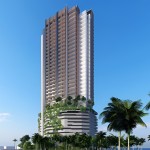
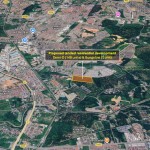
Penang East Seafront Residence, an upcoming seafront commercial development by Star Sanctuary Land Sdn. Bhd. at Butterworth, Penang. It is strategically located along Jalan Bagan Jermal, adjacent to Plaza Toll Bagan Ajam.

This development will see the construction of a 19-storey commercial building, offering 293 units of serviced suites, and rooftop infinity pool.

Project Name : Penang East Seafront Residence
Location : Butterworth, Penang
Property Type : Serviced residence
Total Units: 293
Built-up Area: (to be confirmed)
Indicative Price: (to be confirmed)
Land Tenure: Freehold
Developer: Star Sanctuary Land Sdn. Bhd.
Last Updated: June 2022

Register your interest here

(This information will be used to keep you updated on the project and future development.)
*By submitting this Form, you hereby agree to our PDPA Consent Clause.

Location Map:


No decision yet on moneylending policy review

Property News/ 13 October 2016 No comments

penang-developer-lendingThe Urban Wellbeing, Housing and Local Government Ministry is still undecided on the review of a moneylending policy for property developers although it has been over a month since the idea was mooted.

On Sept 8, Urban Wellbeing, Housing and Local Government Minister Tan Sri Noh Omar said eligible property developers can apply for moneylenders licences under the Moneylenders Act 1951 (Amendment 2011) to provide loans to property buyers.

Even though the Act has been around for a while and a few developers already have the licence, Noh’s proposal – mooted as a solution for affordable-home buyers who were unable to get loans – ran into strong opposition from various quarters.

At present, the Act enables those with the licences to offer loans with interest rates of up to 12% a year with collateral and 18% a year without. It is understood that property developers who already have moneylending licences are offering loans at an interest rate of 8% a year.

Following a Cabinet meeting, the ministry was instructed to review and fine-tune the policy to make it more effective in helping house buyers.

The ministry then organised a closed-door meeting on Sept 21 to gather feedback from various industry stakeholders.

“During the meeting, we spoke out against it, we presented our views, but they have not come back to us yet. There have been no new developments on this,” said National House Buyers Association secretary-general Chang Kim Loong.

While it is envisaged that the policy will be reviewed after being brought into the spotlight by various stakeholders, it looks to be taking time due to the complex nature of the issue.

In the meeting with stakeholders, for example, pertinent issues raised included a cap on interest rates offered, the offer of loans without collateral and loan rejection rates as well as the risk of default and foreclosures. Questions were also raised about borrowers’ ability to service two loans – one from the bank and one from the developer.

Just two days ago, Bank Negara Malaysia issued a statement on the need to develop alternatives to home ownership being a policy priority, extolling the risks of according financing to those who can ill afford it. Alternatives mentioned included a well-functioning rental market.

On the other side of the divide, however, property portal PropertyGuru said housing loans play a big part in the home ownership process.

“But let developers develop and banks be banks. Typically, developers do not wish to become financiers as it ties up capital that can be used for purchasing land and developing projects.

“But this idea is symptomatic of just how serious the lack of financing and the high rate of loan rejections have become. It is imperative we help buyers get loans, without which homeownership will remain a dream for many, especially Gen Y which comprise about 38% of our population,” PropertyGuru Malaysia country manager Sheldon Fernandez said in a statement yesterday.

The property portal suggested several measures to aid first-time home buyers, including increasing plot ratios, assessing loan eligibility based on gross income, extending loan tenures to 40 years, allowing developer interest bearing schemes for first-time buyers and taking another look at interest rates.

Source: TheSunDaily.my

Tags: