fbpx

Tambun Indah Land to roll out RM170 mil worth of launches in 2017

Property News/ 24 February 2017 No comments

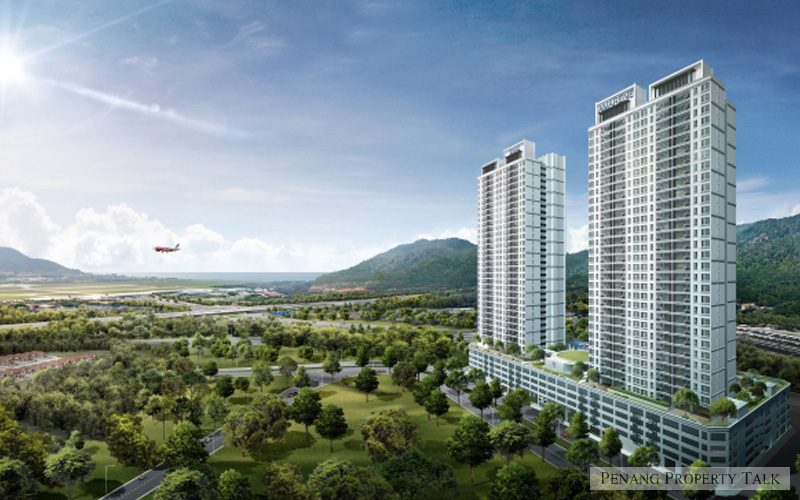
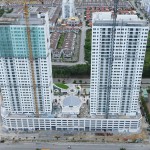
pearl-28Penang-based property developer Tambun Indah Land Bhd plans to launch three new projects worth about RM170 million for 2017, said the developer.

These projects are Pearl Saujana phase 1, Pearl 28 in Pearl City, Bandar Tasek Mutiara and Palma Residence in Alma, Penang.

“The group is optimistic that the planned launches would contribute positively to its track record and are in line with the group’s focus in the affordable landed property segment.

“As at Dec 31, 2016, Tambun Indah has achieved 80.3% take-up in on going projects of RM1.4 billion,” said the developer in a statement, adding that its balance sheet remains healthy, allowing them to not only complete its planned developments but also to acquire landbank for expansion.

Tambun Indah added that it has a pipeline gross development value of RM3.1 billion to be built over the next seven years. As at Dec 31, 2016, unbilled sales stood at RM196.9 million.

For the financial year ended Dec 31, 2016, Tambun Indah’s net profit rose 11% to RM112.2 million from RM101.1 million. This is despite revenue dipping marginally by 1.85% to RM360.8 million as compared with RM367.7 million over the same period last year.

“The enhanced profitability is attributed to progress billings being on track, as well as a favourable product mix in property development, additional rental from newly completed investment properties and a net fair value gain of RM5.2 million from investment properties,” said Tambun Indah.

The developer’s investment holdings consist of GEMS International School and the Pearl City Mall, which commenced operations in September 2015 and April 2016, respectively.

“The mall boasts a healthy occupancy rate and would contribute its first full year of revenue in the current financial year ending Dec 31, 2017,” added Tambun Indah.

Source: TheEdgeProperty.com.my


Tags:

APDL approvals to boost Penang market

Property News/ 23 February 2017 4 comments

Grossyieldperformance_0After waiting for months on end for their applications for advertising permits and developers’ licences (APDLs) to be approved, developers in Penang breathed a sigh of relief recently — they have finally been given the nod. They are now busy with sales and purchase agreement signings and banking in of cheques, says Michael Geh, senior partner of Raine & Horne International Zaki + Partners Sdn Bhd.

To recap, Geh mentioned early last year that there was an inordinately long delay in the processing of APDLs. He said developers were waiting for 1½ years for what usually takes a month to process.

Now that the approvals have been given, the Penang property market is expected to see better times.

“The sales figures will surface in the first two quarters of the year,” says Geh, when presenting the 4Q2016 Penang Housing Property Monitor.

A quick look at the monitor data reveals that the performance of the sector in last quarter of 2016 was flat, with very little price movements across the board. Geh says the quarter’s data shows a “moderate” market.

However, he says, overall, the market was active last year, although it was affected by the soft market conditions. “The Penang property market was active throughout 2016 despite a slight dip in volume and value. A total of 13,539 properties, including residential, commercial, industrial, agricultural and development land, worth RM6.85 billion, were transacted up to the third quarter. For residential properties, there were 9,899 transactions worth RM4 billion in the first three quarters.

“The secondary market has remained stable with prices rising slightly.”

Last year, there were issues regarding pre-war properties being purchased in large numbers by foreigners, but such purchases have slowed down in recent months, says Geh.

“However, this doesn’t mean that such properties are not being transacted as there are still locals buying them for their own use. To date, foreign property purchasers of such properties in Penang have remained at 7%.”

According to Geh’s research, properties priced below RM500,000 were the most actively transacted in the state last year.

“If we look at the prices of properties transacted in Penang in the first half of 2016, most of them were between RM200,001 and RM500,000 (33%), followed by below RM100,000 (23%) and between RM100,001 and RM200,000 (20%),” he says.

“This shows that the demand for homes priced below RM500,000 remains strong while that for units priced above RM500,000 is expected to dip.”

For the first quarter of this year, Geh expects transactions of properties priced below RM350,000 to be active. “There are a lot of homes priced RM350,000 and below on the market and many people are applying for bank loans. These are high-rise units on the island and landed properties on the mainland that are located further away from the popular areas like Bertam.”

Other areas with such properties available are Relau, Teluk Kumbar and Tanjung Tokong, he says, adding that the property hotspots for the year include Bertam, Penang Sentral, Iconic City and Batu Kawan on the mainland, and George Town, Batu Maung, Persiaran Karpal Singh/Sungai Pinang and Bayan Baru on the island.

Penang opportunities

Geh highlights that world-class developers are eyeing Penang as a destination to partner local companies for property developments. However, he is unable to provide details at the moment as negotiations are ongoing.

He believes that as the state invests in catalytic projects such as the Penang Transport Master Plan, its economy will strengthen in the long run.

“My prediction for 2017 is that the transaction figures will grow and property values will remain high. If Bank Negara [Malaysia] relaxes the housing loan requirements, the market will definitely move again,” he says.

“I am predicting a 5% increase in residential property transactions in the first quarter of the year. I am expecting Penang to register about RM1.13 billion worth of transactions involving 2,527 units. The market will remain robust, especially the secondary market, which is more active than the primary market with a ratio of 5:1.”

With regard to new developments in Penang, it was recently reported that Eco World Development Group Bhd and the Employees Provident Fund will jointly develop 375 acres of prime land in Batu Kawan into two townships.

Penangpropertyprices (1)“The involvement of the EPF is a positive signal for Batu Kawan. It also shows the provident fund’s confidence in Penang as a cornerstone of the development of northern Peninsular Malaysia,” says Geh.

It was also reported recently that the development of the Business Processing Outsourcing Prime and Penang International Technology Park projects, worth a combined RM11.3 billion, has been deferred due to the current soft property market conditions. Geh says he is surprised at the move as he believes that the projects would have a catalytic effect on the state’s economy. “It would have been good to commence the projects, taking advantage of the soft condition of the construction industry … the developers would have got good quotes. These iconic projects would have given the Penang property market a boost, construction-wise.”

He adds that currently, the Philippines and Bangalore are outsourcing leaders, and if Penang does not jump on this bandwagon now, it may miss the opportunity.

Geh believes that with new jobs created for locals, the property market will see an upward trend, both in terms of transactions and rents.

A rather flat market in 4Q2016

According to quarter-on-quarter data, there were no price movements for all property types, except for standard 3-bedroom apartments/condominiums in Island Park/Glades, which saw price growth of 4% to RM520,000 from the third quarter. Property prices in Island Park/Glades also rose 8.33% from the previous year, making it the only area in the monitor that showed quarterly and yearly growth.

Penangpropertyrentalrates (1)Overall, the year-on-year price growth in the other areas surveyed was marginal or flat.

In the 1-storey terraced house category, only those in Jelutong saw price growth of 1.11% to RM910,000 from a year ago. For 2-storey terraced houses, prices of only those in Green Lane rose 4.17% to RM1.25 million.

The 2-storey semi-detached house segment was a bit more active with those in Sungai Dua and Minden Heights achieving 6.67% price growth to RM1.6 million, and those in Sungai Nibong registering a 2.78% increase to RM1.85 million.

As for 2-storey detached houses, the prices of those in Tanjung Bungah rose 2.7% to RM3.8 million.

Standard 3-bedroom flats in Sungai Dua and Lip Sin Garden saw the highest increase in prices, at 8.57% to RM380,000 from a year ago, followed by those in Green Lane (up 5.26% to RM400,000) and Bandar Baru Air Itam (up 4.35% to RM240,000).

As for condos and apartments, those in Pulau Tikus saw price growth of 6.15% to RM690,000 while those in Batu Ferringhi appreciated 2.22% to RM460,000.

Source: TheEdgeProperty.com.my


Tags:

Quinton

Balik Pulau/ 22 February 2017 19 comments /中文版

quinton

Quinton, another affordable housing at Balik Pulau, by Prisma Bumiraya Sdn. Bhd. (Pearl Ocean). It is located along Jalan Sungai Pinang, next to Titi Teras Primary School. Only less than 2km away from Balik Pulau town centre.

This development will see the construction of a 16-storey residential building, offering 383 affordable units.

READ MORE ABOUT AFFORDABLE HOUSING:

Property Project: Quinton
Location :
 Balik Pulau, Penang
Property Type : Affordable housing
Built-up Size: 775 sq.ft., 850 sq.ft. & 900 sq.ft.
Total Units: 383
Land Tenure : Freehold
Indicative Price : RM233,000 onwards
Developer : Prisma Bumiraya Sdn. Bhd. (Pearl Ocean)

Register your interest here

(This information will be used to keep you updated on the project and future development.)
*By submitting this Form, you hereby agree to our PDPA Consent Clause.

Location Map:



Penang, Sabah picked as top investment regions for leisure/hotel sub-sector

Property News/ 22 February 2017 No comments

penang-propertyPenang and Sabah remain the most attractive regions for investment in the hotel or leisure sub-sector, according to respondents of Knight Frank’s Malaysia “Commercial Real Estate Investment Sentiment Survey 2017” (CREISS).

“Looking into the most attractive regions for investments in 2017, Sabah and Penang were voted as the most attractive regions for hotel or leisure investment.

“Also, the attractiveness of investing in the hotel or leisure sub-sector leapt from 65% in 2016 to 93% in 2017,” said the survey.

The survey had gathered responses from property developers (77%), fund or real estate investment trust (REIT) managers (16%) and lenders (7%).

Knight Frank also noted that industry players expected the hotel or leisure sub-sector to remain resilient in 2017, while 53% expected the average room rate to remain steady this year.

More than half (56%) of the respondents thought that the yield performance of the hotel or leisure sub-sector will be stagnant for 2017

Meanwhile, Kuala Lumpur will continue to be the focus of investments in the office and retail sectors.

“Despite the challenges in the office and retail markets, 12% of the respondents continue to see potential for office investments in Kuala Lumpur while 20% think there is a potential in the retail sector in Johor,” said Knight Frank on the findings.

According to the survey, respondents were not satisfied with the performance of the office and retail sub-sectors in 2016 and expected the outlook to remain cloudy in 2017.

Meanwhile, majority of the respondents said the capital values for the office and retail sub-sectors will hold steady, with more than half of them expecting both sub-sectors to remain stagnant this year.

Slightly more than half of the respondents thought rental values for the office (56%) and retail (54%) sub-sectors will decrease while 64% (office) and 59% (retail) of the respondents expected occupancy rates for these sub-sectors to decrease.

On yield performance, 55% and 42% of the respondents expected yield compression in the retail and office sub-sectors respectively.

Source: TheEdgeProperty.com.my

Tags:

Making George Town pedestrian-friendly, one back lane at a time

Property News/ 21 February 2017 No comments /中文版

back-lane-upgradeThe unkempt and inaccessible back lanes of George Town will soon be upgraded, beautified and opened up for easy access to pedestrians and cyclists.

Starting with three small lanes first, the Penang Island City Council (MBPP), together with Think City, plans to renovate these, upgrade the drainage systems and widen them in accordance with the heritage zone’s Special Area Plan (SAP).

MBPP secretary Yew Tung Seang said the plan was to turn these back lanes into recreational and relaxation spaces for the residents and passers-by.

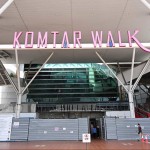
“Currently, some of these back lanes are blocked, dirty and dark so we hope to open it up to make it easier for people to use these lanes to access another road safely without using the main roads,” he said during an open dialogue with residents on the proposed back lanes project at Komtar this morning.

The opening up of these back lanes, which includes adding lighting, will turn these into easy and safe connections within the inner city for pedestrians and cyclists.

Yew said the council wanted to engage with the affected residents and house owners through a dialogue session before implementing the project, however.

The MBPP selected three back lanes for this initial proposal: from Jalan Magazine to Jalan Gurdwara, from Jalan Cheong Fatt Sze to Jalan Dr Lim Chwee Leong and from Lebuh Tamil to Jalan Dr Lim Chwee Leong.

All three lanes are near to the city centre around Komtar, where the state government’s administrative centre is located.

20172002_jalan_magazine_jalan_gurdwara_penang_back_lane

The backlane of Jalan Magazine leading to Jalan Gurdwara will be turned into an access lane for the public

Amongst the proposed upgrades are to turn these spaces into gardens, open air cafes and creative art corners.

“We are now obtaining feedback from the stakeholders before implementing it,” Yew said.

The dialogue session was disrupted when a resident, Lim Eng Chew, started voicing safety concerns regarding the project.

“Have you asked the Bomba? What happens when there’s a fire if you close up the lanes? How is the Bomba going to get in? Is the Bomba here today? You didn’t even ask the Bomba,” he shouted.

He went on about how he has lived there all his life and witnessed over 19 fires in the area in that time.

“Do you know if some vehicle blocked the entrance, the Bomba couldn’t get in? I’ve complained to the council so many times about these vehicles blocking the lanes but nothing was done,” he said.

He then continued telling the council in Hokkien that these back lanes are not spaces for “fancy cafes” and gardens but are meant as escape routes for residents in case of emergencies.

20172002_jalan_magazine_jalan_gurdwara_penang_back_lane_(1)

Backlanes, such as this one, will be upgraded for easy access by pedestrians and cyclists

“These back lanes are for the people living there to get in and out, not for some project,” he said and continued to create a ruckus without waiting for Yew to reply. Lim was finally ushered out after several minutes of continuous shouting.

Yew explained to the remaining stakeholders in the hall that the project will not close up the lanes or block access to the residents.

“The project was to open it up, beautify it and upgrade the lanes for the people there,” he said.

Think City chief operating officer Neil Khor, who was also present, explained that the project will be similar to Think City’s pilot Armenian Street back lanes project.

“This is not just a beautification project but a larger upgrading project for the whole of George Town according to the Special Area Plan and this also means improving the drainage system, creating a trench for the utilities so they don’t dig up the back lanes when conducting their repairs and using special porous concrete to allow rainwater to drain off faster,” he said.

In Think City’s Armenian Street Back Lanes project, Khor said they worked with all the residents and stakeholders to get their participation in the whole project.

Read More: TheMalayMailOnline.com


Tags: