fbpx

RM19.75 billion worth of unsold houses in Malaysia

Property News/ 23 November 2021 No comments

penang-property (1)

A total 30,290 units of completed houses with a value of RM19.75 billion were reported unsold in the third quarter of this year.

Deputy Housing and Local Government Minister Datuk Seri Ismail Abdul Muttalib said data by the National Property Information Centre (NAPIC) revealed a 2.64 per cent decrease in the number of unsold residential units in the third quarter compared with the second quarter of the year (a total 31,112 unsold completed houses worth RM20.1 billion).

The slight drop in unsold housing properties, he said, was attributed to numerous promotional efforts by developers including reducing prices or offering discounts to house buyers.

“This was shown by the reduction in the House Price Index in the third quarter of 2021 (preliminary) recorded at 198.6 index point compared with the third quarter of 2020 at 199.9, which is a 0.7 per cent drop.

“It is hoped that more developers will reduce the prices of houses to address the property overhang and restore the residential property market,” he said in reply to a question from Datuk Ahmad Jazlan Yaakub (BN-Machang).

Ismail said Kuala Lumpur, Penang, Selangor and Johor recorded the highest number of unsold houses.

Among the factors that contributed to the property overhang were supplies that did not match the demands in localities, prices and household income mismatch and unattractive locations of housing projects, as well as house buying transactions through sub-sales, he said.

He said Big Data Analytics (BDA) was being conducted to get the real picture and existing data related to the housing sector in Malaysia as part of measures to address the issue.

He said the study, which started in February, was expected to be completed in May next year.

Preliminary findings revolved around housing data related to supply and demand at various state agencies and departments.

“There is a need to establish a repository data centre to enable main industry players to use the same data for projections related to housing supply and demand, affordability, available financing, housing financing schemes, policy development and forecast for housing needs.

“The study will also determine the direction for the development of a comprehensive a BDA system that covers data needs, technology, expertise and its costs.”

Another measure taken by the ministry to address the issue were Home Ownership Campaigns (HOC), which offered duty stamp exemption and a 10 per cent discount on houses priced between RM300,000 and RM2.5 million by developers registered with the Real Estate and Housing Developers’ Association Malaysia (Rehda).

Ismail said the ministry was considering extending the HOC, originally slated to end Dec 31.

The residential property market however is expected to remain sluggish until end of this year, he said.

He added that the ministry was also considering to introduce requirement or guidelines for developers to submit feasibility studies in applying for planning permission.

“The findings (in the feasibility study) will help in preventing development projects that are irrelevant to current market demands.”

Source: NST Online

Tags:

Workers’ housing is a new emerging asset class

Property News/ 23 November 2021 No comments

workers-dorm-penang

The Covid-19 pandemic, which began in the first quarter of last year, has thrust purpose-built workers’ accommodation (PBWA) into the spotlight, establishing it as a new emerging asset class.

According to Knight Frank Malaysia’s recently released Workers’ Dormitories publication, demand for quality and well-planned workers’ accommodations is expected to rise.

Allan Sim, executive director of capital markets – industrial at Knight Frank Malaysia, said that PBWA is a niche, non-traditional, and relatively new asset class, with the majority of such existing establishments concentrated in high economic growth regions such as Selangor, Johor, and Penang.

He said that, while the majority of the country’s existing PBWAs are owner-operated, more industry players such as operators, investors, and developers are jumping on the PBWA bandwagon to meet growing short to long-term demand for compliant workers’ housing.

“More recently, in the case of Westlite-PKNS Petaling Jaya, a master lease model was adopted whereby the owner entered into a master lease agreement with a single professional operator to run the dormitory,” he said.

Interest from institutional investors, according to Sim, is expected to grow steadily as more supply of high-quality dormitories becomes available and this sub-market reaches maturity in the mid- to long-term.

He said that after 2023, workers will be able to live in centralised labour quarters (CLQ).

“Given its long-term investment nature, it is expected to emerge as an appealing asset class for both foreign and domestic entities,” he said.

Sim believes that, with the support of a strong industrial sector, particularly the high-value manufacturing chain, centralised workers’ housing will evolve into a higher grade or quality asset class over time.

He said that this will strengthen Malaysia’s position as an Asian destination for high-value manufacturing and global services.

“Workers’ housing will gradually evolve into a subset of the larger industrial real estate ecosystem, rather than a separate asset class. Having proper and professionally managed workers’ accommodations, however, is critical to completing the industrial ecosystem and helping Malaysia compete with other regional countries in attracting flows of foreign direct investments from global industrialists,” he said.

On the challenges faced by industrialists, Sim said that when professionally managed dormitories are unexplored propositions, they turned to terraced homes, apartments, shophouses, and makeshift accommodations to house their workers haphazardly.

“In addition to a lack of awareness and accountability, most of these types of housing were overcrowded and had poor sanitation, resulting in a slew of social issues that have plagued the community for years. The perception of higher costs and non-standard guidelines in various states has also resulted in years of resistance from industry players to provide dedicated workers’ accommodations,” he said.

According to Mark Saw, executive director of Knight Frank Malaysia Penang branch, workers’ accommodation can only be built on commercial and industrial (light and medium) land in Penang.

He said that finding suitable dormitory locations is difficult because the areas surrounding established industrial parks are mostly privately owned.

“However, rising demand for such accommodations has resulted in higher asking prices for privately held land in areas such as Valdor and Permatang Tinggi, even though these lands may still be zoned “agriculture,” according to him.

Debbie Choy, director of Knight Frank Malaysia Johor branch, said that upfront planning and experience are essential in Johor when developing workers’ accommodations.

“Otherwise, it will be more difficult to accommodate additional infrastructure and space when construction is underway,” she said.

Elsewhere in Selangor, the land-use zoning for workers’ accommodation within the jurisdiction of Majlis Bandaraya Shah Alam is ‘commercial’ while in areas under Majlis Perbandaran Klang, it is ‘residential’ although workers’ housing may be developed on commercial land subject to conditions imposed by the local authority.

The planning requirements in terms of development intensity such as plot ratio, minimum land area, and building height may further differ by states (and local authorities).

kpkt-guideline


Rentals, yields and capital values

According to Knight Frank Malaysia research findings, which are supported by data collection of rental revenues for PBWAs across Malaysia’s major states, the analysed rental of selected PBWAs on a per bed per month basis could range from RM155 per bed per month (low end) to RM300 per bed per month (high end).

“In the short term, we anticipate an increase in both asking and achievable rents for PBWAs. This is due to existing demand, which is being fueled by regulatory compliance, outstripping existing and incoming supply,” said Keith Ooi, the firm’s deputy managing director.

Ooi also said that as the market matures, the investment yield for this asset class is expected to moderate.

According to him, this phenomenon has also been observed in the industrial asset class, where initial double-digit yields recorded in the late 1990s/early 2000s have moderated to currently range from six per cent to 6.5 per cent.

Ooi said that industrial properties are increasingly popular as investment-grade assets among institutional investors and real estate investment trusts.

Taking on the lodging nature of residential property while servicing the thriving and essential industrial sector, the segment appears to be a strategic diversification option to mitigate the impact of a downturn in the economy.

Supported by the fundamentals of the industrial sector, this expanding subset is particularly appealing to stakeholders looking for defensive sectors to capitalise and invest in, he said.

Source: NST Online

Tags:

Grains Residences

Bukit Mertajam/ 22 November 2021 2 comments /中文版

grains-residences

Grains Residences, a serviced residence development by Znen Landmark Development Sdn. Bhd. at Bandar Perda commercial district in Bukit Mertajam. Located near Jalan Perda Utama roundabout, just a stone’s throw away from KPJ Penang Specialist Hospital and Seberang Perai City Council. Neighboring communities include BM City Mall and Metropol, which is still under construction.

This development comprises a 46-storey commercial building, featuring 401 units of serviced residences with rooftop facilities and 7 levels of car parking podium. There will also be 19 units of shop offices located at the ground level.

Project Name: Grains Residences
Location : Bukit Mertajam, Penang
Property Type : Mixed development
Total Units: 401 (serviced residence)
Built-up Area: (to be confirmed)
Indicative Price: (to be confirmed)
Developer: Znen Landmark Development Sdn. Bhd. (Znen Group)

Register your interest here for updates on this project and other property news

(This information will be used to keep you updated on the project and future development.)
*By submitting this Form, you hereby agree to our PDPA Consent Clause.

Location Map:


SITE PROGRESS: Marriott Residences (Nov 2021)

Property News/ 21 November 2021 3 comments

Marriott-residence-site-progress-nov2021


About Marriott Residences

A mixed development by BSG Property in Georgetown in Penang. It is located between the famous tourist belt of Gurney Drive and Kelawai Road, next to Evergreen Laurel Hotel. The project comprises a 55-storey skyscraper, featuring a mixed of hotel rooms and condominium units

Find out more about Marriott Residences

Register your interest here for updates on this project and other property news.

(This information will be used to keep you updated on the project and future development.)
*By submitting this Form, you hereby agree to our PDPA Consent Clause.

Plans afoot to make George Town a more sustainable and resilient heritage city

Property News/ 20 November 2021 2 comments

petach

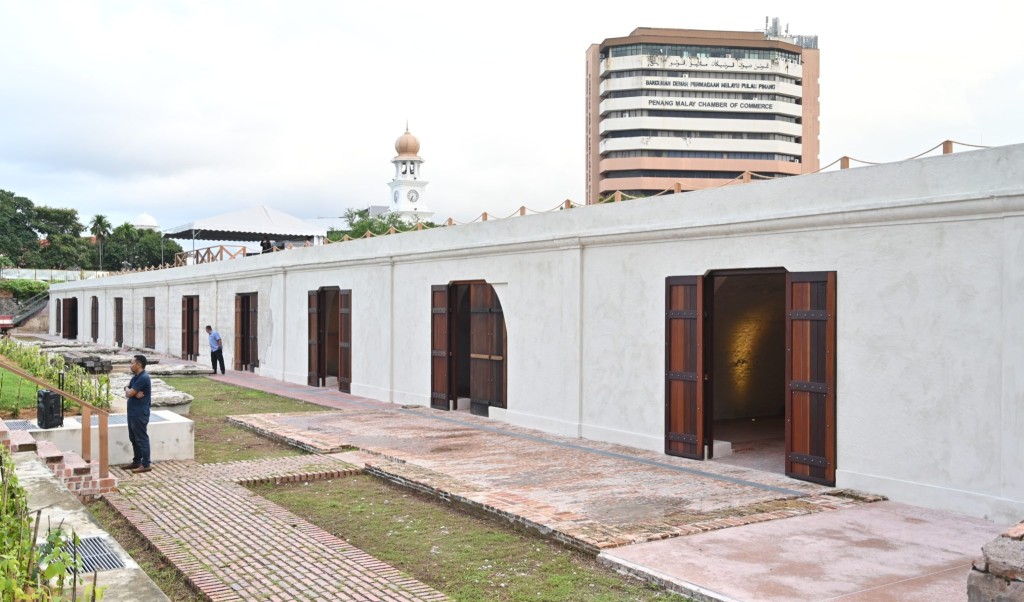
The Penang Tourism and Creative Economy (PETACE) has planned to develop George Town World Heritage Site as a resilient heritage city and lift the state’s economy to greater heights in line with the Penang2030 vision.

During the launching of the reports of George Town World Heritage Site Population & Land Use Census 2009-2019 : A City in Transition and Scenario Planning : Possible Futures for Penang’s Economy in 2030, state Tourism and Creative Economy Committee chairman Yeoh Soon Hin was pleased with these two innovative and important publications initiated by Think City and its partners.

On the George Town World Heritage Site Population & Land Use Census 2009-2019 : A City in Transition, Yeoh pointed out that it bookended the history of heritage site from 2008 until prior Covid-19 pandemic.

“The data show a significant investment in new businesses and physical conservation after a decade of heritage listing.

“With this data, we have a robust framework to plan for the future of George Town, which is aligned to Penang2030 vision.

“These data, alongside Think City’s contribution, have influenced the revision of George Town Special Area Plan.

“We will be focusing on reviving tourism and creative sectors that have suffered losses in this pandemic.

“Our 5R approach – Rethink, Reset, Recover, Rebrand and Restart – builds the foundation to accelerate the state’s tourism and other creative sectors.

“The cultural and technology assets are the window of opportunities for the future growth of Penang,” he said in his speech before launching the event at Think City multipurpose hall in UAB building today.

Speaking of the future in relations to the launching of Scenario Planning : Possible Futures for Penang’s Economy in 2030 report, Yeoh said this was developed in response to the global socio-economic shocks and technology changes impacted by pandemic.

“This report identifies the key drivers of change, outlining possible futures and providing recommendations on how Penang can position itself post-pandemic.

“I would like to thank Think City, Penang Institute and Penang Green Council (PGC) for developing this insightful body of work that allows us to imagine the paths that Penang future could be.

“It is important to keep the aim in line with the Penang2030 vision.

“I would like to thank Think City and its partners on the completion of these two reports and I encourage anyone who has interest in the future of Penang to download the reports from Think City’s website,” he said.

Think City senior director Dr Matt Benson hoped these reports would make a positive contribution on the future of Penang, particularly George Town World Heritage Site’s sustainability.

“We look forward to a continued collaboration with the state government and other institutions, including Penang Island City Council (MBPP), Digital Penang, Penang Institute and PGC,” he said.

On the possibility of reopening the international borders next year, Yeoh said the state’s tourism players were all well prepared.

“We also anticipate the number of domestic tourists will increase next month,” he said when asked by reporters on the state’s tourism outlook.

Also present were Chief Minister Incorporated (CMI) deputy general manager S. Bharathi, Penang Green Council (PGC) general manager Josephine Tan, Penang Heritage commissioner Rosli Nor and Digital Penang chief executive officer Tony Yeoh.

Source: Buletin Mutiara

Tags: