fbpx

Penang LRT race heats up as 7 consortia eye Mutiara Line systems package

Property News/ 26 April 2026 No comments

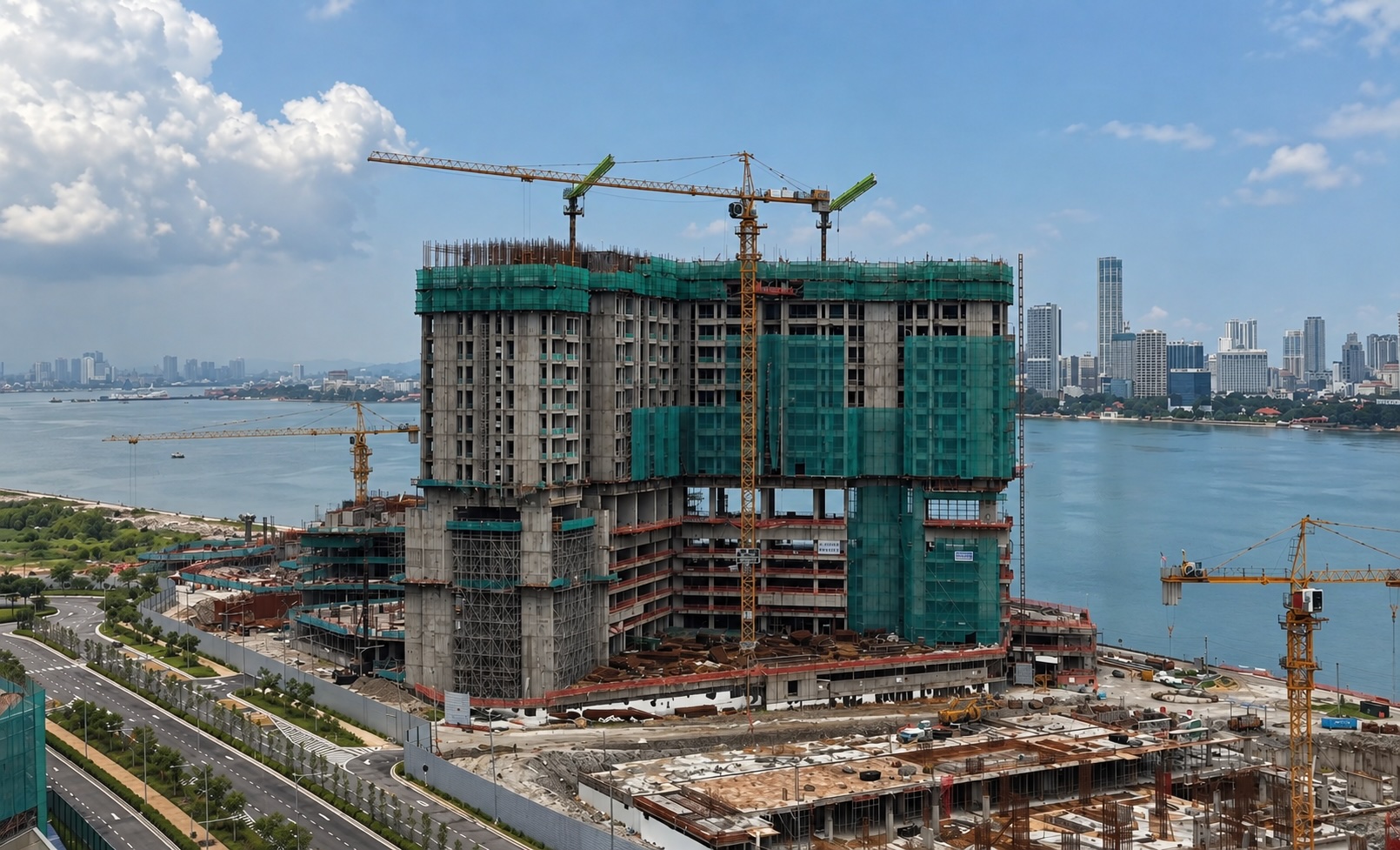
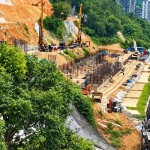
penang-lrt-site-progress

The battle for Penang’s Mutiara Line systems package is shaping up to be one of Malaysia’s most hotly contested transport contracts, with intense lobbying and fierce competition among seven consortia vying for a project that carries significant strategic weight in the country’s rail industry.

MRT Corp has opted for a reverse e-bidding exercise to determine the most competitive price for the systems package, which covers signalling, rolling stock, and track works on a design-and-build basis. The decision follows months of refinements since the tender was first called in December 2024, with multiple deadline extensions and addenda, including a notable revision in August 2025 that changed the rolling stock configuration from four-car to three-car train sets.

The field of bidders is largely homegrown, with local heavyweights Gamuda Bhd, MMC Group, YTL Group, Malaysian Resources Corp Bhd (MRCB), a WCT Holdings-Lion Pacific joint venture, and a Dhaya Maju Infrastructure Asia-Berjaya Rail partnership all in the running. A seventh consortium has also submitted a bid. Most contenders have partnered with Chinese firms, with MMC standing apart through tie-ups with South Korea’s Hyundai Rotem for rolling stock and Japan’s Hitachi for signalling.

On pricing, the WCT-Lion Pacific JV submitted the lowest preliminary bid at RM2.7 billion, with several other bidders reportedly also coming in below RM3 billion. However, the reverse e-bidding format means the lowest number alone won’t guarantee a win as MRT Corp will weigh execution capability alongside price.

CIMB Research highlighted Gamuda and MRCB as strong contenders, given their track records as lead contractors on the Klang Valley’s first two MRT lines and LRT 3, respectively. Gamuda’s international portfolio, spanning tunnelling and metro projects in Taiwan, Singapore, and Australia, further bolsters its credentials.

A fund manager cautioned that while reverse bidding could compress margins, it won’t necessarily make the project unviable. “Not all companies can last in such an exercise, especially if you can’t work on lower margins,” the fund manager noted, adding that discipline among bidders and MRT Corp’s priorities will shape the final outcome.

Beyond the contract itself, industry observers see the Penang LRT systems package as a strategic foothold. Winning it signals not just financial gain, but a firm stake in Malaysia’s evolving rail ecosystem, making the prize well worth the fight.

REHDA Institute advances workforce readiness agenda with 1st mentorship session under RIYI 2026

Property News/ 26 April 2026 No comments

1. Group Photo

The REHDA Institute Youth Initiative (RIYI) 2026 held its first corporate mentorship session recently, bringing together up to 50 selected students from more than 15 universities nationwide for direct engagement with senior industry leaders as part of efforts to strengthen graduate workforce readiness in Malaysia’s built-environment sector. The mentorship session formed part of a structured three-session programme running throughout 2026.

RIYI was first introduced during the REHDA Institute CEO Series in January 2026 and officially launched by Transport Minister Anthony Loke Siew Fook, reflecting the Institute’s commitment to strengthening connections between universities and industry as part of broader efforts to support graduate transitions into employment and contribute to Malaysia’s human capital development agenda.

The first of three sessions under the year-long mentorship programme introduced participants to early career expectations, professional pathways and practical insights to help bridge the transition from university to working life. Students also engaged directly with corporate mentors and gained a clearer understanding of how different roles within the built-environment ecosystem contribute to industry growth.

The programme also aims to address challenges related to graduate underemployment and the mismatch between graduate expectations and employer requirements, as employers continue to highlight gaps in workplace readiness among some fresh graduates entering the labour market.

AR46591

REHDA Institute chairman Datuk Jeffrey Ng Tiong Lip, who is also Independent Non-Executive Director of AYER Holdings Berhad, said, “RIYI is more than a mentorship programme. It represents a strategic response to Malaysia’s evolving skills challenges by strengthening collaboration between universities and industry and giving students earlier exposure to real workplace expectations through engagement with experienced corporate leaders.

“By combining structured mentorship with practical industry exposure, RIYI aims to help close critical skills gaps, strengthen graduate employability, support earlier career progression and contribute towards safeguarding Malaysia’s competitiveness and project delivery capacity over the coming decade,” he said.
The initiative comes at a time when improving graduate employment outcomes remains a national priority. According to the Department of Statistics Malaysia (DOSM), Graduates Statistics 2024 report, although Malaysia’s graduate unemployment rate has declined to about 3.2%, more than 1.6 million graduates remain in skills-related underemployment. This highlights the need for stronger alignment between education pathways and employer needs.

The construction and built-environment ecosystem already employs more than 300,000 graduates nationwide and supports over 140 upstream and downstream industries, underscoring the importance of sustained engagement between universities and industry in preparing students for professional roles across the wider built environment ecosystem.

Chan Leng Wai, chairman of Likei Logistics Services Bhd and Independent Non-Executive Director of TalentCorp Malaysia, said, “From a talent strategy standpoint, employability is about building leadership pipelines, not just filling roles. Initiatives like the REHDA Institute Youth Initiative give employers early visibility of talent and shape graduates through real-world expectations, accelerating their transition into adaptable contributors with long-term leadership potential.”

The second and third mentorship sessions, scheduled for June and September, will build on these foundations by exploring productivity mindset development, career progression pathways and longer-term leadership readiness, while continuing structured engagement between students and industry mentors across participating organisations.

Students participating in the programme represent universities across Malaysia, including Universiti Putra Malaysia (UPM), Universiti Sains Malaysia (USM), Universiti Malaysia Perlis (UniMAP), Universiti Teknologi MARA (UiTM), Tunku Abdul Rahman University of Management and Technology (TAR UMT), Universiti Poly-Tech Malaysia (UPTM), UCSI University, INTI University, HELP University, Taylor’s University, Sunway University, Universiti Tunku Abdul Rahman (UTAR), Monash University Malaysia and University of Wollongong Malaysia.

Datuk Seri Dr Michael KC Yam, Chancellor of University of Wollongong Malaysia and trustee of REHDA Institute, said, “Universities play a pivotal role in shaping graduates who are not only academically capable but also industry-ready and future-focused. Initiatives such as RIYI highlight the importance of sustained collaboration between universities and industry partners to ensure students gain earlier exposure to workplace expectations and evolving professional pathways.

“From a university standpoint, strengthening these partnerships helps align academic preparation more closely with real-world practice while supporting Malaysia’s longer-term pipeline of adaptable, future-ready talent,” he said.

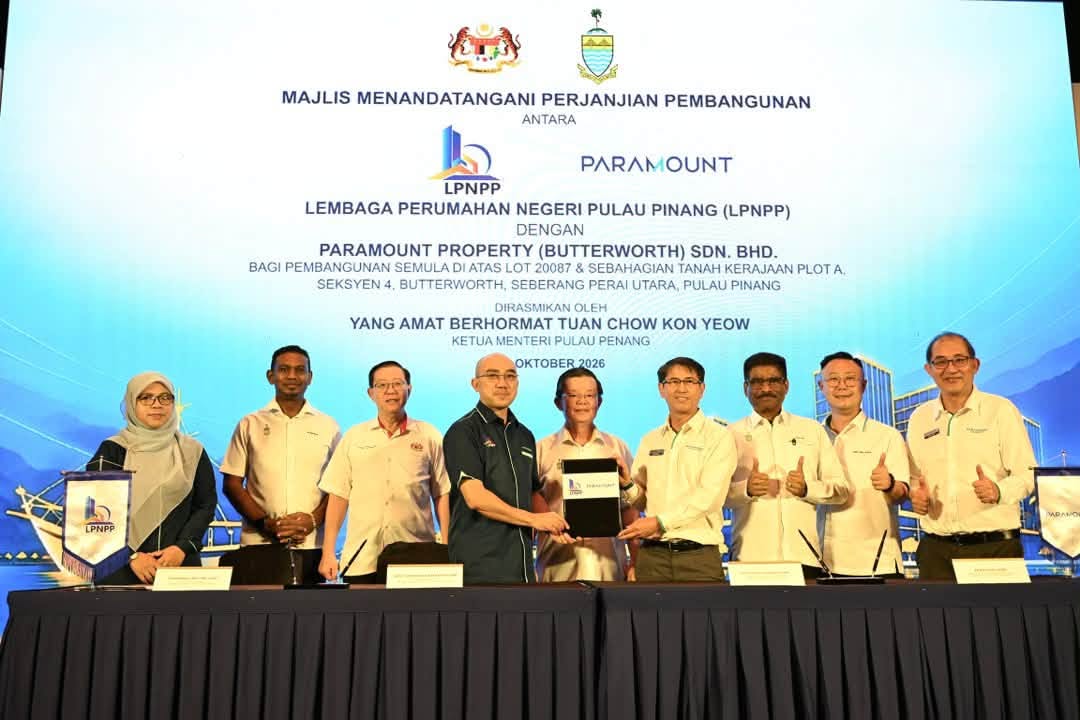
The programme was delivered in collaboration with REHDA Youth leaders and supported by corporate partners from across Malaysia’s wider built environment ecosystem, beyond property development alone, including Sime Darby Property, Paramount Property, Avaland, Feruni Ceramiche, FAR Capital and Progressture Solar, reflecting industry wide commitment to strengthening graduate readiness and talent development.

The mentorship initiative forms part of REHDA Institute’s broader effort to strengthen early industry exposure for university students and support smoother transitions from campus to employment within Malaysia’s built-environment sector. Moving forward, REHDA Institute aims to position RIYI as an annual national level programme and gradually scale participation to benefit more universities and students nationwide.

MBPP eases heritage residential-to-commercial conversions

Property News/ 25 April 2026 No comments

George Town

Property owners within the George Town UNESCO World Heritage Site will soon enjoy a faster and more streamlined pathway to convert residential properties into shophouses.

The Penang Island City Council (MBPP) has approved a new guideline, effective May 1, removing the need for planning permission (kebenaran merancang) for selected change-of-use applications within the heritage zone. Instead, owners are only required to submit building plans, a move expected to cut the approval process by six to nine months.

According to MBPP mayor Rajendran P. Anthony, the revision is aimed at facilitating property owners while reducing procedural delays and compliance costs. The guideline applies to both pre-war and post-war buildings that contribute to the heritage value of George Town, including those of Early Penang and Straits Eclectic architectural styles.

Under the new rules, terrace houses may be converted into shophouses, with commercial use restricted to the ground floor and upper levels retained for residential purposes. While minor additions are allowed, these must remain within the existing building footprint, with no increase in building height permitted in order to preserve the historical streetscape.

Parking requirements remain in place, although developers can opt to pay a contribution in lieu, set at RM25,000 per car bay and RM2,500 per motorcycle bay. A separate conversion charge of RM100 per sq m will also apply for residential-to-commercial use.

The revised guideline replaces previous provisions, balancing improved efficiency with continued safeguards to protect the site’s Outstanding Universal Value.

Separately, MBPP also received the UNESCO Asia-Pacific Award for Cultural Heritage Conservation for the Esplanade Seawall and Promenade project, recognised under the “New Design in Heritage Contexts” category.

SITE PROGRESS: G’Vinton (Apr 2026)

Property News/ 24 April 2026 No comments

g-vinton-site-progress-april2026-6

About G’Vinton

A serviced residence development by GSD Land in George Town. The project spans approximately 1 acre and is strategically positioned between Ambank and the NSTP building, offering convenient access to KOMTAR and Gurney Drive. The development will include 336 serviced suites, a nine-level car parking podium, and four shop offices on the ground floor. Recreational facilities will be located on level 39.

Find out more about G’Vinton

Subscribe here for updates on this project and other property news

*By submitting this Form, you hereby agree to our PDPA Consent Clause.
(This information may be used by the developer or their appointed agent to initiate follow-up communications with you on the project.)

Beach Street set for RM24.7mil green upgrade

Property News/ 23 April 2026 No comments
beach-street-artist-impression-1

An artist’s impressions of Beach Street after the project is completed

Beach Street in George Town is set to undergo a major transformation, with a climate-adaptive upgrade aimed at enhancing walkability, reducing urban heat and improving the overall streetscape within the heritage core zone. Long regarded as one of the city’s most historic commercial corridors, the area will be reconfigured to better balance modern urban needs with heritage preservation.

The RM24.7 million project is part of the Nature-Based Climate Adaptation Programme (PNBCAP), jointly implemented by the Penang Island City Council with funding support from the World Bank Adaptation Fund. Covering a 1.76km loop that includes Beach Street, Church Street Ghaut and Victoria Street, the project commenced in September last year and is scheduled for completion by December. Progress has reached approximately 30% as of late March, with works carried out in phases to minimise disruption to traffic and business activities.

A key focus of the initiative is to mitigate the urban heat island effect. Plans include the planting of more than 900 trees, alongside the introduction of green corridors, pocket parks and permeable surfaces to improve drainage and reduce surface temperatures. These measures are expected to enhance thermal comfort while contributing to better air quality and flood management within the heritage zone.

The project also places strong emphasis on pedestrian-friendly infrastructure. Wider walkways, shaded paths and barrier-free features such as ramps, tactile paving and seating areas will be incorporated to improve accessibility for all users. At the same time, roadside parking will be reduced from 293 bays to about 150, with selected spaces converted into landscaped areas.

While initial concerns were raised about potential impacts on the street’s historic character, authorities have indicated that strict safeguards are in place to protect key heritage assets, including the Queen Victoria Memorial Clock Tower. The existing roundabout in front of the landmark will be transformed into a pocket park, in line with conservation guidelines under the George Town UNESCO World Heritage Site Special Area Plan.

In addition to landscaping improvements, sustainability features such as solar-powered street lighting and environmental sensors will be introduced to monitor temperature, humidity and air quality. These measures will allow for post-completion evaluation of the project’s effectiveness and inform future climate-adaptive initiatives.

From a broader perspective, the upgrade is expected to support local businesses by improving accessibility, enhancing the streetscape and encouraging greater pedestrian activity. As the project progresses, it is also seen as a potential model for similar urban interventions across Penang, reinforcing efforts to create a more resilient, liveable and environmentally responsive city.

(Image: The Star)