fbpx

Delima Emas Condominium – Official Launch (19 April)

Property News/ 14 April 2014 No comments

THE PROJECT

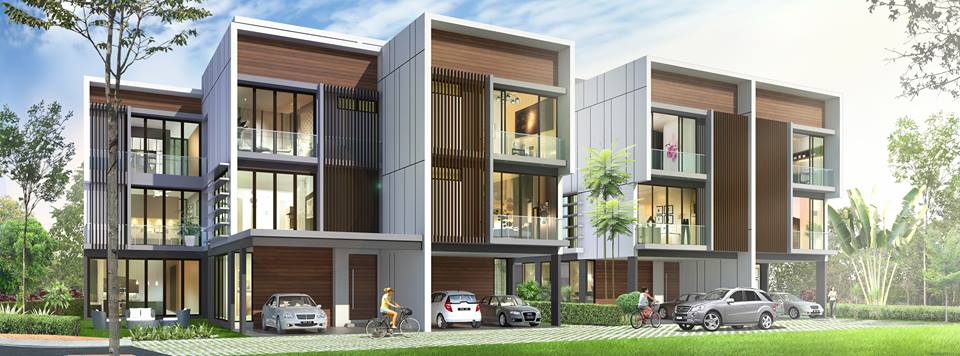
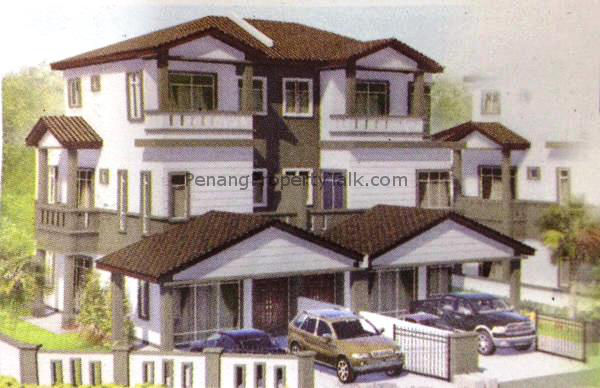
Developer E.W. & Associates Sdn. Bhd., having successfully completed some 1,200 units of affordable residential units at Taman Seri Delima launch yet another affordable housing project. This latest launch consists 198 of condominium units – Condo Delima Emas – covering 2 tower blocks that is annexed to a seperate car park building. All condo units have a minium of 3 bedrooms with layout ranging from 1,170 sq.ft. to 1,640 sq.ft. Meeting the needs of defferent households, there are 4 seperate designs and layout starting from basic – practical and purposeful to cater for young working families – to more elaborate – for comfort living by middle income households.

Located in the mid way between the Penang Bridges, Taman Seri Delima is easily accessible to the 1st and 2nd Penang bridge. (11.5km to 1st bridge and 12.3km to the 2nd bridge). Taman Seri Delima has easy accessbility to schools, shopping and medical centres.

LOCATION AND SURROUNDING

Located strategically adjacent to the north- south highway close to the Juru Toll Plaza and the vicinity of auto city commercial cum residential centre, Taman Seri Delima has increasingly become a popular a well- planned commercial and residential area for rapidly rising income households. The development of Taman Seri Delima started some 10 years ago and now houses some 8 blocks of high rise residential buildings consisting of a total of 1200 units. It has a rapid growing commercial centre consisting of 112 of two and three storey shop offices that cater to the needs of the residents of Taman Seri Delima and the surrounding areas.

The opening of the 2nd Penang Bridge is likely to see a greater the flow of factories into the surrounding of the Juru-Batu Kawan areas to take the advantage of lower operational costs. Thus the demand for affordable homes in this vicinity is expected to increase rapidly. Taman Seri Delima being one of the more established residential and commercial centres is likely to see a further enhancement of its popularity as a convenient and affordable area for middle income households.

DEVELOPMENT AND COMPLETION

The Developer has already commenced the development and sales of units to potential buyers to avoid the increase in price to buyers arising from the introduction of GST in 2015. Expected date of completion within 30 months of Sales and Purchase Agreement.

Project Details

Location : Juru, Penang
Property Type : Apartment/Condominium
Total Units : 198
Built-up Area: 1,090 sq.ft. – 1,604 sq.ft.
Land Tenure: Freehold
Maintenance Fees: RM0.19 psf.
Indicative Price: RM350,000 onwards
Developer: E.W. & Associates Sdn. Bhd.
Contact No: 019-568 5551 (Sam)

[Sponsor Ads]

Tags:

Eco Terraces

Paya Terubong/ 10 April 2014 256 comments

eco-terraces-entrance

Eco Terraces, a gated and guarded development by EcoWorld in Paya Terubong, Penang. Located on a 12.79 acres landscaped ground, with only 30% of the land used for development. It comprises 333 condominium units with sizes ranging from 1,095 sq.ft. – 2,008 sq.ft.

Eco Terraces’ clubhouse boasts comprehensive services including wellness, childcare and concierge. The clubhouse has a care hub that offers 24/7 nurse-on-call service and monthly doctor consultation for the residents.

There is also a multi-purpose sports hall, karaoke rooms, mini theatre and golf simulation room.

All units will be furnished with the following:

  • Kitchen cabinets with top & bottom for all units
  • Hood, hod & oven for all kitchens
  • Air-cond units to all living and bedrooms
  • Mirror & vanity top with cabinet for each bathroom
  • Shower screen for master bathroom
  • Water heater with storage tank for all bathrooms
  • Wardrobes-fully fitted carcass with sliding doors for each bedroom
  • Digital lockset at main door for all units
  • Metal grille door for all units

Property Project : Eco Terraces
Location : Paya Terubong, Penang
Property Type : Condominium
No. of Storey: 33
Total Units: 333
Built-up Area: 1,095 sq.ft. – 2,008 sq.ft.
Tenure : Freehold
Indicative Price: RM900,000 onwards / ~RM850 psf
Developer : Eco World Development

Register your interest here

*By submitting this Form, you hereby agree to our PDPA Consent Clause.
(This information may be used by the developer or their appointed agent to initiate follow-up communications with you on the project.)

Location Map:

Image Gallery
Tags:

Goods & Services Tax and the Property Investor

Property News/ 9 April 2014 No comments

* Article by Richard Oon *

While presenting the recent Budget 2014, Prime Minister Datuk Seri Najib Razak announced the introduction of the Goods and Services Tax (GST) and when enacted, GST will be effective from 1 April 2015 and standard rated supplies will be subject to GST at a rate of 6%. With the introduction of GST, the current indirect taxation systems of sales tax and service tax will be abolished on the same date.

What is GST?

GST which is also known as the ‘value added tax’ (VAT) in many countries, is a multi-stage consumption tax on goods and services, which ultimately falls on the final consumer.GST is levied on the supply of goods and services at each stage of the supply chain from the supplier up to the retail stage of the distribution. Even though GST is imposed at each level of the supply chain, there is no compounding tax effect, regardless of the number of stages a product or service undergoes in the supply chain, as GST is only charged on the value added element at each stage in the supply chain. This is achieved through net of ‘output tax’ (the GST on the goods and services sold by you) minus ‘input tax’ (the GST you paid on the raw materials, equipment and services used in your business) mechanism adopted under the GST administrative process.

GST is a broad-based consumption tax covering all sectors of the economy i.e all goods and services made in Malaysia including imports except specific goods and services which are categorized under zero rated supply and exempt supply orders as determined by the Minister of Finance and published in the Gazette.

GST will be charged on any supply of goods and services if the following conditions are satisfied:

  1. it is made in Malaysia;
  2. it is a taxable supply of goods or services;
  3. it is made by a taxable person; and
  4. it is made in the course or furtherance of any business carried on by that taxable person.

A taxable supply is a supply which is standard rated (6% under current proposals) or zero rated, whereas exempt and out of scope supplies are not taxable supplies. GST can only be levied and charged if the business is registered under GST. A business is not liable to be registered if its annual turnover of taxable supplies does not reach the proposed prescribed threshold of RM500,000. Therefore, such businesses cannot charge and collect GST on the supply of goods and services made to their customers. Nevertheless, businesses can apply to be registered voluntarily.

So how will GST implementation impact property prices?

Properties from the primary and secondary markets will be treated differently when it comes to GST implementation. Even though it has been proposed that residential properties are deemed to be exempt supplies (ie. the developer cannot charge housebuyers GST), you will realise that the developers will still be subject to GST on the construction materials and supply of various services. As the developers will have to pay for the input tax (ie. GST) on those construction materials and other services, they are unable to claim output tax as GST is not imposed on residential properties. Consequently, the GST element of the costs of construction would eventually be passed on to the housebuyers. In the case of commercial properties, the developers will have the relief of claiming GST incurred as input tax as they are able to charge output tax (GST) on the buyers. In the case of a mixed development of both residential and commercial properties by a developer, the proportion of GST incurred in relation to the construction of residential properties cannot be passed on and absorbed by the construction of commercial properties either.

Some may argue that cost of construction may instead reduce, considering that the rate of sales tax in Malaysia which is currently 10%, will be abolished and replaced by the 6% GST come 1 April 2015 and this would in fact translate into some savings on the cost of construction materials. However, it would be worthy to note that pursuant to the Sales Tax (Rates of Tax No. 2) Order 2012, the sales tax rate on most building materials enjoy a preferential sales tax rate of either 0% or 5% as at 31 December 2013. So in fact, the tax element of construction materials would in reality, increase!

How about sub-sale properties?

Post-GST implementation, there will be no GST implications when you buy or sell a residential property from or to the secondary market, as it is an exempt supply.

So the question is how should we position ourselves as a property investor with this latest development and how can we take advantage of the pre and post GST implementation?

For those who like to know more, I have been invited to share about the impact of GST to the property market in Penang on 19th April 2014. I will be sharing in more details about what it means to you as a property investor and property owner. At the same time, I will also go into details about GST in the broader sense and the introduction and implementation of tax related matters.

We are expecting a full house and as seats are limited, I would suggest that you book your seat NOW by clicking the link below:

http://www.AboutPropertyInvestment.com/

Richard Oon is the National Tax Director of TY Teoh International, a member firm of the MSI Global Alliance, which is one of the world’s largest independent associations of accountancy and law firms. Richard is a member of the Malaysian Institute of Accountants (MIA), a fellow member of the Association of Chartered Certified Accountants (ACCA), a fellow member of the Chartered Tax Institute of Malaysia (CTIM) and also a Certified Financial Planner (CFP). He has more than 20 years experience in the taxation industry and holds a tax agent licence issued by the Ministry of Finance under Section 153 of the Income Tax Act 1967.

[ Sponsored Ads ]

Tags:

Y-Storey

Pulau Tikus/ 9 April 2014 8 comments

Y-Storey, a 19-storey residential building by Yeangs Sdn. Bhd. within the established township of Pulau Tikus, Penang. It is strategically located at the junction of Jalan Burmah and Jalan Bagan Jermal, comprises 90 units of SOHO, 2 & 3-bedroom apartments.  It also has an upmarket restaurant within the refurbished heritage house on the site.

Other amenities will include retail shops on the 2nd and 3rd floors and shared facilities on the podium level such as an infinity pool, gym and other common rooms.

Project Name: Y-Storey
Location :
 Pulau Tikus, Penang
Property Type : Mixed development
Total Units: 90
Land Tenure : Freehold
Developer : Yeangs Sdn. Bhd.

Register your interest here

(This information will be used to keep you updated on the project and future development.)
*By submitting this Form, you hereby agree to our PDPA Consent Clause.

Location Map:


Tags:

As we wait, properties may become harder to afford

Property News/ 8 April 2014 16 comments

by Datuk Seri Michael Yam

I recall reading a letter written to the editor of a popular daily which caught my eye. The man related the story of the advice given by his grandfather and father about getting onto the house ownership ladder as early as possible. He was a young man, a fresh graduate in the mid-70’s with a starting salary of RM900 per month. He came from a humble background and every month he had to carefully allocate his limited earnings to his ageing parents and younger siblings as well as plan for his expenditure.

With his meagre salary, he rented a place close to his place of work so that he did not need a car, ate modestly at food stalls and saved every ringgit he could. Life was no doubt rather tough in the beginning but he worked hard at his job. He built up his career and gradually moved up the corporate ladder and by then, managed to save enough to buy a small Datsun (now Nissan) for RM8,000 (with 80% loan) and also put the 10% down payment for a linked house in the outskirts of PetalingJaya priced at RM83,000. It was not near his workplace but that was all he could afford at the time.

It was a choice worth his sacrifice, the location he chose to stay has today boomed into a township and the home he bought is worth more than RM800,000. Looking back, the man made a wise decision to have his own financial planning set at an early stage and we should all learn from the young man’s experience.

Lesson number one

Choose a property that you can afford at that particular time when you are ready to purchase. The longer one waits, the higher the property price would become and the increase of such price will be higher in rate than the increase in our salaries and savings.

Wait further to try and match the original price tag, and you will find yourself chasing after the property forever and lose out on other opportunities.

Lesson number two

Be realistic in your choice of your first home. Everybody wants to buy their dream home but unless we are realistic and practical, this will remain a dream forever. While the young man in the story above is lucky enough to buy a linked house in the outskirts of Petaling Jaya during that time, it is now impossible for young new graduates to purchase a landed three-room unit in the same area. Whilst it may be prudent to plan ahead for future needs and family expansion or proximity to ageing parents and other priorities, we should be open to other affordable choices – perhaps a strata property, a studio or one bedroom unit, or a location further from the major urban centres where prices are relatively cheaper.

Eventually, when salaries have gone up and the need for bigger units is more evident, you can upgrade to a more suitable housing unit which could be partially funded by the capital gains from your initial unit. The purchase of that bigger unit may otherwise be impossible if you wait until you have accumulated enough savings and earn a high enough salary!

Lesson number three

The most important lesson to first time house buyers is to start saving for your home purchase early. Prices are not going to be cheaper in the future as development costs will continue to increase due to price hikes in land, building materials, labour, logistics, utilities and inflationary pressure which will inevitably lead to escalation in house prices. In addition, the challenge to come up with the 10% down payment, be it for purchase from the primary or secondary market, will be tremendous.

The Employees’ Provident Fund or EPF housing account II from the monthly contributions will help to a certain extent but it needs time to grow the fund and you still need to come up with the upfront payment and other acquisition costs – legal fees, stamp duties etc, so it makes sense to start planning and saving for your first house purchase as early as possible in your career, along with other plans like car purchases, getting married or starting a family.

Youths of today should have greater awareness and appreciation for the importance of saving for their future and investing in property at an early age rather than constantly changing their smart phones, buying designer goods and frequently hanging out at overpriced cafés and bistros. Buying a house definitely cannot be an afterthought that youhave not prepared yourself financially for; for some who are more fortunate, you might be able to seek help from your family members in planning for your first house purchase but for those who are not, without early and proper planning you will find that you will never have enough to buy a house of your own even later in life.

Let’s take heed of the lessons learnt from the young man’s life story. At some point in the future you may look back and be grateful that you purchased the home despite some struggles to make a living. The young man, now older and wiser is sitting on a lot of gain and equity for his next purchase for investment.

Datuk Seri Michael Yam is the president of REHDA Malaysia. Apart from managing his own consultancy firm, he is an independent director of several public-listed companies and also a global bank in Malaysia.

Source: StarProperty.my

Tags: