fbpx

Penang’s cooling measure on properties has limited effect

Property News/ 29 January 2015 No comments

Lebuh Chulia, George Town, is going through a property boom with many owners selling their pre-war shoplots or raising rentals that are driving out tenants. – The Malaysian Insider pic by Hasnoor Hussain

As property owners in the city of George Town find their old buildings appreciating in value, the Penang government’s ruling to prohibit foreigners from buying landed properties on the island under RM2 million will only have a limited effect and may be counterproductive.

State local government exco Chow Kon Yeow said the level of effectiveness of the cooling measure, which was introduced last year to curb speculation in Penang’s property market, was questionable when some foreigner buyers still found prices above RM2 million attractive.

“If a building owner wants to sell his property to a foreigner, he can up the price from RM1.9 million to RM2.5 million. That kind of price is still considered cheap to buyers from countries like Singapore and Hong Kong.

“In that way, such a cooling measure may not be so effective, and may even result in the opposite by boosting property prices when local owners find that their properties have higher values if they sell to foreigners,” he said, adding that Malaysia was not like Thailand, where there was control on foreign ownership of properties.

Such a situation may be a problem in George Town, where the Unesco world heritage site is located, if owners of pre-war buildings sold off their premises to foreign buyers or increased their rental.

Chow said rental rates went up after the Rent Control Act was repealed in 1997, but some residents and businesses in the city managed to survive.

He admitted that some tenants were in for another wave of rental hikes and evictions resulting from the property boom in recent years, which encouraged property owners in the city to increase their rental or sell off their premises for profit.

“It is very difficult for the state government to control property transactions.”

In recent years, the city had also seen many of its old buildings refurbished and converted into hotels and chic cafes either by their original or new owners, or tenants, to attract tourists.

The latest of such projects is at Lebuh Chulia, where the owner of a row of shophouses is evicting her tenants by April 1 to refurbish the lots into a hotel. Some of the tenants, including a chemical supplier and a machine workshop, have been there for more than 50 years.

Some concerned citizens are seeing these new tourism and commercial-driven developments as a threat to the city’s remaining residents, old trades and businesses that give George Town its unique culture, character and charm.

In some cases, the evictions spell an end to the businesses and trades all together because the tenants could not find a new place in the city to set up shop because of high rental rates.

Although some of the trades are considered part of the city’s heritage, there is no law to protect intangible heritage.

Chow, whose state constituency of Padang Kota is partly made up of the world heritage site and its tangible and intangible heritage, said the state government was looking to the soon-to-be gazetted Special Area Plan (SAP) for the Unesco world heritage site as a preventive measure.

He said once the SAP was gazetted, all future applications for planning permission and others would have to conform to the type of activities prescribed for a particular area in the heritage site.

He said the heritage city would be divided into various precincts, and the land used for the different precincts restricted to certain types of activities.

“Any particular activity will have to conform to the plan, which will also ensure that there will not be too many of the same activity going on.

“The control the state can exercise to try to balance progress and heritage conservation in the heritage city is at the planning and development stages, using the SAP,” he said, adding that the plan will hopefully be gazetted this year after its Bahasa Melayu translation is completed.

The long-awaited SAP will guide and control development within the George Town World Heritage site, which has more than 90 Category 1 heritage buildings (monuments, ancient buildings gazetted under the National Heritage Act 2005 and formerly the Antiquities Act 1976) and more than 4,000 Category 2 buildings of special interest that need to be preserved.

The plan, which takes into account the existing characteristics of the different areas in the heritage city, covers seven different building and land use activity zones, including tourism and leisure, trade, waterfront and jetty.

Source: The Malaysian Insider

Tags:

Penang to see spurt in housing sales pre-GST

Property News/ 28 January 2015 5 comments

Michael Geh

Real estate agents see a spurt in property activity in Penang in the first quarter of this year, spurred by an urgency to get deals closed ahead of the implementation of the goods and services tax (GST) on April 1.

Raine & Horne Penang director Michael Geh said the uncertainty over the impact the consumption tax will have on property prices may lead to a flurry of investment activity in the state’s property sector.

He is of the view that many property investors will get caught in the “herd mentality” of buying properties pre-GST on concerns that property prices will rise an additional 6% under the new tax regime.

“People are psychologically affected by the GST even though it is understood that the sale and purchase of residential property is not subject to GST. However, the general view is that there would be GST impact on building material and labour costs, which inevitably give rise to higher property prices,” he told The Edge Financial Daily.

Conversely, the owner-occupier segment of the Penang housing market is likely to be sluggish given the tighter lending conditions.

“While there are many genuine homebuyers wanting to buy properties, they are not able to secure loans as housing prices have surged beyond [the average] person’s reach,” Geh said.

He noted that these homebuyers are holding out for more affordable properties built by the federal and state governments, as well as private developers.

On the developers’ front, Geh said: “Many developers in Penang are feeling the pinch [with rising costs] as they have to pay higher infrastructure development charges, conversion fees and drainage contribution.”

The Penang government increased the drainage contribution from RM15,000 to RM50,000 from January last year. This was in addition to infrastructure development charges, introduced in 2012, which were set at RM15 per sq ft for residential projects and RM21 per sq ft for commercial projects.

Geh also said Penang’s secondary residential market, which accounts for a 70% share of the property market, remains active and stable compared with the primary market.

In 2013, the state’s secondary market recorded RM5.89 billion in turnover from the sale of 14,950 units compared with the primary market, which totalled RM1.21 billion from the sale of 2,750 units.

According to the National Property Information Centre, in the first half of 2014 (1H14), the number of transactions for residential units in Penang stood at 9,023, out of the total number of transactions for all properties of 12,929. The sales value of the residential units was RM3.76 billion, which represented the largest portion of the Penang property market’s total sales value of RM7.2 billion in 1H14.

Real Estate Housing Developers’ Association (Rehda) Penang chapter chairman Datuk Jerry Chan said the drainage contribution, infrastructure development charges, a default compensation for non-provision for each low and low-medium cost housing unit and the re-zoning fee imposed in the state are the highest in the country.

He noted that Penang-based developers are finding it difficult to fork out RM120,000 for each low-cost housing unit they choose not to build in their projects on the island as well as non-Penang developers who are compelled to pay RM150,000 per unit.

“On the mainland, if a developer does not fulfil the low-cost quota, it is required to pay between RM50,000 and RM72,500. Nowhere in Malaysia are such charges imposed. Therefore, these costs get passed on to homebuyers,” Chan told a media briefing on Dec 3, 2014.

He sees property prices in Penang increasing by between 3% and 15% once the GST comes into play.

Ivory Properties Group Bhd chief executive officer Datuk Low Eng Hock told The Edge Financial Daily that the introduction of GST will definitely hit the construction sector.

“When construction cost goes up, it will also affect the price of properties in Penang since they are interrelated. For that, we are looking at about 3% to 4% increase in the state’s property prices following the implementation of GST.

“We also foresee that the property market in Penang will soften slightly this year due to difficulty for some purchasers in obtaining housing loans,” he said.

However, Low said despite land scarcity, factors such as Penang’s transformation to an international city, infrastructure upgrading and Penang being a preferred destination for retirees would neutralise the situation.

“Based on these factors and with scarcity of land on Penang island, we remain positive on the property outlook for next year and opine that properties priced between RM700 per sq ft and RM1,000 per sq ft will continue to be in demand,” he said.

Source: The Edge Markets

Tags:

TRI Pinnacle – 2nd Car Park Is Optional!

Property News/ 27 January 2015 No comments

* UPDATE: Aspen Group has now clarified that the 2nd car park is OPTIONAL! Please visit their facebook page for more details.

Recently the discussion in TRI Pinnacle has caught my attention and it seems that some affordable home buyers are being asked to buy a second car park that cost between RM30,000 and RM50,000. A car park that cost up to 15% of the actual affordable unit price? This sounds like an affordable housing with unaffordable car park. If this is a misunderstanding, I think the developer should clarify.

[ Read more about this project… ]

Here are the most recent comments about this project:

By: peaceful

The problem is not about having religion places, the problem is the excessive volume affecting the neighborhood...

By: phorlanpha

The JMB chairman thinks he's very smart....now lan lan have to back down

By: kochabi

Issue at Tanjung Tokong condo resolved, says Penang police chief.

By: mofaz

"Any new projects lately have requirements to have a Surau in the property." Surau requirement and Non Muslim House of Worship have always been a statutory requirement of any residential or commercial projects through out Malaysia. Not "lately".

By: MajorArches

<a href="#comment-1060718" rel="nofollow">@jack </a> From the viral video is because of the Surau prayers, JMB also like misqouted andhave a misunderstanding. Yesterday they did have a press conference and all well. Hopefully not again and this is very sensitive thing to do and the property management should advice the JMB as well.

*** READ MORE COMMENTS ***


Tags:

AFFORDABLE: Sungai Ara / Ideal Property Group

Sungai Ara/ 26 January 2015 17 comments

* PROJECT CANCELLED *

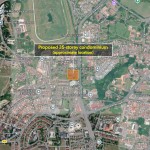
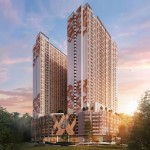
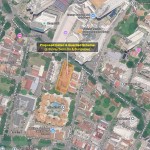
Another proposed i-Condo affordable housing development by Ideal Property Group in Sungai Ara, Penang. Strategically located along Jalan Paya Terubong, just a stone’s throw away from Golden Triangle condominium.

The affordable development comprises a 37-storey building with 802 condominium units. It is expected to be priced not more than RM400,000.

*Location and street view is estimated only. Actual location to be updated soon.*

READ MORE ABOUT AFFORDABLE HOUSING:

Property Project : (Pending)
Location : Sungai Ara, Penang
Property Type : Affordable housing & shop offices
Total Units : 802
Land Tenure: Freehold
Indicative Price: RM400,000 and below
Developer : Ideal Property Group

Register your interest here

(This information will be used to keep you updated on the project and future development.)
*By submitting this Form, you hereby agree to our PDPA Consent Clause.
Tags:

Affordable housing to drive property sector

Property News/ 26 January 2015 No comments

All eyes will be on the affordable housing segment again this year, with residential properties priced around RM500,000, expected to drive the property market due to pent up demand.

Zerin Properties CEO Previndran Singhe (pix) said the residential segment will continue to drive the property market this year, especially products priced below RM500,000 due to pent up demand from first-time home buyers as well as well-priced high-end residential properties in well-connected locations by reputable developers, particularly in Greater KL, Penang and Iskandar Malaysia.

“This is backed by the fact that about 40% of the country’s population are between the ages of 25 and 54, which is considered the house-buying age,” he told SunBiz in an interview.

Based on a study by the Real Estate and Housing Developers’ Association Malaysia (Rehda), residential property prices are expected to increase by 3% after the GST implementation, which Previndran feels is trivial, particularly for high-end properties.

“Buyers and investors who have the cash and good credit scoring should consider investing into areas and developments within close proximity to upcoming Mass Rapid Transit (MRT) and Light Rail Transit (LRT) stations, which will offer good capital appreciation and rental returns,” he said.

Areas to watch out for within Greater KL are developments within proximity to MRT stations, LRT 3 stations and new highways namely Damansara-Shah Alam Expressway (DASH), Sungai Besi-Ulu Kelang Elevated Expressway (SUKE), the proposed Kinrara-Damansara Expressway (KIDEX) as well as the KL Monorail extension.

“Places to invest in would be Sungai Buloh, Kota Damansara, Taman Tun Dr Ismail, Damansara Heights, Kajang, Cheras, Old Klang Road (near KL Monorail extension) and Bandar Utama, Shah Alam and Klang (proximity to LRT 3 stations),” he said.

He also highlighted areas such as Bangsar, Medan Damansara and Taman Seputeh for landed and well-priced condominiums; KLCC and Mont’ Kiara for well-priced condominiums in well-managed developments; as well as Malacca, Penang, Medini Iskandar and Kota Kinabalu for long-term investment.

Meanwhile, the industrial segment is expected to register positive growth this year due to the growing demand in recent years for high quality industrial parks while commercial office space is expected to remain stable despite sliding crude oil prices.

“New green buildings in prime locations will perform well with strong demand from multinational companies,” said Previndran.

Raine & Horne International executive director Lim Lian Hong said 2015 will be a challenging year for property developers due to the lack of purchasers, who will be affected by difficulties in getting loans as a result of the credit limits set by the banks.

In terms of the residential segment, which is zero-rated, Lim said the focus will be on affordable housing especially those priced about RM500,000 while industrial properties will continue to perform well, driven by the government’s effort in encouraging investors into the country for manufacturing and processing of materials.

“The commercial segment will be mixed while the retail segment will see a number of new shopping centres coming up around Petaling Jaya and other parts of Kuala Lumpur, which will contribute to a huge supply. This will drive rental rates down, while some older shopping centres will be hit,” he told SunBiz.

Meanwhile, the supply in office space is increasing and there will be challenges in terms of rental rates and occupancy rates.

“As for hotels, the four- and five-star hotels will continue to do well as they have the lowest room rates in this region, whilst the business class and three-star hotels are being challenged by the new class of budget hotels located in shoplots and smaller premises,” he added.

Looking back at 2014, Lim said the property market had cooled down quite effectively due to measures taken in Budget 2013 and initiatives taken by the central bank.

“Sales are down in both the primary and secondary markets although some developers still recorded good sales like Kajang Hill and Semenyih. Memorable events in 2014 include the land deals along Jalan Ampang, which were done at RM3,000 per square foot even though the market seemed to have cooled down,” he said.

Over in Johor, KGV-Lambert Smith Hampton (Johor) Sdn Bhd executive director Samuel Tan (pix) said 2015 will be even more challenging with the macro-economy expected to slowdown due to the reduced income from the country’s main exports, petrol and commodities.

“The completion and soon-to-be completed supply of new properties especially service apartments will be a challenge. There will be a need to occupy the units whether for rental, owner-occupation or as a second home. The toll hikes and implementation of Vehicle Entry Permit (VEP) at both ends of the Causeway cannot come at a worse time than this. It is totally illogical to increase the cost of travelling by such a huge percentage when both countries are symbiotically dependent on one another,” he told SunBiz.

Tan said the toll hikes and VEP will be a deterrent for foreigners especially Singaporeans, to buy properties in Iskandar Malaysia (IM) and to travel daily. According to him, a high proportion of those travelling daily to Singapore work in Singapore and form a sizeable group of buyers who earn the stronger Singapore dollar.

“With this increased cost, many may opt not to invest and it will be a backlash on our market. The stronger Singapore dollar should be an opportunity for Singaporeans and Malaysians working in Singapore to buy properties here. The authorities should look into ways to encourage such investment, more so as the economy is showing signs of slowdown,” he added.

Meanwhile, the other immediate game-changer is the proposed Rapid Transit System to be connected from Thomas Line near Republic Polytechnic to Johor Baru (reportedly at Bukit Chagar).

“Once the first pile is put into the Straits, there will be another of frenzy in the market. The current congestion at both Woodlands and Second Link are major reasons why many do not want to be in IM.”

While many are preparing to buy cheap this year, Tan noted that the stratified residential segment will see a challenge with over 100,000 units already approved, of which 10,000 are already under construction.

“Landed residential will face lesser problems due to the lack of supply. However, the present high price tags in a slowdown economy does not augur well for these properties as many may want to consolidate their funds instead of committing to such big tickets. The secondary market in the residential sub-sector is expect to perform better.

“Shop offices will continue to be sought after albeit at a slower rate as prices are over RM1.3 million onwards. If investors can get a yield of some 5% to 6% per annum, I believe it is worthy of investment. Industrial properties will be attractive in SiLC, Tanjung Pelepas and Kulai areas due to better accessibility and concepts,” he said.

Source: TheSunDaily

Tags: