fbpx

Exciting year ahead for residential market

Property News/ 21 March 2015 5 comments

The new year started off on a positive note for Penang homebuyers, says Raine & Horne International Zaki +Partners director Michael Geh. Since the state government announced specific guidelines on Sept 13 last year to encourage the building of affordable houses, there has been “greater advocacy” and more approvals of such projects, Geh says in presenting The Edge/Raine & Horne International Zaki + Partners Penang Housing Property Monitor for 4Q2014.

The guidelines provide for three types of affordable homes: a RM200,000 unit with a built-up of 750 sq ft; RM300,000 unit of 850 sq ft; and RM400,000 house of 900 sq ft. A developer that wishes to build affordable houses will be exempted from the quota to build low or low medium cost units while development charges will be reduced to RM5 psf.

This bodes well for those looking to buy their first home in Penang, Geh says. From his research, he has found that Malaysia’s demographics is currently onion shaped, with the majority of the population within the 30-year-old range. This group, he notes, can only afford to pay for a house priced at about RM350,000.

“I have found that in the last five years, there has been immense pent-up demand for houses priced below RM350,000. This year is exciting because in the last two years, at every property exhibition, house buyers couldn’t  buy anything as the properties were priced out of their range,” he says. Sales activity for affordable housing, he adds, will grow exponentially this year.

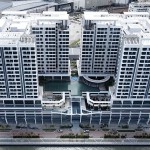
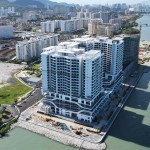
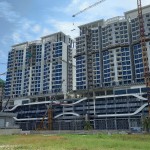
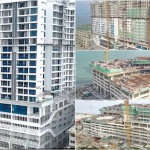
More developers in Penang are listening to the market and offering affordable houses below RM400,000. Among them is MSummit Group, which launched Ramah Pavilion, an affordable apartment project in Teluk Kumbar, on Jan 31. Ballots for the units — with built-ups of 800 to 1,355 sq ft and priced from RM198,000 to RM398,000 — were held for eligible applicants who had registered with the state government.

Another developer, Ideal Property Group, is awaiting approval to build over 5,000 units of affordable houses in the Relau/Sungai Ara areas, says Geh. There is also Aspen Group Holdings Sdn Bhd’s affordable high-rise project Tri Pinnacle, in Mount Erskine, Tanjung Tokong.

It’s not only developers that have been provided plenty of incentives to jump on the bandwagon, landowners too are encouraged to develop affordable homes on their land, says Geh. As a result, moving forward, he believes the affordable house market will stay active.

Meanwhile, Geh highlights some hot spots for home owners to consider, among them, inner city George Town, within the Unesco Heritage Zone. Others include Bayan Lepas, including Bayan Baru, which is near the Penang International Airport, as well as Tanjung Tokong, which is within the vicinity of E&O Bhd ’s Sri Tanjung Pinang development. On the mainland, Batu Kawan is popular thanks to its proximity to the Sultan Abdul Halim Muadzam Shah Bridge, or second Penang Bridge.

Market activity is mostly driven by domestic demand, says Geh. Moreover, many Penangites who are working abroad are buying homes in the state.

While the affordable housing sector is going strong, the same cannot be said for other property types. The Malaysian Insider had reported on Feb 12 that developers are feeling the pinch as state contributions have been increased. “[House] prices are still up due to rising costs faced by developers,” Real Estate Housing and Developers’ Association (Rehda) Penang chairman Datuk Jerry Chan had said in a press conference.

State infrastructure contributions have been raised of late. For instance, developers need to pay RM15 psf on the gross development area prior to development, while drainage contribution and conversion fee amounts have increased by 100% since 2013, Geh notes.

However, he believes that “the market should be allowed to work itself out as the Penang property market is undergoing many changes at the moment”.

Geh sees the positive outlook for the last quarter of 2014 following through to the new year. “I saw optimism in the market as affordable housing projects were approved [in 4Q] and this year, they will be sold. This is a marked difference from all other quarters of 2014, where there was negativity and hopelessness in the air as house prices were simply beyond homebuyers’ purchasing range.”

House price breakdown

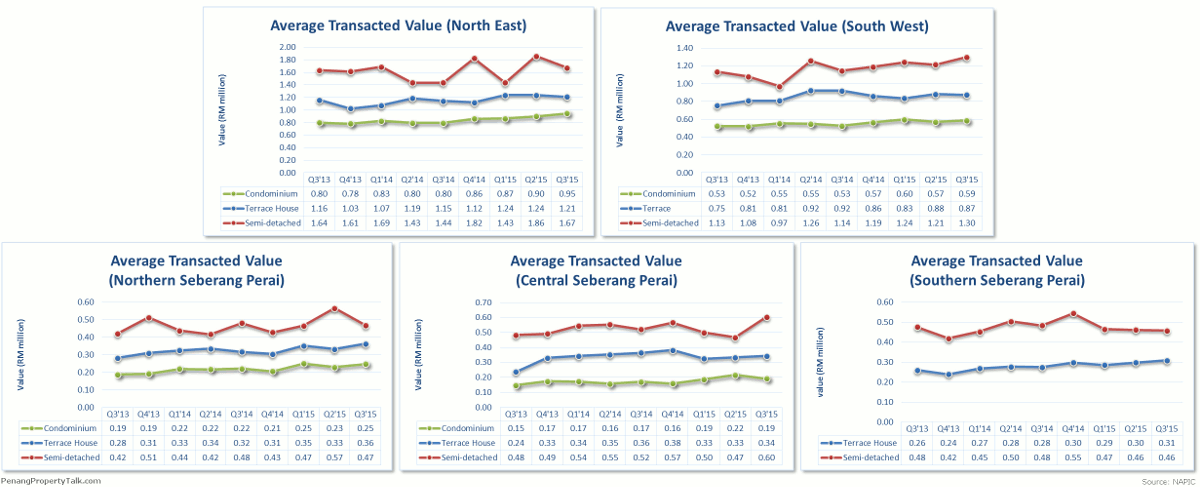
While areas surveyed in the monitor shows prices have risen from a year ago, Geh notes that they are plateauing now. He believes sales activities will slow, with a slight rise for premium houses priced above RM700,000.

The average price of 1-storey terraced houses in Seberang Perai Tengah on the mainland gained 20%, rising to RM200,000 from RM160,000 year on year, while on the island, houses in Green Lane and Jelutong rose 16.67% to RM780,000 from RM650,000.

For this house type, every area surveyed showed no price growth quarter-on-quarter except for the mainland. In Seberang Perai Tengah, prices rose 10% from RM180,000, Seberang Perai Selatan saw a 6.25% increase to RM160,000 from RM150,000, and Seberang Perai Utara, a jump of 5.56% to RM180,000 from RM170,000.

For 2-storey terraced houses, Seberang Perai Selatan gained 21.43% y-o-y to RM280,000 from RM220,000. The next highest gainer was Sungai Nibong, where homes rose 20% to RM1.1 million from RM880,000, followed by Sungai Ara, up 16.67% to RM900,000 from RM750,000. Q-o-q, most areas saw modest gains. In Seberang Perai Selatan, prices rose 10.71% from RM250,000, followed by Sungai Nibong with a 9.09% increase from RM1 million.

As for 2-storey semi-detached houses, the top gainers y-o-y were Island Park houses, which rose 14% to RM2 million from RM1.72 million. Sungai Ara homes posted a increase of 11.11% to RM1.35 million from RM1.2 million. Houses in Minden Heights rose 10% to RM1.5 million from RM1.35 million. Q-o-q, all houses in this category showed no change or modest price growth.

Moving on to 2-storey detached houses, the biggest gainers were Island Glades and Green Lane with both seeing a rise of 28.57%. In Island Glades, prices rose to RM2.8 million from RM2 million, while Green Lane units hit RM3.5 million from RM2.5 million. In Minden Heights, prices were up 20% to RM3.5 million from RM2.8 million. Q-o-q, only houses in Tanjung Tokong (12.5%) and Minden Heights (5.71%) showed price growth.

In the 3-bedroom flat sector, units in Relau rose 15.38% to RM260,000 from RM220,000. Other areas seeing price growth were Bandar Baru Air Itam (5.26%) and Green Lane (3.13%). Other areas remained unchanged. Q-o-q, only flats in Bandar Baru Air Itam (5.26%) and Relau (3.85%) saw a slight increase while others showed no change.

For 3-bedroom condominiums, all areas surveyed showed price growth. Units in Tanjung Tokong advanced the most, by 22.41% to RM580,000 from RM450,000. In Pulau Tikus, prices rose 17.24% to RM580,000 from RM480,000, while in Tanjung Bungah, prices shot up 16.67% to RM600,000 from RM500,000. Q-o-q, some areas showed modest growth while others remained unchanged.

In the rental market, flats and condomiuns saw no change in rental rates y-o-y and q-o-q. Other property types revealed varied results, with some areas showing marginal growth while other remained unchanged.

Geh says it is currently a tenants market as there is enough choice for renters to be selective. Furthermore, yields have dropped because market values have risen.

The Penang residential property market looks to get a boost thanks to the affordable house supply that will come onto the market in a few years. How this will change the property landscape is yet to be seen but for now, the pent-up housing demands of young Malaysians is finding an outlet.

Source: TheEdgeMarkets.com

Tags:

More moves to curb housing loans seen

Property News/ 21 March 2015 No comments

Wong: ‘Residential property loan growth will moderate this year.’

More selective measures on loans to the property sector, among others aimed at curbing speculation, could be in the pipeline judging from the strong lending to the industry and continued elevated home prices, according to analysts.

Analysts contacted tell StarBizWeek that the property measures will not be hard measures but more likely be selective and macro prudential-based, which could be introduced in the near term due to higher total exposure of financial institutions to the property sector.

Hard measures include those relating to real property gains tax and loan-to-value (LTV) ratio for property purchases.

Based on Bank Negara’s Financial Stability and Payment Systems Report 2014 total exposures of financial institutions to the property sector amounted to RM628.5bil or 23% (2013: 21.9%) of total financial system assets as at end-2014. Financial institutions here includes banks, development and selected non-bank financial institutions and insurers as well as takaful operators.

Bank exposures alone accounted for the bulk (95.4%) of this, with property-related financing and private debt securities (PDS) held by banks increasing slightly during the year to 26.6% (2013: 25.4%) of total assets of the banking system.

About 65% of bank exposures to property is concentrated in the residential property end-financing market, while end-financing for the purchase of land and commercial properties make up about 30% of total property-related exposures.

Total property loans ( residential and non-residential) as at January (2015) makes up 42% of banking system loans.

Some of the macro prudential measures to curb speculation in the property sector, analysts say, could be in the form of higher tax on non-owners of properties or homes occupied by non-owners as oppose to genuine owners of properties as practised in Singapore and the standardisation of the minimum price of property that can be bought by foreigners – which is at RM1mil currently – to all states in the country.

Malaysian Rating Corp Bhd (MARC) chief economist Nor Zahidi Alias agrees there is a possibility that macro prudential measures to curb speculation in the property sector could be unveiled in the near terms in view of the high total exposure of financial institutions to the property sector.

“Total exposure of financial institutions to the sector contined to climb to 23% of total financial system assets in 2014 from 21.9% in 2013.”

At the same time, he adds, home prices continued to remain elevated, estimated at 6.6 times of household median income.

“We foresee that more selective measures are likely to be introduced by the the central bank to ensure softer property loan growth in the near and medium term, although weaker economic growth in itself will reduce borrowers’ appetite for debt accumulation this year.

“In addition, souring business and consumer sentiment will also lead to stricter lending standards going forward,’’ he notes.

DBS Group Research analyst Lim Sue Lin says the research house will not discount the possibility of further measures for property lending.

“Take Singapore’s case for example. It took two years before the effect was seen in the sector.

“The republic abolished the Interest Absorption Scheme (IAS) – which is similar to the developers interest bearing schemes (DIBs) – in 2009 to curb speculation, but the impact was muted due to robust demand for properties and low interest rates in the country.

“It took Singapore two years to see a moderation in mortgage growth from a peak of 23% in August 2010 to 16% in September 2012, and finally 12% in September 2013. The first loan-to-value (LTV) ratio tightening measure there was introduced in February 2010,’’ she said in an email reply.

At the same time, Lim and other analysts say there is a need to monitor the applications and approvals for mortgages.

Among some of the broad cooling measures which had been introduced by Bank Negara for the property sector is the 70% LTV cap on a borrower’s third and subsequent property-financing facility, lowering of the maximum tenure for property loans to 35 years from 45 years, the abolition of DIBs, raising of the real property gains tax and increasing the cap on foreigners buying properties to RM1mil from RM500,000.

RAM Ratings co-head of financial institution ratings Wong Yin Ching says the rating agency does not expect further restrictions on loans to this sector in the near term with macro prudential measures on property lending gradually achieving their desired impact.

“Although residential property loans grew by a strong 13% in 2014, property loan applications were visibly lower while loan approvals were flat last year.

“This lends support to our view that residential property loan growth will moderate this year.

“These cooling measures have also significantly slowed down growth in higher-risk personal financing and credit card facilities,” she adds.

Sharing the same views as Wong, OCBC Bank (M) Bhd country chief risk officer Jeroen Thijs notes: “The intended effects of the macroprudential and fiscal measures introduced since end 2013 seem to be having an effect as the rate of growth in the housing price index has slowed down markedly.

“As such, we do not anticipate the central bank will introduce any additional measures in the short term.”

On the rising household debt to GDP in Malaysia at 87.9% last year (2013: 86.7%), Wong says while she acknowledges Malaysia’s relatively high household debt to GDP level, RAM Ratings does not expect a systemwide deterioration in household loan quality.

This ratio is expected to stay high, reflecting the fundamental demand for home and vehicle financing by the young population, she says, adding that to date, the asset-quality indicators of household loans remain benign.

Against a backdrop of low employment rate, still-healthy domestic economic growth and accommodative interest rate environment, any slippage in household credit quality is expected to be tolerable, Wong says.

Source: StarProperty.my
Tags:

REHDA: GST will raise house prices by 6.2%

Property News/ 20 March 2015 No comments

The Real Estate and Housing Developers’ Association Malaysia (Redha) expects property prices to increase by 6.2% once the Goods and Services Tax (GST) kicks in on April 1, due to certain building materials which are taxed under the regime.

Residential properties are exempt from GST.

“94% of the survey’s respondents are very worried over the GST’s impact on overall business costs”, Rehda president Datuk Seri Fateh Iskandar Mohamed Mansor said during the launch of its’ property industry survey results for the second half of 2014, adding that it is one of the key issues faced by the property sector presently.

He said the other equally important issues were financing for buyers, as well as challenges related to utility service providers and local authorities.

Among other examples indicating how serious things were, Iskandar said launches of residential and commercial units for the second half of 2014 dropped by 62.9% and 81.6% respectively, in contrast to the figures seen in the first half.

“Most distressing are first-time buyers wanting but (being) unable to purchase affordable housing,” noting that from 2013 to 2014, loan rejections over sales rose by 7%.

Iskandar said its issues with utilities service providers were on ensuring proper access to electricity, water, and sewage for their new projects.

He also observed that slow approval processes, inconsistent policies/guidelines and high development charges from the local authorities such as town councils only served to compound matters.

“The government on a state and federal level ought to engage the private sector in addressing these issues effectively, in particular to increase the purchasing power of Malaysians,” he urged.

Source: TheSunDaily.my

Tags:

Affordable Housing Roadshow – Gurney Plaza (21 March)
Property News/ 19 March 2015 No comments

For those who are interested in affordable housing projects, officers from the state housing department together with PDC will be going to Gurney Plaza this Saturday (21 March) for the ‘Mission: Home-Possible’ road-show, to showcase affordable housing projects, as well as assisting potential buyer to submit their completed application forms.

Click on the link below to find out more details about affordable housing projects in Penang. There are currently 8 projects open for registration.

>> Full list of Affordable Housing in Penang <<

Applicants are advised to bring along the following documents to facilitate their registration:

  • Photocopy of applicant’s identity card and their spouse
  • Photocopy of certificate of marriage / sijil nikah / statutory declaration of marriage
  • Photocopy of certificate of divorce or death certificate of spouse (if relevant)
  • Photocopy of children / dependents’ identity card or birth certificate
  • Confirmation letter of employer / photocopy of pay slip for both applicant and spouse
  • Employee’s Provident Fund (KWSP) statement of applicant and spouse
  • Letter of confirmation from KWSP if the applicant or spouse are not EPF contributors
  • Statutory declaration of income for applicant and spouse (for those running their own business / working on their own)
  • Photocopy of business registration certificate / trade license (for those running their own business)
  • Form B of Income Tax (for those running their own business)
  • Photocopy of OKU card (if relevant)
  • Letter of confirmation by employer confirming residence of at least 5 years in Penang

The eligibility criteria for applicants for affordable housing, are as follows:-

  • must be a Malaysian citizen
  • born in Penang, working in Penang and a registered voter in Penang; or having resided in Penang for at least 5 years as at the date of application, and a registered voter in Penang
  • 21 years old and above
  • nett household income of not more than RM2,500 for low cost units
  • nett household income of not more than RM3,500 for low medium cost units
  • nett household income of not more than RM6,000 for affordable housing units under RM200,000
  • nett household income of not more than RM8,000 for affordable housing units under RM300,000
  • nett household income of not more than RM10,000 for affordable housing units under RM400,000
  • for low and low medium cost units, the applicant must not have owned any property in Malaysia
  • for affordable housing units, the applicant will be given priority if he or she does not own any property in Malaysia but if they have owned either a low or low medium cost unit, the applicant may still be considered

Tags:

No GST on commercial unit rentals under RM500,000 a year

Property News/ 17 March 2015 No comments

The Goods and Services Tax will not be imposed on rentals of commercial units below RM500,000 a year, says Datuk Seri Najib Razak.

The prime minister said the government had also decided that supply services for all stratified residential houses would be GST-exempt.

He said under subsection 18(2) of the Goods and Services Act 2014, services for owners of low-cost and medium-cost stratified houses are GST-exempt.

“The exemption has been extended to cover all categories of stratified houses, meaning any fees imposed by management bodies and joint management bodies (JMBs) on maintenance and management including sinking fee contributions are exempted from the GST,” he said in his written reply to Ng Wei Aik (DAP-Tanjong) today.

Ng had wanted to know whether the GST would be imposed on maintenance and management fees and sinking fund contributions.

Najib, who is also Finance Minister, said the GST will apply if JMBs or management bodies make taxable supplies such as rentals on commercial units exceeding RM500,000 a year.

On Nov 28 last year, several property-related agencies submitted a petition calling for zero tax for maintenance charges, sinking fund contributions and all related contributions or charges payable.

On Jan 5 this year, the Finance Ministry agreed to extend GST exemption from low- and medium-cost properties to all stratified residential properties.

Meanwhile, Deputy Finance Minister Datuk Chua Tee Yong said false input tax credit claims would be one of the challenges for the GST, which will be implemented on April 1.

Such false claims are often faced by countries like Singapore that have introduced the GST, he told reporters after meeting representatives from the Royal Customs Department and used car and motorcycle dealer associations in Putrajaya today.

Chua said other challenges in the GST implementation include errors made by companies in their GST-compliant software and tax assessments.

“That is why the government is urging companies to register before the GST implementation to enable them to qualify for the advisory period,” he said.

On the call to postpone the GST implementation, Chua said the government had fully prepared for the implementation since October 2013, adding the new tax regime had been successfully implemented in 169 countries. Chua said used vehicle prices will go down with the approval of the Margin Scheme by the government following appeals from some 4,000 association members and used motorcycle traders.

The scheme prevents double taxation on the used goods, he said. – BERNAMA

Tags: