fbpx

Penang’s Secondary Property Market To Remain Resilient

Property News/ 2 April 2015 1 comment

Penang’s secondary property market transaction volume is expected to remain resilient with the implementation of the Goods and Services Tax (GST).

Malaysian Institute of Estate Agents (MIEA) Penang branch Chairman Mark Saw said the GST would have a minimal impact on the secondary property market, driven by high demand especially for residential properties.

He said as long as there was population growth, the demand for properties would always be there.

“There won’t be too much impact from GST in property, and in fact I believe by August, GST will be fully understood by all,” he told reporters after introducing the MIEA Youth Penang Branch here today.

He said the demand for properties in the secondary market would likely rise due to the expensive newly-launched properties.

He explained that only new house prices, even with GST exemption, would increase slightly by three to five per cent due to the GST on building materials.

However, he said the upcoming Malaysian Secondary Property Exhibition (MASPEX) Penang 2015 from Aug 13-16 at Penang Queensbay Mall would offer buyers a wider choice of secondary properties not only in Penang but also in Johor Baharu and Kuala Lumpur.

He said the four-day exhibition would showcase affordable properties ranging from RM400,000 to RM1.2 million.

“There will be over 35 booths to exhibit various residential properties including landed, condominiums, apartments, flat and also commercial properties from the three cities,” he added.

He said the exhibition was expected to attract 50,000 visitors as it would be held in a shopping mall. – Bernama

Tags:

Ewein Zenith’s mixed project in Penang gets planning consent

Property News/ 1 April 2015 13 comments

Ewein Zenith Sdn Bhd, a joint venture between Ewein Land Sdn Bhd and Consortium Zenith BUCG Sdn Bhd (CZBUCG), has received planning permission from the Penang Island City Council to go ahead and develop a mixed project on a 3.67-acre freehold land in Bandar Tanjong Pinang, Penang.

In a filing with Bursa Malaysia today, Ewein Bhd said Ewein Zenith, a 60%-owned subsidiary of Ewein Land Sdn Bhd which in turn is a wholly-owned unit of Ewein, received approval from the council on the planning permission yesterday.

CZBUCG holds the remaining 40% in Ewein Zenith.

The parcel of land, which is vested with the Penang state government, has been alienated to Ewein Zenith for the proposed mixed development on Feb 17 this year.

“The alienation of the land is partial payment for the works to be carried out by CZBUCG for the major road project and the third link tunnel project (in Penang) and it will be treated as CZBUCG’s contribution,” Ewein had told Bursa in June last year.

It forms part of the 110 acres of land in Tanjong Pinang that the Penang government is using to compensate CZBUCG for the construction, feasibility studies and detailed design work of a RM6.3 billion integrated road transport project. The project involves a 12km paired road and a 6.5km undersea tunnel linking the island and the mainland in an agreement signed on Oct 6, 2013.

“In consideration for the performance of the contract, Consortium Zenith will be given 110 acres of freehold land in Tanjong Pinang (at an approximate rate of RM1,300 per sq ft),” a circular from Ewein to shareholders in June 2014 read.

In February 2014, both Ewein Zenith and CZBUCG had signed a supplementary agreement where the former will pay RM133 million to CZBUCG for the land to be alienated to Ewein Zenith for the development of the mixed project.

Last August, CZBUCG chairman Datuk Zarul Ahmad Zulkifli was reported as saying that the second phase of the feasibility study for the RM6.3 billion Penang undersea tunnel project was on-going and the construction will commence in 2016.

CZBUCG is a special purpose vehicle formed among Zenith Construction Sdn Bhd (99.94%), Beijing Urban Construction Group Co Ltd (0.02%), Juteras Sdn Bhd (0.02%), and Sri Tinggit Sdn Bhd (0.02%).

Ewein shares closed unchanged at 49 sen today, bringing a market capitalisation of RM103.35 million.

Source: TheEdgeMarkets.com

Tags:

Book first, Regret Later

Property News/ 31 March 2015 No comments

House buyers are advised to do their homework first to avoid booking fee headaches.

A woman paid RM2,000 as deposit for an apartment to the developer without her family’s knowledge. Her parents objected because when they came to know about it because they were afraid she would be tied down by the added commitment. She wanted to know if she could cancel the booking and get a refund.

A man paid RM200 as a booking fee for an apartment unit. He later visited the site and found that the construction progress was not to his satisfaction. He went back to the developer’s office to cancel the booking and request for a refund. At first, he was verbally informed by the company’s marketing manager that a refund will be given. After waiting two weeks, he called the company again to be told that deposit would not be refunded. His argument is that since he had not signed the sale and purchase agreement (SPA), he is entitled to a refund.

A woman paid the 10% booking fee and signed the SPA for a house. She later learned that she was only eligible to secure a bank loan of 85% of the purchase price, instead of 90%. Because of that, she wished to cancel the booking. She was asked by the developer to show proof that she was not eligible to obtain a loan.

Another woman booked a unit and paid RM1,000 as the booking fee. She was supposed to come up with the remaining 10% downpayment within two weeks. However, she decided not to buy the property and wished to cancel the booking and get a full refund.

The National House Buyers Association (HBA) receives many enquiries each year from such people about their deposit problems, including some from buyers who have given up hope of seeing their deposits refunded.

In a normal conveyancing practice where the property is completed, there is a chain of events starting with an ‘offer to purchase’ together with a payment of an initial deposit. There is no fixed guideline on this, and it is up to the vendor, purchaser and their lawyers. This offer to purchase is legally binding once the offer is accepted and should one of the parties withdraw, there is a penalty involved – usually the forfeiture of the deposit or compensation in lieu thereof.

However, with the purchase of housing from plans or under construction from housing developers, there is no provision under the law for collection of booking fees. Obviously, this is confusing to potential purchasers, as there are many advertisements offering initial booking fees as low as RM1.

Collection of booking fees in whatever name is illegal. Regulation 11(2) of the Housing Development (Control & Licensing) Regulations 1989 (revamped 2002) states that: ‘No housing developer shall collect any payments except by whatever name called except as prescribed by the contract of sale.’

The statutory SPA forms – the Schedule of Payments of Purchase Price (Third Schedule of Schedules G and H) – specifies that 10% of the purchase price is to be paid immediately upon signing of the agreement. Our conclusion is that the developers must have obtained prior written consent from the Controller of Housing to be allowed to collect the booking fees.

Some creative developers than devised ways to circumvent this illegal ‘booking fees’ by getting the buyers to ‘offer to purchase’ and to accept the fees to book their units. These forms/letters provided by the developers also require the purchaser to pay the rest of the booking fees within two weeks. There is usually no cooling-off period, and purchasers are often bound by the offer letter as the monies are now in the hands of the developer.

To serious buyers, it means you do not have to provide a deposit if you have an SPA and the initial payment of 10% of the purchase price. Even after payment of 10% of the purchase price, in cases where the purchaser is unable to obtain a loan, he is able to back his deposit, albeit with a deduction of 1%. This has been provided for in the recent amendment to the contract of sales according to the Housing Development (Control & Licensing) Regulations. This only applies if the purchaser fails to obtain the loan due to his ineligibility of income and has produced proof of such ineligibility to the developer.

Purchasers in the situations above still have an avenue to seek the refunds by going to the Tribunal for Homebuyer Claims. Our advice to serious buyers is to do your homework well, such as checking the construction site and your credit eligibility, before you make any bookings to prevent any regrets.

Reference: National House Buyer Association

Disclaimer
The information contained in this pages was obtained from www.hba.org.my and sources believed to be reliable. While every effort has been made to ensure the accuracy and reliability of this material, www.hba.org.my does not guarantee the information is complete or accurate, or up to date. The information contained is for informational purposes only and should not be construed as advice on facts specific to the reader.

Tags:

Botany Bay Residence

Tanjung Bungah/ 30 March 2015 4 comments

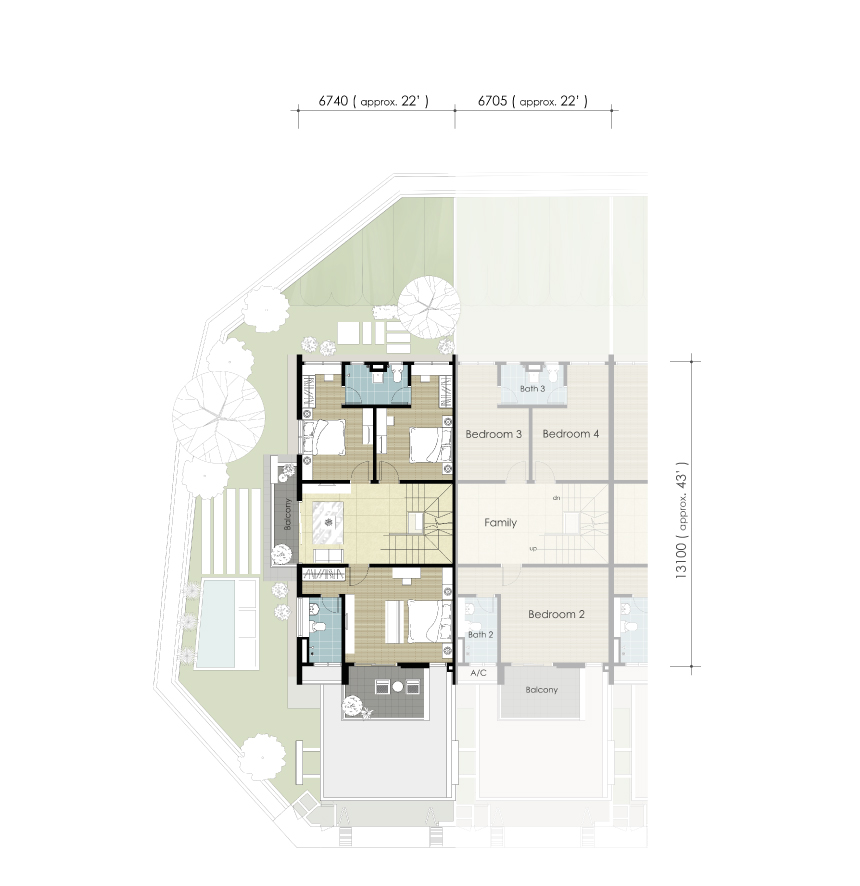
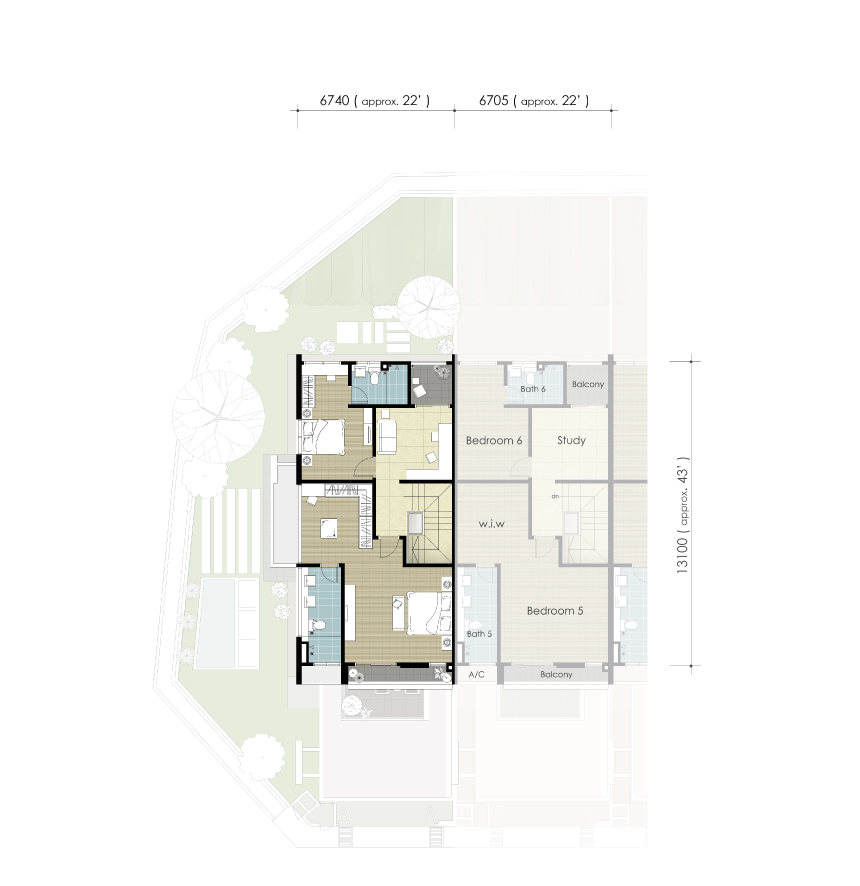
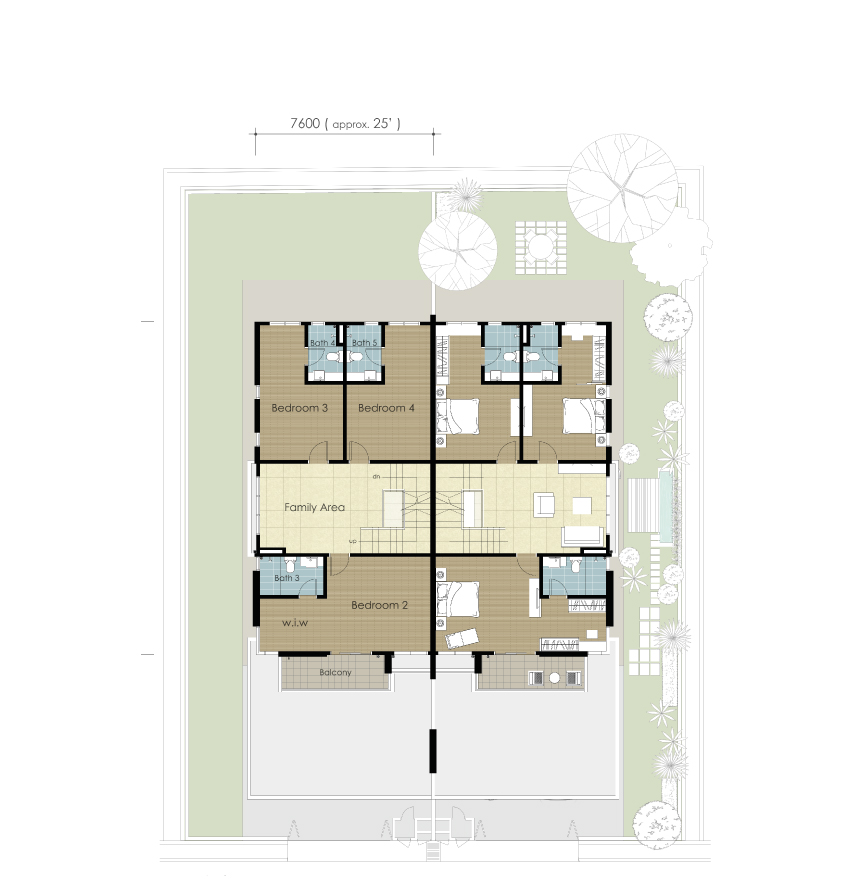
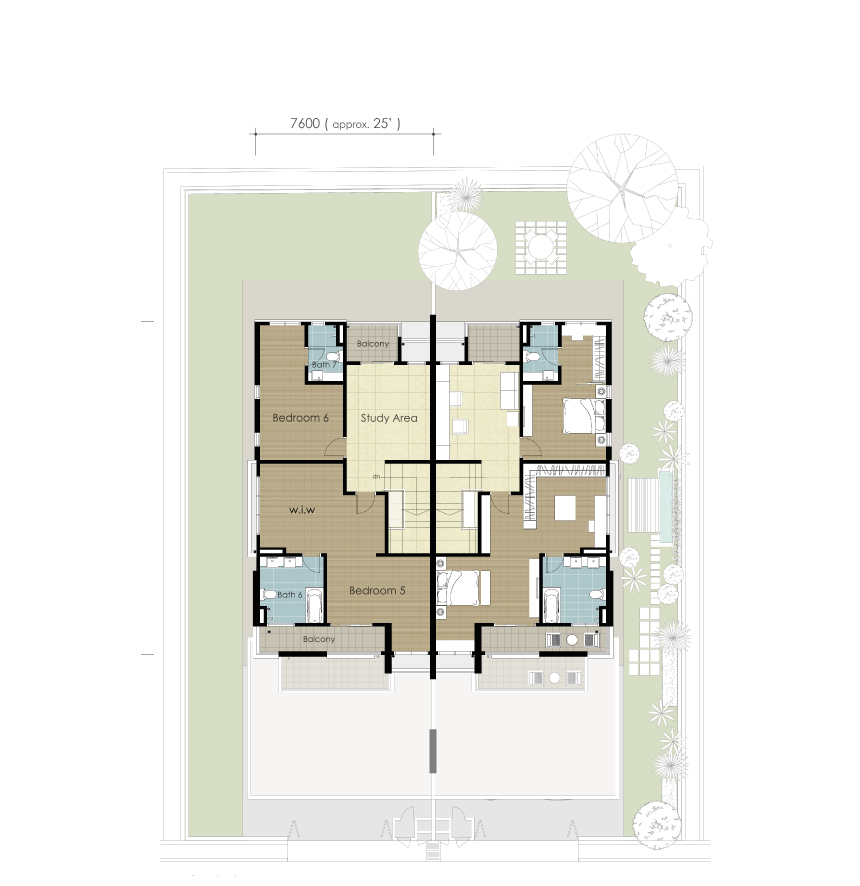
Botany Bay Residence, an upcoming luxury residential development by Blossom Acacia Sdn. Bhd. in Tanjung Bungah, Penang. It is strategically located on the hill of Tanjung Bungah overlooking the Andaman Sea.

This is a 5-storey low rise low density development with only 47 units of luxury residences. Unit size ranging from 2,760 sq.ft. onwards.

Property Project : Botany Bay Residence
Location : Tanjung Bungah, Penang
Property Type : Low rise residence
Total Units: 47
Built-up Area: 2,760 sq.ft. – 6,246 sq.ft.
Tenure: Freehold
Developer: Blossom Acacia Sdn. Bhd.

Register your interest here

(This information will be used to keep you updated on the project and future development.)
*By submitting this Form, you hereby agree to our PDPA Consent Clause.

Location Map:


Tags:

Unfair housing loan agreement

Property News/ 28 March 2015 4 comments

Most if not all house buyers will require financing to buy their dream homes. While there appears to be stiff competition among banks for market share and interest rates may be kept low, house buyers are ultimately at the mercy of banks when it comes to the detailed terms and conditions of the housing loan. (Banks in this context refers to commercial banks, Islamic banks and other financial institutions).

Unfair legal fees

When a borrower takes a housing loan, the borrower is required to execute a loan and other related agreements. This entails the borrower having to pay legal fees, the amount of which varies, depending on the loan amount – the higher the loan amount, the higher the legal fees although the complicity and level of work does not necessarily commensurate directly with the loan amount.

Although it is the borrower paying the loan lawyers’ fees, the said loan lawyer is actually acting for and on behalf of the bank. As such, the loan lawyer is not in the best position to advise the borrower if there are clauses in the loan agreement which are not in the best interest of the borrower.

In addition, in the event of any dispute between the borrower and the bank, the borrower cannot ask the loan lawyer for advice as the loan lawyer is acting for the banks.

If this is the case, then is it “fair or equitable” for the borrower to pay such legal fees when it is clear that the lawyer is actually acting for the banks? Obviously not. Hence, the bank should absorb the legal fees as the lawyers are clearly there to act for the bank and protect its interest.

Exorbitant fees for simple letters

The banking sector in Malaysia is a very tightly regulated industry. Any fees that banks intend to charge must be approved by Bank Negara. It is disheartening to note that borrowers continue to be charged exorbitant fees which seem to have the explicit blessings and consent of Bank Negara. Instances of borrowers being charged unreasonable fees for copies of redemption statement, EPF statement letter etc are common.

Allocation of monthly repayment to principal and interest

This is a story about three friends who took a housing loan (HL) of RM500,000 ten years ago. They were offered the same HL interest rate of 4.2% (base lending rate of 6.60% less 2.40%) but took different loan tenures as follows:

Albert took a 20-year HL. Eric took a 25-year HL and Jamie took a 30-year HL.

After servicing their monthly loan instalments diligently for the past 10 years, they decided to fully settle their housing loan using a combination of their EPF monies and own savings. When they asked for a redemption statement to find out what was the principal sum outstanding, they received a shock of their lives.

Albert, Eric and Jamie were under the impression as they had served 50%, 40% and 33.3% of the loan tenure, their principal sum outstanding would be RM250,000, RM300,0000 and RM333,333 respectively.

So, when their respective redemption statement showed that Albert, Eric and Jamie still owed respectively RM301,654, RM359,415 and RM396,652, they got a big shock.

So, why did they still owe so much more than what they had thought? The answer lies in the allocation of the monthly instalment towards covering the principal sum and interest charged by the bank.

In an equitable world, the monthly instalments would be allocated on a “straight line basis” to cover the principle and interest charged. Thus, a borrower who served 10 out of a 20-year HL would only owe 50% of the original loan amount.

However, the reality is that the borrower still owes 60.3% of the original loan amount.

The typical borrower will always be “penalised” for settling his loan before the maturity date. Even in the penultimate year of the original loan tenure, the actual amount outstanding is still higher than the theoretical amount, which should be the amount outstanding had the allocation of monthly instalments been done on a straight line basis.

Is it fair and equitable?

Most borrowers do not know or even understand how this allocation is calculated. Is such an allocation “fair and equitable” to the borrower? Under such circumstances, are borrowers supposed to accept that the bank’s own generated computer system has calculated the interest correctly and allocated the payments in the correct manner?

To the borrower, they have paid 10 out of a 20-year loan, he should only owe balance 50% and not 60.3%. Is this manner of allocation not just another unjust way for the bank to generate higher profits, after all the bank did receive the payments on time and in full every month. It is the dream of every borrower to be debt-free as soon as possible and it is not fair to the borrower to be penalised in such a manner when he wants to settle his loan early.

That said, borrowers have no choice but to accept the calculation of the bank as correct and final. If the borrower were to reject and not pay the required sum, the loan will not be considered as repaid in full. The borrower could even be blacklisted and even have his property auctioned off by the bank to recover the remaining sum outstanding if the borrower refuses to pay up.

It would be more transparent and equitable if the monthly payments made by the borrower are allocated in a “straight line basis” to interest and principal equally over the

tenure of the housing loan. Short of that, borrowers are at the mercy of banks.

Some banks operate like a “cartel” and standardise their fees to be charged to customers. One wonder whether such unfair practices are condoned by the regulators like Bank Negara.

It is also interesting to note that banks are exempted by the Malaysia Competition Commission allowing banks to agree and collude on unfair fees, penalties and practices to be charged to borrowers.

Unnecessary expenses

Loan agreement “printing charges” – sold between RM150 and RM350. The banks’ solicitors need to purchase a standard loan agreement from the bank (via soft copy) and adds the borrowers’ details in order to complete the loan agreement. The banks charge the lawyer and the lawyer charges the borrowers.

Standard loan agreements are now downloaded from the bank’s website or from soft copy. The bank no longer need to print them and should not charge for such documents. Alas, this has been continuing till to date.

Lopsided terms and conditions

Lopsided terms and “add-on” products are aplenty, if the borrower wants to identify with them. It would be good practice to remove or qualify the banks’ arbitrary powers.

Conclusion

The National House Buyers Association (HBA) had on Sept 4, 2014 made representation to the Finance Ministry (MOF), Bank Negara. Housing and Local Government Ministry in the presence of Association of Banks Malaysia and Islamic Banks of Malaysia in the form of slides presentation on some observations and unethical practices of some banks.

HBA is looking to work closely with MOF, Bank Negar and all related stakeholders to level the playing field for housing loan borrowers in the long-term interest of the banking industry. We had proposed to set up a working committee to resolve all unfair practices. MOF and Bank Negara have a legitimate interest in the final shape of the banking industry into operating a principled and towards a “customer friendly arena”.

Source: StarProperty.my

Tags: