fbpx

GST operational issues affecting property developers

Property News/ 12 August 2015 No comments

20140430_BLD_CONSTRUCTION. PIX BY:  LEE LAY KINProperty developers are still faced with operational issues that come with the implementation of the Goods and Services Tax (GST), after the consumption tax came into force four months ago.

In a forum to address this issues at the recently concluded Fiabci-Penang International Roundtable Property Conference 2015, Ernst & Young Tax Consultants Sdn Bhd Partner Yeoh Cheng Guan said property developers are faced with several operational issues concerning GST.

“One such issue is registration of GST with the Royal Malaysian Customs. Property developers tend to register new companies for any development to be undertaken, and usually these companies do not have any income, but when you register with Customs, you need to be able to highlight that there is taxable turnover for the company within the next 12 months,” said Yeoh.

He added that the issue arises owing to the nature of the property development business, where there is a long gestation period from the time of development to the point of sale, or when cash is received.

“Twelve months is a short period of time for property developers [to be able to justify their income projections],” he explained.

Meanwhile, property developers who have problems in registering for GST, or did not register at all would lose out on input tax credits.

“For developers of commercial developments, all input tax credits, which is the GST that was charged by suppliers, all these costs are claimable. However, the catch is if you are not registered with customs, you will not be able to claim on whatever GST costs incurred at the development stage prior to earning any income,” said Yeoh.

Another issue plaguing property developers concerns joint land development agreements (JLDA) and how to treat the GST that comes with such arrangements.

Under JLDA arrangements, land owners are handing over a right to develop the land to the property developers, and under GST law, it is considered a supply of services and is subject to GST.

“The issue that comes into play is how do you determine the absolute amount for the right to be charged, as this is something that is usually determined at the end of the project, depending on the yield generated, so what happens now [is that] there is an estimation amount charged by the land owner, and this could then potentially lead to issues of under-declaration of GST and so forth,” said Yeoh.

For residential developments which are GST exempt, the issue surfaces when there are additional fittings to the units, such as air-conditioning, heating system and automatic gate system, which are all subject to GST.

“Supply of residential properties with basic fittings is GST exempt; when there are additional fittings involved, the developer has to recognise the GST for these items as a cost of doing business [and this is where some operational issues arise],”said Yeoh.

He added that property developers need to be on their toes on GST issues, to ensure that their operations are not affected by the implementation of the consumption tax,

On the impact of GST on property prices, Yeoh said that in general, the impact would be a minimal 3%.

“Why this impact is a minimal 3% is because prior to GST implementation on April 1, 2015, developers were already subject to sales tax, and had already factored that into their developments,” said Yeoh.

Source: TheEdgeProperty.com

Tags:

UPCOMING: Bukit Mertajam / Asas Dunia Bhd.

Bukit Mertajam/ 11 August 2015 6 comments

upcoming-asas-dunia

A proposed guarded residential development by Asas Dunia Bhd. in Bukit Mertajam, Penang. It is located next to Taman Jernih, only a short drive away from Maju Jaya Business Center. Other neighbouring communities include B Garden, Taman Alma & Taman Permata.

This development comprises:

  • 3-storey bungalow (2 units)
  • 3-storey semi-detached, type A (10 units)
  • 3-storey semi-detached, type B (12 units)
  • 3-storey semi-detached, type C (20 units)
  • 2-storey semi-detached (4 units)

More details to be available upon project launch.


Property Project : (to be confirmed)
Location : Bukit Mertajam, Penang
Property Type : Residential (Guarded)
Indicative Price : (to be confirmed)
Developer Asas Dunia Bhd. 

[streetview width=”100%” height=”250px” lat=”5.345907″ lng=”100.48069800000007″ heading=”81.5326212560739″ pitch=”-0.14837149180312156″ zoom=”0″][/streetview]

Tags:

5 things you need to know about strata living in an urban community

Property News/ 11 August 2015 1 comment

gng-faqWe tend to forget the meaning of community living while climbing the career ladder to put food on the table and the kids through private school. Urban Malaysians live in private spaces, outsourcing our community responsibilities to our maids and elected representatives. In fact, we outsource everything outside our own nests, especially in the management and maintenance of apartment buildings and common property.

Given the sharp increase in the number of Malaysians now living in apartments and the popularity of gated communities, the authorities have introduced the Strata Management Act 2013 (SMA 2013), which came into effect on June 1. It replaces the piece-meal regulatory framework of before with a coherent system that takes into account lessons learnt about how Malaysians organise themselves, or fail to.

SMA 2013 provides clearer provisions on the management of all stratified residential and commercial buildings in Peninsula Malaysia. It replaces the Strata Titles Act 1985 and Building and Common Property Act 2007 on strata management, and puts higher standards of governance on the members of the residents’ management committee, as well as on all residents (owners) in the same development.

Are you an owner or tenant of an apartment or a house in a gated community? Here are five things you need to know about what SMA 2013 means for your lifestyle.

1. Pay now, or pay (lots) more later

In general, the collection of monthly maintenance charges for the upkeep of common facilities and property in the neighbourhood is a task worthy of Hercules.

SMA 2013 says you have to pay your maintenance charges and sinking-fund contribution within 14 days of being asked to in writing by the management committee. And if you don’t? You’ll be charged interest on the amount owed at 10% per annum calculated on a daily basis.

So forget about famously flexi-Malaysian time. You pay for being late. Those who pay on time should not have to subsidise (or contribute to the interest earnings) of those who do not.

2. Think you can afford to be late? Think again

And there’s more about late-payment interest in SMA 2013: it prescribes by-laws that function as the house rules or deed of mutual covenant for your development. (These can be found in the third schedule of the Strata Management (Maintenance and Management) Regulations 2015.)

In plain English, the management committee now has explicit legal authority to disable any electronic access card or transponder to deny defaulters access to common facilities, including their designated parking bays — until they pay up in full. The management committee may also charge a reactivation fee of up to RM50 for electronic access cards and put up a list of defaulters on the residents’ notice board.

3. Your destiny, in your hands: Residents can now take charge of their own affairs earlier than before

Residents (owners) can now gain control of the management of their development much earlier than previously.

This is because the developer must call for the first annual general meeting (AGM) within one month of 25% of the all share units in the development being registered to their respective owners,

After the AGM, the developer must then handover management of the development to the management committee within one month.

Stuff you might be interested to know: the statutes and regulations that govern delivery of strata title upon the delivery of vacant possession to purchasers are the SMA 2013, Strata Titles (Amendment) Act 2013, Housing Development (Control and Licensing) (Amendment) Act 2012 and the Housing Development (Control and Licensing) Regulations 2015.

4. Volunteer, for real. Because it’s not just a thankless task but you can go to jail for it

Previously, there was no restriction on management committee members holding office for consecutive terms. Now, SMA 2013 makes it clear that no committee member shall hold office for more than three consecutive terms. Are you the chairman, secretary or treasurer of your residents’ management committee? Then you can’t hold office for more than two consecutive terms.

Despite the fact that most committee members are unpaid volunteers, they face a fine of up to RM250,000 or imprisonment not exceeding three years or both, in the event of any breach of their obligations.

5. The new Act has teeth: Meet the Strata Management Tribunal

To give effect to its provisions, SMA 2013 has established the Strata Management Tribunal, which has jurisdiction to hear cases where the sum in dispute is not more than RM250,000.

The maximum fine the tribunal can impose on a party found to be in the wrong is also RM250,000.

Who can file a claim with the Tribunal? The developer, purchaser, proprietor, joint management body (the precursor to the residents’ management committee) and the residents’ management committee are all entitled to file a claim with the tribunal.

Matters that can be brought before the tribunal must relate to strata management. No legal representation is necessary to appear at a hearing unless it involves complex issues of law, or one party will suffer severe financial hardship if not legally represented.

The award made by the tribunal shall be final and binding on all parties and be treated as a court order.

So, how now…

SMA 2013 stipulates the rights and responsibilities of each party in a strata development. Nonetheless, the purpose of communal living has always been self-management and self-sufficiency, with the active participation of all residents in the neighbourhood.

And remember: a steady cashflow goes a long way towards paying contractors on time and their motivation, and work performance. That’s why it’s imperative to pay your maintenance fees on time.

Chris Tan is a lawyer, author, speaker and keen observer of real estate locally and abroad. He is founder and managing partner of Chur Associates. If you have questions that you would like to ask Tan, please go to the Tips section of theedgeproperty.com.

Disclaimer: The information here does not constitute legal advice. Please seek professional help for your specific needs.

Source: TheEdgeProperty.com

Tags:

10 Most Popular Projects in July 2015

Ramah Pavilion has again proven to be the busiest affordable housing projects in town with nearly 12,000 views last month. This project has always been in the top 4 since January 2015. Sandiland Foreshore, a newly introduced affordable housing projects in Georgetown has taken the third spot.

top-10-july-2015

  1. Ramah Pavilion
  2. One Foresta
  3. Sandiland Foreshore
  4. Sierra Residences
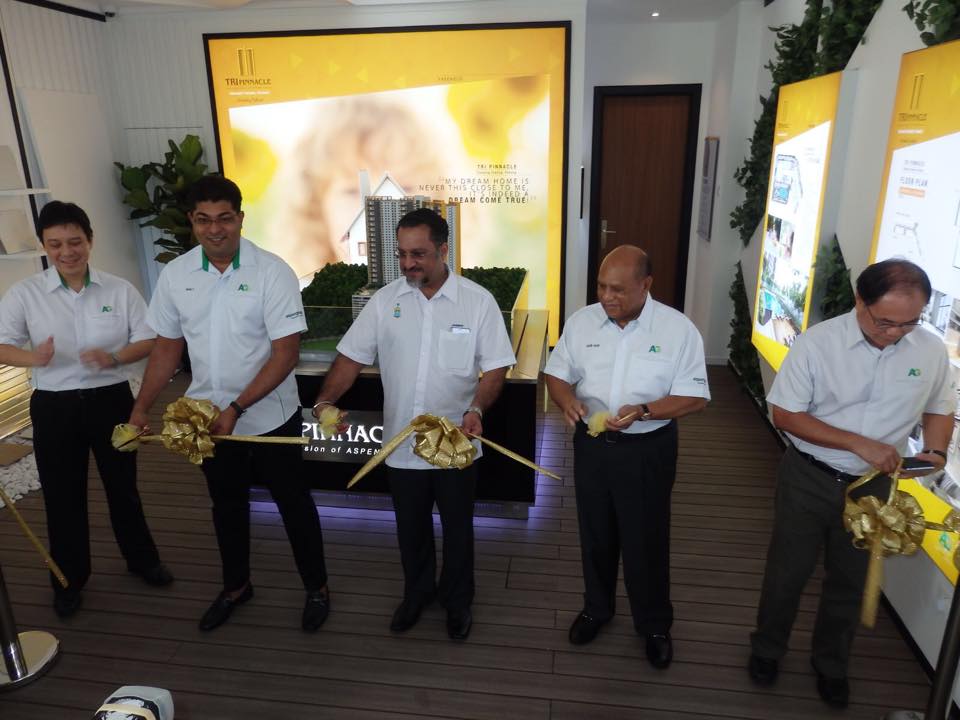
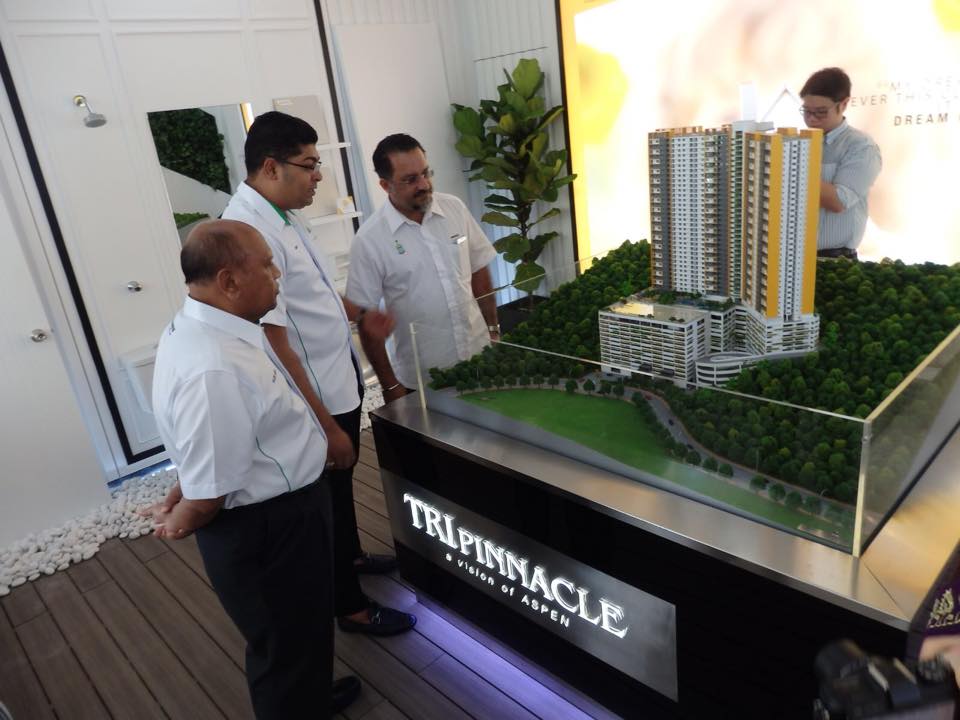
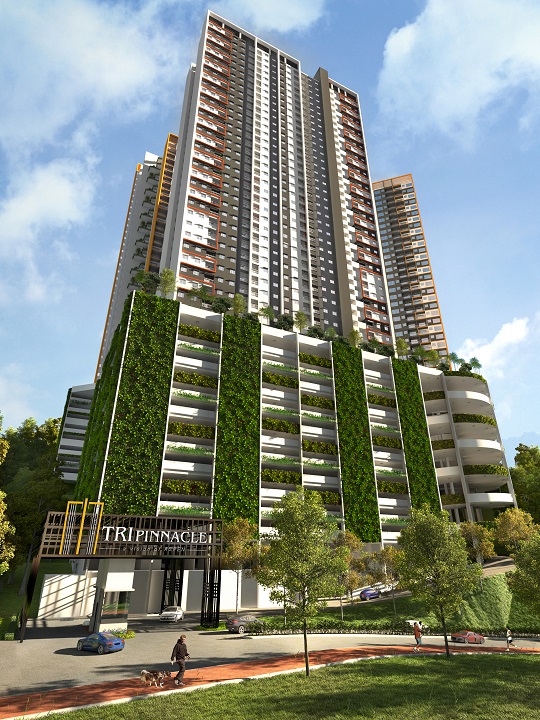
  5. TRI Pinnacle
  6. Forest Ville
  7. Summit 191
  8. The Tamarind
  9. Golden Triangle 2
  10. The Clovers

Forest Ville is not actually new but part of One Foresta affordable housing scheme located in Bayan Lepas. It is available to the open market with indicative price starting from RM450,000 onwards.

To know more about the current and upcoming affordable housing projects and location, below is the page that you should not missed out:

Affordable Housing Projects & Location

* Projects are ranked based on the actual number of clicks & views in Google Analytic web traffic report for PenangPropertyTalk.com.

PREVIOUS MONTH: 10 Most Popular Projects in June 2015

Tags:

Applicants allowed to select affordable housing projects in Penang

Property News/ 9 August 2015 No comments

20150807_PEO_ROUNDTABLE FORUM 4_MSYThe Penang state government will allow applicants of affordable housing units to select affordable housing projects in the state, following suggestions from property players for the move.

Speaking at a roundtable session during the Fiabci-Penang International Property Conference (PIP) 2015 yesterday, Penang state executive councilor for Housing and Town and Country Planning Jagdeep Singh Deo said that the state government had decided on the move after taking into account the implications for first time home buyers.

“It was decided by the State Government that as the affordable housing projects involve units, costing between RM200,000 to RM400,000 on the island and RM150,000 to RM250,000 on the mainland, which prove to be quite a large sum for any potential first time buyers, we would therefore allow them to select the project that they were interested in,” said Jagdeep.

* Click here for a complete list of affordable housing in Penang *

He added that the selection could be done at the State Housing Department or via the respective property developers who were allowed since January this year to register applicants on site and forward the application forms for vetting purposes to the State Housing Department

The move by the state government follows concerns expressed by the developers in the inaugural PIP summit held in January this year, on whether the state government could furnish an adequate supply of the name list for affordable home applicants, and whether these applicants could choose their projects.

The Penang state government was the first state in Malaysia to introduce 100% affordable housing guidelines for the private sector in August 2014, whereby through this private-public partnership, the private sector was encouraged to undertake 100% affordable housing projects.

“Since the exercise began in August last year, the Selection Process Enhancement Committee (SPEC) has selected a total of 1,025 names of applicants which were given to developers and for this year, a total of 3,948 names had been given to developers as of yesterday (Aug 6),” said Jagdeep.

He added that SPEC will continue to sit at least once a month to provide the name list for not only developers of affordable housing projects, but for low-cost and low/medium-cost projects as well.

In the last six months, following requests from developers, the state has also opened up several aspects determining eligibility, to improve on the provision of name lists to the developer.

“This includes lifting the geographical requirement, whereby earlier an applicant for a certain project had to be from the same district where the project was.

“On another note, it was also suggested that the state government could consider opening up a certain percentage of the affordable units to the open market; this is being considered by the state but we must stress that the objective of the affordable housing initiative is to ensure that the target group, namely first time home buyers with a middle income can realise their dreams of owning their first home,” said Jagdeep.

He added that for the affordable housing price range of between RM200,000 to RM500,000, the total transacted units in Penang were 5,809 in 2013, which increased to 6,537 in 2014.

“I am confident that there will be a further growth of properties in this price range this year,” said Jagdeep.

Source: TheEdgeProperty.com

Tags: