fbpx

10 Most Popular Projects in July 2015

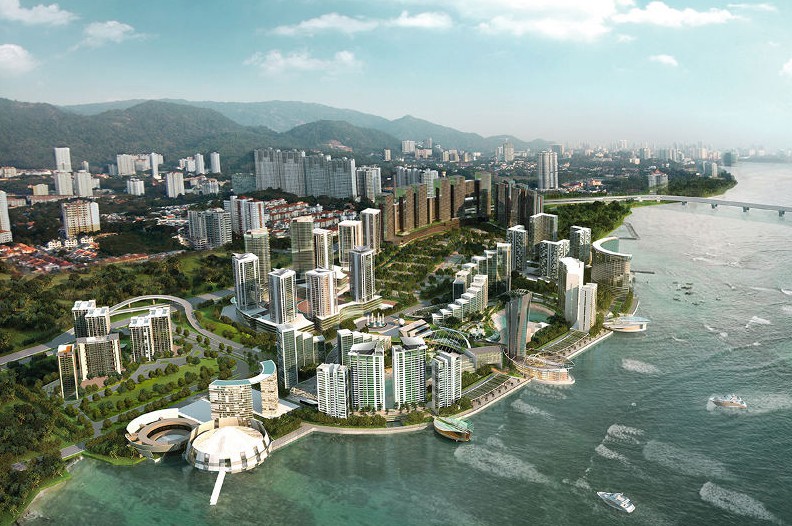
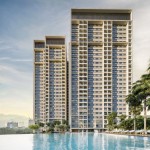
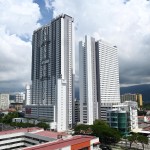
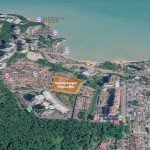
Ramah Pavilion has again proven to be the busiest affordable housing projects in town with nearly 12,000 views last month. This project has always been in the top 4 since January 2015. Sandiland Foreshore, a newly introduced affordable housing projects in Georgetown has taken the third spot.

top-10-july-2015

  1. Ramah Pavilion
  2. One Foresta
  3. Sandiland Foreshore
  4. Sierra Residences
  5. TRI Pinnacle
  6. Forest Ville
  7. Summit 191
  8. The Tamarind
  9. Golden Triangle 2
  10. The Clovers

Forest Ville is not actually new but part of One Foresta affordable housing scheme located in Bayan Lepas. It is available to the open market with indicative price starting from RM450,000 onwards.

To know more about the current and upcoming affordable housing projects and location, below is the page that you should not missed out:

Affordable Housing Projects & Location

* Projects are ranked based on the actual number of clicks & views in Google Analytic web traffic report for PenangPropertyTalk.com.

PREVIOUS MONTH: 10 Most Popular Projects in June 2015

Tags:

Applicants allowed to select affordable housing projects in Penang

Property News/ 9 August 2015 No comments

20150807_PEO_ROUNDTABLE FORUM 4_MSYThe Penang state government will allow applicants of affordable housing units to select affordable housing projects in the state, following suggestions from property players for the move.

Speaking at a roundtable session during the Fiabci-Penang International Property Conference (PIP) 2015 yesterday, Penang state executive councilor for Housing and Town and Country Planning Jagdeep Singh Deo said that the state government had decided on the move after taking into account the implications for first time home buyers.

“It was decided by the State Government that as the affordable housing projects involve units, costing between RM200,000 to RM400,000 on the island and RM150,000 to RM250,000 on the mainland, which prove to be quite a large sum for any potential first time buyers, we would therefore allow them to select the project that they were interested in,” said Jagdeep.

* Click here for a complete list of affordable housing in Penang *

He added that the selection could be done at the State Housing Department or via the respective property developers who were allowed since January this year to register applicants on site and forward the application forms for vetting purposes to the State Housing Department

The move by the state government follows concerns expressed by the developers in the inaugural PIP summit held in January this year, on whether the state government could furnish an adequate supply of the name list for affordable home applicants, and whether these applicants could choose their projects.

The Penang state government was the first state in Malaysia to introduce 100% affordable housing guidelines for the private sector in August 2014, whereby through this private-public partnership, the private sector was encouraged to undertake 100% affordable housing projects.

“Since the exercise began in August last year, the Selection Process Enhancement Committee (SPEC) has selected a total of 1,025 names of applicants which were given to developers and for this year, a total of 3,948 names had been given to developers as of yesterday (Aug 6),” said Jagdeep.

He added that SPEC will continue to sit at least once a month to provide the name list for not only developers of affordable housing projects, but for low-cost and low/medium-cost projects as well.

In the last six months, following requests from developers, the state has also opened up several aspects determining eligibility, to improve on the provision of name lists to the developer.

“This includes lifting the geographical requirement, whereby earlier an applicant for a certain project had to be from the same district where the project was.

“On another note, it was also suggested that the state government could consider opening up a certain percentage of the affordable units to the open market; this is being considered by the state but we must stress that the objective of the affordable housing initiative is to ensure that the target group, namely first time home buyers with a middle income can realise their dreams of owning their first home,” said Jagdeep.

He added that for the affordable housing price range of between RM200,000 to RM500,000, the total transacted units in Penang were 5,809 in 2013, which increased to 6,537 in 2014.

“I am confident that there will be a further growth of properties in this price range this year,” said Jagdeep.

Source: TheEdgeProperty.com

Tags:

Making ends meet

Property News/ 8 August 2015 No comments

bizdx_anr_0808_tongtoon08Why developers cannot afford to build affordable houses

Imagine you were offered a job with a salary which was insufficient to cover all your basic expenses like food, childcare, petrol and mortgage. Would you take the offer?

I believe the immediate response to the question would unanimously be “No!” More so when the cost of living is increasing rapidly over time. One would rather take more time and effort to look for a job that can actually make ends meet.

Now imagine an almost similar question being asked on the current supply of affordable housing.

When private developers are unable to cover the cost of the land and construction, would they be able to develop affordable homes?

Just like the cost of living, the idea of building affordable homes is not further helped by the increasing land and construction costs. Dwindling availability of development land in urban and semi-urban areas has increased land cost. As for construction cost, it is not only affected by inflation but by the increase in raw-material costs.

With these challenges, it is not surprising that the supply of affordable housing is not meeting its demand. Many small developers who used to collectively contribute significantly in these areas had now disappeared from the development scene.

According to the McKinsey Global Institute (MGI), the business and economic research arm of McKinsey & Company, 330 million households around the world today lack decent housing or are financially stretched with their housing loans that they forgo other basic needs. This figure illustrates the point that both developing and advanced economies faced the same challenges of providing low cost affordable homes to their people.

In its report “A blueprint for addressing the global affordable housing challenge”, MGI identified four approaches that can narrow the housing gap in different nations. They are:

  • Securing land for affordable housing at the right location;
  • Developing and building homes at lower cost;
  • Operating and maintaining properties more efficiently; and
  • Improving access to financing.

Of the four approaches, the most important approach for our country is to unlock land supply for affordable housing. Land is usually the single biggest factor in providing affordable housing.

According to MGI, it is common for land costs to exceed 40% of property prices, making it a hurdle for private developers to turn them into affordable housing without suffering a loss. Speaking universally, no one can be in business unless they are able to make profit. Otherwise they just cannot exist.

Reiterating from my previous articles, our government can relief the situation by releasing public land in right locations for affordable housing developments. MGI’s report states that in Turkey, the TOKi housing agency has acquired 4,120 sq km or 4% of urban land, largely from other government entities.

TOKi in partnership with private developers then developed the land under a revenue-sharing scheme. This method allowed TOKi to split the development costs and further fund land acquisition and development of affordable homes.

The practice in China; the government will release public land to the market every year with a 70-year ground release or leasehold and also, sell development rights to the developers, in the pursue of affordable housing.

The point of illustrating countries like Turkey and China is to highlight the fact that only a government agency or authority can own or acquire land on such a big scale. Our government in the 1970s applied this method. As an example, they acquired plantation land in Shah Alam and Bangi at around RM10,000 per acre to create the townships that you see today. Today’s government could learn and continue the effort from its predecessor, in acquiring land or converting agriculture land for affordable housing purposes.

MGI’s report also emphasised that the time taken to approve the permit for housing development is another key factor to reduce developers’ capital costs. Delays in approvals affect the efficiency of the overall housing development. Our current government is well aware of this predicament; the issue now is what is its plans and actions to hasten the approval process so as to cut costs.

By releasing idle land resources and expediting the approval process, the government housing agencies such as the various state development agencies and PR1MA would be able to deliver large-scale affordable homes even without subsidies.

Efficient allocation of affordable homes is also important to avoid any abuses in the delivery of affordable housing to the wrong people, i.e. those who can afford normal housing. In South Africa, the authorities will check the national housing subsidy database to ensure applicants are first-time beneficiaries. While in Turkey, the TOKi housing agency imposes harsh penalties for fraud or abuse in the allocation of such homes.

This article started with the reason why people will not take jobs that offer wages that cannot cover their basic living cost. It is the same dilemma faced by private developers, especially the small and medium developers in our country, in the context of providing affordable homes. As such, it is important for the government to step up. It has to be determined and steadfast in making the necessary changes in order to drive home the goal of housing the rakyat.

Datuk Alan Tong has over 50 years of experience in property development. He was the world president of FIABCI International for 2005/2006 and awarded the Property Man of the Year 2010 at FIABCI Malaysia Property Award. He is also the group chairman of Bukit Kiara Properties. For feedback, please email feedback@fiabci-asiapacific.com.

Source: TheStar.com.my

Tags:

Affordable housing remains key priority in Penang

Property News/ 8 August 2015 3 comments

Lim Guan Eng Pic_TMIAffordable housing remains a key priority for the Penang state government, which has embarked on 12 affordable housing projects in all five districts of the state, which will see some 22,512 units of affordable housing being delivered within the next 15 years.

Penang Chief Minister Lim Guan Eng (pictured) said that work has commenced for at least four out of the 12 projects in the pipeline.

“The first project, which is the first phase of Bandar Cassia at Batu Kawan is due to be completed by next year,” he told a roomful of property industry players during his keynote at the Fiabci-Penang International Property Conference 2015 today.

He added that the private sector has shown its support for the Penang state-initiated 100% affordable housing policy.

* Click here for a complete list of affordable housing in Penang *

“To date, some 12,606 units of affordable housing have been submitted to the authorities,” said Lim.

However, he said that there were some obstacles faced by the state government in its delivery of affordable housing to the people of Penang.

“For one, the issuance of Advertising Permits and Developer Licenses (APDL) both for projects by the state government and the private sector, which usually take only two weeks to process, have been put on hold indefinitely by the Federal government,” said Lim.

He added that out of the 48 applications for licenses made from August 2014, only 18 had been approved by the Ministry of Housing as at April this year.

“It is now August 2015, one year later, and I am certain that the number of pending applications would have increased. I am told by developers who have applied for their APDLs and who are waiting that they have in fact complied with all requirements, and as such there is no reason whatsoever for the ministry to withhold the issuance of their APDLs,” said Lim.

He added that another obstacle is the high loan rejection rates by commercial banks of loan applications by low cost, low-medium cost and affordable housing applicants.

“I have long advocated the reintroduction of the Developer Interest Bearing Scheme (DIBS) for first time home buyers, and will continue to call for the same in Parliament,” said Lim.

He added that commercial banks should also loosen their lending conditions to such applicants of low cost, low-medium cost and affordable housing as part of their corporate social responsibility to assist the realisation of many Penangites’ dream to own their first homes.

Penang state executive councillor for Housing and Town and Country Planning Jagdeep Singh Deo said the state may consider increasing the income cap for potential buyers of affordable housing units to reduce the rejection rates by banks.

Currently, the net household income cap is between RM6,000 to RM10,000 for affordable housing units ranged between RM200,000 to RM400,000 respectively.

“If we were to consider increasing it by 50% to RM9,000 to RM15,000, this may achieve the objective of reducing the high loan rejection rates, however, it does not achieve the state’s objective of assisting the lower and middle income groups,” he said during a roundtable discussion at the conference today.

He added that a compromise could be met by the introduction of a new and cheaper type of affordable housing in the range of about RM150,000 to cater to the low and middle-income group, with the income cap maintained at RM6,000 or lower.

Source: TheEdgeProperty.com

Tags:

New school plans progressing smoothly

Property News/ 7 August 2015 1 comment
metn_2a_0708_adzim_1

Building dreams: Abdul Malik (fifth right) and other VIPs applauding during the phase two groundbreaking ceremony of SMJK Heng Ee branch in Bayan Lepas, Penang.

The SMJK Heng Ee branch in Jalan Sungai Tiram 1 in Bayan Lepas, Penang, will be able to take in 3,000 students once it is ready in 2018.

Construction of the RM50mil school project has entered its second phase with a six-storey academic building costing RM20mil. It will have 96 classrooms.

Heng Ee’s board of governors chairman Datuk Loh Geok Beng said the school would be able to take in pupils from nine Chinese primary schools in Penang’s Southwest district.

“It will bring convenience to the students and parents staying in this district. It will reduce traffic congestion since students no longer have to travel downtown for education.

“This is also a continuation of development in Chinese education for the betterment of the future generation,” he said in his speech at the groundbreaking ceremony of the second phase yesterday.

The school land, measuring 3.24ha, was contributed by Ideal Property and Koperasi Tunas Muda Sungai Ara Bhd to the Penang government for educational purposes. Ideal Property obtained a licence to build the school from the Education Ministry in 2013.

Phase one of the construction of an administrative building costing RM7mil has been completed. It was sponsored and constructed by Ideal Property Group.

The third phase will see the construction of a seven-storey building comprising a school hall, library, auditorium and other facilities.

Penang exco member Datuk Abdul Malik Abul Kassim, representing Chief Minister Lim Guan Eng to perform the groundbreaking ceremony, said the state has always emphasised strongly on the development of education.

“Education plays an important role for a society to prosper and become successful. The state government has given high priority in this aspect.

“Strong education can generate more quality human capital needed by the various industries in Penang. It will help the state stay relevant and become a destination of choice for investors,” said Abdul Malik, who is also Batu Maung assemblyman.

Also present were Ideal Property Group executive chairman Datuk Alex Ooi, Bayan Baru MP Sim Tze Tzin, Bukit Bendera MP Zairil Khir Johari, Penang Chinese Chamber of Commerce (PCCC) executive adviser Tan Sri Tan Kok Ping, PCCC president Datuk Seri Choot Ewe Seng and Penang Chinese Town Hall chairman Datuk Khor Teng How.

Source: TheStar.com.my

Tags: