 Bank Negara looking at long-term solutions
BUYING a house can be an emotive affair. Selling a house can be equally so. Whether the emotions are on the part of the buyer or the seller, Bank Negara has found itself in a tussle between protecting the house buyer and the developer’s balance sheet.
It is very clear about its role and it will protect the people because it is of the view that when banks protect their customers, they naturally protect the banking system.
At the heart of the issue is affordability.
It is an undisputable fact that prices are today beyond the reach of a vast majority of even the middle-income group, what more those below.
The result is unsold completed units, and because sales are slow, it makes no sense for developers to build more of the same.
But the peculiarity about the sector is that, every year, developers have to sell in order to generate revenue.
Because sales were slow in 2014 and slower in 2015, Bank Negara was – and still is – inundated with calls by developers via different channels to re-introduce developers interest bearing schemes (DIBS) and to loosen lending restrictions. Bank Negara is doing neither, according to sources.
“When developers call for loosening restrictions, what sort of restrictions are they referring to?” a Bank Negara source asks.
“Do they want the potential borrower to eat less, not have any savings, reduce transport cost?”
If that be the case, then developers are merely targeting at “improving their own balance sheet but transferring their burden to the households.”
The source says Bank Negara “cannot pass the problems of developers to the households”. Household debt currently at 89% to gross development product is among the highest in South-East Asia.
Affordability is a complex issue and ease of lending is not the panacea, the source says.
Affordability computation
The central bank did an income/affordability computation with four income group categories, the average RM6,000 income earner, the bottom 40%, middle 40%, and the top 20%. (See table)
According to the analysis, those earning RM6,000 can only afford a RM360,000 house, the bottom 40% with a net income of RM2,200, a RM50,000 house.
Those in the middle 40% with net salary of about RM4,800, a RM265,000 house, and the top 20% net income earners of RM10,600, a RM850,000 property.
Even then, this computation is a very “simplified and imprudent one” because it does not take into account inflation, cost of living, other liabilities like student, car and personal loans, and only 10% or no savings at all.
“There is a difference between a house purchase and house ownership. A borrower may be able to buy a house, but this need not result in house ownership.
“There is no point doing a cursory credit assessment and a borrower services the loan for three to four years only to have it auctioned off later. Our objective is to make sure only those who can afford a loan can get a loan,” the source says.
The source says that while the bank is protected because it can auction the property, the borrower is left with a debt he can ill afford.
In this respect, the source says Bank Negara is aware of auction syndicates and their tactics. The property price drops 10% each time it fails to be sold at an auction. As the value drops, the burden falls on the borrower to make up the difference between the outstanding loan amount/interest and final auction price. The ultimate loser is the buyer/borrower.
If borrowers take a loan early, they should be able to pay it off before they retire.
“We do not want them to be in debt when they are retiring. We want a purchase to result in ownership.”
Beyond collateral
High house prices ultimately lead to high debts. The source says Bank Negara has advised banks and lending institutions to look beyond the collateral.
The onus is on them to ensure that the borrower does not default, that they have quality borrowers on their books.
“If banks were to protect house buyers/borrowers and not only themselves, they naturally protect the banking system. If banks consider only the collateral, they are actually only protecting themselves. In the event of a foreclosure, the ultimate loser is the borrower, not the bank, not the developer,” the source says.
Developers thinking up creative marketing schemes and gimmicks is one issue. Banks’ marketing staff pushing loans in order to meet their loan targets is another.
Whatever it is, if borrowers’ repayment profiles seem dicey, pushing them to buy a house impacts their future consumption. This ultimately hurts the overall economy, the source says.
Although non-performing loans (NPLs) are low at 1.6%, there may be a rise going forward. Those who bought a long time ago will not be affected by escalating prices. Those who bought on developers interest bearing schemes (DIBS) are being monitored.
The source says DIBS increase prices by between 20% and 30%. Instalments are higher. At the end of the day, DIBS is a gimmick, the source says.
As for developers calling for DIBS to be re-introduced for first time buyers, the source says this will not be prudent. The developer wants a sale, but the burden is laid on the house buyer. DIBs was banned in January 2014.
According to Bank Negara’s Financial Stability and Payment Systems Report 2015, annual growth of borrowers with at least three outstanding housing loans – a proxy for speculative buyers – was maintained at a low and stable rate of 3.1%, down from the much higher rate of increase last observed in 2010 of 15.8%.
On whether there is a price bubble, the source says no, adding that Malaysian banks have enough buffer to absorb a price drop of up to 40%.
The source also says the notion of easy credit without responsible guidelines just to help the property sector is misguided. This will only be setting up the banking system for a sub-prime situation. It was this which gave rise to the sub-prime crisis in the US.
Price adjustments
Ultimately, the thrust of today’s woes is price adjustment and Bank Negara’s view is that financing is not the only tool. A holistic approach is needed with other stake holders/authorities on board.
“If left to market forces, it is a tricky thing. The situation is acute in the Klang Valley, Penang and Johor,” the source says.
Stamp duty, speed of delivery and quantity/quality of affordable housing, the use of industrial building systems (IBS), a modern technique of building, are other tools.
Bank Negara is working with agencies and state authorities but there is a need for political will on the part of the government.
It has also brought up the setting up of a central agency similar to Singapore’s Housing Development Board, which is a systematic way to provide affordable housing. Malaysia currently has multiple agencies and different states have different measures.
Bank Negara is also working with Penang and Johor authorities in their delivery criteria. Authorities were allocating affordable houses to those earning RM1,000 and RM2,000 when they obviously cannot afford these purchases.
This cooperation will be extended to other state agencies/authorities, the source says.
There is also a dire need for more up-to-date information. The National Property Information Centre released last year’s figures while Singapore’s Urban Redevelopment Authority is speedier with its information.
Bank Negara is also studying the ownership versus rental aspect. It has noted that the more advanced the country, the lower the ownership level. But it is too premature to draw any conclusion, the source says.
“The jury is still out (on this),” the source says.
France has a 65% home ownership, Germany 52%, and Hong Kong 51%. People are more mobile today and may work in another country in two to three years. We are advising the government to consider a rental policy, the source says.
Germany was not caught in a sub-prime situation because it is essentially a rental market, the source says.
Commercial sector
As for the oversupply in office and mall space and whether low occupancy will contribute to instability in the financial/banking sector, the source says developers usually use private debt securities/bonds to raise capital for projects.
“Banks’ exposure is very small. Insurance companies’ exposure is also small as they have low risk appetite,” says the source.
On the role played by local authorities to curb supply, the source says they could stop giving approvals.
On the 50% discount for development charges given by City Hall last September if developers were to begin construction six months from getting their development order, the source says this could be for previous applications.
The discount was an incentive to speed up construction because development had slowed. As the situation stands today, it “makes no sense” for developers to launch new projects when there is an over supply, and no sense on the part of the local authorities to give incentives.
Source: TheStar.com.my

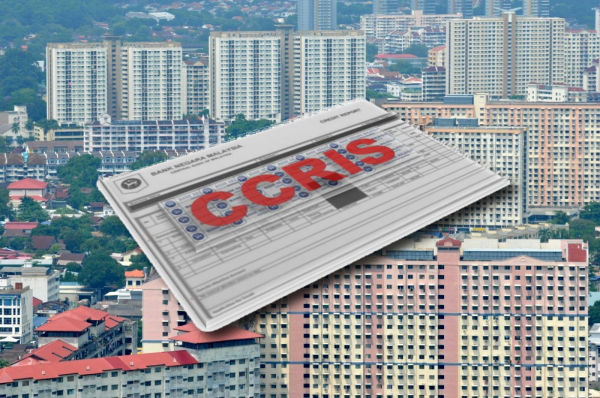 Affordable housing applicants must now show their creditworthiness when applying.
 Every now and then some quarters will accept developers’ mantra to re-introduce the Developers Interest Bearing Scheme (DIBS). It should be noted that Bank Negara had prohibited and outlawed “any form of interest capitalisation scheme”. The economic downturn is seen as a fresh opportunity for DIBS to be reconsidered. This time around, it’s only for “first time house buyers”.