fbpx

Rising, falling, rising? Market observations for the first half of 2015

Property News/ 3 November 2015 No comments

PENANG RESIDENTIAL PROPERTY MARKET

In Penang, the residential property market contracted by almost half since the hitting its peak in 2011. The market recorded a total of 9,667 transactions in 4Q2011, its highest in four years, before seeing a drastic drop of about 48.47% in 1Q2012, to just 4,981 transactions. The corresponding value of transactions dropped to RM1.5 billion in 1Q2012, from RM2.27 billion in 4Q2011.

Raine and Horne Msian Penang Residential 1H2015

The market saw fluctuations in 2012. In 2Q2012, the number of transactions increased by about 38.68% to 6,908 valued at RM1.92 billion before dropping slightly to 6,398 in 3Q2012. The market plunged again in 4Q2012 by 22.17%, to 4,979 transactions.

The market continued to contract in 1Q2013, when the number of transactions dropped slightly to 4,193 (worth RM1.55 billion) but remained stable with slight increases throughout the next three quarters of the year, bringing the total transactions to 17,700 units (RM7.1 billion).

In 2014, the pattern of transactions was interesting. It dropped slightly by about 8.66% to 4,291 transactions in 1Q2014 from 4,598 transactions in 4Q2013, before increasing by about 10.27% to 4,732 in 2Q2014, valued at RM1.89 billion. By 3Q2014, the number of transactions had dropped to 4,194 (RM1.75 billion), before surging 23.82% to 5,193 transactions (RM2.06 billion) in 4Q2014.

By 1Q2015, the market had plunged again by about 26.17% to 3,834 transactions (RM1.55 billion) compared with 4Q2014. A year-on-year (y-o-y) comparison with 1Q2014 also saw a market contraction of about 10.65%.

In 2Q2015, the market improved slightly on the previous quarter, to 3,909 transactions (RM1.59 billion). However, in a y-o-y comparison with 2Q2014, the market contracted by 17.39% or 823 transactions.

Geh believes the market contraction in Penang could also be due to strict loan approval criteria and fewer loan approvals.

He adds that the long delay in the issuance of the advertising permit and developers licence (APDL) had also taken a toll on the Penang residential property market.

“I believe the demand for projects in the pipeline in Penang is good but the sales process cannot commence due to the delay in the APDL,” he says.

Developers must obtain the APDL from the Housing Ministry before the sale process and the signing of the sales and purchase agreement for any development project.

The issuance of the APDL in Penang for many projects by local developers has been delayed for more than a year.

MALAYSIA: OVERALL RESIDENTIAL PROPERTY MARKET

There was an overall contraction of the Malaysian residential property market in the first half of this year (1Q2015) compared with 1Q2014, according to figures released by the National Property Information Centre (Napic).

Raine and Horne Msian residential 1H2015

The first half of 2014 (1H2014) recorded a total 122,830 transactions in the market worth a total RM40.31 billion. In comparison, 1H2015 recorded 119,599 transactions with a value of RM37.97 billion, or a 2.63% contraction.

If we look at the quarterly comparison, the 1Q2015 saw a slight increase of about 1.46% to 59,626 transactions (RM18.74 billion), from 58,767 transactions (RM19.39 billion) in 1Q2014 .

By 2Q2015, there is a noticeable contraction of 6.38% to 59,973 transactions, from 64,063 transactions in 2Q2014. Over the years, it is normal for the number of transactions to increase from the first to the second quarter, as seen in 2014 (from 58,767 to 64,063, worth RM20.92 billion).

Looking at transaction history, the first quarter of every year usually sees a slight drop before the transactions spike in the second quarter. The residential property market in Malaysia hit its peak in 2Q2011, when transactions spiked to a high of 73,710 (RM16.68 billion) from 60,333 (RM13.52 billion) previously. Similarly, 1Q2012 saw a total of 64,402 transactions (RM15.13 billion), which spiked in 2Q2012 to 71,595 transactions (RM17.48 billion).

After the market hit its peak period between 2011 and 2012, it began to drop in 2013 and reached a four-year, all-time low in 1Q2014. The market picked up in 2Q2014 and 3Q2014 by recording 64,063 transactions (worth RM20.92 billion) and 63,661 transactions (RM21.66 billion), respectively.

By 4Q2014, the market had again dropped, to 60,760 transactions (RM20.09 billion) and continued to drop in 1Q2015 before increasing slightly in 2Q2015.

In summary, the overall residential property market in Malaysia in the last four years up to the first half of this year saw the market spiking in 2011 and 2012 before it contracted in 2013. While picking up slightly in 2014, it again showed a contraction in the first half of this year.

Raine & Horne International Zaki + Partners Sdn Bhd senior partner, Michael Geh, attributes the overall contraction in the market to strict loan requirements.

“The low loan approvals due to stricter loan requirements has taken a toll on the property market,” he says.

Source: TheEdgeProperty.com

Tags:

Ewein set to bag second Penang project by year end

Property News/ 2 November 2015 1 comment

city-of-dreamsEwein Bhd, which is currently jointly developing the RM800 million City of Dreams condominium project in Bandar Tanjong Pinang, Penang with Consortium Zenith BUCG Sdn Bhd (CZBUCG), is set to bag its second project on the island by the end of the year.

“Right now, we are finalising and fine-tuning the [contract] terms [to develop] the next parcel of land [in Bandar Tanjong Pinang] with CZBUCG, and hope to make an announcement by year end,” its deputy chairman and group managing director Datuk Ewe Swee Kheng told The Edge Financial Daily in an interview last week.

In June, it incorporated a new 60%-owned subsidiary, Ewein Zenith II Sdn Bhd, in anticipation of winning the contract. The remaining 40% stake in Ewein Zenith II will be held by CZBUCG.

Ewe said Ewein is proposing to develop three blocks of luxury serviced apartments on the 4.4252-acre (1.79ha) piece of freehold land, which will have a gross development value (GDV) of RM1 billion.

To be called City of Dreams II, the serviced apartments will comprise 891 units, but with smaller built-ups than that of City of Dreams, he said.

“Nevertheless, this is subject to the finalisation of the second parcel of land,” said Ewe.

Meanwhile, Ewein will start to see contributions from the City of Dreams project to its profit for the third quarter ended Sept 30, 2015 (3QFY15), based on its 60% share of the joint venture with CZBUCG, which owns the remaining 40%. It is due to announce the results of the quarter in the second week of this month.

“We have started progress billing for road and drainage works serving the project. We expect the project to gain momentum from 4QFY15,” said Ewe.

“The development is expected to contribute RM200 million in profit before tax and minority interests over the next four years,” he said.

Ewein saw its 2QFY15 net profit jump 88.1% to RM521,000 from RM277,000 in 2QFY14. Revenue, however, fell by a marginal 1.48% to RM10.55 million from RM10.71 million a year ago.

Ewe said the group had received overwhelming responses to the City of Dreams condominium project, receiving 1,203 applications for the 572 units available.

“We are in the progress of qualifying these applications, and hopefully will be able to sign some of the SPAs (sale and purchase agreements) by the end of this year,” he added.

City of Dreams features two blocks of 40-storey towers housing a total of 572 condominium units, with built-ups ranging from 1,100 sq ft to 2,350 sq ft.

Sitting on a 3.67-acre piece of freehold land, the seafront units are priced from RM1,172 per sq ft (psf), which is relatively lower than Eastern & Oriental Bhd’s high-end condominiums in Seri Tanjung Pinang nearby, which are going for RM1,800 psf.

City of Dreams and City of Dreams II are part of a proposed development measuring 50 acres to be known as Wellness City of Dreams, which will have a GDV of RM13.89 billion. The proposed project is expected to comprise, among others, a wellness resort, retirement and nursing residential suites, and serviced apartments.

While property development will contribute “significantly” to the group’s pre-tax profit from FY16, Ewe said the group had no intentions of ending its manufacturing of precision sheet metal fabricated parts business.

“We can still remain profitable in the manufacturing segment. While profit growth rates may be flat, but in times like these (lower demand from the electronics and electrical sector), I think we are considered good to be able to remain profitable,” he remarked.

On its property investment business, Ewe said rental income from Menara IJM Land in Penang provides the group recurring income on an annual basis. The group acquired the property in 2011 for RM50 million.

Ewe said contributions from this segment are expected to increase in the coming years from a revision of rental rates.

Year to date, Ewein’s (fundamental: 0.95; valuation: 1.4) share price has risen 109.78% to close at 96.5 sen last Friday, up 7.5 sen or 8.43% higher from the previous day’s closing. Its market capitalisation stood at RM186.68 million.

Source: TheEdgeMarkets.com

Tags:

UPCOMING: Butterworth / CBD Capital Sdn. Bhd.

Butterworth/ 1 November 2015 11 comments

Upcoming-by-cbd

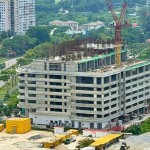
An upcoming high-rise development proposed by CBD Capital Sdn. Bhd. at Butterworth. This project comprises a 15-storey 205-unit service apartment with 3 retail units located at ground floor.  It will also comes with facilities such as swimming pool, gymnasium and etc.

This development is located just next to Butterworth Outer Ring Road (BORR), adjacent to Orange Garden housing scheme by Tah Wah Group. It’s about 10 minutes drive from Butterworth Ferry Terminal and the future Penang Sentral.

This is still pending for approval. Details to be available upon project launch.


Property Project : (pending for approval)
Location : Butterworth
Property Type : Service apartment
Total Units: 205
Indicative Price: (to be confirmed)
Developer : CBD Capital Sdn. Bhd.

Location Map:

Good news for renters, not so much for buyers

Property News/ 1 November 2015 No comments

main_0111_PropertyMarketReport_azbPDFAre you currently renting or looking to rent? If you are, there might be some good news for you on the horizon.

Rental charged for condominium units is expected to drop by 20% to 40% due to an oversupply: as more and more of them become ready for occupancy and come onto the market, buyers are finding it difficult to sell their units for a good price and are being forced to rent them out for much cheaper than usual.

Siva Shanker, the immediate past president of the Malaysian Institute of Estate Agents (MIEA), says he is absolutely certain that for the next one to three years, the biggest winner will be the rental market.

“The guy who wants to rent will suddenly be able to find a nice, brand new condo with facilities for half the price it should actually go for,” says Siva, who is also the chief executive officer of PPC International Sdn Bhd, a property consultancy and real estate group.

This, he says, is because in 2012, 2013 and 2014, many properties were bought on speculation by those wanting to flip them – sell them – as soon as they were ready to be occupied.

And a lot of these condos will be ready at the end of this year and in 2016 and 2017.

These flippers, he says, did not put any of their money down because they took out a 100% housing loan (lending regulations were less stringent then) and also took advantage of DIBS, the developers’ interest-bearing scheme, in which the developer absorbs the interest of the housing loan during the construction period.

“They probably bought these units on the advice of some ‘property guru’ whose skills and credentials I would question.

“These investors clubs made a mess by telling people to buy, say a RM600,000 unit, as they would be able sell it off for RM900,000 in three years’ time when it is ready. So that fellow (the flipper) thinks he can make RM300,000 out of thin air. He only bought it because he took advantage of the DIBS and the 100% loan. Otherwise, he wouldn’t have been able to buy.”

Siva says a lot of properties that were bought in this way in 2012 and 2013 are going to become ready and available at the year-end and in 2016.

That is when the problem starts. Because with the property completed, the DIBS comes to an end and the housing loan kicks in, so the buyer will now have to start servicing his loan.

Because of the economic slowdown, the political uncertainties affecting sentiment, and the tighter banking regulations now, the buyer who bought a unit with the intention of flipping it right away might now find it difficult to sell even if he drops his price.

“He wants to sell it at RM900,000 but there are no takers at that price, so he drops the price to RM800,000 and still there are no takers, down to RM750,000, RM700,000, still no takers, and now he is at RM650,000, which is dangerously close to how much he bought it for, and he is panicking like mad.

“The bank doesn’t care if the market is good or not. You still have to pay the bank loan,” says Siva.

Siva says some buyers might end up losing their properties because they can’t pay their loan instalments and it becomes a non-­performing loan (NPL); some would struggle but somehow manage to service their loan; and then there are those who might choose to rent out their unit rather than sell it at such a low price.

“The buyer (flipper) might ask for RM3,500 rental but not get it, then he’ll drop the rental, then drop it and drop it again to RM2,000 or RM1,500 … so it will be a renters market,” he says.

However, Siva stresses that it is not the entire housing sector that will be affected by lower rents; this would apply only in selected speculative sectors.

“I think it will be with the RM500,000 to RM800,000 condos, the high-end residential condos and shoebox units like SoHo, SoVo and SoFo, which have been built by the ­dozens,” he says, referring to different types of small commercial units, the small-office-home office, small-office-virtual-office, and small-office-flexible-office.

He expects projected rentals to drop by 20%, 30% and 40%, adding that these projected rentals were already a bit too high to start with.

However, Siva does not think there will be a massive non-performing loan problem as in the 1997-98 financial crisis.

“My opinion is that even though the rent might not cover their monthly instalment, at least it’ll cover half, and they ll top up the other half.”

As for those wanting to buy homes, Siva advises looking further afield because land that can be developed in the cities is scarce and very pricey.

Even during the current economic slowdown, prices of property in the Klang Valley have not come down, he says.

Nevertheless, Siva claims, even though all the data is not in yet, he can tell that 2015 will end up looking like a bad year for the property sector.

This is the case, he maintains, even though there was actually a slight improvement in the volume of transactions in 2014 compared with 2013.

“It was very small but an improvement, nevertheless. All of us thought ‘great, the down side is over’. ”

Then, for the first three months of 2015, people were like “ostriches who dug their heads into the sand and stood still”, as ­buyers refused to buy and sellers refused to sell because of the GST.

“We thought ‘Okay, everywhere in the world it was the same human reaction when the GST was first introduced’.

“We predicted that through April, May and June, the market will get used to the GST and learn to adapt, and learn it’s not the end of the world after all. It’s just a bit tough but let’s get on with things.”

But, he says, just as people were getting used to the GST, the 1MDB issue “cracked open”. And when the Wall Street Journal published the report on money (RM2.6bil political funding) going into Prime Minister Datuk Seri Najib Razak’s personal account, people panicked and there was a bit of a halt in the property market, Siva says, adding ruefully, “Malaysians constantly have knee-jerk reactions.”

So the recovery the experts were expecting to see in the third and fourth quarter did not happen.

“We are now into the final quarter of the year. I do not believe we will see an improvement,” he says.

“What we have to do is write off 2015 as a bad year and put it in our pocket and forget about it. And say to ourselves that life cannot end. It must carry on.

“Let’s just ride this out, and let’s start all over again with vigour next year.”

He predicts there will be a bit of interest coming back in the first quarter of 2016 and that in the second quarter, the market will be just about ready to recover.

Source: TheStar.com.my

Tags:

Debating DIBS for the property market

Property News/ 1 November 2015 No comments

wahidomar0111The Government is considering housing developers’ request to reintroduce DIBS (Developers Interest-Bearing Scheme) for first-time house buyers.

Minister in the Prime Minister’s Department Datuk Seri Abdul Wahid Omar says the Government is discussing whether to relax current buying and lending guidelines for first-time house buyers.

“It is still at the discussion stage,” he says after the opening of the 2015 Malaysia Property Exposition (Mapex) on Friday. Today is the last day of the expo, which is being held at the Mid Valley Exhibition Centre, Kuala Lumpur.

“As much as we want to promote home ownership, it is important that we make sure that home ownership comes with the ability to service the loans.

“The last thing we want is to force people to own homes and take up loans which they are not able to service later.”

But he says the Government recognises the request by the Real Estate and Housing Developers’ Association (Rehda) to see how they can help young families who are renting and, at the same time, are in the process of buying their first house.

“If they were to buy a house now, it takes three years to complete and they have to continue paying rental for the house they are staying in. But at the same time, once their loan is disbursed progressively for the house they bought, they have to service it, and some people can’t deal with both together (house rental and house loan instalment at the same time),” says Wahid, explaining why developers have requested for DIBS to be reintroduced for first-time buyers.

DIBS is a scheme in which the developer absorbs the interest of the housing loan during the construction period, which means that the house buyer does not need to service the loan until the house is completed, which usually takes about three years from the time the development is launched.

However, this has led to excessive ­property speculation, as people who could not really afford the loans were using DIBS to buy properties because they could do it without putting down any of their money, with the intention of selling – or flipping – the house upon its completion to make a quick profit.

The other widely acknowledged issue with DIBS is that when developers absorb the interest from loans for house buyers during the construction period, they ­inevitably pass that amount down to the house buyer in the form of higher prices for the completed house compared with prices for a house without DIBS.

In November 2013, Bank Negara tightened lending guidelines and curbed DIBS.

When the 2016 Budget was announced recently, the First House Deposit Scheme was introduced with RM200mil allocated to help first-time house buyers afford their down payment.

Wahid says the Government has not yet determined whether this will also apply to second-hand homes or be confined to newly-built property only.

“The main intention is to assist first-time home buyers. It is important to observe the spirit and intention. We appreciate that for many young families to come up with that 10% down payment can be challenging.”

As for complaints that people are finding it hard to secure housing loans because the regulations have been tightened, Wahid says that when the Govern­ment surveyed the banks, the banks told them that the rejection rate for loans is less than 20%.

“This is where we need to look at the detailed data because there might be some screening at the developers’ end.”

He says the cooling measures the Government introduced over the past few years, such as responsible lending guidelines, have had their desired impact in curbing excessive speculation and moderating rapid growth in household debt.

He makes it clear that these measures are not meant for first-time house buyers but rather for those who are buying their third property onwards.

For Wahid, it is crucial for developers and those in the property sector to innovate and embrace new technologies to keep costs low.

He points out that the construction industry is facing productivity-related issues that need to be addressed.

These issues, according to Wahid, include a low-skilled work force, inadequate or a mismatch in training and development, over-reliance on low-skilled foreign labour, limited adoption of modern practices, mechanisation and industrialised building systems (IBS), the lack of data and information-driven decision-making, and a limited adoption of information technology such as building information modelling.

However, Rehda president Datuk Seri F.D. Iskandar Mohamed Mansor claims that 50% of housing loans are being rejected and urges the Government to relook some of its cooling off measures.

“It has taken a toll on developers. We are facing challenging times,” he says.

He says it would help if developers are given GST relief for constructing low-cost and affordable homes.

Iskandar also says another issue affecting the industry is rising “compliance costs”.

When they build something, he says, there are Federal Government and State Government regulations to comply with, and doing so can be costly.

Citing new infrastructure costs, he says this is now being passed down to the developers when it was not the case five to six years ago.

He says land takes up 15% to 20% of the development cost, and compliance costs, which used to be about 5%, now has gone up to 20% in some states.

Source: TheStar.com.my

Tags: