fbpx

Penang’s SME Village ready by 2019

Property News/ 17 October 2016 No comments

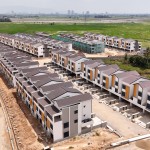
penang-sme-villageThe Penang Development Corporation (PDC) targets to complete the development of the 60ha (150 acres) SME Village in Batu Kawan by 2019.

Special Advisor to Penang Chief Minister and investPenang director Datuk Seri Lee Kah Choon told StarBiz that to-date PDC had sold all the one to two-acre bungalow lots in the first phase of the SME Village, and almost all the landed properties in the second phase.

The bungalow lots in the first phase were sold for around RM40 per sq ft and are suitable for building detached factories.

“For the second phase, comprising 40 terraced and four semi-detached light industrial units, we have sold 40 units of the properties, priced from RM800,000 onwards.

“They should be ready for the owners to move in by the end of 2016,” he said.

Lee said the third phase, comprising a service centre, would be ready by next year.

“We will look at the demand for industrial properties next year, so that we can plan for light industrial properties most suitable for the fourth and fifth phases of the SME Village.

“The automation cluster could be on the fifth phase,” Lee added.

On future investments into Penang, according to Lee, there are three big medical device companies from US and Europe interested to set up manufacturing operations in Penang.

“Negotiations are underway. We expect to see some results next year,” Lee added.

It was recently reported by StarBiz that Minnesota-based Lake Region Medical Inc, a maker of medical devices and consumer healthcare manufacturer Johnson & Johnson are in talks with Seagate Technology to acquire the latter’s 16.4ha land in Batu Kawan.

Talks between the companies, however, are still at the preliminary stage.

Seagate, which acquired the land two years ago, is closing down its hard disk manufacturing operations in Penang by mid next year.

According to the data from Medical Manufacturing Asia 2016, the medical device market in the Asean region is projected to double from US$4.6bil in 2013 to US$9bil in 2019.

“Three Asean countries – Malaysia, Indonesia, and Thailand – account for approximately 65% of the current medical device market among the 10 member countries,” the Medical Manufacturing Asia 2016 report says.

Affordable medical devices, cardiac devices in particular, are in demand in Asia.

Lee said the merger and acquisition exercises undertaken by some of the global multi-national corporations (MNCs) could result in the movement of higher-end technologies and new products being move to another cost effective location.

“When companies merge, there would be consolidation exercises, which could prompt the migration of technologies or new products to other cost effective manufacturing sites.

“This is why it is important for the country and Penang to be competitive in the cost of doing business, have a ready pool of talents, and the necessary infrastructure to attract these new investments,” Lee said.

Meanwhile, The Free Industrial Zone, Penang, Companies’ Association’s (Frepenca) is forecasting that the fourth quarter 2016 would improve over the preceding third period.

“Some 74% of the members are projecting their performance to improve in the final quarter of 2016 over the previous third quarter.

“About 16% are forecasting a flat fourth quarter, and the remaining 10% a drop in their revenue,” Frepenca committee member Datuk Heng Huck Lee said.

For the third quarter 2016, some 54% are expecting an improvement in their revenue over the second quarter.

“About 42% are seeing a flat third period, while the remaining 5% a drop in their revenue,” Heng said.

The Frepenca companies, comprising 75 local firms and multinational corporations from the United States and Europe, are involved in the semiconductor and electronics industries.

Source: TheStar.com.my

Tags:

How To Invest/Buy Your 1st Property Even in the current property market

Property News/ 17 October 2016 No comments

house (2)* Article by Freemind Works *

Since the start of property boom nearly 10 decades ago, owning a home has become the lynchpin of the Malaysian dream. Although, with the increasing cost of living, depreciation of Ringgit, GST implementation and various other lending restrictions, the dream seems to be increasingly out of reach for many especially for the younger generation.

Property investor and property
 coach, Kaygarn Tan says there 
are many reasons property is 
still the number one investment 
choice despite the current 
challenges, one of them being 
leverage. Your investment can 
either create enough positive 
cash flow for you to quit your day 
job or give you a good capital
 appreciation. But before you can achieve this, there are three important fundamentals of property investment that need to be addressed – Your intention of buying, property location and access to financing.

To find out more about Property Market Outlook 2017 And Beyond, please click here

IDENTIFYING YOUR NEEDS
In identifying your intention of owning a property, Tan poses two important questions: (1) Is the property intended for own stay or for investment? (2) And if you are looking to invest, what is your strategy?

He suggests that those looking to invest should determine if they are looking for capital appreciation or cash flow (rental). Once the strategy has been decided, they need to identity the type of property that will match it.
“Buying a high rise property would be the obvious choice if you’re looking to capitalise on rental yield. On the other hand, if you’re looking for capital appreciation, a landed property would give you the best return. Make sure you do your rental return calculation,” advises Tan.

When it comes to capital appreciation, it is crucial to have the foresight and to be able to identify the boom factor/ development potential of a location. The quiet backwater, called Batu Kawan in mainland Penang that started booming during the construction of the Second Penang Bridge linking the mainland to Batu Maung exemplifies this point. With the arrival of notable developments such as IKEA, Designer Village (Premium Outlet), KDU University College, Batu Kawan and its periphery towns are expected to experience a price surge.

FUNDING YOUR FIRST HOME
Although it’s tempting to purchase a home with the best view and a myriad of luxurious facilities, Tan suggests that young investors stay realistic and purchase within their means. Keeping your purchase below RM300,000 (assuming that the buyer manage to obtain 90% financing) would only require RM30,000 down payment. Attainable as it may be (with calculated planning), the idea may seem farfetched to the Generation Y. To prove this possible, Tan lays down six solutions to funding your first home down payment.

Solution # 1: Invest in yourself first
You need to have the awareness that you are your best investment, thus is important to be well-equipped with knowledge. Without good knowledge, you will not be able to identify a potential property.

Solution #2: Good money management
Make a point to save some of your monthly income and contribute it towards your down payment fund. Your purchase goal should be realistic and according to your budget.

Solution #3: FAMA loan
In other words, father-mother loan. Knowing how little you earn on your first job, parents are usually more than willing to either subsidize a little bit or pay for the full amount.

Solution #4: Leverage using a credit card or Personal loan
Unless it’s a very good deal, credit card or personal loan can be a double-edged sword due the high interest charged. Use it merely as a tool.

Solution #5: EPF withdrawal
For those working and contibute to EPF, you could actually opt to EPF withdrawal. You can actually withdraw from EPF Account 2 to finance your 10% downpayment.

Solution #6: 100% from Government Scheme and Commercial Bank
For the 1st home buyer out there, do explore the option of getting 100% loan. For example, there are 100% Government Loan Scheme for 1st home buyer. Recently also announced, commercial banks are also providing 100% loan to buyer purchasing their 1st property.

Solution #7: Structure a deal with the developer for a No-Money-Down
Say you purchase a RM300,000 property and manage to obtain 90% loan. If you can work out a deal with the developer for 10% rebate, which is worth RM30,000, how much do you have left to shell out? Zero, of course. This is what you call buying with no money down.

To find out more on How To Design Your Property Portfolio For 2017 And Beyond, please click here

Till then, happy investing,
Article contributed by Kaygarn Tan
Penangites, good news. You are in for a treat as Property Investment Master Coach Kaygarn Tan will be hosting Property Stratagems on 22-23 Oct 2016 in Penang. He will be inviting his property investors friends and sought after speakers to share on how to invest in current property market especially on how to buy with no money down in sub-sale market, how to get unlimited access of loans from the banks, 2017 budget & property market outlook and many more.

As only 17 seats left, so hurry please click here to reserve your seats. See you there.

[Sponsored]

Tags:

Investing in George Town pre-war buildings bears fruit

Property News/ 16 October 2016 No comments

bizw_p16e_1510_jy_1Singaporean entrepreneur with Penang roots, Jonathan Foo, 44, is seeing his family investment in heritage properties of George Town taking a form that will generate long-term recurring income.

Foo is the chief executive officer of 1919 Global Sdn Bhd, which has to date spent in excess of RM10mil to conserve its heritage properties in George Town.

“In 2006, my father bought 19 pre-war properties in dilapidated conditions along Khoo Sian Ewe Road, Penang Road and Phee Choon Road.

“Many of our relatives and friends did not believe it was good investment because no one believed that dilapidated pre-war houses could be renovated and adapted for modern commercial use.

“When George Town was awarded the World Heritage Site status from Unesco in 2008, we knew it was time to start doing something with our heritage property investments.

The first phase of the restoration project involved renovating Loke Thye Kee Restaurant, on the corner of Khoo Sian Ewe Road and Burma Road. “The Loke Thye Kee Restaurant restoration was completed in 2014. We are now doing some upgrading works for the interior and will start operation in October 2016 as a Penang heritage food restaurant,” Foo says.

The second phase involved turning five pre-war houses facing Penang Road into a hotel.

“Known as Loke Thye Kee Residences, the hotel, which started operation a year ago, targets overseas and domestic tourists who appreciate heritage architecture.

“The heritage hotel, with modern comforts, was awarded as top five suites in Asia by The Asia Design Hotel Awards 2016,” Foo adds.

The third phase saw the renovation of the famous Majestic Theatre into a multi-purpose convention hall which can be used for screening movies, live performance, and rented out to host events and weddings.

“The restoration was recently completed and The Majestic Theatre is now opened to public.

“It is the only heritage theatre in George Town that you can still watch a movie or a live performance,” he says.

Built in 1926, The Majestic Theatre, also formerly known as the Shanghai Sound Theatre, was the first “talkies” theatre in Northern Malaya and was originally designed as a live performance theatre.

The theatre and the adjoining 12 shop-houses were commissioned by local businessman and philanthropist, Khoo Sian Ewe, whose name now adorns the street fronting the building.

The fourth phase of restoration, which is being undertaken now, involved turning 12 pre-war properties along Phee Choon Road into a commercial hub for the media industry, with production and post-production facilities for film, television, and design,” Foo says.

“We are also getting queries from parties interested to instruct post-production movie and television courses at the commercial hub.

Foo says he is confident his project would help to pull back talented Penangites who have gone overseas to work.

According to Foo, Penang is on the right track in its effort to conserve heritage properties. “However, the authorities who formulate the heritage conservation guidelines do not do enough to obtain feedback from the heritage property owners.

“They are instead influenced by non-government organisations who feel that heritage properties should be conserved to reflect only the style and theme of a historical period during which the properties were first built.

“This is a wrong view of heritage conservation, which could impede the progress of heritage conservation work.

“We are talking about living heritage and not a single period frozen in time,” Foo adds.

On whether the rentals of heritage properties have skyrocketed, Foo says that as the cost of buying and renovating a heritage property is high, it is only natural that the landlord asks for higher rentals.

“If we cannot recover the capital spent, then how are we to launch future heritage conservation projects?” Foo asks.

According to Foo, if the heritage guidelines cause delay for heritage conservation projects to get started, investors will lose money.

“They may abandon their projects to cut losses if the delay is prolonged.

“George Town would just become an area of aged ruins.

“How could George Town then uphold its Unesco World Heritage Site status?” Foo asks.

Foo says that in the past, George Town was a well-know trading and commercial hub in the Asean region.

“Why would it be wrong for Penang to continue to be commercially significant, to continue as a key hub for heritage properties to gain in value,” he says.

Source: TheStar.com.my

Tags:

Amaris Terraces By-The-Sea

Tanjung Tokong/ 14 October 2016 6 comments /中文版

amaris

Amaris, one of the last landed properties available within the masterplanned development of Seri Tanjung Pinang, Penang’s most desirable community. Situated next to E&O’s Sales Gallery, with seafronting orientation. Amaris is only 5 minutes walk to Straits Quay retail marina.

This development will offer 29 units of 3-storey freehold terrace homes with almost the size of the super semi-detach houses and villas. Built-up size ranging from 5,262 square feet in an intermediate unit to 6,540 square feet in a corner unit.

Register your interest now. More updates to follow soon!

(This information will be used to keep you updated on the project and future development.)
*By submitting this Form, you hereby agree to our PDPA Consent Clause.

Project Name: Amaris
Location : Seri Tanjung Pinang, Penang
Property Type : 3-storey terrace
Built-up Area: 5,262 sq.ft. – 6,540 sq.ft.
Total Units: 29
Indicative Price: RM3,780,000 onwards
Developer : E&O Property (Penang) Sdn. Bhd.

Location Map:


Actual Site Video:

Condos in Penang that are flourishing

Property News/ 14 October 2016 4 comments
chartsPenangOct15_2015

by The Edge Property

Despite the sluggish market, property investors in Penang can take comfort in reports of capital appreciation in the state. Data collected by the National Property Information Centre’s (Napic) Property Market Report 2015 showed that out of 30 condominium projects in Penang, 11 saw price increases from 2014 to 2015.

Of the 11, seven recorded price growth of over 5% year-on-year. The seven were Kondominium Mutiara (17.1%), Sri Pangkor Condo (9.3%), The Straits Regency (8.6%), Desaria or Regency Heights (7.6%), Quayside Seafront Resort Condominium (7.4%), The Peak Residences (5.5%) and Harbour Place (5.2%). The transacted prices of these condominiums ranged from RM125,000 to RM2.15 million. All of them are located on Penang island except Kondominium Mutiara and Harbour Place.

Of the two projects on the mainland, Kondominium Mutiara recorded the higher price growth at 17.1%, where its unit price range of between RM88,000 and RM145,000 in 2014 had gone up to between RM125,000 and RM145,000 in 2015. This condominium also took the top spot as the project with the highest price growth in Penang overall.

These two projects have their respective pull factors that have contributed to their price growth. “Kondominium Mutiara is located less than 5km from Universiti Teknologi Mara (UiTM), so the main occupiers are students. The units there are priced below RM150,000 and there are no other similar properties in that area,” Henry Butcher Malaysia (Penang) Sdn Bhd senior vice-president in asset valuation Shawn Ong Kah Boo offers.

Harbour Place, which is located in central Butterworth, is less than 2km from the ferry terminal. Based on Napic’s data, Harbour Place was transacted between RM225,000 and RM320,000 in 2015, which Ong says is a very attractive price range for the younger generation of homebuyers.

JLL Malaysia country head YY Lau believes that the more affordably priced non-landed homes on the mainland have attracted the locals considering how affordability has become a major concern among homebuyers. “The supply of condominiums and apartments priced below RM500,000 on Penang island is limited. Looking at the price trends of between RM1 million and RM2 million of new condominiums launched on the island, it’s easy to deduce why buyers are looking for alternatives on the mainland,” says Lau.

“Problems in obtaining housing loans could have also pushed more buyers to opt for units which are considered affordable to them,” she adds.

Over on the island, the highest price growth was recorded at 9.3% at Sri Pangkor Condo. The condo is situated at Pulau Tikus with George Town city centre only less than 3km away, not to mention accessibility and amenities such as shopping malls, hospitals and schools located nearby.

Ong notes that new condominium launches usually benefit older ones as consumers look for alternatives against the higher-priced new condominiums, citing Regency Heights as an example.

“New developments are coming up nearby and have created a pull factor for Regency Heights, improving its asking price although it’s not situated in George Town and is nearly 10 years old,” he says.

Oversupply in island’s condo market?

Henry Butcher’s recent research report, Penang real estate market: Opportunities despite weak sentiments for 2Q2016, stated that as at 2Q2016, Penang island has an existing residential supply of 217,467 units which comprises 42,781 units of landed houses and 174,686 units of strata properties. On the mainland, the existing residential stock stands at 185,027 where there are 111,413 units of landed houses and 73,614 units of stratified units.

“The number of new completions in 2014 on the island was 4,991 in contrast to completions in 2013 totalling 2,926. The surplus could have been carried forward to 2015, resulting in oversupply,” Lau offers.

Ong also foresees significant new supply dampening the condo market in Penang island. “There is still a lot of supply coming in over the next few years and it will continue to be a buyers’ market for condominiums on the island,” he says.

In terms of future supply, supply of landed and strata properties is estimated at 11,391 units (up to 2018) and 55,445 units (up to 2019), respectively.

Despite the concerns of oversupply in the condo market on Penang island, the overall demand for non-landed homes in Penang has been gradually rising. “There used to be more landed residential property transactions on Penang island than high-rise ones but the percentage of non-landed housing transactions surpassed landed homes in 2013,” says JLL’s Lau.

According to Napic’s data, 48% of the transacted residential properties on Penang island in 2015 were landed homes. By 1Q2016, the transacted figure for non-landed homes on the island had risen to 55% while on the mainland, more than 80% of transacted properties were still landed homes.

However, “we can see demand for high-rise residential properties in Penang as a whole is increasing. Moving forward, we expect to see further interest in high-rise residences due to the additional facilities, services and security provided by condominiums compared to landed housing,” Lau elucidates.

Mainland vs island

Meanwhile, director of Penang-based Izrin & Tan Properties Sdn Bhd Tan Chai Liang says that as land prices continue to spike, future developments on Penang island will most likely be non-landed schemes.

Tan believes that the island is still the preferred choice for most homebuyers, despite its decreasing affordability.

“The main issue here is the affordability of new homes and this may drive away some new homeseekers to go for lower-priced and larger homes on the mainland. However, the mainland is lacking in terms of services and amenities. Penang island still has the upper edge with its international schools, good private hospitals, colleges and hotels,” he says.

Tan also notes that compared with the non-landed housing market on the mainland, condominiums on the island had a head start in terms of price growth, having recorded capital appreciation as early as 2000, compared to the ones on Penang mainland.

“Condos and apartments on the mainland may have recorded higher capital appreciation by percentage recently but in terms of price psf, prices are still low compared to their peers on the island,” he adds.

There is no doubt that the island offers more in terms of amenities. It also has easily accessible recreational areas like scenic beaches and hills.

On the downside, Lau says people living on the island have to go through traffic congestion as both recreational and eateries on the island are popular not just among Penangites but international and domestic visitors.

Catalysts in Penang

Both the mainland and island have undergone major transformations over the past few years.

“We see economic activity and housing projects mushrooming in Batu Kawan (mainland), Bukit Relau, Batu Maung, Sungai Ara and Teluk Kumbar (island), capitalising on the completion of the Sultan Abdul Halim Muadzam Shah Bridge (previously known as the Penang Second Bridge) in 2014,” says Lau.

Following this, the next major infrastructure developments which are being pursued by the state government would be the proposed Penang Light Rail Transit (LRT) Line connecting Komtar and the Penang International Airport and the proposed undersea tunnel linking Gurney Drive (island) with Bagan Ajam (mainland). If these projects are realised, they can become catalysts for the future growth of the real estate sector in Penang.

Source: TheEdgeProperty.com.my

Tags: