fbpx

The challenge of housing affordability

Property News/ 3 November 2016 No comments

Georgetown_urbanisation2910_620_411_100The right to shelter is an inalienable basic human right. Providing basic, sufficient and affordable housing for its people, particularly those with a low income, is one of the fundamental duties of the state.

However, if a government-linked research institute’s housing survey is any indication, it has validated the people’s suspicion that home prices in Malaysia have spiralled beyond the reach of common people in recent years.

Khazanah Research Institute (KRI), a government-linked research centre, conducted an in-depth survey and published the findings in its 2015 research report titled “Making Housing Affordable”. The report reveals that in Malaysia, the median house price is 4.4 times the median annual household income vis-à-vis an affordable market where the median house price is three times the median household income.

The report highlights Kuala Lumpur and Penang as the two “severely unaffordable” markets, with 5.4 times and 5.2 times the median household income respectively.

One would have thought that the lower-income group would be the most vulnerable section of society hit by this housing crisis.

But, the KRI report also says “gaps are beginning to appear in the system, exemplified by the growing concern of middle-income households who are neither eligible for social housing nor are able to afford private sector-supplied houses”.

In other words, today’s housing prices are so high that they are beyond the reach of even the middle-income group, which forms about 40% of the population, while the lower-income group, which forms the other 40% of the population, is facing an acute shortage of social housing.

This means that 80% of the country’s population is seriously affected by housing woes. And if urgent policy solutions are not taken to tackle the problem, this staggering 80% housing crisis-stricken population is clearly fertile ground for social and political discontents.

To be fair, this elephant in the room is well acknowledged by the government. Just recently, Deputy Finance Minister Datuk Othman Aziz expressed his concern over the serious mismatch, given the lack of supply of houses deemed affordable by most Malaysians. He was quoted as saying that only 21% of new housing launches were priced below RM250,000 in 2014 while developers are attracted to build high-end properties priced above RM500,000.

The developers obviously disagree with any suggestion, either explicit or implied, that they are to blame for the “seriously unaffordable” housing market. They say a lot of factors have to be taken into account in analysing this problem. For example, they stress the need for a single body that promotes and provides affordable homes, instead of having various agencies and schemes, such as the 1Malaysia People’s Housing programme and Syarikat Perumahan Negara Bhd, and the sometimes rather confusing guidelines and criteria adopted by the various government agencies.

Another valid point made by them is that the government should play its role in providing social housing and affordable homes for the people. For instance, when planning for development on government-owned land, the state should consider setting aside 50% of the land for affordable homes, instead of focusing on monetising its land bank.

Besides, there is one aspect that developers have been intensely lobbying the government — making property purchase financing more accessible to the buyers again. This financing woe has been the Achilles’ heel of the property market for quite some time now. Hence, reinstating developer interest bearing schemes and relaxing rules for foreign buyers are among the items on their wish list.

Apparently, the problem is so serious that the urban wellbeing, housing and local government minister had to chip in with a rather controversial proposal — allow property developers to provide financing to homebuyers.

Against this backdrop came the keenly awaited Budget 2017 announcement on Oct 21 where the government proposed various measures to increase access to financing for first-time homebuyers and make housing more accessible to the people.

In summary, under Budget 2017, the government is planning for more affordable homes by government-linked companies (GLCs). It also crafted a flexible financial scheme for housing loans and a subsidised housing programme for the B40 (bottom 40% household income) group.

However, on closer look at the budget, besides the rather novel plan to build about 10,000 homes in urban areas for rent to eligible youth with permanent jobs, other proposed measures seem to centre on creating a more debt-fuelled property market when our household debt has already reached a record high! Already, there is concern that Malaysians are borrowing too much and not saving enough, based on the latest report by KRI.

In its fourth publication of “The State of Households II” released recently, KRI says while household debt growth has been moderating since 2010 (2015: 7.3% year on year), the ratio of household debt to gross domestic product remained high, at 89.1% in 2015 against 87.4% in 2014. And most household debt was undertaken to finance house purchases.

Herein lies the danger. With the increased access to financing, homes suddenly look more affordable. But we should always bear in mind that there is no free lunch in a market economy. Buying a house, affordable or otherwise, and being able to afford the monthly instalments are two different matters altogether. Without a reasonable level of real income, a higher housing loan would have to be taken. That means a higher monthly repayment, which many cannot afford over the long run.

We, therefore, must never put the cart before the horse by talking about home ownership without first addressing the basic issues of affordability and sustainability — the financial capability of the purchasers to service the instalments throughout the loan duration.

Probably, that is why Bank Negara Malaysia, despite enormous pressure from various parties, has consistently insisted that increasing access to financing is not the way to resolve the affordable housing issue. Instead, finding alternatives to homeownership, including a well-functioning rental market, should be one of the policy solutions.

The challenges of providing basic, sufficient and affordable housing for the people require a holistic and long-term solution and never a knee-jerk reaction. For any piecemeal and short-sighted prescription not only can increase risks in the housing market but can also have far-reaching consequences for our country’s financial and political stability.

After all, if there is one lesson to be learnt from the 2007/08 global financial crisis, which had its origins in subprime mortgage lending, it would be this: A homeownership campaign can only be sustainable if it is anchored on real income, gainful employment and thriving businesses, and never an easy credit-fuelled housing bubble.

Source: TheEdgeProperty.com.my

Tags:

Property sales dipped further in first half of 2016

Property News/ 2 November 2016 10 comments

graphicchartsNapicNov1Market performance remained sluggish in the first half of this year as property transaction numbers in the country continued their downward trend.

According to the National Property Information Centre’s (Napic) data for 1H2016, a total of 163,528 properties were transacted averaging 27,255 properties a month, a decrease of 12.3% compared to the same period last year.

In terms of transacted value, the total dropped to RM64.59 billion in 1H2016 from RM76.61 billion in 1H2015.

Among all the segments, residential properties remained the main driver, constituting 62% of total transactions. In 1H2016, a total of 102,096 residential properties worth RM32.7 billion were sold. However, compared with 1H2015, the transacted volume and value for the residential segment had dipped 14.5% and 10%, respectively.

Interestingly, agricultural land emerged the second biggest contributor to total transaction volume in 1H2016 at 23%. There were 36,723 land deals worth RM6.33 billion sealed during the period. Compared with 1H2015, the transaction volume and value had increased 7.3% and 4% y-o-y, respectively.

Meanwhile, development land took up 6% with 10,249 deals worth RM8.56 billion, down 5.34% in terms of volume and 28.8% in value from a year ago.

The third most transacted property type was commercial properties. At 7%, it saw 11,660 properties sold in 1H2016 at a total value of RM11.32 billion. However, its transaction volume and value had dipped significantly by 34.5% and 21.85%, respectively, from the same period a year ago.

Selangor, Johor and Perak ranked top three

Of the various states, Selangor, Johor and Perak held the highest transaction volume in 1H2016 — remaining unchanged from 1H2015 — while Putrajaya, Labuan and Perlis recorded the lowest transactions in the same period among the 16 areas shortlisted by Napic. Selangor saw 32,007 properties worth RM18.2 billion sold in 1H2016, with the highest number of transactions coming from residential properties at 24,839, commercial properties at 2,719 and agricultural land at 2,059.

Johor was ranked the second highest state with 20,680 properties sold, which carried a total value of RM10.87 billion in 1H2016. Residential properties, agricultural land and commercial properties were the most traded segments in the state with transacted cases of 13,693, 4,242 and 1,583, respectively.

Perak, ranked third in terms of transaction volume, saw 19,782 properties worth RM3.9 billion sold in 1H2016. Residential properties and agricultural land were the most transacted segments in Perak with 11,965 and 5,944 deals closed, respectively.

However, the top three ranking states saw decreasing sales. Transactions in Selangor, Johor and Perak dipped 16.3%, 15% and 17% y-o-y in 1H2016.

On the other hand, Kedah and Kelantan have seen a significant increase in transaction volume.

Transacted properties in Kelantan totalled 6,447 cases, an increase of 38% y-o-y. Agricultural land and residential properties were the most transacted segments in Kelantan with 2,871 and 2,656 deals respectively, in 1H2016.

Kedah’s total transacted properties had surged 9.8% to 16,118 cases, with the highest number of transactions coming from the residential segment at 11,965 and agricultural land at 5,944.

Buyers looking for affordable properties

According to Napic’s data, 66% of the total transacted residential properties in the country were priced below RM300,000. Transactions of residential properties between RM300,001 and RM1 million stood at 30%, while houses with price tags of over RM1 million and above hit just 4%.

On commercial properties, 36% of transactions were for properties below RM300,000. Most transactions were for properties with price tags between RM500,001 and RM1 million. Properties with selling prices over RM1 million stood at 17%.

For industrial properties, 44% of the properties sold were below RM500,000 while 35% were closed at RM1 million and above.

The data also showed that 84% of the agricultural land were transacted below RM200,000 and most deals (46%) were sealed at below RM50,000.

Under development land, the performance was similar to the agricultural land segment, where 62% of the deals were below RM200,000, while 30% of land plots transacted were below RM50,000. However, 12% of the transactions were priced above RM1 million.

Source: TheEdgeProperty.com.my

Tags:

Property prices can come down if …

Property News/ 1 November 2016 No comments /中文版

house-price-goes-down-enWill property prices come down?” This is not a new question especially in a time when the property market is soft.

Before one answers that question, panellists at TheEdgeProperty.com’s Roundtable on Budget 2017 held on Oct 24 pointed out that industry stakeholders should first ask and find out whether there is any possibility that property prices could go any lower.

The panellists that took time off to take part in a lively discussion following the tabling of Budget 2017 by Prime Minister Datuk Seri Najib Razak on Oct 21 were: Real Estate and Housing Developers’ Association Malaysia (Rehda) deputy president Datuk Soam Heng Choon, Rehda deputy secretary general Tan Ching Meng, Rehda Selangor chairman Zulkifly Garib, Rehda Johor chairman Datuk Steve Chong, Rehda Kedah/Perlis chairman Datuk Rick Cheng and Master Builders Association of Malaysia (MBAM) president Foo Chek Lee. The roundtable was moderated by TheEdgeProperty.com managing director and editor-in-chief Au Foong Yee.

Overall, the panellists agreed that it is possible to bring down property prices but developers would not be able to do it on their own. All stakeholders — including the federal government and state governments — have a role to play.

The industry players also stressed that property prices hinge on numerous costs, the major ones being land, construction, compliance and labour.

“If you look at the historical data that we have compiled in Kedah, the compliance cost has been increasing every year since 2008, on existing items as well as fees imposed on new items. So it is impossible to see property prices dropping in the near future,” said Cheng.

He said the compliance cost took up only 5% of construction cost in 2008 for a single storey terraced house in Kedah. But this has increased to 13% this year. For each of these terraced houses, the compliance cost comes up to about RM20,000. On top of a hike on construction cost, this is 546% higher than in 2008, he cited.

“In urban areas like the Klang Valley, the percentage of compliance cost in a property development can reach 20% to 25%,” said Tan.

Meanwhile, Soam said the government has been made aware about the rising compliance cost. “We are trying to ask the federal government to address this issue and for the National Land Council and National Housing Council to standardise the cost in each state.”

On the cost of labour, MBAM’s Foo said it is “impossible” to keep the cost low because Malaysia’s construction industry needs foreign labour. We cannot deny that the construction industry needs foreign workers because our youths do not want to do the job, he added.

He also said that the Goods and Services Tax on building materials is another burden to developers and contractors, and they have no choice but to transfer the cost to the end-buyers.

There are other factors that add up to the total construction cost as well such as the lengthy process for development approvals which could take years while requirements imposed on developers, including the requirement to build low-cost housing, also affects the prices of other property types.

“There are already a lot of conditions being imposed [on developers]. For developers, the average net sellable area of their projects is now about 15% to 20% lower than 15 years ago. At that time, we could build 12 to 13 units of terraced houses per acre, but now the number is smaller, so our net sellable area has been reduced,” Soam said.

He also stressed that developers are not making “obscene profits” as they are often perceived.

“If you look at some of the listed property development companies, you can check their profit margins and compare that with companies in other industries. Are we really making obscene profits? I don’t think so,” Soam commented.

Agreeing with Soam, Zulkifly said the focus has long been on the developers and the government when it comes to property prices. “It is possible to bring prices down if everybody plays his or her part,” he said.

Overall, it does not seem likely that property prices will come down anytime soon but considering the current state of the market, some developers may be feeling the pinch and decide to reduce the prices of their properties.

Indeed, there could be good buying opportunities for homebuyers shopping around during this time, said Rehda Johor’s Chong, who believes some developers may lower their property prices to ease their cash flow problems.

“It’s important to remain positive and send positive vibes to the market. Housing property prices will not come down [for the time being] but there are many choices in the market. It is now a buyer’s market and if you see any cheap property, just grab it,” Chong added.

The roundtable also discussed the measures announced by the government in Budget 2017 and the use of Industrialised Building System to bring down the cost of property.

Source: TheEdgeProperty.com.my

Tags:

Mirage @ Tanjung Bungah

Tanjung Bungah/ 31 October 2016 7 comments /中文版
mirage-tanjung-bungah

Picture for illustration only

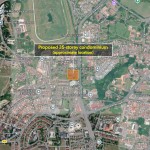
Mirage @ Tanjung Bungah, another high-rise mixed development by Kobay Development at Tanjung Bungah, Penang. It is located on a 1.5 acre seafront land along Jalan Tanjung Bungah, diagonally opposite Grand Ocean Condominium.

This development will see the construction of a 45-storey building with 2 residential towers. It offers a total of 90 condominium units and 45 units of serviced suites.

This project is still pending for approval, more details to be available upon official launch.

Register your interest here

(This information will be used to keep you updated on the project and future development.)
*By submitting this Form, you hereby agree to our PDPA Consent Clause.

Project Name: Mirage @ Tanjung Bungah (to be confirmed)
Location : Tanjung Bungah, Penang
Property Type : Mixed development
Built-up Area: (to be confirmed)
Total Units: 90 (condo), 45 (serviced suites)
Developer : Super Tropica Development Sdn. Bhd. (Kobay Development)

Location Map:


New Holiday Inn & Suites in Penang

holiday-inn-penang-mainlandInterContinental Hotels Group (IHG®), one of the world’s leading hotel companies, has signed a management agreement with Exopuri Development Sdn Bhd to develop a new 288-room Holiday Inn & Suites on mainland Penang.

The hotel will be strategically located in the bustling commercial district of Prai, between the major bridges connecting mainland Penang and Penang Island. Business guests can enjoy a short 15-minute commute to most major commercial areas in Prai which are home to the headquarters of a number of multinational companies, whilst visitors travelling for leisure can access Penang’s renowned downtown area, Georgetown, by car through a half hour drive from the hotel.

When it opens in four years, Holiday Inn & Suites Penang Prai will be the tallest building in the area at approximately 35 levels, enjoying high visibility from the North-South Highway which connects Malaysian capital Kuala Lumpur with Penang and other northern cities. The hotel, which will be a short drive to upcoming major development Batu Kawan, will sit within Juru Sentral, a mixed use complex, alongside retail shops, residential premises, offices and serviced apartments. Guests will also appreciate the close proximity of the hotel to two of Prai’s main lifestyle hubs, Auto City and Icon City which boast a wide range of restaurants and bars and banking facilities.

Leanne Harwood, Vice President, Operations, South East Asia and Korea, IHG said: “We are delighted to have this opportunity to work with Exopuri Development Sdn Bhd to expand our presence in Penang as the state, also known to most as the ‘Silicon Valley of the East’, continues to experience growth in visitor arrivals and gain traction as a regional business hub for international companies. Penang welcomes international and intra-regional visitors from countries where the Holiday Inn brand is well known and loved, and we are confident Holiday Inn & Suites Penang Prai will be a great addition to the Malaysian state when it opens within the next few years.”

Holiday Inn & Suites Penang Prai will feature four restaurants and bars: an all day dining, a lobby lounge, a pool bar and a rooftop sky bar. The hotel will also have 12 meeting rooms including a ballroom with a generous seating capacity to cater for a range of meetings and events. Guests can enjoy the outdoor pool, work out at the fitness centre or relax at the spa during their downtime. In addition, the hotel will include suites with amenities catering to guests staying in Penang for an extended period of time.

Mr. Ng Kock Leong, Managing Director, Exopuri Development Sdn Bhd said: “We are pleased to be developing the hotel with IHG who we know has a great reputation in operating world-class hotels. The Holiday Inn brand is well loved and recognised by travellers all around the world, and coupled with the great location we are opening the hotel in, we are confident Holiday Inn & Suites Penang Prai will be the hotel of choice by both first time and frequent travellers to Penang. We look forward to welcoming guests through our doors when the hotel opens.”

Register your interest here to receive more updates about properties in Penang

(This information will be used to keep you updated on the project and future development.)
*By submitting this Form, you hereby agree to our PDPA Consent Clause.

Source: HospitalityNet

Tags: