fbpx

Strengthen MM2H programme to ease property glut

Property News/ 20 July 2019 3 comments

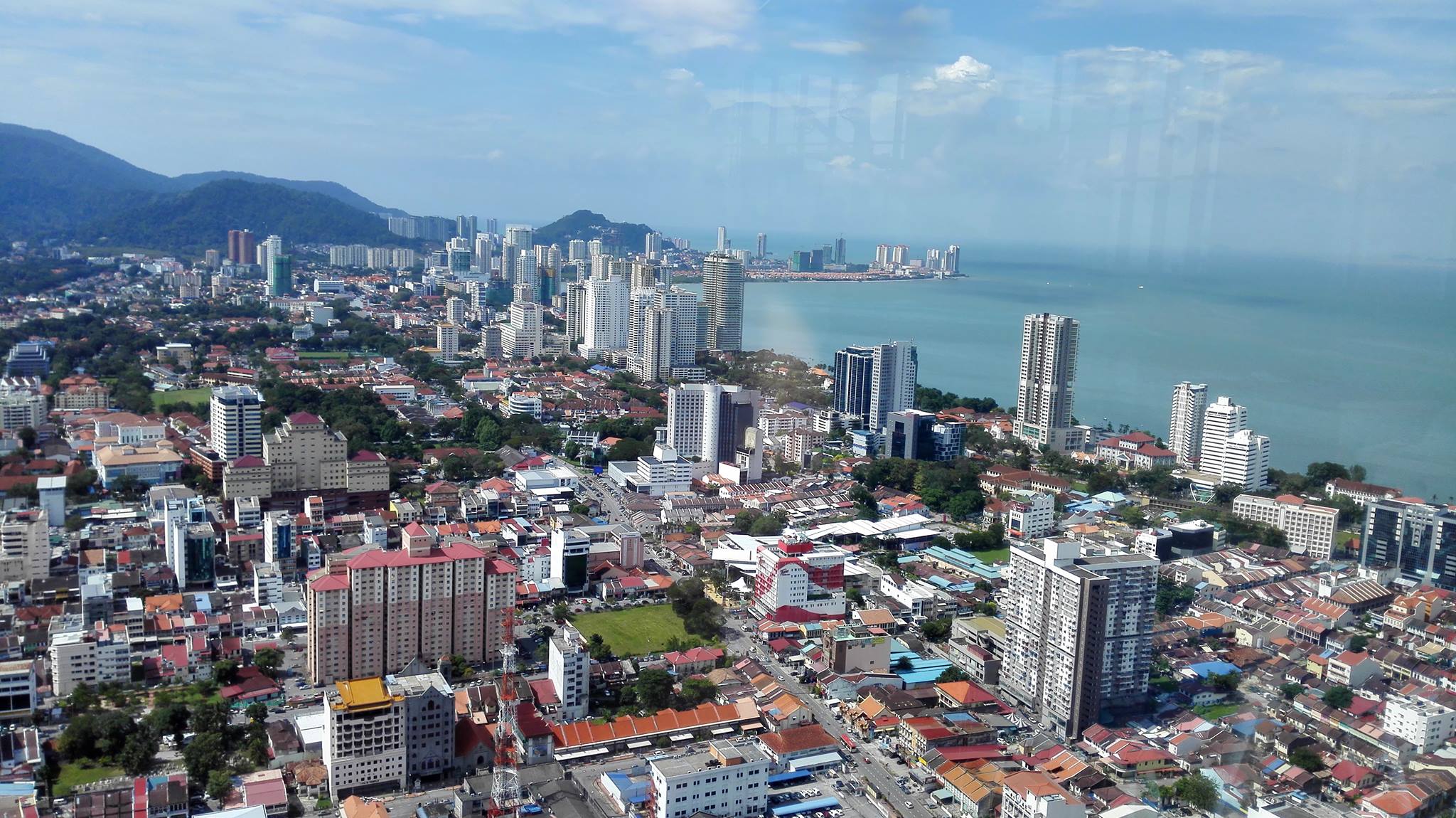
penang-mid-term

The Malaysian Institute of Professional Estate Agents and Consultants (MIPEAC) is of the view that encouraging more foreigners to take up the MM2H (Malaysia My Second Home) programme and to invest in Malaysian properties could help ease the glut in the property sector.

In a statement today, MIPEAC said it would be a waste not to strengthen the promotion of MM2H and encourage more foreign investments in the country’s property sector.

“With RM20 billion worth of residential overhang, we should be more open to foreign buyers with higher spending power to enter the market,” it said.

International Real Estate Federation (FIABCI) Malaysian chapter president Michael Geh reportedly said in a news portal recently that Malaysia must encourage more foreign buyers of local real estate to resolve the issue of unsold units in the country.

“In general, efforts to drive in foreign investments in other segments like commercial and industrial properties should be taken more seriously as well. MIPEAC believes that more can be done to encourage foreign buyers and investors to enter Malaysia’s property market.

“High-end developments can be marketed more intensively globally, together with the ongoing efforts done in the tourism sector,” it added.

Although stricter background checks for MM2H applications have been implemented recently, MIPEAC applauds the Tourism, Arts and Culture Ministry’s efforts to speed up the approval process of the backlogged applications by setting up a special task force.

Concurrently, it said growth in the ICT sector in Malaysia will also pull in more professional foreign workers which will in turn encourage more property purchases by expatriates.

Source: TheSunDaily.my


Tags:

Mont Residence – Limited units available with attractive ownership package!

Property News/ 19 July 2019 Comments off

Mont Residence, a 38-storey lifestyle condominium located on 5.15 acres freehold land in Tanjung Tokong. Featuring 473 condominium units with four well-designed and practical layouts. The project is now completed with limited units left. Call VST Group at 016-459 8080 or 017-332 8382 now to find out more about the attractive ownership package!


KEY FEATURES:

  • Strategic location, just a stone’s throw away from to market, shopping malls, hospitals, schools, shops & restaurants.
  • Multi-tiered security, access control, central CCTV and guard patrols.
  • Healthy lifestyle & facilities, 3 types of swimming pools and fully equipped gym, games room, stydy rooms & more.
  • Sky Garden – Panoramic views of the rolling green hillside & Straits Quay.
  • Wine & Dine – Stylish dining facility.

FACILITIES:

Covered car park, Barbecue Area, Playground, Game room, Karaoke, Library, Gymnasium room, Fitness Stations, Basketball court, Jacuzzi, Swimming pool, Wading pool, Mini golf range, Sky Lounge and many more!

Developer’s Website: http://www.vstgroup.com.my

Register your interest here or call 016-459 8080 / 017-332 8382 for more details

Tags:

Ferringhi Residence 2 named the Five Star Best Residential Development

Property News/ 19 July 2019 1 comment

fr2-banner

Mah Sing Group Berhad’s Ferringhi Residence 2 project in Penang has received recognition for its excellence.

It was named the Five Star Best Residential Development for Malaysia at the Asia Pacific Property Awards 2019-2020.

This impressive achievement is a testimony to Mah Sing’s continuous commitment in delivering a well-planned sustainable residential development with top quality and enhanced features.

“We are honoured that Ferringhi Residence 2 has been recognised,” said Mah Sing founder and group managing director Tan Sri Leong Hoy Kum.

“We have been in the property industry for around 25 years.

“Our promise to reinvent quality space and enhance the lives of our homebuyers is always our main priority when planning a project.”

Mah Sing also revealed its new Ferringhi Residence 2 show unit at Southbay Sales Gallery in Batu Maung recently after relocating from the old sales gallery in Menara Boustead, George Town.

The relocation was done to meet the continuous interest from potential home buyers.

The new 1,494sq ft Ferringhi Residence 2 show unit features the Type A layout which embodies the leisure urban resort style.

Interested homebuyers can now visit the new Ferringhi Residence 2 show unit at Southbay Sales Gallery every day from 9am to 6pm.

In addition, Ferringhi Residence 2 has just celebrated its topping up ceremony for Phase 1, symbolising the completion of the structure of the Tower B building.

Tower B is expected to be fully completed in July 2020 while the entire project, with its two phases, is scheduled for completion by December 2020.

The project is expected to have a total gross development value of RM614mil.

The 3.8ha Ferringhi Residence 2 development is in Penang’s famous holiday spot of Batu Ferringhi.

It is a freehold residential condominium located behind the Penang Hill forest range and the Teluk Bahang Forest Reserve Park.

The project is accessible through Jalan Sungai 1 which branches off from Jalan Batu Ferringhi in front of Holiday Inn Resort Hotel.

Ferringhi Residence 2 is a resort-style condominium designed predominantly in a north-south direction.

The development comprises three towers (32-storey high-rise residences, 10-storey mid-rise residences and 4-storey low-rise residences).

Source: TheStar.com.my
 

Tags:

Transport Ministry approved Bayan Lepas LRT project

Penang-LRT-approved

The Transport Ministry has approved Penang’s Bayan Lepas light rail transit (LRT) project, says Anthony Loke.

In a statement Tuesday (July 17) the Transport Minister said approval was given after detailed study of the Penang Economic Planning Unit’s (BPEN) application to develop the Bayan Lepas LRT project.

However, the state would have to exhibit documents of the project for a three-month period and the final go-ahead will only be decided after public responses are evaluated, said Loke.

“The application by Penang BPEN to develop the Bayan Lepas LRT scheme has been approved on July 16 subject to conditions stipulated under Section 83 and 84 of the Land Transport Act 2010.

“After approval is given, the applicant is required to deposit all required documents to the Land Public Transport Agency (Apad) for public inspection and for them to raise objections within a three-month period starting from the final date of notice published in local news advertisements.

“The completed documents of the project are to be exhibited in public places including government offices.

“The applicant must also upload a copy of the documents on a website for online viewing.

“After evaluating the public responses during the public viewing, another application for confirmed approval has to be submitted,” said Loke in the statement.

The RM8.4bil Bayan Lepas light rail transit (LRT) together with a monorail, cable cars and water taxis, is part of the state government’s RM46bil Penang Transport Master Plan (PTMP).

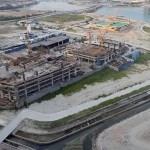
It will begin from Komtar in the northeast corner of the island and pass through Jelutong, Gelugor, Bayan Lepas and Penang International Airport before ending at the proposed Penang South Reclamation (PSR) development comprising three man-made islands totalling 1,800ha near Teluk Kumbar.

It is expected to provide a fast route to the airport and will traverse densely populated residential, commercial and industrial areas.

There are 27 LRT stations along the alignment, with the maintenance depot located on the first island that is to be reclaimed on the island’s south coast.

Media Statement from Transport Ministry


Source: TheStar.com.my
 

Tags:

Is allowing blacklisted PTPTN borrowers to apply for loans a good thing?

Readers Column/ 17 July 2019 No comments

ptptnBy Dr. Paul Selva Raj

The Ministry of Housing and Local Government has announced that backlisted National Higher Education Fund Corporation (PTPTN) borrowers who are listed on the Central Credit Reference Information System (CCRIS) will not be blacklisted if they apply to buy a home. Is this measure good for consumers, especially young workers, the banks and the property developers?

Firstly, being listed on CCRIS should not in itself become the deciding factor in rejecting loans to young workers, or for that matter, any consumer. It certainly should be a contributing factor. There are two possible scenarios when a consumer is blacklisted in CCRIS.

Firstly, one has poor financial management skills resulting in spending beyond one’s means, high credit card debt or multiple other loans beyond one’s ability to pay. In a study by the Asian Institute of Finance, 75 percent of consumers in the age range of 20 to 33 had at least one long-term debt, possibly PTPTN loan; however, another 37 percent had more than one long-term debt. Furthermore, a Bank Negara study shows that 76 percent of consumers would find it difficult to raise RM 1,000 to face an emergency while 47 percent had high credit card debts. For this category, an additional housing loan would only make matters worse.

On the other hand, there may be those who had to face some sort of personal or family catastrophe, and in the short-term was unable to make the payments on a certain loan and was thus blacklisted. This group certainly deserves to be considered for a housing loan.

Thus, past credit behaviour should certainly weigh in on the loan application process, but the CCRIS blacklisting should not automatically be the reason to reject a loan.

While the Federation of Malaysian Consumers Associations (Fomca) recognises that owning a home is a basic consumer right, the key factor in acquiring a loan by the consumers and approving a loan by the bank must be the ability of the consumer to repay the loan.

Apart from the consumer’s financial habits, two key factors that determine repayment ability is income and the price of houses. In relation to one’s income, the house must be affordable. Are Malaysian houses affordable?

According to Khazanah Research Institute and Bank Negara, the sign of a well-functioning, affordable home market is when the median price across the whole housing market is three times the gross annual household income.

Overall in Malaysia, house prices are 4.4 times the median income. Further, zeroing in on the states and cities, house prices in Kuala Lumpur are 5.4 times the median income; in Penang, it is 5.2 times; in Johor it is 4.2 times; and in Selangor it is 4.0 times.

Furthermore, while Bank Negara says an affordable home is RM242,000, in actual fact the average price of houses in KL is RM490,000; in Selangor it is RM300,000; in Johor it is RM260,000 while in Penang it is RM295,000.

To put it simply, houses in Malaysia are simply not affordable to consumers.

The efforts, through policy and programmes, then should be to reduce the price of houses to the affordable range.

Thus, the first priority in assisting home ownership should be to build affordable homes as well as to get the private sector to build affordable homes.

The private sector is more keen to build expensive homes with very high rates of return, of course, but when these expensive houses cannot be sold, it puts pressure on banks to approve loans to consumers, especially young workers even though they may not be able to afford the monthly payments.

While young workers have a right to own a home, purchasing a home beyond their means can only result in severe financial hardship in the near or long term.

CCCRIS and other credit scores should help banks to determine if loans should be given; however, a more comprehensive and detailed study should be made to enable first-time home owners to buy their homes.

Consumers, on the other hand, need to take a comprehensive look at themselves and assess their ability to make regular house loan payments in the context of other current and long-term financial commitments.

What is seriously lacking currently is a strategic approach to financial literacy programmes for young workers and young families.

It is critical that young workers and young families develop the knowledge, skills and motivation to assess their current financial habits and management practises and develop more optimal practices towards enhanced spending, saving and investments, and debt management to develop more responsible financial behaviour.

Further, due to low uptake of insurance, especially medical insurance, as well as preparation for retirement, financial education is key to ensuring that young consumers are prepared to face financial challenges at every stage of their lives.

When a young consumer is blacklisted in CCRIS, there is a high possibility that there is a serious problem in the way he/she is managing his/her debts. The way forward should be to educate and empower young people to manage their finances, not make it easier for them to get a huge loan, which could only lead to further financial problems.

Dr. Paul Selva Raj – Chief executive officer of Federation of Malaysian Consumers Associations (Fomca).

Source: TheStar.com.my

Tags: