fbpx

New STRA guidelines could see unlicensed listings removed from booking platforms

Property News/ 1 November 2026 No comments

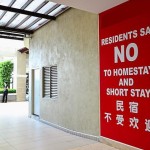
The federal government is drafting a set of uniform planning guidelines for short-term rental accommodation (STRA), which could require all premises operating as short-term rentals in Malaysia to be registered and fully comply with local authority licensing requirements before they can legally operate.

Deputy Housing and Local Government Minister Datuk Aiman Athirah Sabu said the guidelines are being prepared by the Ministry of Housing and Local Government (KPKT) through PLANMalaysia, in collaboration with the Ministry of Tourism, Arts and Culture (Motac), state governments and local authorities. The document is currently undergoing final review with Motac before being presented to the Cabinet and subsequently the National Council for Local Government (MNKT).

Under the proposed framework, several regulatory requirements are being outlined:

Mandatory local authority licensing: STRA operators must register their premises and comply with the relevant local authority’s licensing conditions before operating legally.

Strata management rules remain applicable: Short-term rentals in strata properties must continue to comply with the respective Joint Management Body (JMB) or Management Corporation (MC) by-laws under the Strata Management Act 2013.

Automatic licence verification: The government is encouraging cooperation with digital accommodation platforms to introduce automatic licence status checks before a property can be listed.

Removal of unlicensed listings: Digital platforms are expected to take responsibility for removing listings that do not have valid licences or breach local authority requirements and existing laws.

Stronger enforcement: Local authorities and enforcement agencies may take legal action against non-compliant operators under existing legislation, including the Town and Country Planning Act 1976 and the Street, Drainage and Building Act 1974.

The proposed framework also addresses the possibility of limiting short-term rental operations to 180 nights annually. However, Aiman Athirah said a regulatory impact assessment had been conducted, and any cap would need to balance property owners’ income opportunities, tourism industry requirements, public safety and residents’ wellbeing.

Penang has already introduced its own measures, with the Guidelines for the Operation of Private Accommodation in Strata Property Schemes taking effect on April 1, 2023, followed by the gazetting of the Private Accommodation (Local Authority) By-Laws on August 1, 2026.

The nationwide guidelines are expected to provide a common regulatory framework for states and local authorities, although their implementation will depend on the subsequent approval and adoption process.
Tags: , ,

Silicon Island’s 1st factory expected to begin operations in 2028

Property News/ 31 October 2026 No comments

silicon-island-102026

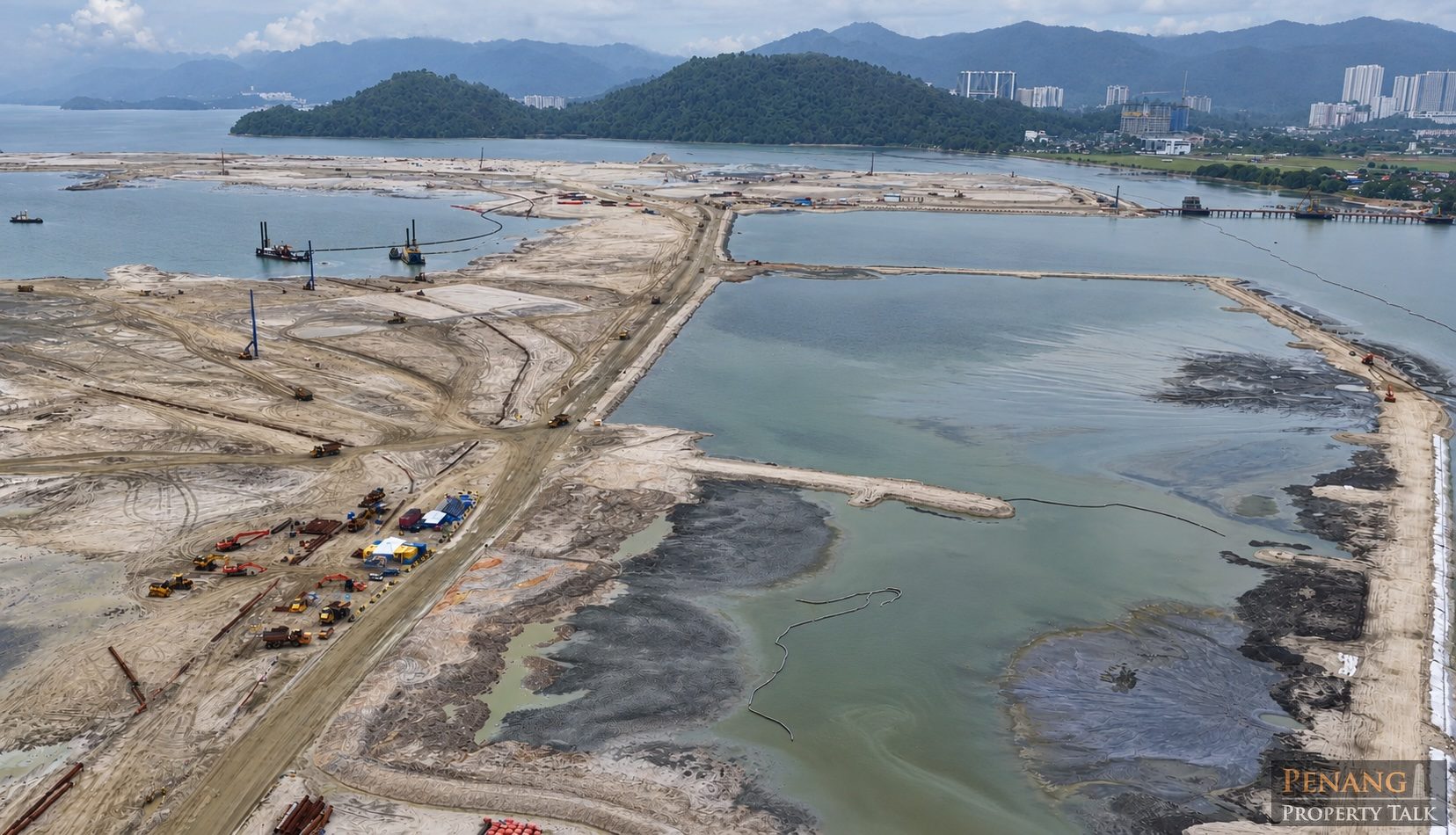
Silicon Island is expected to welcome its first factory in 2028, with the sale of industrial land at its 700-acre Green Tech Park scheduled to begin as early as the first quarter of 2027.

Chief Minister Chow Kon Yeow said the industrial park would focus on attracting high-value investments in semiconductors, automated test equipment (ATE), integrated circuit (IC) design and medical devices, positioning Penang as a green and sustainable technology hub.

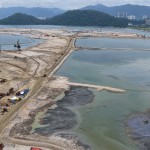
He said reclamation works on Silicon Island had reached 500 acres as of October 2026, representing 39.4% of its 1,270-acre Phase One development. A 64.85-acre site had also been prepared for the Mutiara Line LRT depot.

Speaking when tabling the Penang Budget 2027 at the State Legislative Assembly, Chow said Silicon Island was expected to generate long-term economic benefits. As of September 30, 2026, a total of 4,531 contracts worth RM1.92 billion had been awarded to local contractors and businesses.

Beyond Silicon Island, the state is also strengthening its semiconductor ecosystem through initiatives such as the Malaysia Automation, Test and Equipment (ATE) Campus in Batu Kawan. The Federal Government has allocated RM25 million for the project, while Penang is contributing 10 acres of industrial land worth approximately RM40 million.

Penang’s chip design ecosystem has also expanded, growing from around 25 companies to more than 50, supported by the Penang Silicon Design @5KM+ initiative.

Meanwhile, the proposed Penang Technology Finance Centre (PTFC), backed by a RM100 million strategic investment partnership between the Federal and state governments, aims to strengthen technology financing and attract further investments.

Chow stressed that these developments must translate into quality employment, higher incomes and suitable housing for skilled workers. Rumah Bakat Madani developments in Bandar Cassia, Batu Kawan, and Lorong Tenggiri, Seberang Jaya, are among the initiatives aimed at providing accommodation for professionals and industrial workers.

Other strategic developments planned by the Penang Development Corporation include Penang International Logistics Aeropark, Batu Kawan Industrial Park 3, Bandar Cassia Technology Park and the Seberang Perai Tengah New Corridor.

Together, these initiatives are expected to strengthen Penang’s position as a major technology and manufacturing hub while creating new investment and employment opportunities across the state.

Penang nears 80% of its 2030 affordable housing target

Property News/ 30 October 2026 No comments

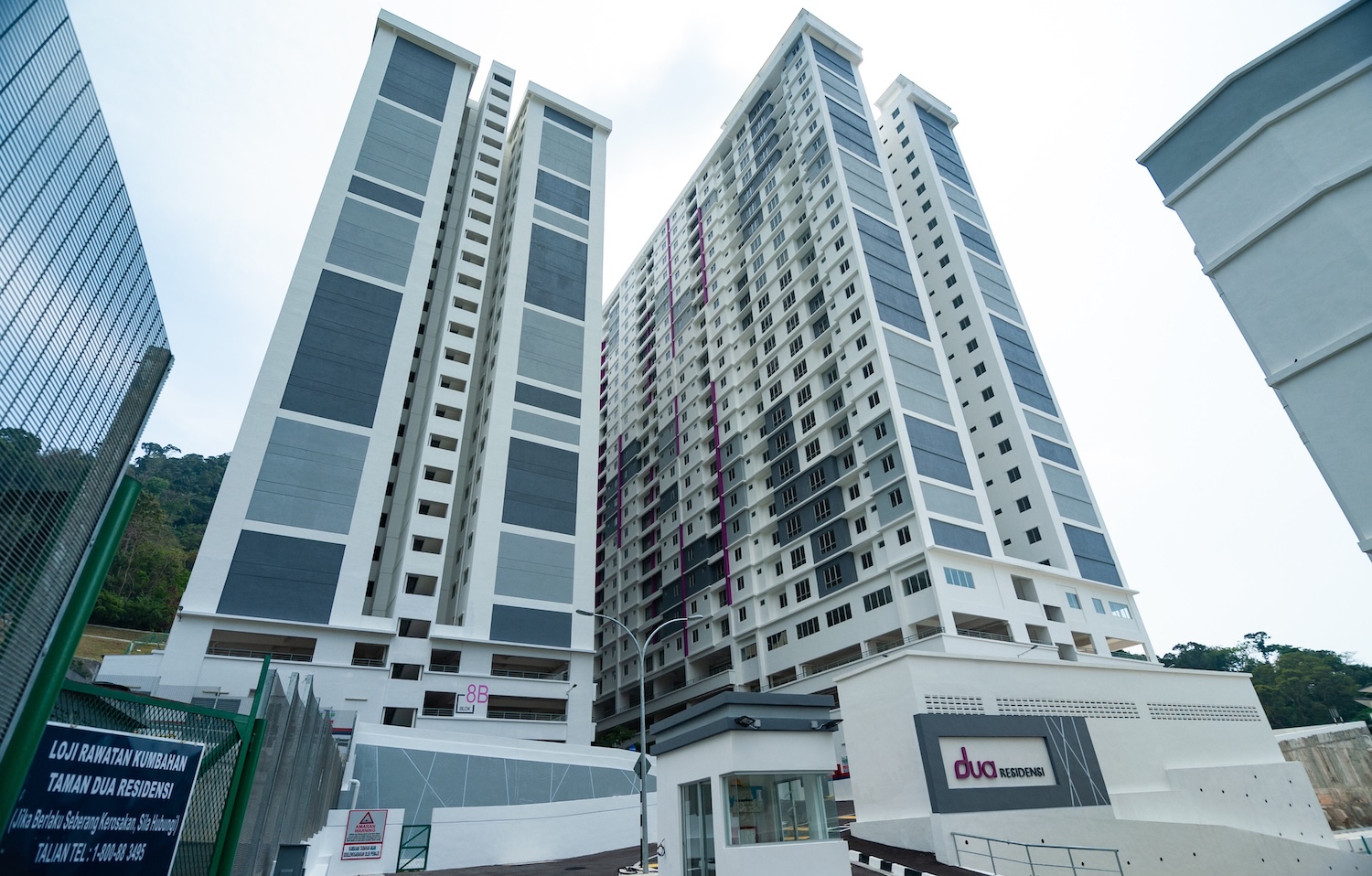
Dua Residensi

Penang has delivered 176,457 affordable housing units under its Rumah MutiaraKu (RMKu) programme, achieving 80.21% of its target of providing 220,000 units by 2030.

Chief Minister Chow Kon Yeow announced the figures when tabling the Penang 2027 State Budget at the State Legislative Assembly, highlighting the state government’s continued focus on expanding affordable housing opportunities.

He said the state would continue strengthening its housing agenda through additional RMKu developments, Rent-to-Own (RTO) schemes, urban renewal initiatives and the utilisation of suitable land for housing projects.

Under the Penang Housing Board’s 2021–2030 development blueprint, 22 projects have been identified, comprising 13 RMKu developments and nine urban renewal projects. These initiatives are expected to deliver a further 18,342 affordable housing units.

The state is also looking into changing housing needs, particularly among single individuals and elderly people living alone. In 2027, the Penang Housing Board will explore co-living concepts, potentially introducing them to selected state-owned rental housing and People’s Housing Programme (PPR) units.

Meanwhile, the state government has approved 578 residential lease extension applications since 2025, covering areas including Batu Kawan, Juru, Permatang Tinggi and Jelutong. The approvals allow eligible landowners to extend their lease tenure to 99 years.

Chow encouraged eligible landowners to submit their applications to their respective district and land offices in 2027.

On land taxation, Penang’s land tax review implemented in 2026 marked the first adjustment in 32 years. As at October 29, 2026, land tax collections reached RM167.59 million, an increase of RM51.54 million or 44.41% compared with RM116.05 million in 2025.

Despite providing a 50% land tax rebate and approving appeals for reductions, the state recorded higher collections. The government has agreed to continue the 50% rebate in 2027, subject to applicable conditions.

Penang named world’s most budget-friendly city for digital nomads

Property News/ 30 October 2026 No comments

gurney-bay

Penang has been named the world’s most budget-friendly city for digital nomads, topping a new international study that compared 26 cities across 15 countries.

The study, conducted by digital marketing agency Click Intelligence and featured in Moneywise in October, gave Penang an overall score of 0.78, placing it ahead of several popular destinations in Asia and Europe.

Busan in South Korea came second, followed by Kuala Lumpur in third place. Fukuoka and Seoul, both in South Korea, completed the top five. Other cities in the top 10 included Tartu, Chiang Mai, Valencia, Osaka and Brno.

The study estimated that living in Penang costs around €850 (approximately RM3,860) a month, including rent. It also highlighted the island’s affordable lifestyle, internet connectivity, safety and access to Malaysia’s DE Rantau Nomad Pass, which allows eligible remote workers to stay in the country for 12 months, with an option to renew.

Click Intelligence co-founder and director James Owen noted that language is rarely a barrier in Penang, where English is widely spoken, while Malaysia is generally considered a safe place to live.

Penang Tourism and Creative Economy Committee chairman Wong Hon Wai said the recognition reflected the state’s growing appeal among digital nomads and international visitors.

He added that beyond affordable living, Penang’s UNESCO World Heritage status, multicultural heritage, renowned food, vibrant arts scene and natural attractions make it an attractive place to live, work and explore.

The recognition also supports the state’s ongoing efforts to strengthen its tourism industry and creative economy.

Tags:

Iconic targets new Penang property launch in 1H 2027

Property News/ 30 October 2026 No comments
iconic-harmony-bm

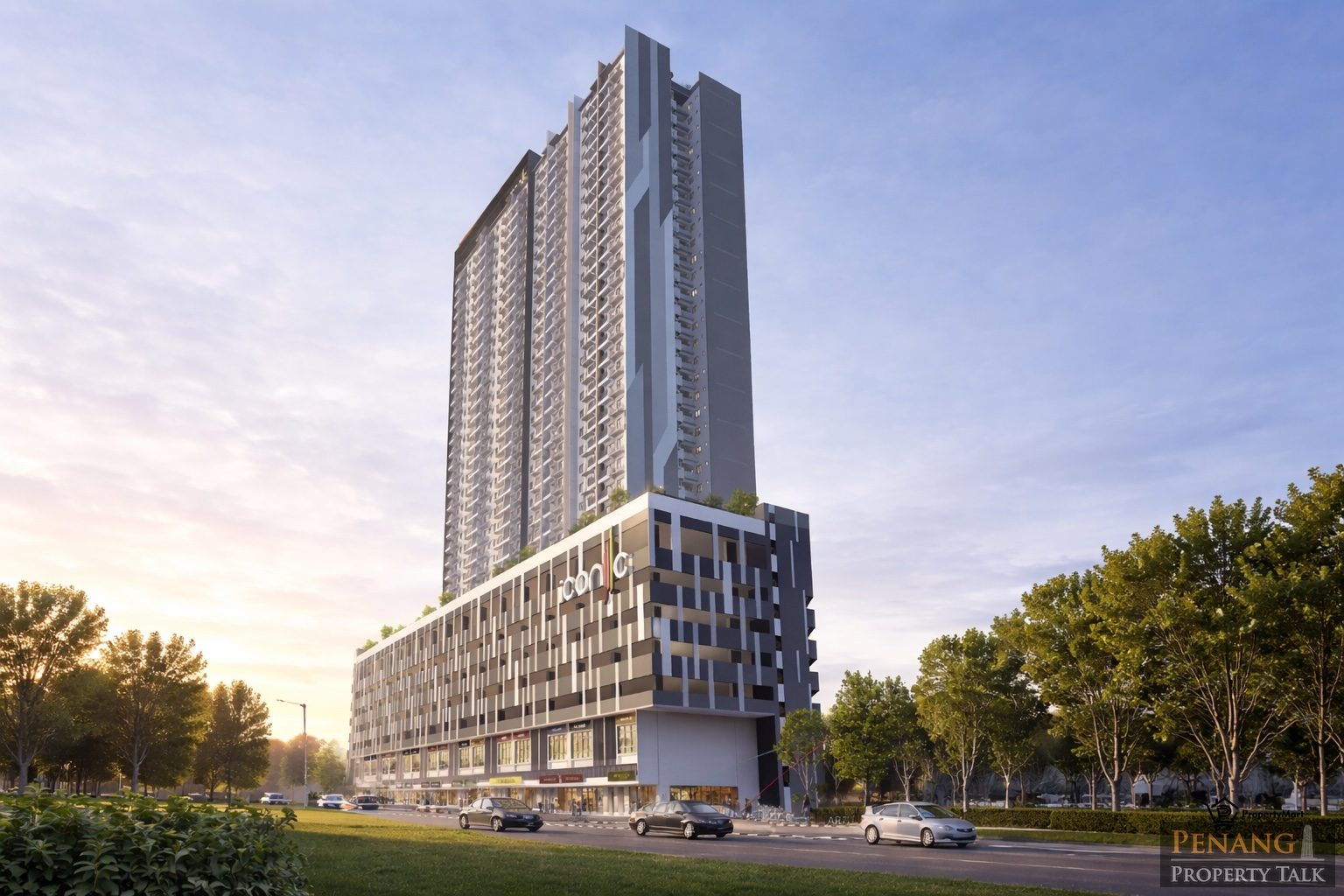
Iconic Harmony in Bukit Mertajam

Iconic Worldwide Berhad is preparing for its next phase of growth in Penang, with a new property development targeted for launch in the first half of 2027 as the group looks to strengthen its position in the state’s property market.

In its 2026 annual report, the group identified property development as its main growth driver for the coming financial year, with plans to maintain its development pipeline following the ongoing Iconic Harmony project in Bukit Mertajam.

Iconic Harmony comprises 751 affordable housing units with a gross development value (GDV) of RM250 million. The project is progressing towards its targeted completion in 2027, with units sold expected to be ready for delivery before the end of that year.

While details of the next development have yet to be disclosed, the planned launch signals the group’s intention to sustain its presence in Penang’s property market.

Property development drives stronger performance

Iconic Worldwide recorded a significant improvement in its financial performance for the financial year ended June 30, 2026 (FY2026), with revenue rising 84.8% to RM87.61 million from RM47.40 million a year earlier.

Property development contributed RM58.55 million, accounting for 66.8% of total group revenue. The segment’s profit before tax also increased to RM9.12 million from RM3.01 million in FY2025.

At group level, profit before tax climbed to RM11.49 million from RM3.06 million, supported by stronger property development performance and improved contributions from other segments.

The results underline the growing importance of property development to the group’s overall business strategy.

Hospitality and manufacturing provide additional support

Beyond property development, Iconic Worldwide is looking to strengthen its hospitality and manufacturing businesses.

Its hospitality services segment recorded a 50.7% increase in revenue to RM9.65 million in FY2026, returning to a profit before tax of RM408,000. The group expects further contributions from improved marketing, visibility and service delivery.

Meanwhile, its manufacturing segment is expected to benefit from rental income generated by leasing its manufacturing facilities to a third party, which commenced in April 2026.

Execution will be key

Looking ahead, the group faces the challenge of sustaining growth amid competition, construction costs and increasingly selective homebuyers.

Its annual report highlights affordability, location, connectivity and timely project delivery as important factors influencing property demand.

For Iconic Worldwide, completing Iconic Harmony and preparing its next Penang development for launch will be key priorities in the coming financial year.

With property development firmly established as its main growth driver, the next phase will be crucial in determining whether the group can maintain its financial momentum and build a more sustainable development pipeline in Penang.