fbpx

Own a Gated & Guarded Home in Penang

Property News/ 16 August 2014 No comments

Taman Cassa Maya, a gated and guarded housing scheme by Streamsville Sdn. Bhd. in Butterworth, Penang. It comprises 12 units of semi-detached and 115 units of terrace houses with wide range of exclusive facilities and swimming pool.

Call 012-481 8018 now and save up to RM68,838!

Here are 21 reasons why you should invest in Taman Cassa Maya:

  1. Landed Property – Land is valuable because demand is always more than supply.
  2. Gated & Guarded – 24 hours security to protect you and your family
  3. Low Booking Fee – Only RM5,000 to book!
  4. Refundable Booking Fee – If your loan is rejected, booking fee is refundable upon showing of rejection letters to the Developer
  5. Low Downpayment – Only 3% downpayment which is around RM20,000 only
  6. Promotional Rebate – Developer is generously giving out 7% (up to Rm68,838 of Saving), to help home buyer to own a quality property
  7. Free Sales & Purchase Agreement and Legal – Saving of approximately RM25,000
  8. Strategic Location – Located in the prime area of Butterworth, Sungai Dua. Adjacent to the proposed third link Undersea Tunnel that connects Penang island and Penang Mainland.
  9. Easy Access – Located next to the North- South Highway, 10 minutes to Penang Bridge
  10. Huge Potential of Capital Gain – A few well known developers have confirmed purchased lands nearby the site
  11. Low Price – Only RM278 per square feet, whereby other high rise condominium is launching at RM350 per square feet
  12. Phase 1 out of 4 – this is the phase 1 project from the developer, as you know phase 1 is always the cheapest to buy
  13. Low Density – Only 115 units of Terrace and 12 Units of Semi- D
  14. Good Feng Shui – careful considerate design according to Feng Shui. Direction as facing North East and South West to receive maximum positive Qi; benefit for health and wealth
  15. Ergonomics Design – Spacious 2 storey 2248 Square Feet of amazing built up for Terrace; building fully extended to unit lot boundary
  16. Exclusive edition – 12 units limited edition Semi- D, 39′ x 85′ land area with 14′ of Side Open Space
  17. Spacious car porch – 25 feet length (Terrace) & 35 feet length (Semi-D), can park up to 3-4 cars
  18. Club House – Swimming pool, Lounge, Gymnasium with pool view, Entertainment room, Wading pool and Reading Pavilion
  19. Theme Park – Themed Children Playground, Herbs & Spices Garden, Outdoor Exercise & Gym Area, Reflexology footpath, Lush Planting, Scenic Viewing Swing
  20. Landscape – 4 Season Linear Park and Pine Sanctuary
  21. You Need A Place Like This to Call it HOME!

Call now! 012-481 8018 for Booking…

[Sponsored Ads]

[Sponsored Ads]

Tags:

Taman Rebana Indah

Sungai Bakap/ 15 August 2014 12 comments

Taman Rebana Indah, a guarded residential development by Sunny Homes in Sungai Bakap, Penang.  Strategically located along federal road, with easy access to Penang Second Bridge via Jalan Perindustrian Valdor.

This project comprises 16 units of 2-storey semi-detached and 52 units of 2-storey terrace houses. Indicative price starts from RM394,800 onwards for the 2-storey terrace house.

Property Project : Taman Rebana Indah
Location : Sungai Bakap, Penang
Property Type : 2-Storey Terrace/Semi-detached
Land Area: 20′ x 70′ (terrace), 35′ x 75′ (semi-d)
Built-up Area: 1,800 sq.ft. (terrace), 2,340 sq.ft. (semi-d)
Tenure : Freehold
Total Units : 52 (terrace), 16 (semi-d)
Indicative Price: RM 394,800 onwards (terrace), RM514,800 onwards (semi-d)
Developer : Sunny Homes

Location Map:

Tags:

The Penthouse

Tanjung Tokong/ 13 August 2014 22 comments

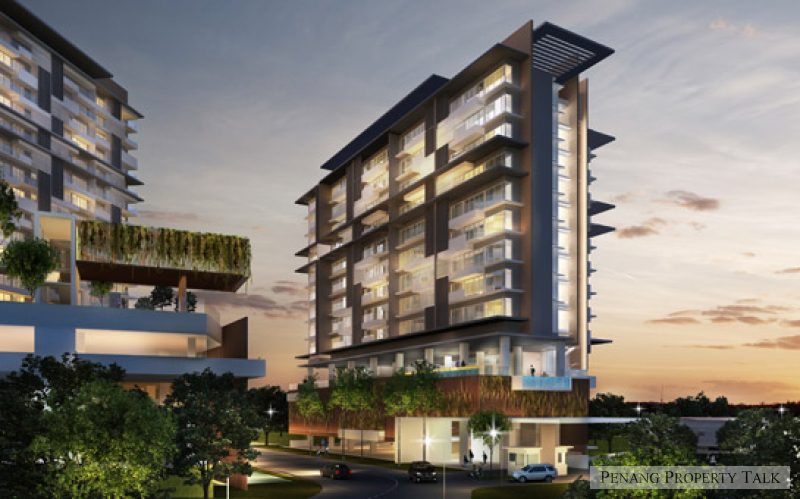
The Penthouse, a luxury high-rise development by Method 123 Sdn. Bhd. in Tanjung Tokong, Penang. This development is strategically located between Jalan Bunga Hinai and Jalan Gajah, next to Costavilla Condominium.

This 29-storey tower comprises only 22 residential units, with standard unit size ranging from 5,000 sq.ft. onwards. The penthouse of The Penthouse has a build up area of around 9,000 sq.ft.

Property Project : The Penthouse
Location : Tanjung Tokong, Penang
Property Type : Luxury Condominium
Built-up Area: 5,000 sq.ft. – 9,000 sq.ft.
Total Units :
 22
Indicative Price: RM 3,000,000 onwards
Developer : Method 123 Sdn. Bhd. (Tamarins Group)

Location Map:

Tags:

When GST is implemented and becomes the law

Property News/ 12 August 2014 9 comments

This month, we will explore the effects of the Goods and Services Tax (GST) on various types of properties when it comes into effect next year.

Residential properties will be exempted from GST. Hence, the seller is not allowed to charge GST on the sale, lease and rental of residential properties such as condominiums, link houses, bungalows, serviced apartments, apartments or upper floor units of shophouses which have been approved for dwelling purposes.

GST is standard-rated for commercial properties. The GSTregistered seller charges GST on the sale, lease and rental of commercial properties. This means that the commercial property buyers or investors will pay GST to the GST-registered seller on the purchase of commercial properties such as shops or retail lots, factories, warehouses, hotels and offices.

Only a GST-registered company that sells you the commercial property, such as in the case of a property developer, is allowed to charge you GST.

If you were to buy from a private seller who is not a GST-registered company, the private seller is not allowed to charge you any GST even though he is selling a commercial property to you.

A GST-registered buyer who buys a commercial property and uses the building to run a business selling GST taxable supplies is allowed to claim back on the GST incurred. The GST payable on commercial properties does not become part of his cost of doing business.

The unregistered GST buyer, however, will not be able to claim back GST for the purchase of the commercial property. The GST becomes his cost of investment.

When he sells the property later on, the GST he incurred which he cannot claim back, will likely be included in the subsequent selling price.

The determining of commercial and residential units is subject to the design (before property completion), usage (after property completion), registration with relevant authority or the Sale and Purchase Agreement (SPA). This information is useful to buyers, investors, business owners and property developers of commercial and residential properties as the differentiation of the two type of properties will affect the pricing, upfront investment and GST claim.

By MICHELLE LIAN

Source: StarProperty.my

Tags:

The effect of inflation on mortgage loan repayments

Property News/ 12 August 2014 1 comment

RM5 for a bowl of curry noodles? In my day, it was 50 sen!” Sounds familiar? No doubt you hear your parents and grandparents griping about today’s prices more often than not.

The reason for these price differences is simple and straightforward: inflation. We won’t go into the mechanics of inflation and its causes here; all we need to know in this context is that it devalues a currency over time by increasing the prices of goods and services.

Now, you might be wondering about the significance of inflation when it comes to mortgage loan repayments, and how you can utilize this knowledge. Let’s start from the beginning.

A misled mindset?

There’s a piece of conventional wisdom when it comes to property loans – pay them off whenever you have spare cash, and the more the better because you’ll be done with them earlier.

However, the opposite could ring true if you take into account the inflation factor. Simply put, RM1 – 30 years ago has a higher value than RM1 today due to inflation. Going by the same logic, RM1 now would obviously be of a higher value than RM1, 30 years down the line.

Imagine that a simple roadside meal will cost 10 times more, 30 years later. So, logically, paying ahead on your property loan instalments, you’d be using ringgit that would worth more compared to years down the line. Thus, wouldn’t you be losing out by paying more than you have to, despite shortening your loan tenure?

Inflation versus interest

Of course, the one major argument against this logic is that while you might save some money by outsmarting inflation, you would end up paying more anyway due to the huge amounts of interest over the years.

To gain a clearer understanding of the impact of inflation here, we have to get a little technical. Let’s take a home loan of RM450,000 paid over 30 years at a steady Base Lending Rate (BLR) of 4.2%. Your monthly repayment would work out to RM2,201.

For argument’s sake, let’s compare two hypothetical scenarios.

Scenario 1 – Standard repayments made to bank throughout tenure length

Scenario 2 – An overpayment of RM100 is added on each month throughout the tenure length

From the table above, it can be noted that overpaying your monthly instalments consistently throughout tenure will save you RM30,729 in total. But, does that value reflect the actual value saved when taking inflation into account?

Let’s now look at the two different inflationary scenarios to get a picture of how much value you actually stand to save from repaying earlier. All calculations are based on the discounted cash flow of the mortgage amortisation.

* Discounted cash flow payment = Payment/ (1+ (inflation rate)) number of months

If average inflation rate in Malaysia is at 4% throughout tenure: The amount saved after takinginflation into account = Only RM157in today’s ringgitThis is the value of the amountsaved based on present day value.

If average inflation rate in Malaysia is at 5% throughout tenure: You actually don’t save anymoney but end up “losing” moneyin a sense.The total amount lost after taking inflation into account = RM 2,786 in today’s ringgit.

From here, it becomes clear that by overpaying and saving that additional RM30,729 in the future, translated into today’s equivalent, the amount might be much less than you think simply because of the effect of inflation.

Summary

The mentioned scenarios were based on certain assumptions. What is more likely to happen is a random fluctuation in BLR and inflation rates over time. Still, the principles shown hold true.

What we want to highlight is how you can extract maximum value from your money by just following Loanstreet’s three simple rules for stretching the value of every ringgit.

In a nutshell:

  1. If loan interest rates are higher than inflation:-
    • Pay off your Loan (This article disregards investment options)
  2. If loan interest rates are lower than inflation = Use your money for either:
    • Investments or
    • Consumption items
  3. In most situations, keep only a minimum amount of cash (in savings/ Fixed Deposits (FD), etc, as your money generally devalues over time (Though there are certain exceptions).

One final note, please remember not to discount the importance of saving. There are times when you just might need that extra cash, or must save up for a future use. Do, however, practice wisdom and save just enough for practical purposes.

This is our simple guide to stretching the value of every ringgit.

>> Loanstreet.com.my is a website that helps Malaysians compare and apply for loans online, free of charge.

Source: StarProperty.my

Tags: