fbpx

UPCOMING: Bukit Tengah / Oriental Max Group

Bukit Tengah/ 25 August 2015 14 comments

upcoming-oriental-max

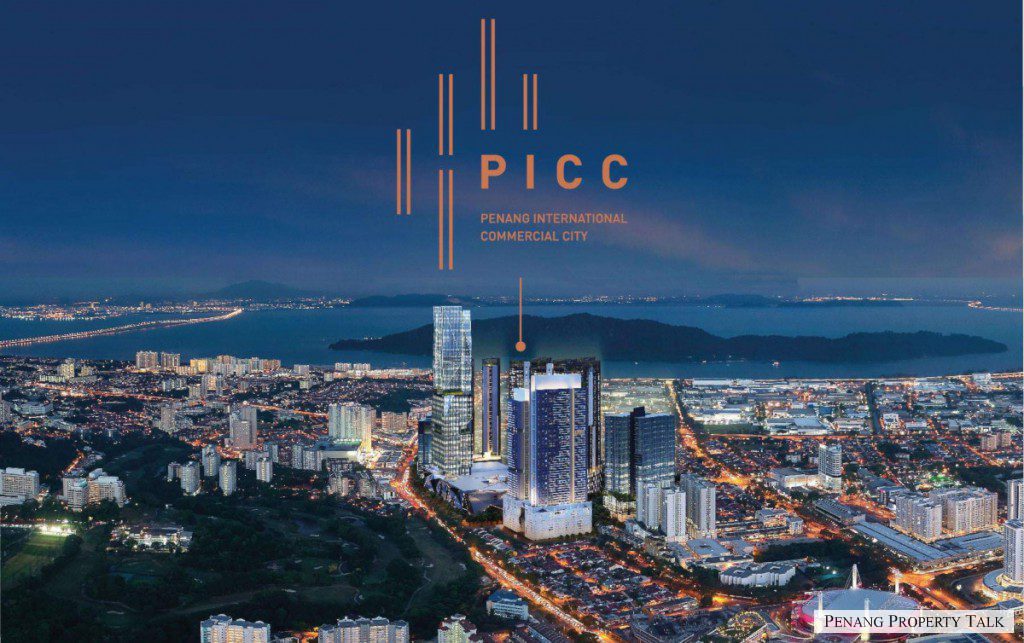
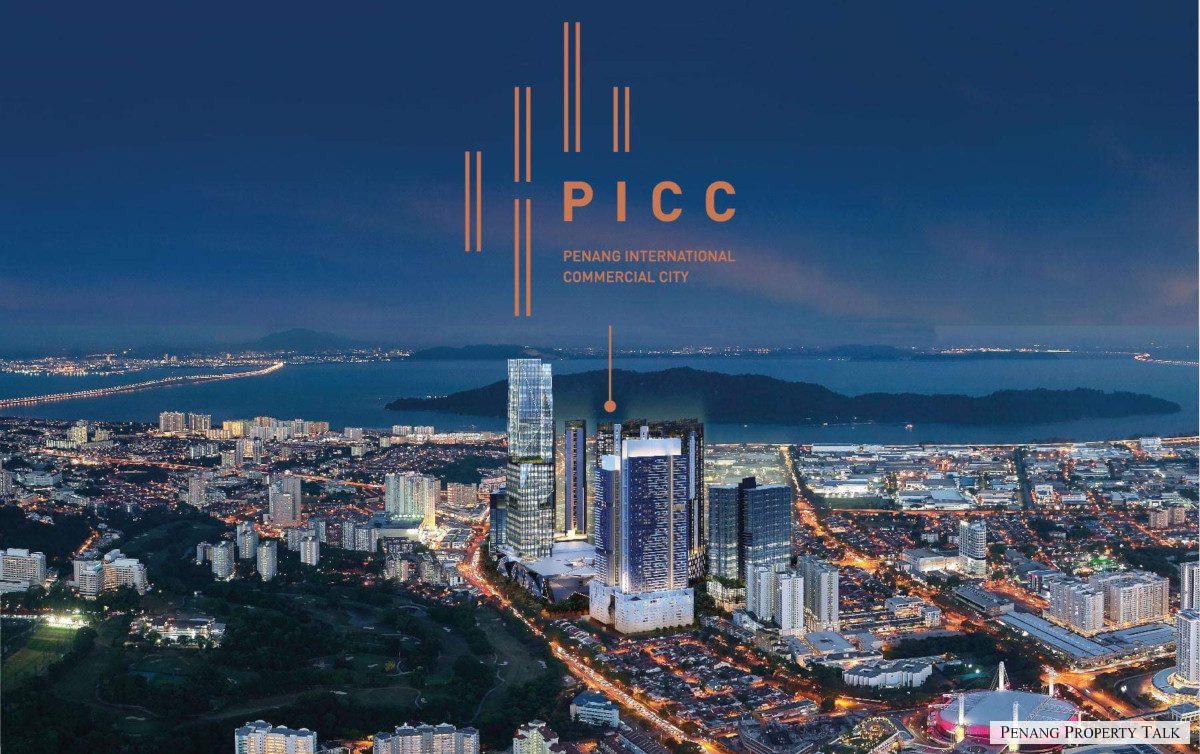
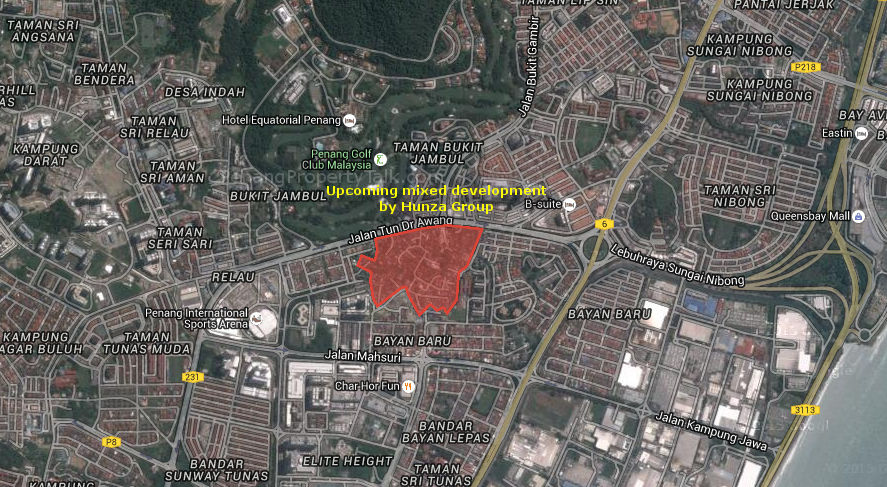
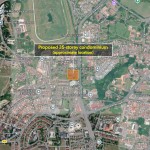
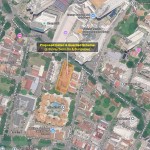
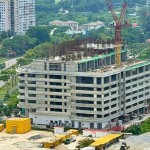
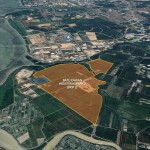
Upcoming commercial development by Oriental Max Group in Bukit Tengah, Penang. It is strategically located next the group’s gated and guarded project, Central Way 2. Highly visible from the North-South Expressway.

This development comprises:

  • 25-storey service apartment (391 units)
  • 6-storey motel (48 units)
  • 2-storey shop offices (26 units)
  • Detached commercial unit with mezzanine floor (6 units)

More details and photos to be available upon project launch.

Property Project : (pending approval)
Location : Bukit Tengah, Penang
Property Type : Commercial development
Tenure : Freehold
Developer : Ocean Mix Sdn. Bhd. (Oriental Max Group)

Tags:

Malaysia’s home prices ‘seriously unaffordable’, says Khazanah Research

Property News/ 25 August 2015 3 comments

seberang_perai_property_houses20140304_840_558_100Malaysia’s average house prices are more than four times the median income of its population, making them “seriously unaffordable”, research by Khazanah Research Institute (KRI) has revealed.

Kuala Lumpur has especially been branded as “severely unaffordable” with house prices 5.4 times higher than the median income in the capital city.

The maximum median range for housing prices compared to median income should not be more than three times the median income. But only one state in Malaysia fits the maximum median range: Malacca, where housing prices are three times higher than the median range. The rest are rated between “moderately” and “severely” unaffordable.

Terengganu is the most severely unaffordable of all the states, with median multiple affordability standing at 5.5.

In Kuala Lumpur, the median house price is now RM490,000 per unit, almost double the median house price ranges in all other states.

Penang was also rated as severely unaffordable while Selangor, Malaysia’s wealthiest state, has a median house price of RM300,000, putting it at the moderately unaffordable level.

The research was authored by Dr Suraya Ismail, Intan Nadia Jalil, and Puteri Marjan Megat Muzafar and titled “Making Housing Affordable”. It said that in the case of Kuala Lumpur, housing prices meant the distribution of house prices was “significantly skewed”.

“Of the new properties launched in Kuala Lumpur in 2014, there were no properties launched below the RM250,000 to RM500,000 price bracket, with the bulk of the newly-launched properties situated in the RM500,000 to RM1 million bracket,” it said.

The research was launched today by KRI chairman Tan Sri Nor Mohamed Yakcop, and entailed recommendations to reform the housing industry. According to the report, institutional reforms are needed to change Malaysia’s approach to housing policies. 

Source: TheMalaysianInsider.com

For those who are interested, you can DOWNLOAD FULL REPORT here.

Tags:

Penang Premium Outlets (Design Village)

Batu Kawan/ 23 August 2015 16 comments

design-village

Design Village, a world class shopping experience in a natural tropical park. Costing about RM300 million, the premium outlet will have net lettable area of 400,000 sq ft and contain 150 stores. The tenants will be a mix of luxury and premium brands. There will also be F&B outlets. So far, the tenants that have signed a memoradum of understanding include Hugo Boss, Armani Exchange, Calvin Klein, DKNY, Esprit, Samsonite, and Starbucks.

floorplan


Unlike other conventional premium outlet malls, Design Village features extensive shady landscaping, thoughtful water features, air-cooled covered walkways, considerate rest and seating areas, and the best of Penang’s hawker cuisine, making it a destination that promises a comfortable, enjoyable experience in Malaysia’s otherwise hot and inclement weather.

Less than 5 minutes from north south expressway and from Penang Second Bridge. It is now under construction and on track for a Christmas 2016 opening.


Tags:

RMAF’s Butterworth base relocation scrapped?

Property News/ 23 August 2015 No comments

Butterworth_RMAF_Air_Base_050914_HASNOOR_03_MAIN_ENTRANCE_TUDMMalaysia’s airmen may not be getting a new base in Butterworth, Penang, after all — news that will likely bring relief to residents and business operators opposed to the plan from the start.

According to a source familiar with the plan, the redevelopment of the new air force base for the Royal Malaysian Air Force (RMAF) in Butterworth, Penang, which has been in the works since early last year, may be scrapped altogether.

The source told the digitaledge DAILY that after the federal government granted in-principle approval to TSR Capital Bhd to enter into negotiations with the former to redevelop the RMAF base via a land swap in February last year, not much had happened.

“The project was stalled after much criticism and debate over the impact of the air force base relocation on the livelihoods of [the] people and business operators, and by the likelihood that it will be scrapped,” the source said.

On Feb 5, 2014, TSR Capital, a property developer and construction company controlled by its deputy chairman Tan Sri Lim Kang Yew with a 33.69% stake, announced to Bursa Malaysia that it — together with Lembaga Tabung Angkatan Tentera (LTAT) and Pembinaan Bukit Timah Sdn Bhd — will redevelop the existing 407.52ha air force base in Butterworth into an integrated mixed-use development with a potential gross development value of more than RM10 billion.

In return, the three parties are expected to build a new RM3 billion air force base for the RMAF at a different location.

It was reported that the RMAF base would be relocated to Ara Kuda, near Tasek Gelugor, while the seafront land currently occupied by the RMAF in Teluk Air Tawar, about 8km from Butterworth directly opposite Penang Island, would be transformed into “a city of arts, culture and leisure”.

When met recently, LTAT chief executive Tan Sri Lodin Wok Kamaruddin told the digitaledge DAILY that the fund was in the dark about the status of the air force base redevelopment and had so far not been updated.

He said this when asked on the status of the project and if the redevelopment of the air force base was still on the cards despite little news of the project.

“We are just a proposed passive party. We were invited [to participate in the redevelopment] since it is a military project, and why not if the government so decides,” he added.

Lodin, however, noted that the decision as to whether the project should proceed or not lies with the major stakeholder and not LTAT.

Under the collaboration, TSR Capital will get a 51% stake in the joint venture company, while LTAT and Pembinaan Bukit Timah will hold 30% and 19% stakes, respectively.

The project has drawn much criticism from the opposition, as well as residents and business operators located within the vicinity of the current RMAF base in Teluk Air Tawar, for its upheaval of the established neighbourhoods in its path.

It was reported that many, whose livelihoods were dependent on business involving RMAF staff, were worried that they would be at a great loss after the base’s relocation.

Some quarters have also voiced disparity over the proposed land-swap deal, saying it does not commensurate in value since the three companies will only need to fork out RM3 billion to build the new air force base in the outskirts of mainland Penang.

Penang Chief Minister Lim Guan Eng reportedly said that the state government would not change its stand on the matter, noting that the land-swap deal between the federal government and TSR Capital was “shrouded in secrecy”.

Tasek Gelugor member of parliament Datuk Shabudin Yahaya, who is also Penang Regional Development Authority (Perda) chairman, has also vocally opposed the plan to relocate the RMAF base, saying the new site in Ara Kuda for the base belongs to Perda.

He said Perda had earmarked the land for the building of low-cost and affordable homes.

TSR Capital (fundamental: 0.85; valuation: 2) shares have tumbled 52.3% from its Feb 7, 2014 close of RM1.30, losing RM79.08 million in market capitalisation. The stock closed down 4.62% at 62 sen last Friday, with a market cap of RM72.11 million.

Source: TheEdgeMarkets.com

Tags:

Leakage – A strata living nightmare

Property News/ 22 August 2015 No comments
Stiff penalty: Whoever fails to give access to the party carrying out the inspection commits an offence. The fine imposed is up to RM50,000 or imprisonment of up to three years or both, under regulation 63(2).

Stiff penalty: Whoever fails to give access to the party carrying out the inspection commits an offence. The fine imposed is up to RM50,000 or imprisonment of up to three years or both, under regulation 63(2).

If you live in a high rise building and have an inter-floor leakage issue, you can be rest assured that you are not alone. Inter-floor leakage is without a doubt one of the biggest problems faced by many dwellers of high rise buildings.

Whilst the leakage may appear only in a particular parcel, the source of the leakage may lie in the parcel above or even elsewhere. The cooperation of more than one party is therefore required; without which one cannot even begin to identify the problem, let alone solve it.

Two issues must be identified when there is an inter-floor leakage. Firstly, the source of the leakage and secondly, the person or body responsible for repair or rectification. Who is supposed to identify the source of the leakage to start with? The person or body responsible of course, you may say, but how do you know who is responsible before the cause of the problem is ascertained? A bit of a chicken and egg situation arises.

New Act

Will the new management Act answer to all ceiling leakages?

In February 2013 the Strata Management Act 2013 (SMA) was passed by Parliament. With that came a presumption in law, under Section 142 of the SMA, that if the leakage is on the ceiling, then such leakage is presumed to be from the parcel above unless it is proven otherwise. So, if you have a leakage from your ceiling, go to your upstairs neighbour and tell him/her that he/she is responsible and must therefore find the source of the leakage and do the repair. What if he/she disclaims responsibility? Simple, You just quote Section 142 of the SMA. What a magical section with a “one fits all” answer to ceiling leakages! I thought so too when I first read Section 142, but I was not completely right for the law does not place the entire responsibility squarely on the upstairs parcel owner.

It was to be another couple of years before the SMA was implemented in June 2015 but the good news is that with that came also the implementation of the Strata Management (Maintenance & Management) Regulations 2015 (SMR). Many thanks to those (including HBA volunteers) who worked tirelessly on drafting and fine tuning the provisions of the SMR, we now have some definite answers on what to do if you have a leakage from your ceiling.

Who is responsible?

In dealing with inter-floor leakage one must not just look at Section 142 of the SMA but also Part XV of the SMR. Indeed it is Part XV of the SMR which tells you what to do if you discover dampness, moisture or water penetration from your ceiling or if you were to go home one day only to find that it is raining in your apartment.

Go to the developer if you are still covered by the defects liability provisions.

If the leakage is still covered by the provisions of your sale and purchase agreement (SPA), follow the provisions of your SPA. For homebuyers, these are typically cases where the leakage or defect occurs during the defects liability period, and which the housing developers are required to rectify, as provided in the statutory SPA.

JMB/MC/Management first in the line of responsibility – regulation 56

If the leakage is not one which is covered by the SPA, then notice may be served by the owner of the affected parcel on the developer or the joint management body (“JMB”) or the management corporation (“MC”) or the subsidiary management corporation (“sub-MC”), as the case may be.

This is provided for in regulation 56(1) of the SMR. What regulation 56 essentially means is that you serve notice on the body responsible for the maintenance and management of the common property, which for convenience I shall refer to as “the management”. So, now you see, the party first in the line of responsibility is not your upstairs neighbour but the management.

Once notice is received, the management must, within seven days, carry out an inspection to determine the cause of the leakage and the party responsible for rectification (regulation 57). Thereafter, the management must issue a “Certificate of Inspection” stating the cause of the inter-floor leakage as well as the party responsible for rectification (regulation 59). A standard form certificate for this purpose can be found in Form 28 under the Second Schedule of the SMR.

So, what is the purpose of Section 142, you may ask? Section 142 merely creates a presumption that the defect lies in the parcel above. In practical terms, this does nothing towards resolving any inter-floor leakage issues other than perhaps as a starting point for inspection. After all, one cannot possibly rectify a defect which causes the leakage until and unless the actual defect is identified. The legal implication of Section 142, however, is perhaps best left to those much more qualified than I but I do wonder if this statutory presumption alone can be a valid ground for holding the upstairs parcel owner responsible and if so under what circumstances in light of the provisions of the SMR.

Determining factor(s)

Under regulation 58 of the SMR, the management must take into account not just the aforesaid presumption but also the following matters which to my mind are far more relevant once the defect is identified:-

(1) that any defect in something which serves more than one parcel is a common property defect; and

(2) that any defect in something which serves only one parcel is a defect of that particular parcel even though that something is situated in common property or in void space.

In other words, the determining factor is not the location of that defective something but which parcels that something serves. If it serves just one parcel, that particular parcel owner is primarily responsible and must rectify the defect failing which the management shall carry out the rectification works and charge the expenses to that particular parcel owner. I say primarily because whilst regulation 61 of the SMR imposes the obligation on a specific parcel owner such obligation is expressly stated to be without prejudice to that parcel owner seeking indemnity from someone else.

That of course begs the question of who can be held liable for such indemnity; a question which is beyond the scope of this article but I certainly will not rule out any parcel owner, including the affected parcel owner, who contributes towards the defect or any delay in the rectification of the defect.

The decision of the management is, as expected, not final. Anyone not satisfied with a decision made against him/her may refer to the Commissioner Of Buildings (COB) who shall ascertain the cause of the leakage and the party responsible in accordance with regulation 64(1) & (2) and the decision of the COB shall be complied with by all parties concerned.

Grant access for inspection or risk prosecution

It goes without saying: that neither inspection nor rectification works can be effectively carried out without access to all relevant parcels and common property. Hence, the imposition of a statutory obligation on all relevant parties to give access as provided by regulation 63(1) of the SMR comes as no surprise at all.

Whoever fails to give access to the party carrying out the inspection commits an offence! And the punishment is severe too; a fine of up to RM50,000 or imprisonment of up to three years or both, under regulation 63(2).

Given that the lack of cooperation on the part of some parcel owners/occupiers has remained one of the main causes of delay in resolving inter-floor leakage problems, these provisions are definitely a step in the right direction. It does puzzle me, however, that whilst a failure to give access for inspection tantamount to an offence, the same does not seem to apply to a failure to give access for rectification.

Some of you cynics out there may be tempted to brush this aside as something unlikely to be enforced by the authorities but do you want to take that chance? Do you really want to risk prosecution over something as simple as giving access for inspection and/or rectification?

Beside, now that the Strata Management Tribunal has been set up you may be slapped with an order much sooner than you think.

Chang Kim Loong AMN is the honorary secretary-general of the National House Buyers Association: www.hba.org.my , a non-profit, non-governmental organisation manned purely by volunteers.

Source: TheStar.com.my

In case you are interested, you can download the Strata Management Act 2013 here.

Tags: