fbpx

Mount Erskine – Serene Location Within The City

Property News/ 2 September 2015 No comments

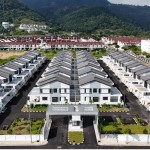
mount-erskineTanjung Tokong, a popular hotspot that has attracted many locals and appeals to a lot of holidaymakers. Nestled in the north east district of Penang, affectionately known as the Pearl of the Orient, its ascendancy to popularity originated from the early development of Seri Tanjung Pinang by E&O with product offering that includes luxury seafront residences.

As the days go by, the location itself has evolved into a vibrant and exciting brand. This has tempted many developers, taking advantage of the appeals of the location and the growing intensity of the brand, to continue to offer an abundance of high rise development projects. With more than 5,000 new homes in the making within Tanjung Tokong, it is adding undue stress to the vibrant development of the area and traffic is becoming a concern.

Popularity does indeed have its price. As it fast approaches the status of a high density category, an alternative yet an appealing choice for many home seekers is Mount Erskine, until recently an untapped market of inherent appeal of its own.

Mount Erskine

For those seeking tranquility and serenity of its surrounding, away from the hustle and bustle of city life and the nightmare of traffic congestion, this site would pose an attractive option.

Due to its elevated land and perched firmly on higher ground, high rise development in this area will be treated to a great spectacle of unobstructed panoramic view of the Andaman Sea. The site’s easier accessibility to schools within its vicinity, hyper markets and wet markets allows a greater sense of connectivity as convenience becomes an added advantage.

Coupled with the availability of popular hang outs, just a short drive away by car, this new possibility as an alternative to Tanjung Tokong is fast becoming a credible choice compared to other alternatives.

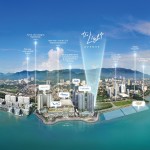
Mont Residence

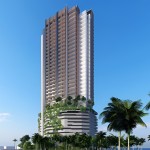
To live in a luxurious setting coupled with the stunning yet captivating view of the Andaman Sea definitely comes with a price that might be beyond the means of many however Mont Residence is an exception. It is able to offer luxurious living at an affordable price yet home seekers can expect only high quality product offerings from an esteemed developer that has aimed to carve a niche in quality lifestyle offering.

The difficulty in attempting to balance the element of luxury with affordable pricing might seem like an insurmountable challenge yet that is precisely what Mont Residence is confident in achieving.

Welcome then to the luxurious yet affordable possibility of Mont Residence.

* Click here for more details about Mont Residence *

[ Sponsored ]

Tags:

University Metropolis @ Batu Kawan

Batu Kawan/ 1 September 2015 36 comments

kdu-batu-kawan

Penang’s first university metropolis in the fast-growing district of Batu Kawan. The metropolis will be developed by Paramount Property, the property development arm of Paramount Corporation Bhd. This development will be anchored by a new purpose-built campus for KDU University College Penang, and featuring residential, commercial and retail elements.

The university campus will occupy 10 acres of land while the remaining 20 acres will be dedicated to a mixed development, with an estimated potential gross development value of RM1.3 billion.

The new KDU University College in Batu Kawan will feature a green campus with a comprehensive range of academic, sports and recreational facilities to create live-and-learn as well as work-and-play environments to stimulate and promote learning. The new campus is expected to be ready by 2018.

Tags:

Penang property market getting bigger and exciting

Property News/ 30 August 2015 No comments

penang-averageby Charles Tan

I think Penang property market is starting to get more advanced. There was a time when developments were just a few hundred million in terms of gross development value (GDV). Then the bigger players arrived and bought huge pieces of lands. There are now more integrated developments. On a yearly basis, if we use Q1 2015 as a benchmark the total transactions in terms of amount would be around RM6.2 billion. Do refer the attached image. Well, according to a report in a local daily, the total new launches in Penang by the major property developers are up to RM16.3 billion. All these launches are supposed to be launched within the next two years despite the current negative overall environment.

This RM16.3 billion of new developments include GDVs from IJM Land Bhd, Eco World Development Group Bhd and Sunway Bhd with RM4 billion, RM10 billion and RM2.3 billion respectively. As for those with existing developments, they include Mah Sing Group with RM2.09 billion GDV, Tambun Indah Land Bhd with RM4.1bil and Penang’s very own Ivory Properties Group Bhd with a GDV of RM2 billion. Yes, these would be just the major ones and there are still many other smaller ones. These new integrated developments are getting popular because many buyers are now exposed to all these lifestyle products. As for the developers, due to these developments being integrated, they are able to have the best of both worlds; residential and retail portions.

I think it’s great that majority of these developers are big names. They would definitely have deeper pockets and should be able to still continue launching these projects and attract many of their loyal buyers. As for investing in properties, it should always be for the long term. Based on the high loan rejections thus far as per many property players there, I think the market remain healthy and should have a more orderly price adjustments for both the developers’ launching price and buyers’ more objective assessments. Gone are the days when launchings in Penang meant queues which form days ahead. In fact Penang is having many new affordable projects from both the state government and private developers that I think would definitely have cooling effects which will benefit Penangites too. In the meantime, if you need a home, anytime is a good time to buy. Just buy within your means.

>> This guest article comes courtesy of my friend, Charles, the founder of kopiandproperty.com. He is popular for sharing his thought on property investment mostly based on his own 12 years experience as well as from all the readings and conversations with property gurus in the industry. (Source)

Tags:

The Stone

the-stone

The Stone, an affordable housing development by PLB Land in Paya Terubong, Penang. It is located immediately opposite Majestic Heights, only 1km away from the ongoing EcoTerrace scheme by EcoWorld.

This development is easily accessible via Jalan Paya Terubong, consists of the following components:

  • Block A: 19-storey building (188 units)
  • Block B: 28-storey building (812 units)
  • Shop lots (4 units)

READ MORE ABOUT AFFORDABLE HOUSING:

For registration details, you may refer to http://erumah.penang.gov.my/

Project Name: The Stone
Location :
Paya Terubong, Penang
Property Type : Affordable housing
Built-up Area: 1,000 sq. ft.
Indicative Price : RM298,000 onwards
Developer : PLB Land

Register your interest here

(This information will be used to keep you updated on the project and future development.)
*By submitting this Form, you hereby agree to our PDPA Consent Clause.

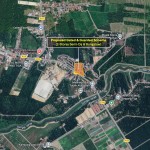
Location Map:


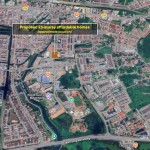
Progress update (March 2019) – by reader


SITE PROGRESS


Making housing more affordable

Property News/ 29 August 2015 3 comments
Suraya: ‘Housing affordability is a function of both house prices and income. It is a dynamic concept.’

Suraya: ‘Housing affordability is a function of both house prices and income. It is a dynamic concept.’

Khazanah Research Institute calls for a national housing survey.

Heard over radio. House prices expected to increase due to a weaker ringgit. Reinstate developers interest bearing schemes. Relax rules for foreign buyers.

In the last 18 months, developers have been bemoaning their fate. It came to a crescendo this year.

The result is that, many have deferred their launches.

There are two issues here. Prices are so high they are beyond the reach of even the middle-income group, which forms about 40% of the population. The lower-income group – the other 40% – lacks social housing.

This means 80% of the population are affected by housing woes.

A research report launched on Monday by Khazanah Research Institute (KRI) says “gaps are beginning to appear in the system, exemplified by the growing concern of middle-income households who are neither eligible for social housing nor are able to afford private sector-supplied houses.”

For about five years now, housing issues and affordability levels have dogged the headlines after house prices spiked in 2010.

Depending on location and type of housing, prices have doubled, tripled or quadrupled. While the Government has announced various social housing schemes in 2011 and 2012 to breach affordability levels, getting such units ready has been laborious.

Housing is an emotive issue. It is now more so than before.

Suraya: ‘Housing affordability is a function of both house prices and income. It is a dynamic concept.’

The architect of the report “Making Housing Affordable” is KRI research director Dr Suraya Ismail.

As a start, she says “housing must be viewed as an economic sector and not as a social welfare concern.”

It must be viewed in its proper perspective because housing is “an inalienable human right.”

It is normal for the people to seek good location, amenities, secure tenure, access to housing finance and a degree of mobility and choice. “This is the purpose of housing,” she says in the report.

As a first step, she recommends the government to conduct a national housing survey as a first step to guide the Government towards planning for a steady supply of housing at affordable prices based on demand and land suitability.

The survey is best undertaken by the Federal Town and Country Planning Department (JPBD) and the National Housing Department (JPN).

Suraya says such a survey would determine issues pertaining to affordability, household income, supply/demand and location.

“Housing affordability is a function of both house prices and income. It is a dynamic concept.”She also debunked the myths that high land prices and high construction costs result in high house prices.

“High housing prices cause land prices to go up, not the other way around,” she says.

Research in nine states shows that cost of labour, material and machinery and equipment receded from 2011 to 2012 – and continue to remain low – but prices continue to climb, the report says.

Her views on land prices concurred with that of a couple of property consultants who some years ago, commented that land owners were asking for high prices when they saw house prices spike.

Land owners were of the view that developers can – and will – factor this in when they market their units. Land cost makes up about a fifth of gross development value (GDV) in Malaysia. For plantation companies, it could be as low as 10%.

Suraya says a housing supply that is more equitable with household incomes requires certain reforms to be put in place and the restructuring of the current system.

She based her recommendations on the business and procurement systems of five Malaysian property developers and compared her findings with a Philippines company 8990 Holdings Inc, a mass housing developer who has successfully supplied social housing by marrying cost and time-saving building technology.

If a Philippines company can build a two-bedroom house with a swimming pool and priced it at about RM57,000, there is no reason why Malaysia can’t – that was the overall view of KRI.

She says the current system of design and construction undertaken by Malaysian developers is not cost effective. Although certain technologies were recommended a couple of years ago to speed up supply and to reduce cost, the reluctance to invest in research and development and training has hurt the sector.

Suraya recommends developing a designated procurement system to consolidate the resources of property developers involved in providing affordable housing.

A series of procedures beginning from the funding of resources, to contracting out the services for design and building and at the construction level should be set up. Each of these levels should involve a competitive tendering process which would help to cut costs, maximise savings and result in lower prices.

New production methods and new procurement systems are needed, she says.

Her second recommendation is to have a five-year no-selling cap. “Short-term speculative behaviour will only serve to increase house prices … and the impact is permanent,” she says.

Her third recommendation is to develop measures to plan for a steady supply of housing at affordable prices.

Each of these three recommendations are “inter-linked” and will only work if taken together, she says.

She says the current demand-led policy initiatives for social housing which focused on transferring physical or financial resources to low-income group need to change.

A new perspective on supply is needed as easy credit and government subsidy are unsustainable burdens, the first increases household debt and the second a burden to the government. Both do not stop prices from escalating.

“Social housing cannot be for 80% of the population,” she says.

Source: TheStar.com.my

Tags: