fbpx

UPCOMING: Butterworth / CBD Capital Sdn. Bhd.

Butterworth/ 1 November 2015 11 comments

Upcoming-by-cbd

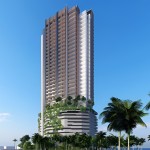
An upcoming high-rise development proposed by CBD Capital Sdn. Bhd. at Butterworth. This project comprises a 15-storey 205-unit service apartment with 3 retail units located at ground floor.  It will also comes with facilities such as swimming pool, gymnasium and etc.

This development is located just next to Butterworth Outer Ring Road (BORR), adjacent to Orange Garden housing scheme by Tah Wah Group. It’s about 10 minutes drive from Butterworth Ferry Terminal and the future Penang Sentral.

This is still pending for approval. Details to be available upon project launch.


Property Project : (pending for approval)
Location : Butterworth
Property Type : Service apartment
Total Units: 205
Indicative Price: (to be confirmed)
Developer : CBD Capital Sdn. Bhd.

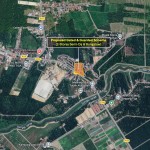
Location Map:

Good news for renters, not so much for buyers

Property News/ 1 November 2015 No comments

main_0111_PropertyMarketReport_azbPDFAre you currently renting or looking to rent? If you are, there might be some good news for you on the horizon.

Rental charged for condominium units is expected to drop by 20% to 40% due to an oversupply: as more and more of them become ready for occupancy and come onto the market, buyers are finding it difficult to sell their units for a good price and are being forced to rent them out for much cheaper than usual.

Siva Shanker, the immediate past president of the Malaysian Institute of Estate Agents (MIEA), says he is absolutely certain that for the next one to three years, the biggest winner will be the rental market.

“The guy who wants to rent will suddenly be able to find a nice, brand new condo with facilities for half the price it should actually go for,” says Siva, who is also the chief executive officer of PPC International Sdn Bhd, a property consultancy and real estate group.

This, he says, is because in 2012, 2013 and 2014, many properties were bought on speculation by those wanting to flip them – sell them – as soon as they were ready to be occupied.

And a lot of these condos will be ready at the end of this year and in 2016 and 2017.

These flippers, he says, did not put any of their money down because they took out a 100% housing loan (lending regulations were less stringent then) and also took advantage of DIBS, the developers’ interest-bearing scheme, in which the developer absorbs the interest of the housing loan during the construction period.

“They probably bought these units on the advice of some ‘property guru’ whose skills and credentials I would question.

“These investors clubs made a mess by telling people to buy, say a RM600,000 unit, as they would be able sell it off for RM900,000 in three years’ time when it is ready. So that fellow (the flipper) thinks he can make RM300,000 out of thin air. He only bought it because he took advantage of the DIBS and the 100% loan. Otherwise, he wouldn’t have been able to buy.”

Siva says a lot of properties that were bought in this way in 2012 and 2013 are going to become ready and available at the year-end and in 2016.

That is when the problem starts. Because with the property completed, the DIBS comes to an end and the housing loan kicks in, so the buyer will now have to start servicing his loan.

Because of the economic slowdown, the political uncertainties affecting sentiment, and the tighter banking regulations now, the buyer who bought a unit with the intention of flipping it right away might now find it difficult to sell even if he drops his price.

“He wants to sell it at RM900,000 but there are no takers at that price, so he drops the price to RM800,000 and still there are no takers, down to RM750,000, RM700,000, still no takers, and now he is at RM650,000, which is dangerously close to how much he bought it for, and he is panicking like mad.

“The bank doesn’t care if the market is good or not. You still have to pay the bank loan,” says Siva.

Siva says some buyers might end up losing their properties because they can’t pay their loan instalments and it becomes a non-­performing loan (NPL); some would struggle but somehow manage to service their loan; and then there are those who might choose to rent out their unit rather than sell it at such a low price.

“The buyer (flipper) might ask for RM3,500 rental but not get it, then he’ll drop the rental, then drop it and drop it again to RM2,000 or RM1,500 … so it will be a renters market,” he says.

However, Siva stresses that it is not the entire housing sector that will be affected by lower rents; this would apply only in selected speculative sectors.

“I think it will be with the RM500,000 to RM800,000 condos, the high-end residential condos and shoebox units like SoHo, SoVo and SoFo, which have been built by the ­dozens,” he says, referring to different types of small commercial units, the small-office-home office, small-office-virtual-office, and small-office-flexible-office.

He expects projected rentals to drop by 20%, 30% and 40%, adding that these projected rentals were already a bit too high to start with.

However, Siva does not think there will be a massive non-performing loan problem as in the 1997-98 financial crisis.

“My opinion is that even though the rent might not cover their monthly instalment, at least it’ll cover half, and they ll top up the other half.”

As for those wanting to buy homes, Siva advises looking further afield because land that can be developed in the cities is scarce and very pricey.

Even during the current economic slowdown, prices of property in the Klang Valley have not come down, he says.

Nevertheless, Siva claims, even though all the data is not in yet, he can tell that 2015 will end up looking like a bad year for the property sector.

This is the case, he maintains, even though there was actually a slight improvement in the volume of transactions in 2014 compared with 2013.

“It was very small but an improvement, nevertheless. All of us thought ‘great, the down side is over’. ”

Then, for the first three months of 2015, people were like “ostriches who dug their heads into the sand and stood still”, as ­buyers refused to buy and sellers refused to sell because of the GST.

“We thought ‘Okay, everywhere in the world it was the same human reaction when the GST was first introduced’.

“We predicted that through April, May and June, the market will get used to the GST and learn to adapt, and learn it’s not the end of the world after all. It’s just a bit tough but let’s get on with things.”

But, he says, just as people were getting used to the GST, the 1MDB issue “cracked open”. And when the Wall Street Journal published the report on money (RM2.6bil political funding) going into Prime Minister Datuk Seri Najib Razak’s personal account, people panicked and there was a bit of a halt in the property market, Siva says, adding ruefully, “Malaysians constantly have knee-jerk reactions.”

So the recovery the experts were expecting to see in the third and fourth quarter did not happen.

“We are now into the final quarter of the year. I do not believe we will see an improvement,” he says.

“What we have to do is write off 2015 as a bad year and put it in our pocket and forget about it. And say to ourselves that life cannot end. It must carry on.

“Let’s just ride this out, and let’s start all over again with vigour next year.”

He predicts there will be a bit of interest coming back in the first quarter of 2016 and that in the second quarter, the market will be just about ready to recover.

Source: TheStar.com.my

Tags:

Debating DIBS for the property market

Property News/ 1 November 2015 No comments

wahidomar0111The Government is considering housing developers’ request to reintroduce DIBS (Developers Interest-Bearing Scheme) for first-time house buyers.

Minister in the Prime Minister’s Department Datuk Seri Abdul Wahid Omar says the Government is discussing whether to relax current buying and lending guidelines for first-time house buyers.

“It is still at the discussion stage,” he says after the opening of the 2015 Malaysia Property Exposition (Mapex) on Friday. Today is the last day of the expo, which is being held at the Mid Valley Exhibition Centre, Kuala Lumpur.

“As much as we want to promote home ownership, it is important that we make sure that home ownership comes with the ability to service the loans.

“The last thing we want is to force people to own homes and take up loans which they are not able to service later.”

But he says the Government recognises the request by the Real Estate and Housing Developers’ Association (Rehda) to see how they can help young families who are renting and, at the same time, are in the process of buying their first house.

“If they were to buy a house now, it takes three years to complete and they have to continue paying rental for the house they are staying in. But at the same time, once their loan is disbursed progressively for the house they bought, they have to service it, and some people can’t deal with both together (house rental and house loan instalment at the same time),” says Wahid, explaining why developers have requested for DIBS to be reintroduced for first-time buyers.

DIBS is a scheme in which the developer absorbs the interest of the housing loan during the construction period, which means that the house buyer does not need to service the loan until the house is completed, which usually takes about three years from the time the development is launched.

However, this has led to excessive ­property speculation, as people who could not really afford the loans were using DIBS to buy properties because they could do it without putting down any of their money, with the intention of selling – or flipping – the house upon its completion to make a quick profit.

The other widely acknowledged issue with DIBS is that when developers absorb the interest from loans for house buyers during the construction period, they ­inevitably pass that amount down to the house buyer in the form of higher prices for the completed house compared with prices for a house without DIBS.

In November 2013, Bank Negara tightened lending guidelines and curbed DIBS.

When the 2016 Budget was announced recently, the First House Deposit Scheme was introduced with RM200mil allocated to help first-time house buyers afford their down payment.

Wahid says the Government has not yet determined whether this will also apply to second-hand homes or be confined to newly-built property only.

“The main intention is to assist first-time home buyers. It is important to observe the spirit and intention. We appreciate that for many young families to come up with that 10% down payment can be challenging.”

As for complaints that people are finding it hard to secure housing loans because the regulations have been tightened, Wahid says that when the Govern­ment surveyed the banks, the banks told them that the rejection rate for loans is less than 20%.

“This is where we need to look at the detailed data because there might be some screening at the developers’ end.”

He says the cooling measures the Government introduced over the past few years, such as responsible lending guidelines, have had their desired impact in curbing excessive speculation and moderating rapid growth in household debt.

He makes it clear that these measures are not meant for first-time house buyers but rather for those who are buying their third property onwards.

For Wahid, it is crucial for developers and those in the property sector to innovate and embrace new technologies to keep costs low.

He points out that the construction industry is facing productivity-related issues that need to be addressed.

These issues, according to Wahid, include a low-skilled work force, inadequate or a mismatch in training and development, over-reliance on low-skilled foreign labour, limited adoption of modern practices, mechanisation and industrialised building systems (IBS), the lack of data and information-driven decision-making, and a limited adoption of information technology such as building information modelling.

However, Rehda president Datuk Seri F.D. Iskandar Mohamed Mansor claims that 50% of housing loans are being rejected and urges the Government to relook some of its cooling off measures.

“It has taken a toll on developers. We are facing challenging times,” he says.

He says it would help if developers are given GST relief for constructing low-cost and affordable homes.

Iskandar also says another issue affecting the industry is rising “compliance costs”.

When they build something, he says, there are Federal Government and State Government regulations to comply with, and doing so can be costly.

Citing new infrastructure costs, he says this is now being passed down to the developers when it was not the case five to six years ago.

He says land takes up 15% to 20% of the development cost, and compliance costs, which used to be about 5%, now has gone up to 20% in some states.

Source: TheStar.com.my

Tags:

Penangites are hoping a rail-based transport system will be the answer

Property News/ 30 October 2015 2 comments
There are daily traffic jams in Jalan Masjid Negeri during the morning peak hours.

There are daily traffic jams in Jalan Masjid Negeri during the morning peak hours.

Slow-moving traffic has become the daily bane of road users on Penang Island and has recently gotten worse.

With a population of 752,800 people, the island had 1.03 million private car registrations in 2014 – a staggering increase of 32.9% in seven years from 2008.

Road users commute for various reasons and the most common is out of necessity. The existing roads have failed to keep up with the increasing number of vehicles and this has increased traffic snarls.

Daily congestion

Nur Ruzzana Md Hashim, 29, a customer service executive who works in a logistics company in the Bayan Lepas Free Industrial Zone (FIZ), battles traffic congestion daily.

“I spend an average of two hours daily on the road as there are bottlenecks in the FIZ area during peak hours, compared to only 15 to 20 minutes in the past.

“It is worse when it rains. I will need to leave home earlier in order to reach the office on time after dropping off my children to school,” she said.

Besides being wearied by the long commute and lack of rest, she lamented the impact of the time spent on the road.

“The long hours spent on the road leaves little time for me to have quality time with my family.

“Besides that, living expenses have gone up and so has my fuel consumption with the traffic congestion. I spend more than RM50 a week on fuel for a one-way distance of 6km.”

Those who have to endure the long commute from the mainland to the island for work or leisure are also feeling the impact.

While congestion and scarce parking are interrelated, insurance manager Gobal Narayanasamy, 42, finds this situation going from bad to worse.

“Coming from Bukit Mertajam, the daily traffic congestion is causing me delays in going to work.

“When I’m on the island, it’s very challenging to look for parking spots in town and at shopping malls. During the festive seasons, parking is a nightmare altogether,” he said.

Another mainland resident, Sher Ibrahim, 43, was not impressed with the current road conditions with not many alternative routes available.

“Road construction will not solve this issue in the long run, even the second Penang Bridge does not divert much traffic from the first bridge and in my opinion, is not the faster and cheaper route to the island,” he explained.

New infrastructure needed

The current traffic congestion calls for finding an immediatesolution besides strengthening the existing roads.

To the relief of Penangites, the state government recently unveiled the RM27bil Penang Transport Master Plan (PTMP) which is aimed at tackling the traffic congestion by 2030 and ensuring Penang’s prosperity beyond 2050.

Postgraduate student of Universiti Sains Malaysia, Nur Fatinah Abu Hassan, 24, resides on campus and relies heavily on public transport to get around the island during class-free days.

When asked about the state’s current public transport situation, she said it lagged behind other developing cities such as Kuala Lumpur, Petaling Jaya and Shah Alam, which has the Klang Valley Mass Rapid Transit Line 1 and 2, and the Klang Valley LRT Line 3, LRT Kelana Jaya Line, LRT Ampang Line, KL Monorail and KTM Komuter.

“I find the service of the local bus service operator Rapid Penang nowhere near satisfactory.

“The waiting time to go from Sungai Dua to the Sungai Nibong Terminal (approximately 2.3km) is around 30 minutes to one hour and the buses don’t really run according to schedule although it is one of the most used bus routes in Penang,” she said.

“The buses in Kuala Lumpur are much more frequent and on time.”

However, she welcomed the idea of the PTMP as a way to improve Penang’s transport system.

“It is good news for commuters like me when our government is taking measures to address the traffic issues while working towards making public transport more efficient as an alternative travel mode, especially with the proposed Light Rail Transit (LRT) and monorail,” she said.

Sustainable solution

To many Penangites, it is high time the state has a new form of land public transport besides buses and taxis.

Besides curbing traffic congestion, the rail-based public transport proposed by the government will be more reliable than other forms of public transport and reducereliance on private vehicles.

Mohd Yunus Yoon, 62, is concerned about the current state of congestion.

“It wasn’t like this 20 to 30 years ago. Traffic congestion started to worsen year by year about five years ago. How long more do we and the next generation have to endure before this gets worse?”

Mohd Yunus is looking forward to rail-based public transport on the island that is more environmental-friendly and provides good accessibility.

“I feel that this cost-efficient transport option will be a step in the right direction in changing the public transport scene in Penang.

“It will also reduce pollution caused by the many private vehicles on the road.

“It would be great if it covers major areas on the island such as George Town all the way to Bayan Baru. It is something people can look into,” he concluded.

Rashid Ismail, 42, who works in one of Penang’s well-known hotels, gave his thumbs up to the PTMP.

“It is timely for the government to introduce transport infrastructure that can cater for generations to come. They should go all out for it as it will benefit us all. It is a win-win situation for the residents and travellers as well.

“This will open up new opportunities for Meetings, Incentives, Conference and Events (MICE) tourism and leisure market for Penang.” he said.

Narayanasamy and Sher Ibrahim are also positive that the introduction of LRT will translate into shorter travelling time and also be cost-effective as they would not need to rely so much on their own private vehicles.

Addressing the traffic congestion could also mean a vast improvement in the quality of life.

“With an efficient public transport, I will be able to get to my destination quickly and without worrying about traffic congestion,” concluded Nur Fatinah.

Ending congestion in Penang is no longer an option and it is time for Penangites to live in a city where travelling between destinations become more convenient, accessible and stress-free.

Source: TheStar.com.my

Tags:

AFFORDABLE: Bukit Mertajam / Villa Acres Development S.B.

Bukit Mertajam/ 29 October 2015 5 comments

affordable-villa-acres-jalan-betek

A newly proposed affordable housing project by Villa Acres Development Sdn. Bhd. at Bukit Mertajam, Penang. If approved, this will be one of the very strategic affordable housing location in the mainland that I have known so far. It is strategically located along Jalan Betek, easily accessible via the ever bustling Jalan Song Ban Kheng. Amenities such as schools, market, banks, shopping malls and eateries are only a few minutes drive away.

This development comprises a 19-storey highrise building with 281 affordable units. Being an affordable housing project in the mainland, it is expected to be priced below RM250,000.

This is still pending for approval. Details to be available upon project launch.


Property Project : (pending for approval)
Location : Bukit Mertajam
Property Type : Affordable Housing
Total Units: 281
Indicative Price: Up to RM250,000
Developer : Villa Acres Development Sdn. Bhd.

Location Map: