fbpx

Juru Interchange Upgrade

Property News/ 20 April 2016 1 comment

juru-interchange-upgrade

As part of the Penang Transport Master Plan (PTMP), the Juru Interchange is expected to be upgraded into a “Diverging Diamond Interchange”. Also called a double crossover diamond interchange, is a type of diamond interchange in which the two directions of traffic on the non-expressway road cross to the opposite side on both sides of the bridge at the expressway.

The proposed upgrade will help address the severe congestion that occurs at the interchange along the North ­South Expressway and at the Jalan Kebun Nenas-Jalan Perusahaan signalised T–junction, which is only 160m west of NSE.

One of the main problems that cause congestion at the existing signalised diamond interchange is that it is operated with long cycle times during peak hours, comprising of four split phases.

During peak hours, long queues form on the approaches and the high turning movements onto the NSE also result in persistent ‘weaving’ (conflicting lane changes). Long queue times and ‘weaving’ significantly reduces the efficiency of the inter­connecting junctions at the interchange.

The proposed Juru IC improvement scheme to mitigate the current congestion essentially involves:

  • Lane widening.
  • Converting the Juru Interchange into a “Diverging Diamond Interchange”.
  • Synchronising traffic signal timing with the Jalan Kebun Nenas-Jalan Perusahaan junction.

This is definitely a good news for those are are staying around Juru, Bukit Tengah, Bukit Minyak and Jalan Song Ban Kheng.

* Click here to find out more about Penang Transport Master Plan (PTMP) *


Mahkota Promenade

Bukit Mertajam/ 20 April 2016 4 comments

mahkota-promenade

Mahkota Promenade, an upcoming commercial development with direct frontage along Jalan Rozhan and AEON Mall. It is located right in front of Mahkota Impian Serviced Apartment, about five minutes walk from AEOM Mall and Tesco Hypermarket.

This development comprises 23 unit of 3-storey shop offices with mezzanine floor. Indicated price starts from RM2.2 million onward.

Project Name : Mahkota Promenade
Location 
: Alma, Bukit Mertajam, Penang
Property Type : 3-storey shop offices
Land Area: 22′ x 64′ onwards
Total Units: 23
Indicative Price: RM2,200,000 onwards
Developer DNP Land (WingTaiAsia)

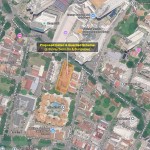
Location Map:

Tags:

Penang commercial property transaction value up by 19%

Property News/ 20 April 2016 No comments

bizd_2004_CommercialMarketPerformance_azbPDFCommercial property transactions were down in both value and volume last year compared to the previous year.

According to the National Property Information Centre’s (Napic) 2015 Property Market Report, a total of 31,776 transactions worth RM26.4bil were recorded in the commercial property segment last year.

This was down by 10.6% in volume and 17.1% in value compared to 2014.

Penang was the only state that held strong despite fallen market activity, having registered an increase of 19% in terms of transaction value, while other major states succumbed to double-digit declines.

Selangor remained in the lead with a 23.5% market share, followed by Johor and the Federal Territory, with a 14.2% and 12.8% share.

As for the shop sub-sector, there were a total of 17,181 transactions worth RM13.31bil in 2015, making up 54.1% of the commercial property transactions.

However, the sub-sector’s volume was reduced by 14.7% and by 11.2% in value, indicating that market activity was on a downtrend.

In Kuala Lumpur, prices of shops showed mixed movements, with increases recorded in established commercial areas served with efficient road linkages.

Two-storey shops in Bangsar’s Lucky Garden fetched more than RM4mil per unit and more than RM6mil in Bangsar Baru, while others were mostly above RM1mil.

Meanwhile in Johor, prices of shops were stable with increases in selected commercial areas served with good infrastructure and road linkages.

Two-storey shops in Johor Baru experienced capital growth of between 2.6% and 15.6%, driven by better accessibility via the Eastern Dispersal Link.

Furthermore, the ground floor shops’ rental segment was largely stable with increases in selected areas.

The rental market for shops remained firm, particularly those located in prime areas such as Jalan Bukit Bintang, Jalan Tuanku Abdul Rahman and Jalan Masjid India, which peaked as high as RM25,000 per month.

In addition, eleven shopping complexes’ transaction worth RM922.32mil was recorded during the review period, with two each in Johor and Negri Sembilan, one each in Kuala Lumpur, Malacca and Sabah, while another four were in Selangor.

Significant transactions, which include 2014 transactions with sales concluded in 2015, were the sale of The Shore in Malacca, Subang Avenue in Subang Jaya and KL Festival City.

The retail sub-sector recorded a slight improvement in occupancy from 81.8% in 2014 to 82.4% in 2015, with a take-up rate amounting to more than 8.39 million sq ft.

Higher take-up spaces were observed in Selangor, with more than 2.15 million sq ft, while Sarawak and Penang each secured more than 1.07 million sq ft.

Apart from Kelantan which recorded negative take-up rate, all other states were positive.

The performance of the three components that form a shopping complex were also commendable – hypermarkets (92.1%), shopping centres (80.8%) and arcades (75.9%).

Shopping centres accounted for 51.3% of the total shopping complexes and 72.1% of the total existing retail space in the country.

As at end-2015, there were 148.86 million sq ft of existing retail space from 932 shopping complexes.

There were a further 64 complexes with 16.25 million sq ft in the incoming supply category and 38 complexes with 11.09 million sq ft in the planned supply segment.

Selangor dominated the existing retail space, while Kuala Lumpur dominated the incoming and planned supply segments.

Source: TheStar.com.my

Tags:

Fewer property launches seen due to softening market and bleak household sentiment

Property News/ 20 April 2016 2 comments

bizd_p3a_2004_jy_1There will be fewer new property launches this year in light of the softening market and bleak household sentiment.

According to the National Property Information Centre’s (Napic) 2015 Property Market Report, the number of new launches fell to 70,273 units, down by 19.2% against 2014 (88,997 units).

However, Deputy Finance Minister Datuk Chua Tee Yong expects more demand for affordable homes, namely those below RM500,000, despite the slowdown.

“About 80% of transactions last year were for homes below RM500,000 and we expect more demand for such properties,” he told reporters following the launch of Napic’s report.

According to Napic, major states such as Johor and Penang saw substantial declines in new launches, down by 42.8% (9,428 units) and 47.5% (2,348 units), respectively.

“The overall sales performance for the country hovered at 41.4% (29,089 units sold), lower than the 45.4% (39,491 units sold) performance in 2014.”

Napic added that Kuala Lumpur, Selangor and Johor remained the main suppliers of new launches with a 20.6%, 18.2% and 13.4% share.

“By property type, condominiums and apartments formed the bulk (27.7% share), followed by two-to- three-storey terraced houses (25.3%).”

Echoing Napic’s report, Chua said the residential property sub-sector would be experiencing further softening in 2016 in view of the various internal and external uncertainties.

He said the commercial sub-sector would moderate, while the office market would plateau this year.

Napic, in its general outlook for the local property sector in 2016, said the economic and financial environment (both local and global) would be even more challenging this year.

“This has led to the calibration of Budget 2016 to ensure that our country remains firm to brave the forthcoming uncertainties.

“In view of the downward gross domestic product revision by both the International Monetary Fund and Bank Negara, the situation is expected to remain the same in 2016.”

Napic said Fitch Ratings’ reaffirmation of Malaysia’s sovereign at an “A-” rating with a stable outlook would have some bearing on the confidence level of the business environment.

“On a cautionary note, the agency also indicated some (negative) points, namely, fast growth in household debt, high indebtedness of the private sector, the weakest credit growth (since 2009) as well as weak governance.

“All these factors will have an influence on the behaviour of market players at large, the real estate industry, in particular, buyers’ sentiment and business confidence.”

According to Napic data, the residential overhang situation took a downturn in 2014.

“There were 11,316 overhang units worth RM5.9bil, up by 16.3% in volume and 56% in value. Johor, which held 21.9% of the national overhang, saw its overhang increase to 2,483 units, up by 8.5% due to higher unsold terrace and serviced apartment types.”

Chua expects an overhang increase in 2016.

“Yes, if the market continues to propose high-end properties, which will have slower take-up rates, we believe there will be an increase in overhang compared with 2015. But hopefully, it won’t be significant.”

Napic also said the number of unsold units under construction recorded an increase of 28.6% to 68,760 units due to large numbers of unsold condominium and service apartment units.

“The fewer number of new launches partly helped contain the unsold units.”

Terraced houses formed the bulk of the overhang units, said Napic, which accounted for 39.9% (4,519 units) of the total.

“Most were concentrated in Johor (1,194 units; 26.4 units). As for the unsold under construction category, service apartments outnumbered other types, accounting for 27.9% (19,192 units) whilst the constructed category saw condominiums and apartments dominating, accounting for 41.1% (4,397 units) of the total.”

In terms of price movements, Napic said the Malaysian House Price Index sustained its moderating trend last year.

“As at the fourth quarter of 2015, the Malaysian All House Price Index (MHPI) stood at 227.5 points (at base year 2,000), up by 5.8% on an annual basis.

“The annual rate of increase for MHPI has been on a decelerating trend since the fourth quarter of 2013, resulting from the various cooling measures to contain the spiralling prices.

“On quarterly movements, the index points contracted by 0.8% against the third quarter of 2015.”

In terms of rental, Napic said rates in Kuala Lumpur generally showed an upward trend.

“The increase was noted in prominent schemes as well as those located in the light rail transit and mass rapid transit routes,” according to the report.

Source: TheStar.com.my

Tags:

Property sales recovery likely in H2

Property News/ 19 April 2016 No comments

penang-developmentProperty sales are expected to recover in the second half of 2016, driven by higher consumer confidence and improved economic outlook.

CIMB Research in a report said it is maintaining an “overweight” call on the local property sector, adding that the situation was “not as dire as initially thought.”

Following a meeting with analysts and fund managers, the research house said that the property sector’s fundamentals are better than its initial perception.

“The majority of investors agreed with our view that the sector’s valuation is cheap and its fundamentals are not as dire as initially thought. However, many prefer to stay on the sidelines as there are no visible near-term catalysts for property sales.

“Also, some feared that the developers may cut their 2016 sales targets due to the weak sentiment in the first quarter of 2016 and difficulty for the buyers in getting bank financing.”

It said while the risk of developers cutting sales targets cannot be discounted, CIMB Research added that the impact on property stocks must not be overplayed.

“For one thing, the fact that there are concerns about developers cutting sales targets mean that at least part of the risk is already reflected in the current stock prices. For another, weak property sales in the first quarter of 2016 do not hinder a recovery in the second half of 2016.

“A turning point in property sales, in our view, would be a stronger driver of share prices than full-year sales performance.”

CIMB Research noted that some investors were also concerned about the high loan-to-deposit ratio (LDR) in the banking system, which they believed constrain the banking system’s liquidity and restrict the banks’ ability to approve mortgage loans.

“Although there is no quick fix for LDR, it is not the only measure of the banking system’s liquidity. The liquidity coverage ratio, one of the primary measures of liquidity in Basel 3, shows that the liquidity of the Malaysian banking system remains very healthy.”

The research house said Eco World Development Group Bhd remains its top sector pick as it is the sector’s bellwether.

“We also like UOA Development Bhd for its prospects of higher sales, LBS Bina Group Bhd for its attractive dividend yield and stronger earnings and Eastern & Oriental Bhd for the news about its STP2 project that could re-rate its share price.”

Source: TheStar.com.my

Tags: