fbpx

Survey shows Penang is the happiest state

Property News/ 18 July 2017 8 comments

lafargehappinessSo it’s true — Klang Valley folks are less happy living in the city compared with those living in Penang and Johor Bahru. That is according to TheEdgeProperty.com-Lafarge Happiness in the City Index 2017 survey.

The survey showed that as many as 49% of respondents in the Klang Valley found city life merely “tolerable” while another 9% and 3% were unhappy and very unhappy, respectively.

That’s hardly surprising, but what will probably make us sit up more is that only 3% of Penang and Johor Bahru respondents were unhappy/very unhappy living in their respective cities.

Penang seems to have gotten the happiness formula right as 47% of respondents from the state said they were very happy while another 30% said they were happy. As for Johor Bahru, about 24% of respondents from there were very happy and 37% were happy.

Why are Penang and Johor Bahru folks so much happier than those in the Klang Valley?

Could it be something in the air? Or could it be that they are living in a less stressful environment?

TheEdgeProperty.com-Lafarge Happiness in the City Index 2017 survey found that 54% of Klang Valley respondents felt stressed out living in the city compared with only 7% and 17% Penang and Johor Bahru respondents, respectively.

“Generally, people living in urban areas especially big cities such as Kuala Lumpur face a lot of stress. Stress could come from dealing with traffic congestion, higher cost of living, and demanding jobs and workplaces,” says Malaysian Mental Health Association (MMHA) secretary-general Datin Ang Kim Teng.

Ang tells TheEdgeProperty.com that stress is essential to keep one moving forward, but too much stress can lead to mental illness.

Citing a survey carried out by the Ministry of Health in 2015, she points out that 39.8% of KL folks have different levels of mental illness, such as stress, anxiety and depression. The figure was lower in Penang and Johor Bahru, at 19.1% and 22.2%, respectively.

“The findings of the ministry’s study and TheEdgeProperty.com-Lafarge Happiness in the City Index 2017 survey correlate, although the latter mentions stress but not mental illness. However, as Ang said, if you are not handling stress carefully, it will slowly transform into mental illness,” says MMHA president See Cheng Siang.

See says stress may also come from loneliness and the lack of an extensive family support, especially for those who are not originally from KL.

“KL is a migrant city — many people came here to further their studies and work. Most of them have to depend on themselves without the mental and emotional support of their families,” he shares.

Ang also adds that many people choose to face their stress-related problems on their own rather than seek help because of the stigma attached to mental illness.

“There are many reasons for the number of people suffering from serious stress problems and mental illness. I think one crucial problem is that Asians still view seeking help from psychiatrists or even counsellors as a stigma,” says Ang.

She stresses that mental illness is just like any other physical illness such as fever and flu. “You will go to a doctor if you feel feverish and your throat is sore, but why wouldn’t you go to a professional if you are mentally sick?” Besides seeking professional help, other options that Ang and See suggest to de-stress are balancing out the time for work and leisure, talking to people and enjoying nature.

“It is proven that greenery will help you relax. However, I would not say KL people are stressed out because we do not have enough green spaces.

“Green spaces can help people de-stress only if people use them. Many people in the city would rather go indoors in their leisure time,” See points out.

Source: TheEdgeProperty.com.my


Tags:

Coming soon: Penang Property Convention 2017

Property News/ 17 July 2017 Comments off

An event that you must not missed! An opportunity to meet up face-to-face with all the property experts and property gurus. Either you are a first time home buyer or a property investor, this event is cater just for you.  

* THIS EVENT IS NOW FULLY BOOKED *
See you on 29 July!

Click here for event details

Tags:

How much do you think land costs in Penang?

Land is the most important asset to a property developer as it enables the developer to sustain and grow its business. The constant rise in land prices is the simplest reason that explains the escalating property price especially those in prime areas.

We have solicited some actual data from reliable sources (mostly from NAPIC) for land transacted in 2016/2017. Hopefully this will shed some lights for those who has been very curious on land prices in Penang. For those who own a land or any landed property in those areas, you can do a quick math to figure out how much your property is worth now.

Land transacted at more than RM10mil in 2016/2017

Land transacted at more than RM10mil in 2016/2017


A 12,000 sq.ft. bungalow lot at Macalister Road is so far the most expensive land transacted in 2016 at RM14.5mil, equivalent to RM1,208 per sq.ft.

It is also worth mentioning that the land in Northern and Central Seberang Perai is coming on par with some areas in the Island.


Tags:

7 Upcoming Projects at George Town (2017/2018)

George Town/ 10 July 2017 6 comments

The scarcity of land has been and will continue to be a challenge in Penang Island. This is particularly true in George Town where some development land were transacted at more than RM1,000 per sq.ft. Here are a few upcoming development to lookout for in 2017/2018.

7-upcoming-at-georgetown

Senrita Development Sdn. Bhd.

A proposed residential development  at George Town, Penang. Strategically located on a half acre land along Jalan Cheah Choo Yew, easily accessible via Jalan Patani. It’s only 10 walk form Penang Times Square, about 2km drive to KOMTAR.

PPB Gruop

Mixed development scheme on a 5-acre land along Swatow Lane in George Town. The site is currently occupied by New World Park, a famous food court with more than 30 food operators and retailers.

Runnymede Group (Runnymede Bay)

5 acre seafront development along Jalan Sultan Ahmad Shah in Georgetown, Penang. Strategically located next to Menara KWSP, only 5-minutes walking distance from E&O Hotel. The proposed development will feature a mix of hotel and commercial properties, to be completed in two phases.

Tanjung Villa Development Sdn. Bhd. (Sandiland Foreshore)

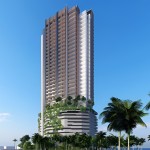
Strategically located at along Lintang Macallum 2 in Georgetown, just a stone’s throw away from Sandilands condominium by Heng Lee Group. This development will see the construction of a 48-storey building, featuring a mix of commercial and residential properties, including affordable units.

WHH Land

A luxury residential development in the heart of Georgetown, Penang. Strategically located along Jalan Logan, next to Villamas condominium. It is also adjacent to the ongoing project by Tropicana Corporation Bhd. – Tropicana 218 Macalister. This 28-storey residential development comprises 48 luxury condominium units, with only 2 units per floor.

Aspen Group (Beacon Executive Suites)

The latest addition to landmarks in the heart of George Town by Aspen Group. Strategically located along Jalan Sungai Pinang, this freehold development comprises 227 units of executive suites with standard unit size of 980 sq.ft. and a state of art roof top bar & lounge.

Mah Sing Group (Icon Residence @ Penang)

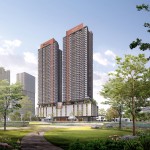
Located along Pykett Avenue, close to Penang’s most famous street, Gurney Drive. This development comprises of two residential towers (24 & 30-storey) with rooftop garden, featuring 294 units with breathtaking views of the heritage city and the sea.

Register your interest here, we will keep you posted with latest updates on these projects

(This information will be used to keep you updated on the project and future development.)
*By submitting this Form, you hereby agree to our PDPA Consent Clause.
Tags:

Common problems in a sub sale transaction

Property News/ 8 July 2017 No comments

homesaleA typical transaction for a sub-sale and purchase agreement (SPA) of an immovable property (whether a landed property or strata titled property) in the secondary market is normally divided into three stages:

  1. The pre-SPA stage;
  2. The formation of the SPA stage;
  3. The completion of the SPA stage.

The pre-SPA stage

During the pre-SPA stage, the investigations carried out at this stage are basically on the property and the vendor.

When a vendor sells his property, it is reasonable to believe that he wants to receive the proceeds of sale in the shortest possible time. On the other hand, when a purchaser buys a property, he wants to get early vacant possession of the property, or get vacant possession within the contemplated completion date of the transaction.

At the pre-SPA stage, it is prudent for the real estate agent to conduct due diligence on the property and the vendor with the assistance of a solicitor, so that the agent may advise his vendor client and also provide the relevant information to the purchaser.

Since the agents and negotiators are in the front line before the solicitor prepares the draft SPA, it is prudent for them to investigate the property and the vendor.

These are some of the issues and decisions that may affect the purchaser and the vendor’s decision to go through with the transaction.

Who is the registered proprietor of the property?

If the property is still in the developer’s name, the original purchaser (aka the vendor) may write to the developer to do a direct transfer of the property from the developer to the second purchaser. However, if the developer does not agree to do a direct transfer in favour of the second purchaser, then a Memorandum of Transfer will be signed between the original purchaser and the developer. At the same time, the original purchaser will sign a Memorandum of Transfer with the second purchaser.

After both Transfers have been duly adjudicated and stamped, both Transfers will be sent to the land office/registry for simultaneous registration, firstly from the developer to the first purchaser, and then from the first purchaser to the second purchaser.

Some developers accept requests for direct transfer, but others will not. If the property is subject to a restriction in interest, then generally the developer may not agree to do a direct transfer to the second purchaser as the developer would have obtained a blanket consent to transfer the property to the first purchaser.

Where the property is subject to a restriction in interest, the developer will firstly transfer the property to the first purchaser. After the first purchaser has been registered as proprietor, then only can he sell to the second purchaser subject to obtaining the consent of the State Authority. This type of transaction will exceed the normal completion period of three months.

The owner of the property is deceased.

When a person dies and has left a will, then the executor of the estate of the deceased person has to apply for a grant of probate to enable him to deal with the property of the deceased person.

When a person dies without leaving a will, then the administrator of the estate of the deceased person has to apply for grant of letters of administration to enable him to deal with the property of the deceased person.

When the owner is deceased, we need to find out if the executor or administrator has been duly authorized by the court to deal with or sell the property of the deceased owner through the grant of probate or the grant of letters of administration respectively.

The executor or administrator of a deceased’s estate has the capacity to enter into a sale and purchase agreement to dispose of the property of the deceased owner.

Without the grant of probate or the grant of letters of administration, there is no authority to sell, and the SPA will not be signed. Parties are to ensure that all the legal formalities have been duly complied by the executor or the administrator of the estate of the deceased owner so that the completion date of the SPA to be eventually signed may be ascertained.

Who has custody of the title to the property?

Where the property has not been transferred to the vendor, it will be desirable to inquire whether the developer or the vendor has the custody of the title.

If the title is found to be lost or missing, then it may not be advisable to sign the SPA. It may take a few months from the time of application to obtain a new title from the relevant authority.

If the parties proceed to sign a conditional SPA despite the lost or missing title, then the process of completion of the SPA will exceed the normal completion period.

The identity of the vendor

If the vendor is a foreigner, and if his name in his identity card and in his passport differs, then the purchaser’s financier may require various documentation to be executed by the vendor to declare and state that the person named in the identity card and in the passport are one and the same person.

If such a discrepancy is discovered from the beginning, then it should be rectified immediately to avoid delays in the disbursement of the purchaser’s financier’s loan.

To ascertain the correct and property identity of the vendor is important to ensure that there are no unnecessary delays in the completion date of the SPA.

Check the title for the correct express condition where the category of land use is “building”.
Where the property being sold is an office unit, it is important to ensure that the express condition stated in the title does not state “untuk rumah kediaman’ (for residential purpose). The correct description is “untuk pejabat” (for commercial purpose).

In one SPA transaction, the vendor wanted to dispose an office unit. After the purchaser had placed a deposit to buy, he discovered that the express condition in the title stated ‘untuk rumah kediaman’ when it should state ‘ untuk pejabat ‘. This could be due to an inadvertent mistake on the part of the relevant authority. The purchaser and his solicitors objected.

The SPA had to be drafted in such a way to indicate that the vendor was given a specific period of time to rectify the error on the title, failing which the SPA would be terminated. There is thus an element of uncertainty which would extend the completion period of the transaction.

Property held on leasehold tenure

If it is a leasehold property with a restriction-in-interest endorsed on the title against the transfer and the charge of the property without the consent of the State Authority, then it is imperative for the vendor to apply and obtain the consent to transfer from the State Authority before the purchaser may proceed to buy the property from the vendor.

Generally, the application for the consent to transfer is approved by the State Authority. However, if the vendor is a bumiputra and the purchaser is a non-bumiputra, then there could be a risk that the State Authority may not approve such application. If further appeals are not entertained by the State Authority, then the sale and purchase agreement will become ineffective and will be terminated.

Where the property of the vendor is caveated

If a land search on the property reveals that a private caveat has been entered on the vendor’s property, then obviously the purchaser will not proceed with the signing of the sale and purchase agreement, unless the private caveat is first removed.

On the other hand, if the preliminary land search shows that there are no caveats on the property, then the parties will proceed with the signing of the sale and purchase agreement.

However, if after the sale and purchase agreement has been signed, and another land search subsequent thereto reveals that a caveat is lodged on the vendor’s property, then if the vendor fails to withdraw the caveat, then the sale and purchase agreement may be terminated and in such an event, the vendor will have to refund all monies paid towards the account of the purchase price to the purchaser and pay compensation to the purchaser, as the case may be.

Developer in liquidation

There have been instances where after a housing project has been completed, but before the strata titles are transferred to the original purchasers, the housing developer company has gone into liquidation.

In such an event, a liquidator may be appointed and requested to act on behalf of the wound up housing developer company in handling the documentation pertaining to the execution of the memorandum of transfer in favour of and for the benefit of the original purchasers.

When an original purchaser does not intend to obtain registered ownership of his property but desires to sell it, then he has write to the liquidator to seek its consent to a direct transfer in favour of the second purchaser.

Upon receipt of such a request, the liquidator will conduct a verification of ownership exercise, and upon being satisfied that the legal formalities and requirements have been complied with by both the original purchaser (currently in his capacity as vendor) and the second purchaser and are found to be in order, and after payment of an administrative fee by the original purchaser to the liquidator, then the process of execution of the direct transfer by the liquidator in favour of the second purchaser may commence and proceed accordingly.

In the above situation, it will be prudent for a due diligence to be undertaken before the original purchaser decides to sell and the second purchaser decides to purchase the property so as to avoid or expect unnecessary delays in the intended sale and purchase transaction.

by Ivan Chan

DISCLAIMER

This article is intended to provide information and does not constitute legal advice for specific needs. You should consider, or seek and obtain independent legal or professional advice for your specific needs and situation.

Advocate & Solicitor Ivan Chan is a legal practitioner at Messrs Amir Toh Francis & Partners, K.L.

His area of practice is mainly in conveyancing matters both in the primary and secondary market, and loan and security documentation for real estate property transactions.

Source: StarProperty.my

Tags: