fbpx

Iconic chairman Tan raises equity in Sanbumi

Property News/ 3 October 2018 No comments
iconic-group

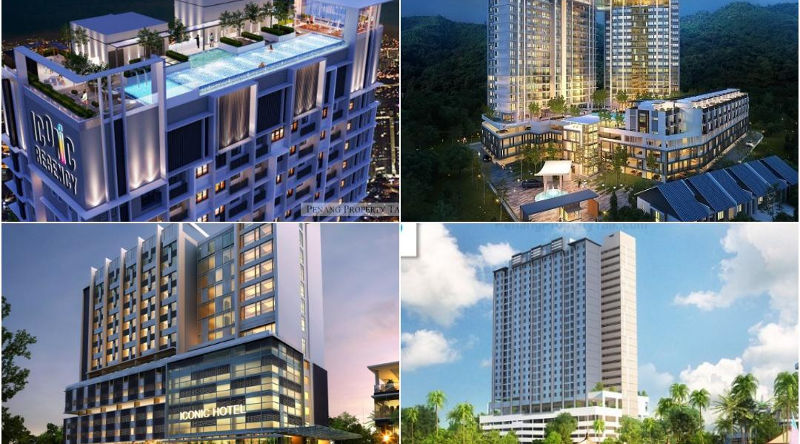
Projects by Iconic Group

Datuk Tan Kean Tet, the chairman of Penang-based property developer Iconic Group Sdn Bhd, is acquiring a substantial stake in Sanbumi Holdings Bhd

Sanbumi, in a filing with Bursa Malaysia, said the company had entered into a conditional share subscription agreement with Tan for the placement of 22.6 million new shares at 17.3 sen each.

Shares in Sanbumi were last traded at 20 sen yesterday.

Tan, 56, will pay RM3.9mil for the shares, which will increase his stake in the company from 1.39% to 10.36%.

“The offer from Tan to subscribe for the placement shares comes at an opportune time, as it allows the company to bring Tan in as a strategic investor.

“The company will also be able to tap and leverage on Tan’s experience in property development as well as hotel development and management,” Sanbumi said.

Tan ventured into property development via the incorporation of Iconic in 2011 and subsequently expanded the business of Iconic into the hospitality sector in 2016.

The Iconic group has completed property development projects worth about RM600mil in gross sales value.

It owns the four-star Iconic Hotel in Juru, Seberang Prai.

Sanbumi Holdings Bhd has proposed two mixed development projects in Penang mainland, offering a mix of serviced residences and shop offices.

Proposed and current development projects by Iconic Group

Proposed developments by Sanbumi Holdings Bhd.

Source: TheStar.com.my


Tags:

Developers undeterred by sales slowdown

Property News/ 2 October 2018 3 comments

seri-tanjung-pinang-aerial

Property developers acknowledge that unbilled sales are on the decline but say the situation is not so bad and they are still able to record decent earnings.

The decline in unbilled sales, they said, is in line with the overall slowdown in the property market over the past few years.

Residential properties, for instance, have seen sales come down by 29% to 194,684 units in 2017, when compared with the five years ago figure of 272,669 units in 2012, based on data from the National Property Information Centre.

Nevertheless, developers when contacted, seem undeterred by the downtrend and are positive about future sales.

Mah Sing Group Bhd, for one, is maintaining its 2018 sales target of RM1.8 billion, according to its chief executive officer Datuk Ho Hon Sang.

“Unbilled sales is a function of sales, so in a challenging market, unbilled sales will naturally reduce and will pick up again when sales volume increases,” said Ho. “However, declining unbilled sales is also a reflection that the developer is probably constructing on time, as they are able to bill the construction progress to their buyers, and this amount will be removed from the unbilled sales.”

“Mah Sing’s unsold and ongoing sales is less than two times our sales target, and less than one time if divided over revenue, which is very healthy compared to our peers,” he added.

Eastern & Oriental Bhd senior general manager for sales and marketing Wayne Wong said the Penang-based developer achieved its historical high unbilled sales of RM1.2 billion in September 2016 on the back of the successful sale of its Tamarind Executive Apartments project.

“With the expected completion of this project at the end of this year, we expect a decline in our unbilled sales figure.

“However, this has not had an adverse impact on our earnings as we focused on our RM800 million inventory. We had, over the last two financial years, achieved new sales of RM387million and RM381million for FY18 [financial year ended March 31, 2018] and FY17 respectively on the back of largely selling inventories in Seri Tanjung Pinang.

“As such, we remain confident that despite lower unbilled sales, we will be able to maintain our revenue growth trajectory,” he said.

Wong added that E&O deliberately slowed down launches over the last two years to concentrate on selling its inventories given the property market conditions over the same period.

“However, we are certainly not resting on our laurels as we are laying the groundwork for the launch of two E&O signature developments, The Conlay in Kuala Lumpur as well as Seri Tanjung Pinang phase 2A’s maiden launch of serviced apartments and neighbourhood retail space with a total gross development value of RM1.5 billion over the next two years,” he said.

Over at Eco World Development Group Bhd, the group managed to maintain its unbilled sales figures for 2018, compared with 2017. Its president and group chief executive officer Datuk Chang Kim Wah said unbilled sales is a very relevant key performance indicator for property developers as it determines future earnings.

“We have worked hard to maintain the numbers, and in this regard, we are pleased to share that our progress billings [unbilled sales] number has increased from RM5.9 billion as at 2Q FY18 (second quarter ended April 30, 2018) to RM6.2 billion as at 3QFY18,” he said.

Axis REIT Managers Bhd head of investments Siva Shanker, who has more than 30 years’ experience in real estate, remarked that the Malaysian property market did see a slight recovery in 2017.

“In 2016, developers launched 52,713 units [in the primary residential market] and achieved 31.4% sales, and in 2017 they launched 77,750 units and achieved 32.6% sales. This clearly shows that 2017 was a slightly better year for developers as they launched more units and achieved a higher percentage of sales compared to 2016,” he said.

Noting that developers are more focused on clearing inventories rather than aggressively launching new projects, Siva said this does not indicate that times are bad for the property sector.

“It is true that most developers are saddled with unsold stock and therefore waiting to clear their stock before launching new developments, but that is not a bad sign. It’s just prudent financial management on the part of the developers and a prudent marketing strategy as they work to clear their unsold inventories first and only launch new offerings once the market improves

“Some of them may be clearing their inventories at a discount, as they are able to get some savings from measures the government has taken to ease house prices, such as the sales tax exemption on some building materials,” he said.

Siva also said that the Malaysian property sector is driven more by sentiment rather than fundamentals.

“There is a feel-good sentiment with the new government and the Malaysia Baru concept, and this hope I feel will drive the market forward a little bit more, and by the time the year is over I believe we will register a small positive growth in terms of property sales,” he added.

Source: EdgeProp.my

 

Tags:

Butterworth coastal reclamation to proceed

Property News/ 30 September 2018 17 comments /中文版

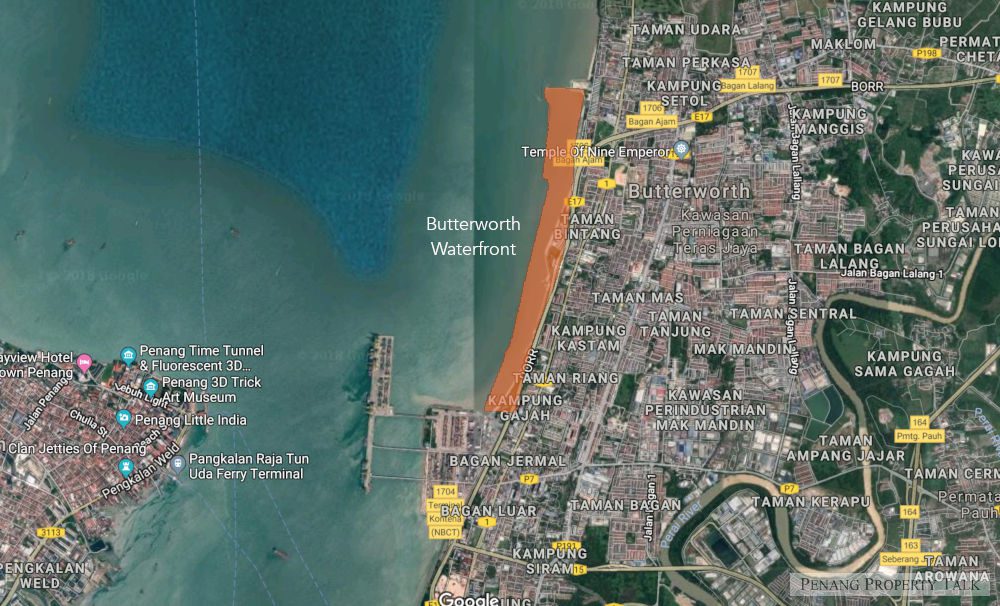
butterworth-waterfront

The coastal landscape in north Butterworth, between the North Butterworth Container Terminal (NBCT) and Jalan Tunku Putra, Teluk Air Tawar, is set to change with the construction of a new waterfront within the next few years.

This follows a supplementary agreement inked between the Penang government and Rayston Consortium (Butterworth) Sdn Bhd to reclaim 650 hectares of the land there.

Today’s signing will push Rayston to start the long-delayed reclamation works since the first agreement was signed way back in 1999.

The company has also been given six months to submit planning approval, including obtaining the Environmental Impact Assessment (EIA) approval.

Chief Minister Chow Kon Yeow said once reclaimed, the whole area would be developed into a mixed development project, which is set to boost the economy of mainland Penang.

“We are excited with the prospect of the creation of the new waterfront.

“In the economic sense, this massive project will boost the economy of Butterworth and its surrounding areas, especially in terms of logistics and transportation, as the site will be where the undersea project sits, if it proceeds as planned,” he told newsmen here today.

Present were State Secretary Datuk Seri Farizan Darus and Rayston director Datuk Ronnie Lim.

Chow said housing, particularly affordable homes, would be among the component in the mixed-development project, in line with the state’s government housing policy.

Meanwhile, Lim estimated the overall reclamation project to be tagged at RM2 billion.

He said the project had been long delayed owing to the relocation of some 1,700 squatters along the Butterworth Outer Ring Road (BORR) alignment, Bagan Ajam and its surrondings.

“Since we have settled the squatters, we can proceed with the project.

“And subject to discussion with the Penang government, this will be a mixed-development project,” he said, without revealing specific details.

Under the supplementary agreement, new clauses were added to the 1999 agreement, in which Rayston would hand over 35 per cent of the reclaimed land, about 90.31ha, to the state government, instead of only 5 five per cent or 12.92ha, within six months of the commencement of work.

Source: NST Online


Tags:

Penang Transport Master Plan is to sustain island’s development

Property News/ 28 September 2018 34 comments

standstill-lceCities become more liveable, progressive and sustainable when there is enhanced accessibility and connectivity to move people around and this is achieved by providing sufficient and efficient public transport.
However, moving people solely on public transport is not a total solution. We cannot ignore the fact that private vehicle ownership will continue to rise in developing countries and to cater to this, roads are essential.

Through the Penang Transport Master Plan (PTMP), the Penang government has set a target of 40% mode share for public transport and 60% for private vehicles. It is the same mode share target set by the federal government.

While the 40% target is still way below many cities, Penang currently starts from a base point of barely 5% public transport mode share.

“With the right incentives and stimuli, I believe it is possible to achieve a gradual shift in mode share and get more people on public transport.

“Coupled with fast-evolving technology in producing cleaner and zero emission cars, the impact of pollution on the environment will be greatly reduced,” said Penang Works, Utilities and Flood Mitigation Committee chairman Zairil Khir Johari.

As a developing country, Malaysia’s economic growth and the demand for mobility has caused a rapid rise of vehicles on the road.

In Penang over the last 10 years, the number of vehicles has increased by 52% (from 1.8 million to 2.7 million in 2017).

At the same time, there remains only one main spinal road in Penang – the Tun Dr Lim Chong Eu (LCE) Expressway – that is constantly congested with standstill traffic during peak hours.

Gridlock in Penang has not only resulted in productivity losses but also causes inefficiencies in economic activity and degradation of the environment.

In short, traffic congestion is limiting economic growth and impacting quality of life.

“To meet the needs of the people and to sustain the development of Penang, there is no doubt that we need to improve the basic road network on the island,” said Zairil.

There are many cities that recognise the need to encourage public transport as well as develop an efficient and viable road network.

Singapore is one such example, where expressways are constantly being built and upgraded in tandem with rail lines to meet the demand of increasing vehicles despite having a public transport mode share of 67%.

Over the last decade, while the number of vehicles in Singapore increased by only 13% (from 850,000 to 962,000), Singapore has built two expressways in that period. Today, Singapore has 11 expressways and six major rail lines.

“It is important to understand that while provision for public transport is needed for a more sustainable way to commute especially during peak hours, highways like the Pan-Island Link 1 (PIL1) are needed to disperse traffic away from the local roads thus freeing road space for the last kilometre connection to public transport such as buses and the planned LRT,” said Zairil.

PIL1 will function as a new spinal road connecting the main residential corridors in the north and central region of the island to the industrial corridor in the south.

There will be five interchanges at strategic locations for traffic dispersal: Gurney, Utama, Paya Terubong, Tun Dr Awang and LCE. With PIL1 as the second spine, the load on LCE will be relieved.

Meanwhile, the Bayan Lepas LRT will link George Town to the Penang International Airport, passing by a corridor with the highest trip demands (Komtar, Macallum, Jelutong, LCC Terminal and Bayan Lepas FIZ). This will form the main backbone for public transport as it will provide connectivity within the island, and eventually to the mainland.

To ease traffic congestion in Penang, the LRT and PIL1 should be implemented concurrently. The LRT on its own will not be able to reduce traffic jams.

In the case of PTMP, Penangites need to look beyond the initial inconveniences during the construction years.

“If we want to address the traffic congestion problem and achieve the goal of a more liveable and sustainable Penang, we need to shed the ‘not in my backyard’ mentality and instead put the needs of the state and our future generations in focus,” said Zairil.

Source: TheStar.com.my

Tags:

BNM: Imbalances in property market continue to persist

Property News/ 27 September 2018 1 comment /中文版

bnmIt looks like the local property market is still not out of the woods, just yet.
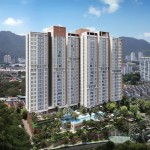

According Bank Negara Malaysia’s (BNM) financial stability review for 1H2018: “Imbalances observed in the property market continue to persist.”

“The number of unsold housing units, correspondingly increased to about 146,196 units as at end of first quarter of 2018, with more than 80% of unsold units priced above RM250,000,” said BNM.

The central bank, however, also mentioned that there is still demand out there for affordable homes.

“Nevertheless, sustained demand for affordable housing, particularly from first-time homebuyers and prudent underwriting practice in lending to the property market and related sectors are expected to mitigate risks of a broad based price correction.”

In February, BNM commented in its quarterly bulletin that the country faced a shortage of affordable houses for the masses.

The central bank also revealed back then that data showed homes in the country were “seriously unaffordable” in 2016 compared to global standards.

Meanwhile, BNM said that “Risks from household sector exposures continue to be mitigated by prudent underwriting and loan affordability assessments by financial institutions and sound risk management practices.

“New household borrowings remained of high quality.”

It said that about 75% of fresh loans were approved to “borrowers with debt service ratios (DSR) of less than 60%.”

“Overall household debt accumulation has also been on a more sustainable path relative to income growth, as a result of the cross-cutting measures that have been implemented since 2010.

“The ratio of household debt-to-GDP continued to moderate and currently stands at 83.8% in the 2Q 2018 (2017: 84.2%).”

As for the commercial segment, things are not so rosy.

“Excess supply of office space and shopping complexes is also expected to persist as vacancy rates deteriorated further in the first quarter of 2018.”

Source: EdgeProp.my

Tags: