fbpx

Property Crowdfunding Explained – First home buyer
Property News/ 9 November 2018 No comments /中文版

Created with GIMP

Want to know more about the peer-to-peer home financing scheme announced in Budget 2019?

By using FundMyHome scheme as an example, here we have extracted the summaries of key points by Malay Mail below:

What is it in a nutshell?

Quite simply, FundMyHome allows a person to buy a home by paying an upfront 20%of the house’s price, with investors such as banks committing to fund the remaining 80% in exchange for a share in future profits.

Under the scheme, the buyer does not have to make any monthly payments — unlike a housing loan — for five years. After the five years is up, the buyer can choose to take up a housing loan to buy the property or sell it off to make some profit. This is assuming the property has appreciated in value.

Do you qualify?

First up, you have to be a Malaysian aged above 18 years who is not bankrupt and who is a first-time homebuyer. You can even buy a house together with another person who is also buying a house for the first time.

The scheme is not for those who just want to make quick profits or for those who don’t plan to own the home for a minimum of five years.

How does it work exactly?

First, a buyer will have to pay a 2% booking fee to reserve a unit in the housing projects listed on FundMyHome’s portal, with the reservation on a first-come-first-served basis.

Houses offered on FundMyHome fall into two categories: “Fully Funded” and “Funding in Progress”, with those in the former category requiring the buyer to pay the 20% and all fees to FundMyHome within at least 14 days.

As for the “Funding in Progress” category, the buyer will again have 14 days to make the same payments, if funding from investors that are typically banks meet the funding target of 80% of the house price within 30 days.

But all funds will be refunded without interest if the funding target is not met within the one-month period.

If all goes well, the legal process for the home purchase from the developers will then take an estimated two to three weeks, according to the FundMyHome portal.

The ownership arrangements, according to FundMyHome’s terms and conditions, is that the buyer becomes a property owner after entering into a sales and purchase agreement (SPA) with the developer, and after other agreements are made.

Rights and obligations

You as a homebuyer under the FundMyHome scheme have become the legal owner of the property. Here’s what you can now do besides staying in the property: Rent the property out until the fifth year of the purchase subject to FundMyHome’s terms and conditions; or renovate the house using your own money subject to the property development’s house rules.

But you will also, as a homeowner, have to pay for all related fees such as management fees, quit rent, assessment tax, insurance, repairs and maintenance costs.

What happens after five years?

The catch is that the house cannot be sold during the five-year period, with the buyer and banks also barred from exiting the scheme during this lock-in period.

About four years and three months from the date of purchase, FundMyHome will appoint an independent and qualified valuer, with the buyer then given two months to arrange for the property’s inspection by the valuer.

FundMyHome requires buyers to have the valuation completed six months before the end of the lock-in period at the buyers’ own cost.

At the end of the five years, the buyer will then have two options: To keep or sell the property.

OPTION 1: Stay on

The buyer can choose to be in the FundMyHome scheme for another five years, with the condition that the buyer tops up with additional money to fulfill the 20% portion if the property’s value has gone up.

As for investors such as banks, they can choose to stay on or sell their 80% share to other institutions. The buyer can alternatively use his/her own money or take out a bank loan to buy off the 80% share from the investors.

OPTION 2: Sell

If the buyer chooses to sell the property, he/she has to leave the property and hand it over by the end of the fifth year, or pay rental based on a 5% rental yield. The property will be advertised for at least three months, with FundMyHome cautioning that it is not guaranteed that the sale process will not be longer than the usual three to six months.

The homeowner will have to bear all third-party costs related to the sale, with the property sold to include developer-provided furniture and fittings in good condition subject to the usual wear-and-tear, while buyer-purchased furniture and fittings can be excluded.

And the catch?

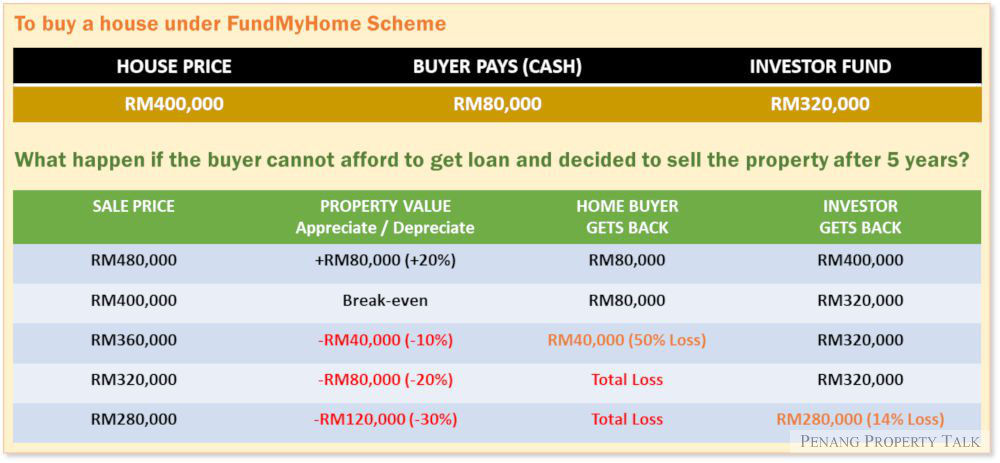
The biggest downside would be the risk of the property depreciating in value at the end of five years, with FundMyHome noting that they could lose some or even all of their capital if the property price falls.

When the property is sold after the fifth year, the order of priority for the distribution of sales proceeds is: Investors or bank to receive their original capital first (80% of purchase price), buyer to receive buyer’s original capital (20% of purchase price).

As for the order of priority for the profits after the original capital is paid out, the investor receives a preferential share of the capital gain or profits (equivalent to 20 per cent of purchase price), while the remaining capital gain will be split to the investor at 80% and the buyer at 20%.

FundMyHome provided an example based on an initial house price of RM300,000 where the buyer pays RM60,000 (20%) and the investor or bank pays RM240,000 (80%), with scenarios of the property value either going up, remaining the same or going down at the end of the five-year lock-in period.

The table below will illustrate how the calculation works:

p2p-scheme


Don’t forget the new tax rate

Note: If for some reason, you decide at the end of the five-year period to sell the property instead of continuing to own it, there will no longer be zero tax on your profits from the sale.

In the recent Budget 2019 speech, the government said it will now impose a 5% Real Property Gains Tax (RPGT) on profits from the sale of properties that were purchased more than five years ago, unless the property is valued at below RM200,000.

There may be another crowdfunding platform in the future. You just have to read the terms and understand your risks.

*Regulations for the property crowdfunding framework that is expected to take effect in the first quarter of 2019*

Source: Malay Mail

Note: As stated in Malay Mail, this story is based on the latest available information on the FundMyHome portal as of the time of writing, and is not meant to be an exhaustive list of information on the terms and conditions of the FundMyHome scheme. You may read the full article from the link above.

 

Tags: ,

Proper studies needed on property crowdfunding

Property News/ 9 November 2018 No comments

tun-daimThe government has good intentions in introducing the property crowdfunding initiative, the first such financial innovation in the world, but proper studies need to be carried out, said the Council of Eminent Persons chairman Tun Daim Zainuddin.

He said the peer-to-peer (P2P) home financing initiative, announced by Finance Minister Lim Guan Eng during the 2019 Budget tabling recently, was something new.

“It’ll be the first time a country is attempting this to help bridge the gap between low wages and high housing prices.

“So we should see more studies being carried on practical ways to implement this,” he told reporters on the sidelines of the Affin-Hwang Capital Conference Series 2018 here today.

Earlier this week, Prime Minister Tun Dr Mahathir Mohamad expressed confidence that the property crowdfunding solution would help drive the building of one million houses over 10 years.

The scheme, to be regulated by the Securities Commission, will offer first-time house buyers the chance to pay only 20% to own a house while the remaining cost will be borne by investors via a P2P financing framework.

When tabling the budget last Friday, Lim said the first exchange was expected to go live in the first quarter of 2019.

Commenting on the Japanese government’s offer to guarantee the 200 billion yen (RM7.4 billion) Samurai bonds with a 10-year tenure, Daim said it would help Malaysia to retire some of the old debts that were signed on at high interest rates.

Source: Bernama


Tags:

Runnymede Bay

George Town/ 8 November 2018 13 comments /中文版

runnymede-bay

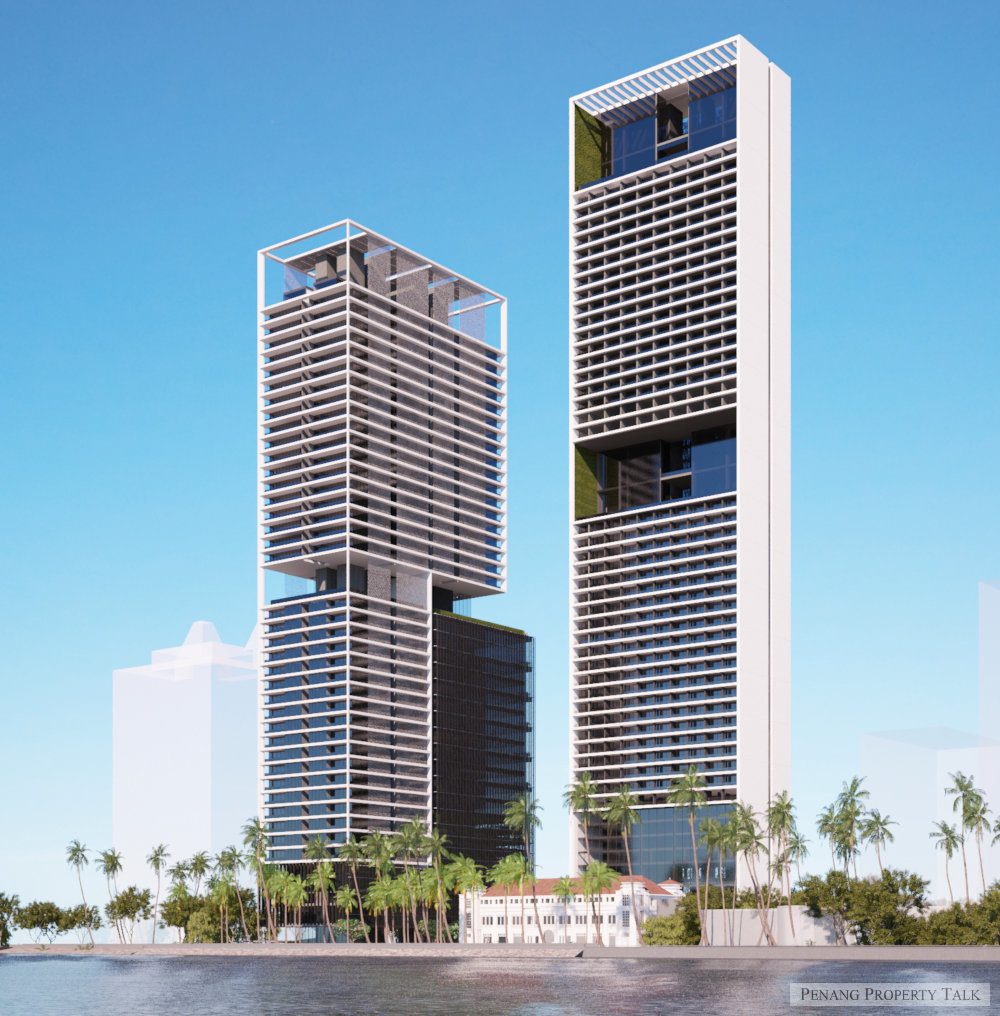
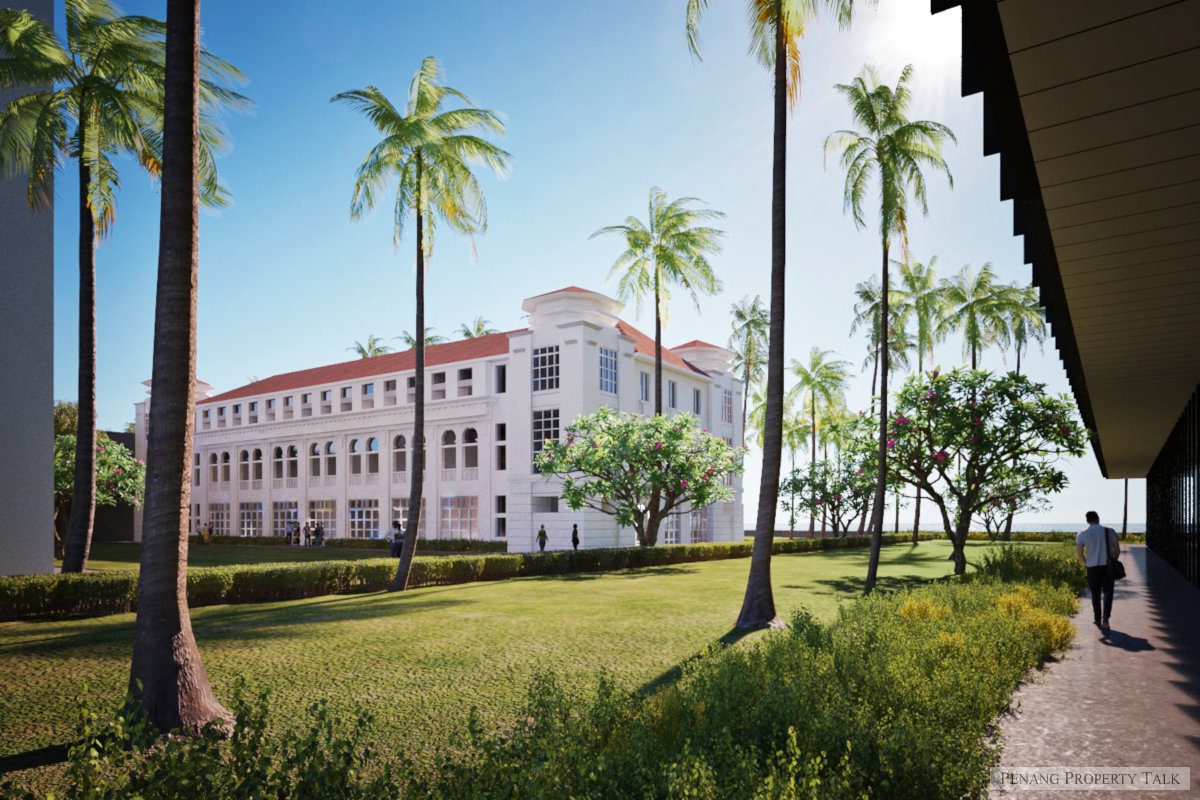
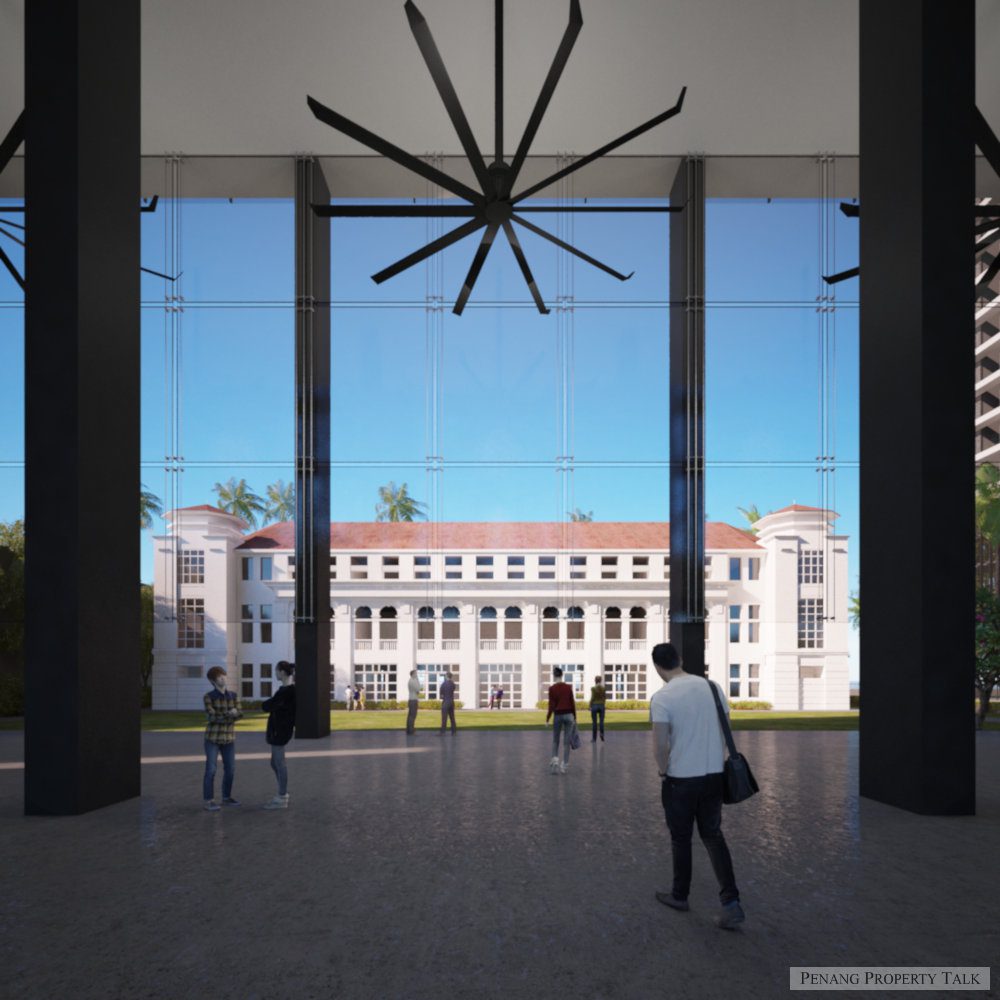
Runnymede Bay, an upcoming 5-acre seafront development by Runnymede Group in the prime business district of George Town, Penang. It is strategically located along the vibrant Jalan Sultan Ahmad Shah (Northam Road) nestled along Penang’s famous Millionaire’s Row, just a block away from the E&O Hotel.

Designed by Kerry Hill Architect of Australia, Runnymede Bay is set to become an iconic landmark in Penang Island when completed. The development will include a skyscraper that spans 45 storeys, consisting of the following components:

  • Retail units spanning two levels located on the ground floor.
  • A multi-storey car parking podium with 10 levels.
  • Serviced residences occupying levels 3-45, with a total of 132 units.
  • Office suites located on levels 11-23, with 44 units.
  • Condominiums with facilities located on levels 24-45, with 98 units.

Phase 2 of the development will see the addition of a 48-storey hotel.

Project Name : Runnymede Bay (formerly known as Runnymede Place)
Location : Georgetown, Penang
Property Type : Mixed development
Indicative Price : (to be confirmed)
Last Updated: June 2023
Developer : Runnymede Group

Register your interest here

*By submitting this Form, you hereby agree to our PDPA Consent Clause.
(These information will be forwared to the developer)
LOCATION MAP

DISCLAIMER: This article is solely based on research done using publicly available data. This is not an advertisement. Any claim, statistic, quote or other representation about a project or service should be verified with the developer, provider or party in question.

UPCOMING: Kubang Semang / Venice Trend Sdn. Bhd.

Kubang Semang/ 7 November 2018 1 comment

proposed-mengkuang-venice-trend-sdn-bhd

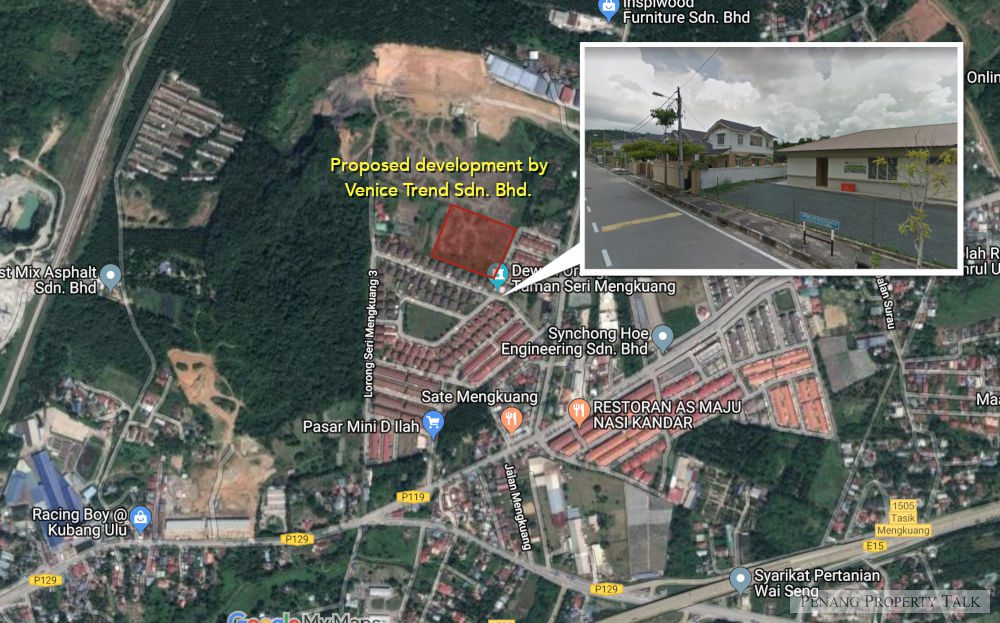
Yet another new residential development proposed by Venice Trend Sdn. Bhd. at Kubang Semang, a township near the state border of Penang-Kedah. It is located on a 4.5-acres land near Jalan Mengkuang Keretapi, less than 5km away from the state border. For those who are working at Kulim, it will only take 15-minute drives to Kulim Hi-tech Park during off peak hours.

This development comprises a mix of terrace, semi-detached and bungalow houses:

  • 2-storey terrace (39 units)
  • 3-storey terrace (12 units)
  • 2-storey semi-detached (10 units)
  • 2-storey bungalow (1 unit)

This project is still pending for approval. More details to be available upon official project launch.

Project Name: (to be confirmed)
Location : Kubang Semang, Penang
Property Type : 2 & 3-storey terrace
Total Units: 62
Built-up Area: (to be confirmed)
Indicative Price: (to be confirmed)
Developer: Venice Trend Sdn. Bhd.

Register your interest here

(This information will be used to keep you updated on the project and future development.)
*By submitting this Form, you hereby agree to our PDPA Consent Clause.

Location Map:


Budget 2019: Not enough to kick-start’ subdued property market

Property News/ 5 November 2018 1 comment

affordable-housing1The measures announced in Budget 2019 will not be enough to “kick-start” the already subdued property and housing market, said property experts.



“The measures for the property sector are too small to affect the market in any way. The market is already subdued, already slow. Overall, I don’t think there will be any impact at all as the changes are rather minimal,” said Malaysian Institute of Estate Agents past president Siva Shanker.

He said some of the policies such as the increases in the Real Property Gains Tax (RPGT) and stamp duty rates are unpopular but believes that Malaysians understand that the new government should be given a chance to fix the problems left behind by the previous government.

Siva said the increase in stamp duty for properties above RM1 million from 3% to 4% will not worsen the overhang as the majority of such units are within the RM500,000 to RM1 million price range.

“The majority of overhang units are in this price range and most of them are in the speculative market. The higher RPGT rate would also get rid of speculation and false demand in the market,” he told SunBiz.

On measures announced for first-time home buyers, he said any kind of concession is useful as many first- time home buyers are from the bottom 40% (B40) group, who may be able to afford monthly repayments but face difficulty in coming up with the downpayment.

“Any kind of savings is useful for them,” he added.

Association of Valuers, Property Managers, Estate Agents and Property Consultants in the Private Sector Malaysia past president Datuk Siders Sittampalam said Budget 2019 could have included some initiatives to kick-start the property market.

“I thought the RPGT would be reduced to boost the property market but, instead, the rate will be increased. This will have an impact on property investors. It will discourage those who buy for investment, which will result in a drop in rental properties as fewer people will buy for renting out.

“Foreign property investors will also be discouraged as the RPGT will be increased from 5% to 10%,” he said.

On the developers’ commitment to reduce house prices by 10%, he said there is no visibility to ensure that they actually reduce prices.

“How will the government ensure that there is a 10% reduction in house prices? If the developer says his selling price has been reduced by 10%, the buyer would just have to accept it. It is not visible,” Siders said.

“However, I must acknowledge that the government has done quite a bit for the affordable housing segment. These moves will help. There are also other good ideas such as the property crowdfunding platform, but it is too soon to comment as the details are not out yet,” he added.

Source: TheStar.com.my


Tags: