fbpx

Farlim Group expands Penang presence with RM160mil transit-oriented project
Property News/ 3 December 2025 No comments

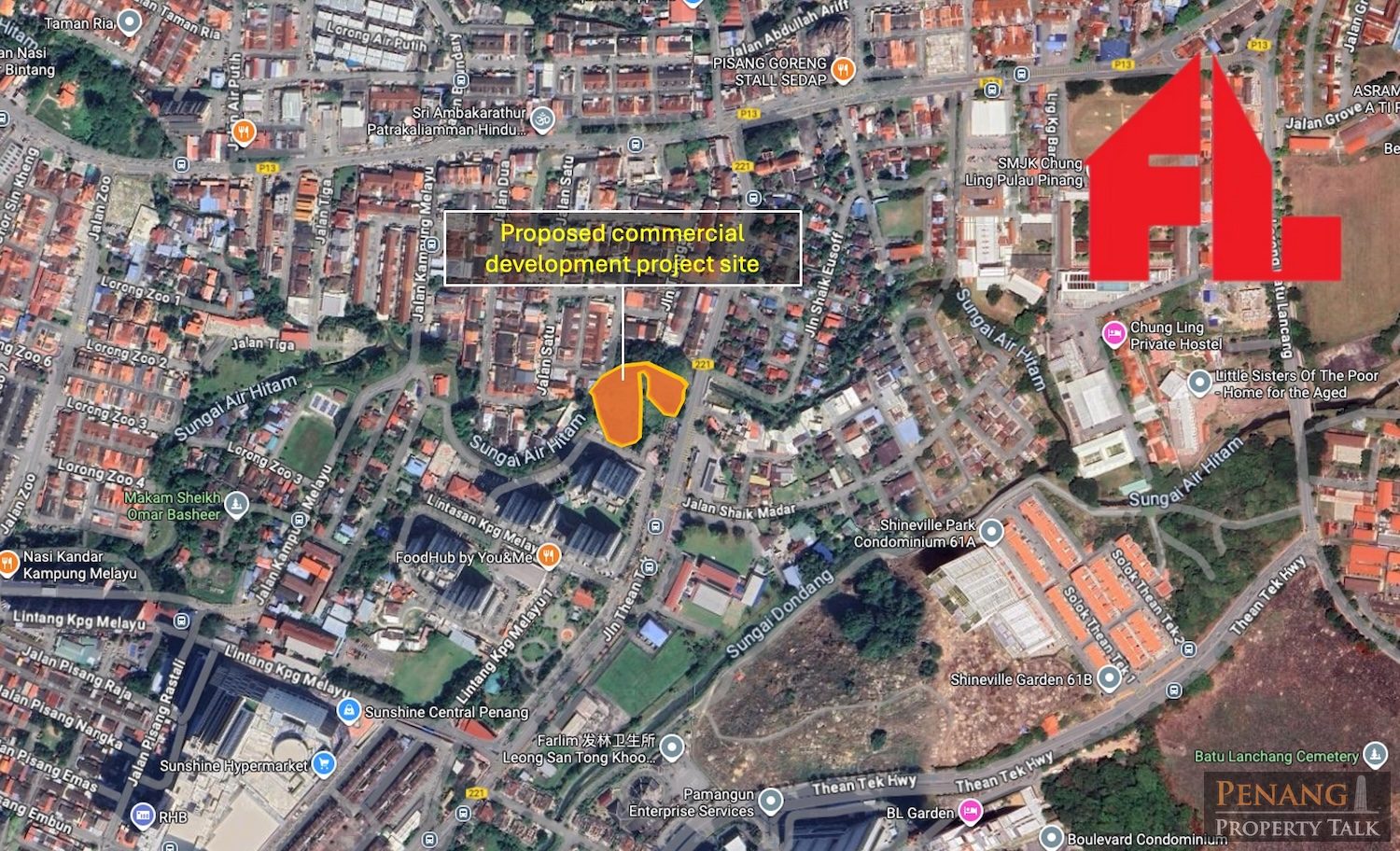
proposed-commercial-development-site

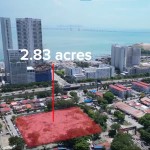
Farlim Group (Malaysia) Bhd is strengthening its presence in Penang with a new joint venture that supports the state’s growing shift toward transit-oriented development. Announced in a filing on Dec 2, 2025, the collaboration with Fortune Lander (M) Sdn Bhd will see the development of vacant freehold land in Mukim 13, Daerah Timur Laut, with an estimated gross development value (GDV) of RM160 million.

The project is planned as a mixed commercial development featuring commercial units, semi-detached shops, and bungalow-style shop offices, along with an adjacent parcel. With a gross development cost (GDC) of RM131.1 million, the undertaking builds on Farlim’s internal feasibility studies, which identified the site as strategically located within a mature commercial zone supported by strong infrastructure and connectivity. This makes it highly suitable for a transit-oriented concept—an increasingly sought-after approach as Penang’s urban landscape becomes more dynamic and mobility-focused.

Farlim said the development fits well with its long-term strategy of sustainable growth, diversification, and community-oriented planning, while also boosting its visibility and brand positioning in the state. Under the agreement, Fortune Lander, the land’s registered owner, will receive a fixed guaranteed return of RM15.94 million or 10% of the saleable area value, whichever is higher. The payout will come in a combination of cash and property units, with the entire project to be financed through Farlim’s internal funds.

As with all major projects, the development is subject to regulatory approvals including land rezoning, building plan approval and financing consent. Construction is expected to start within three months after the building plans are approved, with completion targeted within 42 months from commencement, plus an optional three-month extension if required.
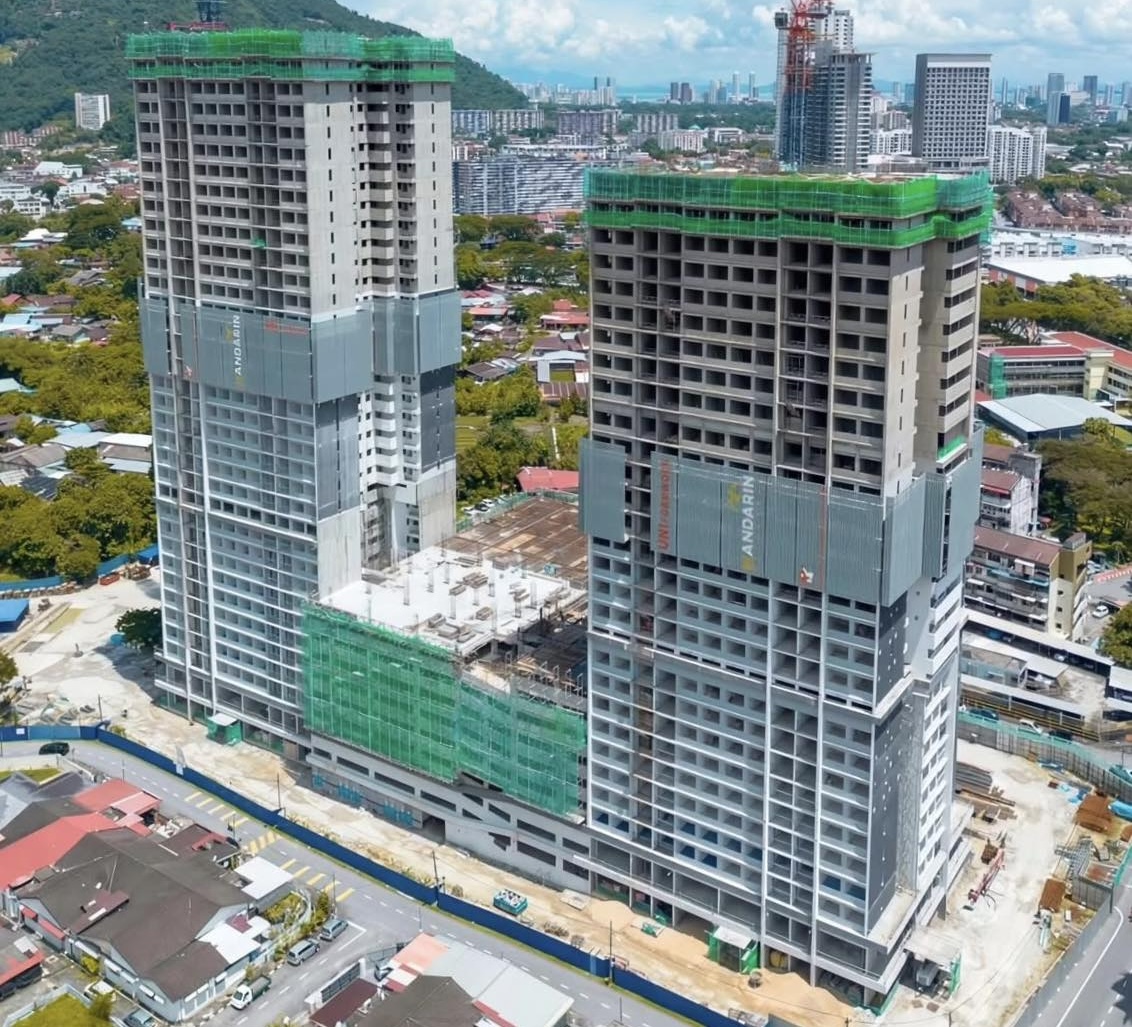
SITE PROGRESS: Mandarin Residence (Dec 2025)

Property News/ 2 December 2025 No comments

mandarin-residence-site-progress-dec2025

About Mandarin Residence

Affordable housing project by Focal Products Sdn. Bhd. in Farlim, at the junction of Jalan Teochew Satu and Jalan Thean Teik. It is right next to Hui Aun Apartment and just 1km from Sunshine Central. The development features a total of 646 residential units with 11 levels of car parking podium. With direct access to Thean Teik Highway, residents enjoy excellent connectivity and nearby conveniences.

Find out more about Mandarin Residence

Register your interest here to keep yourself updated with future development

(This information will be used to keep you updated on the project and future development.)
*By submitting this Form, you hereby agree to our PDPA Consent Clause.

Upcoming waterfront serviced apartment by E&O on Andaman Island

Andaman Island/ 1 December 2025 6 comments

upcoming-serviced-apartment-eno

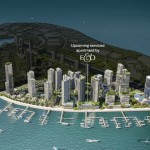
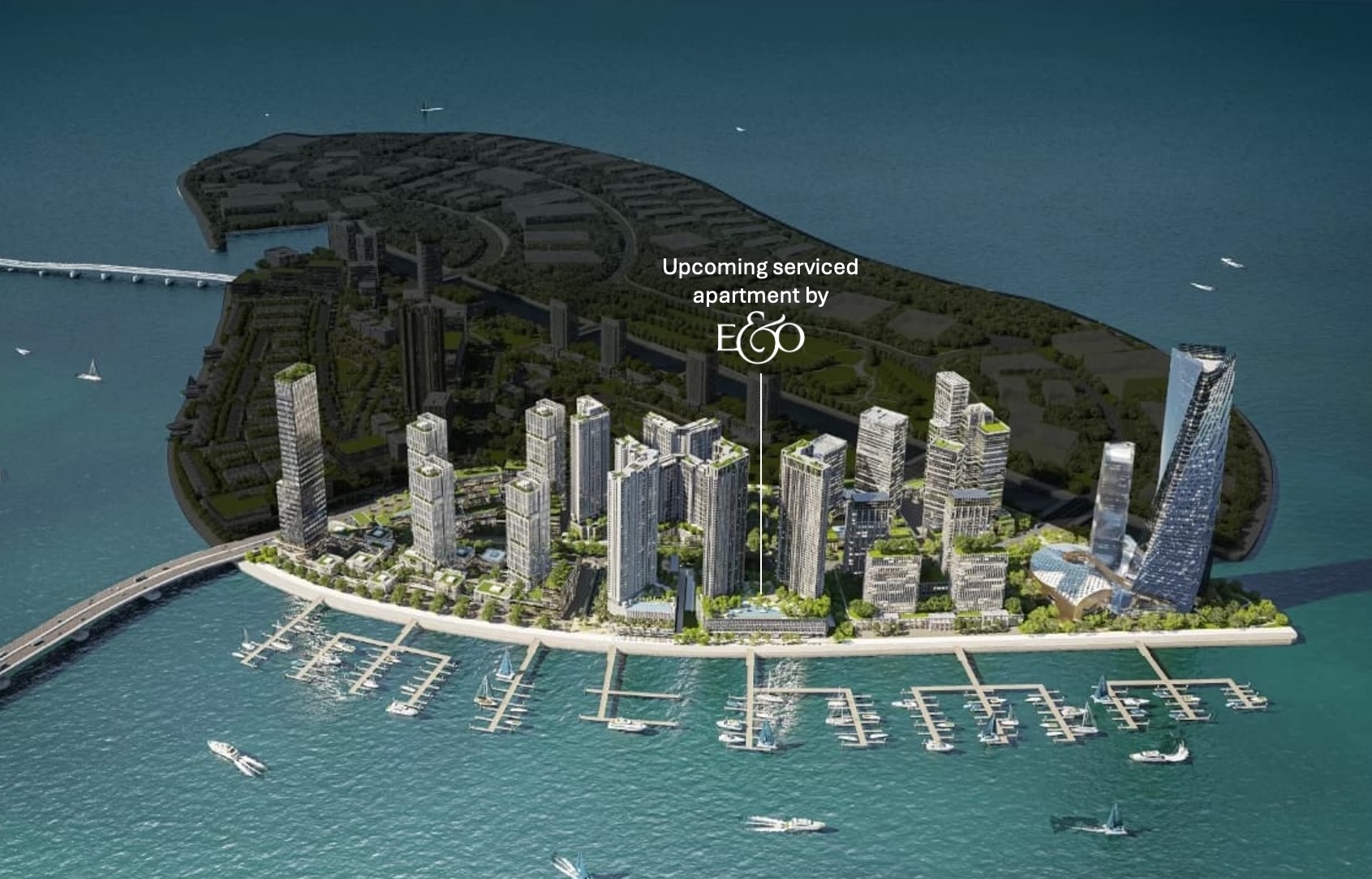
Following the success of Maris, E&O is launching another high-rise development along the coast of Andaman Island. With the new bridge linking the island to Gurney Drive opening soon, essential amenities and services in George Town and the Gurney Drive area will be just a 5-minute drive away.

Located next to the Maris serviced apartment on Andaman Island, the development consists of two 52-storey serviced apartment towers above a basement level with two lower-ground floors. The units are fully furnished and designed for immediate occupancy, offering a move-in ready living space with unobstructed views of the surrounding seascape and the Penang Island skyline.

Project Name : (to be confirmed)
Location :
Andaman Island
Property Type 
Serviced apartment
Tenure 
Freehold
Built-up Size: 
(to be confirmed)
Total Units :
(to be confirmed)
Indicative Price: 
(to be confirmed)
Developer : 
E&O Berhad

Register your interest here for updates on this project and other property news

*By submitting this Form, you hereby agree to our PDPA Content Clause.
(This information may be used by the developer to initiate follow-up communications with you on the project.)
LOCATION MAP

DISCLAIMER: This article is solely based on research done using publicly available data. This is not an advertisement. Any claim, statistic, quote or other representation about a project or service should be verified with the developer, provider or party in question.

Penang steps into a new digital era with next-gen e-Tanah system

Property News/ 1 December 2025 No comments

penang-e-tanah

Penang is gearing up for a major digital upgrade—this time in the world of land administration. The state officially signed its Public-Private Partnership (PPP) concession agreement for the new e-Tanah system today at the Islamic Arts Museum in Kuala Lumpur, marking a big leap forward in how land matters will be handled in the future.

Chief Minister Chow Kon Yeow, who witnessed the signing, called the moment a turning point for Penang’s digital ambitions under the Penang2030 vision.

“This agreement is not just a contract—it’s a catalyst,” he said. “We want a system that’s fast, secure, efficient, and truly people-centric.”

And Penang definitely needs one. With massive reclamation projects like Andaman Island and Silicon Island Phase 1 in the pipeline—together boasting over RM100 billion in gross development value—the state expects land-related transactions to surge from 15,000 cases a year to as many as 30,000 in the coming decade. Everything from land transfers and leases to strata titles and Exco approvals is set to rise sharply.

The current e-Tanah system, introduced back in 2008, has been showing its age for years. Even with RM8.3 million poured into maintenance and upgrades, users still face sluggish processes, limited features, and recurring inefficiencies. A fresh, modern, fully integrated system isn’t just nice to have anymore—it’s essential.

Thanks to support from the Federal Government, including NRES, JKPTG, UKAS and the Prime Minister’s Department, the next-generation platform will now move ahead under a 14-year concession with Puncak Tegap Sdn. Bhd., developed through the Private Finance Initiative (PFI). Chow also expressed appreciation to Prime Minister Datuk Seri Anwar Ibrahim for backing the effort.

The Federal Government, represented at the event by Plantation and Commodities Minister Datuk Seri Johari Abdul Ghani, lauded the project as a strong example of collaboration between federal agencies, state authorities, and the private sector. Johari stressed that efficient land governance is the backbone of economic development and smoother public service delivery.

The good news is that Penang is already building momentum. Since launching the PgLAND system in 2023, the state has seen usage jump by an impressive 73%—from 103,000 users to 178,860 in 2025. PgLAND currently handles digital title transfers, registrations, and land searches, and the plan is for the new e-Tanah platform to integrate seamlessly with it.

“We want PgLAND to eventually become a fully efficient platform for land and parcel tax collection,” Chow said. “Integration with e-Tanah will strengthen Penang’s overall digital delivery ecosystem.”

If everything goes according to plan, Penang should have a fully functional next-gen e-Tanah system by 2027—right on track with the state’s push toward smarter, faster, and more transparent digital governance.

Tags:

Government reassesses 30-year threshold in Urban Renewal Bill

Property News/ 30 November 2025 No comments

30-year-old-threshold-building

The government is taking another look at the proposed 30-year building age threshold under the Urban Renewal Bill, aiming to make sure the benchmark truly reflects what happens to buildings in the real world — not just on paper. Housing and Local Government Minister Nga Kor Ming said the review is meant to balance technical factors with economic and social realities on the ground.

According to the ministry, the 30-year mark was never meant to suggest that buildings are structurally “old” or unsafe. Instead, it’s a practical point where many buildings start showing signs of aging or becoming less suitable for modern living. This includes physical wear and tear, outdated layouts, older technology, rising maintenance costs and difficulty meeting newer safety standards.

In reality, a building’s condition varies widely depending on its material quality, soil conditions, and how well it’s been maintained. Some issues — especially in older flats without lifts or poorly managed strata schemes — can show up even earlier, sometimes within 20 to 30 years.

While engineering standards like JKR 20800:2020 state that a building should have a working structural life of at least 50 years, the ministry clarified that lifespan alone doesn’t tell the full story. By the time a building hits around 30 years old, internal systems such as lifts, water tanks, wiring, piping and sewerage often start to break down. If maintenance has been neglected, these problems can pile up quickly.

From an economic angle, buildings also become less viable to maintain once the cost of repairs exceeds their market value. This typically happens between 30 and 40 years, depending on location and market demand. Buildings aged 25 to 40 years often require major repairs, those between 40 and 60 years may be due for full renewal, and non-heritage buildings approaching 70 years old are usually considered outdated unless they’ve been exceptionally well taken care of.

Malaysia’s laws already require regular checks as buildings age. Under Section 85A of the Street, Drainage and Building Act 1974, high-rise buildings must undergo visual and structural inspections 10 years after getting their CCC, and then every 10 years after that. These inspections must be done by professional engineers and submitted to the local authority.

The minister stressed that any adjustment to the age threshold will be made carefully. The goal is not to create unnecessary financial pressure on residents, but to ensure buildings remain safe, functional and suitable for modern community needs.