fbpx

Penang land duel

Property News/ 7 June 2011 2 comments

title=

Business Times has learnt that SP Setia Bhd and Ivory Properties Group Bhd are the companies that have responded to Penang state government's tender to develop the Bayan Mutiara land. The tender is part of the state government's efforts to raise funds.

Sources said of the two companies, Ivory Properties had submitted the higher bid, for which the reserve price was reportedly set at RM200 per sq foot.

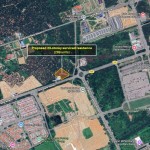
The state government had asked for a request for proposal (RFP) via the Penang Development Corp to develop an initial 24.8ha, which is located south of the Penang Bridge and overlooking Pulau Jerejak.

The RFP comes with the potential to develop an additional 14ha via a future reclamation after the development of the initial 24.8 ha.

Although the deadline for the RFP of the project was set for December 31 2010, it is learnt that the RFP had been recalled and interested parties were asked to re-submit their bids.

SP Setia is currently the only developer without any development projects along Penang's southern corridor where its rivals are present.

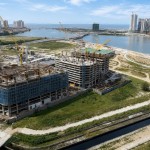
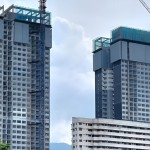
This includes Mah Sing Group Bhd, which is planning a mixed-development property project at Batu Maung. Ivory Properties is present via "The View Twin Towers" development in Batu Uban, while IJM Land Bhd had already embarked on its landmark waterfront development of "The Light" close to the Penang Bridge.

In January this year, the Penang state government announced that SP Setia – via subsidiary Eco Meridean Sdn Bhd – had won a RM300 million project to build and operate the Penang International Convention and Exhibition Centre in Relau on the island.

The project was reportedly meant to create a "Penang People's Park" that includes the country's first subterranean Penang International Convention and Exhibition Centre (sPICE), a 2.8ha public park on the rooftop, a refurbished and upgraded Penang International Sports Arena (Pisa), a refurbished and upgraded aquatic centre and a four-star hotel with retail outlets and a spacious parking lot.

It is not known if SP Setia and the state authorities have inked any agreement to firm up this deal.

SOURCE: Business Times

Tags:

Property developer adds another feather to its cap

Property News/ 6 June 2011 No comments

IVORY Property Group’s Moonlight Bay project has received the Best Leisure Development Award at the Asia Pacific Property Awards 2011 in Shanghai.

A record 21 countries took part in the competition this year, which was part of the International Property Awards covering residential as well as commercial categories.

The group’s chief operating officer Datuk Ooi Chin Loo said attaining one of these coveted awards was indisputable evidence that Ivory was capable of beating some exceedingly strong contenders within the highly competitive Asia Pacific property arena.

“It is definitely a boost of confidence for Ivory to continue ‘building a better world for our future generations’ (Ivory’s tagline),” he said after receiving the award from International Property Awards president Stuart Shield at a gala dinner in Shanghai.

Last year, Ivory’s Penang Times Square was also commended for the Best Mixed-Use Development.

Attributing the commendation to several factors, Ooi said Moonlight Bay was equipped with security ser-vices, landscaped greenery, stonework retaining walls, pocket parks and cascading water features.

“It offers residents an ideal sanctuary to enjoy peace and tranquillity away from the city’s hustle and bustle, bringing them closer to nature.

“Its strategic location — in proximity with places of interest like Butterfly Farm, Tropical Fruit Farm, Batu Ferringhi night market, restaurants and pubs — makes it an ideal project for the market,” he added.

Source: The Star

Tags:

Housing dream come true? Industry players give their views on My First Home scheme

Property News/ 4 June 2011 No comments

Property players are eagerly waiting for clear guidelines from the Government on how the recently launched My First Home (MFH) scheme is supposed to work. Social housing generally does not provide good returns, developers and consultants point out, and without concrete details, it is even harder to expect the private sector to be actively involved. As always, land is a central issue.

First announced last October in Budget 2011 and officially launched in March by Prime Minister Datuk Seri Najib Tun Razak, the scheme is aimed at helping young professionals between 18 and 35 to own a home priced between RM100,000 and RM220,000. At the launch, Najib expressed his hope that the private sector would view participation in the scheme as a corporate social responsibility (CSR) activity, and not as a venture to profit from.

In other words, the developers are expected to shoulder the costs of MFH projects as part of being dutiful corporate citizens. Nevertheless, it has been reported that the Government was considering providing land at very low cost or for free, even in the Klang Valley, in joint ventures with the private sector. If this indeed happens, says Real Estate and Housing Developers’ Association (Rehda) president Datuk Seri Michael Yam, it will help developers to lower costs.

Still, there is this next question on the minds of developers: If the land comes free or cheaper, where will it be? If the sites are far from the city centre or in areas that lack public amenities, will there be enough buyers? As it is, many low-cost housing projects built by the private sector are in areas such as Nilai, Rawang and Sepang, which cannot boast of high demand. If the scheme’s objective is to meet demand for homes, allocating land in such locations would be self-defeating.

Lightening the developers’ load

Yam says land generally constitutes a fifth of the total gross development cost of stratified properties. “For most parts of the Klang Valley and Penang, the likehood is that housing units below RM220,000 would be stratified apartments with relatively small built-up areas, despite land being free,” he adds.

Elsewhere in Malaysia, it may still be possible to deliver landed properties with smaller built-up areas in less prime areas, if access to completed roads and infrastructure is available, and certain conditions and cross-subsidy requirements are waived.

He points out that the expenditure in developing a property project covers land, manpower, construction materials, consultancy fees, utility contribution, bank interest, cross subsidy for low-cost homes and discounts to meet national aspirations. “If all the stakeholders can review their cost, provide subsidised materials and reduce utility contributions, the final delivery cost can be lowered,” he says. He also suggests that the Government consider providing upfront infrastructure and utilities to further reduce the burden on developers.

Hua Yang Bhd chief executive officer Ho Wen Yan believes that it is possible for developers to offer better homes if the Government supplies the land.

He argues: “With cheaper land cost, better homes with larger living area and better amenities can be provided. With good transportation infrastructure such as integrated highways, the MRT (Mass Rapid Transit), KTM Komuter and other forms of public transport, it is possible to live further away and work in the city. This is a proven model in developed cities all over the world.”

At present, says Ho, urban density in Kuala Lumpur is increasing rapidly. To reduce social and economic pressures, there is a need to look at alternatives beyond the city centre.

He points out that while property developers may not be looking to earn sizeable margins from the MFH scheme, some profit is still needed to make participation viable for them. “Balancing all the factors of cost, land allocation and earnings will be critical towards the long-term sustainability of the scheme. Financial incentives such as tax breaks, rebates and other forms of support will be welcomed by the private sector,” he says.


SOURCE: The Star

Tags:

Fine-tuning necessary for housing scheme

Property News/ 4 June 2011 No comments

Besides the possibility of the Government providing land for free or at low cost, another issue surrounding the My First Home (MFH) scheme is the general consensus that it is unrealistic to have the same limit on monthly income and property price across the country. To date, it has been announced that houses under the scheme are priced from RM100,000 to RM220,000 per unit, and to qualify, buyers must have a monthly salary of not more than RM3,000.

Developers are of the view that the higher land values in the Klang Valley and major cities should be reflected in the MFH scheme.

“The scheme should reflect the higher land values, living costs and incomes in the Klang Valley and major cities to ensure there is no mismatch between demand and supply,” says Mah Sing Group Bhd group chief executive and managing director Tan Sri Leong Hoy Kum.

Leong and other developers say a price limit of RM350,000 is more realistic in Greater KL and Penang, and the monthly income limit should be raised to RM5,000.

Real Estate and Housing Developers’ Association (Rehda) president Datuk Seri Michael Yam says the present threshold household income for the purchase of low-cost houses is RM2,500, which is just RM500 less than the RM3,000 income limit for MFH buyers.

The minimum property value of RM100,000 should be set aside so that those who are not entitled to the RM42,000 low-cost homes be given a chance to own a property, says Yam.

Loan financing is another issue linked to the MFH scheme. National House Buyers Association (HBA) secretary-general Chang Kim Loong says buyers with a monthly income of RM3,000 may have problems with mortgage payments, despite the 100% financing provided under the scheme.

Chang explains that based on the previous BLR (base lending rate) of 6.3% and a “market rate” of BLR less 1.8%, the effective interest charged to a house buyer is about 4.5% per annum. Generally, banks practise a rule of thumb whereby any single loan repayment should not exceed one-third of the borrower’s gross pay.

“For a RM220,000 housing loan with a tenure of 30 years and 100% financing, a buyer with a monthly salary of RM3,000 would be paying monthly repayment of RM1,115, which is 37% of his gross monthly salary. These borrowers would not have much savings and could default on their loan obligations in the event of personal emergency expenses. Also, it would be impossible for these house buyers to take up additional loans to buy cars.”

Chang calls for home buyers under the scheme to be given a preferential interest rate of 3% fixed throughout the loan tenure. He also says the Government must make it compulsory for MFH projects to be based on the 10:90 BTS (build-then-sell) concept to give maximum protection to home buyers and to shield the Government from potential liabilities as such projects are easier to revive in the event they are not completed.

Under the BTS concept, a buyer only pays 10% of the price on signing the sale and purchase agreement, with the balance to be settled only after completion of the house.

Yam of Rehda concurs with Chang and calls on banks to allocate a block of loans at preferential interest rates with longer loan tenures and with the provision of having joint multiple borrowers.


SOURCE: The Star

Tags:

Mah Sing rewards loyal customers

Property News/ 3 June 2011 No comments

title=KUALA LUMPUR: Mah Sing Group Bhd yesterday introduced a loyalty rewards programme called "M Club" designed to keep its custo-mers returning to the developer and buy more properties in Johor Baru, Penang and Klang Valley.

The enhanced loyalty programme offers its 10,000 members the chance to enjoy privileges and discounts of up to 30 lifestyle brands.

"We hope in the future our customers will view their M Club as indispensable as their identification card. In fact, in the pipeline is a new-generation Mah Sing Community website complemented by Facebook and Twitter accounts and a community-centric blog," Mah Sing chairman and independent non-executive director Tan Sri Yaacob Mat Zain said in his speech.

He added that M Club members or better known as the Mah Sing community, will appreciate select bene-fits being brought direct to their doorsteps with the simple act of flashing either their classic, gold or platinum M Club card at the merchants, with services ranging from home and living, beauty and health to wellness and personal development.

Among the 30 lifestyle merchant partners are KL Lifestyle Art Space, IHeal Medical Centre, Lightcraft and Times Bookstores.

SOURCE: Business Times

Tags: