fbpx

Nadayu eyes RM300m property sales

Property News/ 17 October 2011 No comments

KUALA LUMPUR: Property developer Nadayu Properties Bhd
(formerly known as Mutiara Goodyear Development Bhd) is targeting sales next year of RM300 million of its properties in several locations in Klang Valley and Penang.

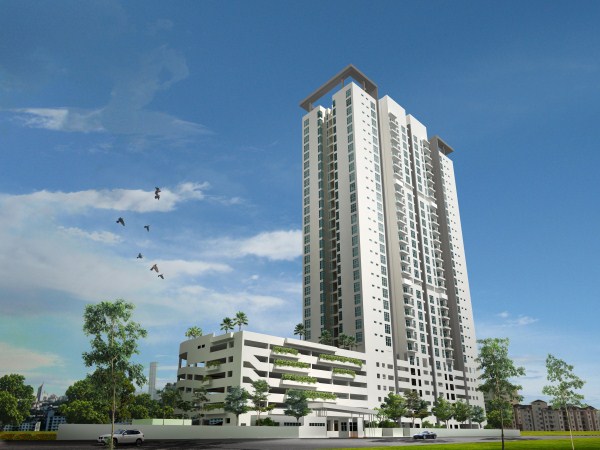
Executive chairman Hamidon Abdullah said the company is about to launch three new projects: Nadayu 28 Sunway, expected to be launched early next month; Nadayu 99 Cyberjaya at the end of this year; and Nadayu 290 Penang early next year.

“The Nadayu brand is becoming acceptable, people are starting to identify the name, and people are starting to associate it with some level of quality and delivery.

“But we want to put out complete affordable products,” he told reporters at Nadayu’s extraordinary general meeting (EGM) here today.

Hamidon said to date, the company had achieved sales this year of about RM250 million of its mixed development projects.

At the EGM, shareholders approved the disposal of three office lots at Dataran Prima with a total floor area of 213.435 sq m for a cash consideration of RM42.6 million.

Hamidon said the asset disposal was in line with the company’s strategy of disposing of non-core assets to focus on its core business of property development.

“The cash from the asset disposal will be used to acquire more strategic land banks for future development,” he said.

Upon completion of the asset disposal, Nadayu shareholders’ funds will stand at RM330.9 million with net asset per share of RM1.44. – Bernama

SOURCE: Business Times

Tags:

Affordable condos in Batu Ferringhi

Property News/ 17 October 2011 No comments

UPLANDS Resort Sdn Bhd plans to build 189 units of medium-range condominiums in Batu Ferringhi to address the need for affordable housing in Penang.

Its director Albert Chuan said they were targeting households with a combined monthly income of RM5,000 and below.

He said plans for the project, located on a 0.9 ha site on Jalan Sungai 1, had been submitted to the local authorities.

?We hope to get the green light soon and start construction work in the first quarter of 2012,? he said, adding the RM34.7mil project should be completed in 30 months.

Chuan added the project was in line with the spirit of Prime Minister Datuk Seri Najib Tun Abdul Razak?s 1Malaysia People?s Housing Programme (PRIMA) to promote affordable housing in the country.

PRIMA, a corporation set up under the Prime Minister?s Department, was launched in the recent Budget 2012 announcement to distribute affordable houses to eligible first time house buyers, whose monthly income is not more than RM6,000.

The 15-storey project, which has 21 units per floor, is serviced by three lifts. Among its facilities are a swimming pool, gymnasium, community hall, and a roof-top landscaped garden.

Chuan said the company was also ?donating? a RM3.5mil wet market equipped with a car park and multi-purpose hall food court to the Penang Municipal Council.

?This is to fulfil our obligation to provide social amenities to the community in Batu Ferringhi,? he added.

Since 1993, Uplands Resort had completed over 1,000 units of residential landed and high-rise properties in Batu Ferringhi.


SOURCE: The Star

Tags:

Penang and the green agenda

Property News/ 17 October 2011 No comments

title=DURING an international conference on quantity surveying in Penang last week where she was invited to deliver a keynote address, former International Trade and Industry Minister Tan Sri Rafidah Aziz continued to be in her element.

The feisty former minister, who earned the nickname “Iron Lady of Malaysia”, did not miss a beat and held a captive audience.

From highlighting the fact that the facilities at an international beachfront hotel where the event was held were less than satisfactory by saying “your microphones here do not rock”, to amusing her audience by using a term “prawn brain” which she has coined before, referring to government officials who cause bureaucratic problems, there were no dull moments.

The heart of her speech, however, touched on the green agenda, as she spoke on the need for the issue to focus entirely on saving the environment, rather than it being about politics and power.

“The green agenda itself and sustainability issues,” noted Rafidah, “have (also) tended to be hijacked by politicians, in seeking a platform to operate upon and make green issues political capital … and this has already happened in some of the developed countries”.

The green agenda, Rafidah said, should not be politicised, as it would detract from the focus required to put into place, policies and programmes directly linked to sustainability.

“Today,” she added, “sustainability has emerged as an important factor in international trade, as more consumers, especially in the developed economies are demanding that products which enter their markets, have undergone production processes, which have in turn, met prescribed standards and regimes; all in the context and preservation of the environment and human welfare and the eco-system”.

Her call to her audience of the day made up of international quantity surveyors, academicians and several corporate sponsors of the event in being good stewards of the environment to ensure long-term business success, is perhaps a sound and timely lesson which must be taken up urgently in Penang.

Citizen groups are becoming more aware and concerned whether the island state is now seeing a further rise in rampant and unbalanced development as high rises, traffic congestion, reclamation projects, more shopping malls, high-rise dwellings and big-ticket commercial and residential property projects are the order of the day.

In the name of wanting to turn George Town into an international liveable city and lure top-notch talent to work, live and play, it appears that the issue of development has turned into one which is now becoming too property-centric.

With increased permissible density, from 1:1 to 2.8:1 or the density of 87 units per acre, land in Penang is becoming even more valuable.

This is because property developers, who are anticipating higher profits, are making a beeline to the island to buy land, and, as with all businesses, to build up to the maximum limit and maximise their profits.

Penang’s beachfronts, its pristine hill station, Penang Hill, and the state’s “golden goose”, which is the world heritage city status obtained in 2008, have not been spared the indiscriminate construction and proposed construction of high-rise buildings.

Add to this, growing environmental destruction on virtually all spots of the island, amid concerns that the state could head for a housing and construction bubble.

The primary responsibility in ensuring that environmental protection is not spawned by political interests, lies with the state.

Politicians and policymakers must determine how entrepreneurship and property rights are utilised to promote and achieve a sound balance in environmental and economic growth.

Ultimately, it is the people who must remain at the heart of the green agenda, and this calls for consumers to stand up for their belief systems and use common sense along with sound and independent science, to chart their own destinies in choosing the kind of Penang they want.


SOURCE: Business Times

Tags:

Property pointers

Property News/ 15 October 2011 No comments

HERE are some pointers for those considering a property investment in the near term:

Valuer and managing director of Khong & Jaafar Elvin Fernandez

“The global environment is changing. Strictly speaking, an upgrader sells the old house to buy the new. If he is going to hang on to the old, he will have to consider the rental market where yields are falling. He has to consider whether the market has peaked in the areas he wants to buy and whether it can go further and that may be unlikely in many areas. Value has gone above the normal governing fundamentals of price versus household income, and price versus rental returns.

“Although Malaysia is rapidly developing and we have a young population and we have seen more years of prices running up than going down, this may not be replicated as sentiments may be poor as a result of what is happening in Europe.

“As for commercial properties, the retail market looks stronger than the office market as there is an oversupply in this sub-segment.

“As for first time buyers, we have a whole range of housing from the low cost to the high-end. But many of the properties that young people may be able to afford are poorly maintained and because of this, these properties are not desirable. The authories should have more stringent legislation for people who default on their service charges. It makes good sense to seek professional property management instead of doing it on a piecemeal basis. Taking care of the maintenance issue is more logical step than building more, only to have the maintenance issue cropping up again later on.”

Tetap Tiara Sdn Bhd executive director (Jaya One) Charles Wong

“Prices will have to stabilise. When considering buying the larger residential units for investment, the question to ask is, Can you rent it out? Smaller units will be more feasible. But having said that, we are seeing a huge number of 400 sq ft units of service apartments being built. While these may be affordable, buyers must consider rentability. Access, connectivity and proximity to amenities are important. And if there are so many of these units, you may need to take a longer period to rent and to re-sell in the secondary market in today’s uncertain climate.

“In the retail market, rental rates have been coming down and are softer than two to three years ago. For landed properties, the rental are expected to drop from 3%-4% to sometimes 1% or 2% and condominium yield from 7% to 8% to 4%-5%.”


Mah Sing group managing director/chief executive Tan Sri Leong Hoy Kum

“The demand will be for smaller units, and for mid-end housing, instead of the high-end ones. If it is a location they want, for example KLCC area, people will buy a little further away like in Jalan Ampang where prices are lower.”

GV International managing director Samuel Tan

“In Johor, price increase is expected to be gradual. Areas with good connectivity will be popular. In the last several years, the emphasis on infrastructures like highways has helped to spur interest and prices. The western coastal highway from Skudai to Bukit Indah has made travelling a breeze and prices have moved 10% or more. Developers are expected to report good sales in the near future although September was a soft month, as a result of the US downgrade in August. Iskandar Malaysia will become more visible and is expected to generate interest from the Japanese, South Koreans and Singaporeans.”


Real Estate Housing Developers’ Association (Penang) chairman Datuk Jerry Chan

“Demand for landed units on the mainland and Penang island will continue but yield on the island is expected to be low, at 1% or 2%. The price movement for this year has been greater than last year. We continue to see land prices going up. For the lower to mid-end, prices are still moving. Demand is expected to remain firm for properties priced RM600,000-RM700,000 and below. For those between RM800 and RM1,000 per sq ft or about RM1mil, people will have adopted a wait-and-see attitude.

“Currently, prices on the mainland is a quarter or a fifth of those on the island. Penang people are beginning to find it too expensive on the island and are moving to the mainland.”

SOURCE: The Star

Tags:

Affordability vs yields

Property News/ 15 October 2011 No comments

Balancing the need for affordable housing with property market speculation

SHANKAR, a 27-year old law degree holder, works as a paralegal with a law firm in Kuala Lumpur and earns below RM2,000 a month. He is currently studying part-time for his Certificate in Legal Practice (CLP).

Shankar and his fiancee, a kindergarten teacher, hope to be able to buy a home by the time they get married later next year. He admits that with both their salaries combined, affording a home in the Klang Valley is indeed a tall order.

Shankar is hopeful that once he is a qualified lawyer (after completing his CLP and once he has been called to the Bar) and earning a better salary, both his wife and him will be able to afford a nice place in the city.

“It is our dream to have our own house,” Shankar says. Both his fiancee and him currently live in their respective parents’ houses, some 50km apart.

Here’s the irony. Once he completes his CLP, but before he can be called to the Bar, Shankar has to do nine months of chambering (pupilage). During that nine months, his salary would actually drop (because he would be hired as a student instead of an employee)!

“It’s how the (legal) industry works, sadly. It does not help that property prices are also very high in the Klang Valley. Sometimes I wonder if we would even realise our dream of buying our own house,” laments Shankar.

Shankar’s plight is shared by many Malaysians with low salaries who, while struggling to make ends meet, are also hopeful of having a permanent roof over their heads – one that they can proudly declare their own.

The residential property market in 2012

It does not help that residential property prices are constantly on the uptrend.

“Property is unique, in the sense that they’re big ticket items that are virtually recession-proof. Today, it’s at one price, tomorrow it will definitely be higher,” says one industry observer.

According to data by the National Property Information Centre (Napic), the price of the “average house” in Malaysia reached RM206,513 in the first quarter (Q1) of 2011. The price increased steadily from the previous four quarters; RM189,604 (Q1 2010), RM194,286 (Q2 2010), RM199,085 (Q3 2010) and RM203,903 (Q4 2010).

“The highest prices were recorded in Kuala Lumpur at RM438,150, Sabah at RM325,676 and Selangor at RM307,586. Johor registered the price at RM147,441 while the lowest prices were noted in Perak at RM127,096, Kedah at RM126,940 and Perlis at RM115,072.

“In Q2 2011, the price of the “average house” in Malaysia increased marginally by 1.1% to RM208,725. Kuala Lumpur continued to record the highest of all house prices at RM442,864,” said JPPH.

Next year, property price increases are expected to continue in Malaysia, albeit at a lower rate, due to rising inflation and slower economic growth.

Citigroup in a recent report says global economic growth (at current exchange rates) is expected to slow from 4% last year to 3% this year to 2.9% next year. This was a downward revision from its forecast last month of a 3.1% growth for this year and 3.2% for next.

Property consultancy DTZ Nawawi Tie Leung Sdn Bhd executive director Brian Koh reckons that housing prices could increase 4% to 5% “across the board” next year.

“We expect a soft landing of property prices next year due to rising inflation. Furthermore, people are more cautious (about their spending),” he says.

“After strong increases in property in the last two years, especially within the Kuala Lumpur area, we expect price increase to be more gradual next year,” Koh adds.

Property consultancy, VPC Alliance (KL) Sdn Bhd managing director James Wong says he does not expect the outlook for the local housing sector next year to be as vibrant as it is this year.

“The economy is facing a slight slowdown and disposable income will be less. This explains developers’ push to launch as many projects as possible.

“Next year, we are expecting less recorded transactions and launches within the primary housing market.”

With fewer launches in the primary housing market, many buyers will look to the secondary market, Wong says.

Real Estate and Housing Developers’ Association Malaysia (Rehda) in a recent briefing says it is “cautiously optimistic” of the housing market outlook in the first half of next year despite a marked increase in building material and labour costs as well as a slowdown in economic activity.

Respondents to a Rehda survey reveal that developers are more optimistic about the second half of this year than the first half of next year. Most respondents said prices would likely rise by up to 20% in the second half of this year, with 47% of respondents planning to increase selling prices by at least 15%. The survey showed that launches in the period were equally split between strata-titled and landed properties.

At the briefing, Rehda president Datuk Seri Michael Yam reportedly said the industry was concerned about how the local economy would be affected by external forces including the pressure on the sovereign debt ratings of Malaysia’s developed market trading partners.

Research houses, meanwhile, have started to downgrade the property market.

HwangDBS Vickers Research in its recent research report says there are signs of property sales slowing down, due to less mortgage applications and approvals (due to banks becoming stricter with financing margins), developers delaying launches and buyers cancelling bookings.

“Mortgage approvals and applications eased from July to August 2011, after hitting record highs in June,” it said. However, for the first eight months of 2011, mortgage approvals and applications grew 25% and 10% respectively year-on-year, which was still ahead of the total banking sector average of 20% and 4% year-on-year respectively.

The research house also says it sees a risk to Malaysia’s economic growth amid the current global financial malaise.

“As property sales correlate strongly with GDP (gross domestic product) growth, demand will likely weaken going forward, which could dampen property prices. If there is a recession (in 2012) property sales could drop by 10% year-on-year on lower volume sales and average transacted prices.”

The need for more affordable housing

With rising inflation and spending power being curbed, the chances of people like Shankar are a little bleak. Fortunately for people like him, there is the My First Home Scheme (MFHS). Launched by the Prime Minister in March, the scheme allows 100% financing for first-time house buyers earning less than RM3,000 a month to purchase homes below RM220,000.

The limit was increased to RM400,000 by Budget 2012, with joint loans between spouses. This comes into effect next January.

“Increasing the amount will allow both of us to apply for our dream home,” says Shankar, who is happy with the Government’s recent budget announcement.

According to reports, seven areas within the Klang Valley have been identified under the scheme, namely Damansara, Cyberjaya, Putrajaya, Shah Alam, Puchong, Rawang and Klang.

“The MFHS is a good move, so is the move to increase the price of the homes to RM400,000 from the previous cap of RM220,000,” says VPC’s Wong.

According to Napic, more than 214,000 transactions took place in the property market in the first half year of this year. Of that number, the majority (66% or 142,600 transactions) was made up of properties priced below RM200,000. Just 10% (or 22,500 transactions) were properties priced at more than RM500,000.

“With the bulk of transactions below RM200,000, the MFHS is timely,” says one industry observer. The scheme has also received criticism – opponents have argued that RM400,000 is deemed too high to be considered as “affordable housing.”

“RM400,000 is too high for a first-time buyer. We need affordable housing at sustainable prices. The scheme doesn’t send out the correct message,” one industry observer says, while another analyst says he is supportive of the move to increase the limit to RM400,000.

“It would encourage more developers, especially renowned ones, to build properties for first-time buyers. They may be put off from buying homes worth RM220,000 and below, especially with higher raw material prices.”

Some developers have, however, expressed intention to develope mass housing projects. Mah Sing Group Bhd earlier this month announced plans to launch linked beginner homes, with prices estimated to begin from RM390,000 in Rawang by as early as the first half of next year.

Earlier this year, SP Setia Bhd also proposed to purchase 1,010.5 acres in Ulu Langat, Selangor to build starter homes priced from RM300,000.

Curbing speculative prices

Budget 2012 also proposed that a real property gains tax (RPGT) of 10% be applied to properties held and disposed of within two years. Meanwhile, the rate of 5% will be maintained for properties sold within the third, fourth and fifth years after purchase.

The current RPGT, imposed after Budget 2010, is 5% for all properties sold within the first five years of purchase. Following the budget announcement, industry observers opined that the 5% increase in the RPGT, for units sold within the first two years after purchase, would have little impact on speculative activities in the property market and escalating house prices.

“The minimal increase is unlikely to curb speculation,” says an analyst.

Wong concurs: “The 10% imposed is not much as it is only imposed on the gains and is a manageable quantum.”

Source: The Star

Tags: