fbpx

Tropicana Ivory’s RM10bil Penang World City to feature diverse cultural components

Property News/ 24 March 2012 No comments

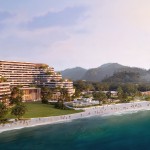
GEORGE TOWN: Tropicana Ivory Sdn Bhd’s (TISB) RM10bil Penang World City (PWC) project in Bayan Mutiara will have affordably priced high-rise units and a world culture’ component, featuring different cultural residential enclaves.

TISB is a joint-venture company in which Dijaya Corporation Bhd holds a 55% stake, while Ivory Properties Group Bhd the remaining 45%.

Ivory group chairman and chief executive officer Datuk Low Eng Hocksays about 15% of the properties for the 800 to 1,000 high-rise units for the first phase will be priced between RM300,000 and RM500,000, depending on the built-up area which ranged between 600 sq ft and 800 sq ft.

The first phase, to be located on a 10-acre site and scheduled for launch in the third quarter of 2012, will have a gross development value (GDV) of around RM600mil to RM700mil.

Subsequent phases for PWC will also see 15% of the properties priced in the affordable range of between RM300,000 and RM500,000, Low adds. Low said the group might consider using the plot ratio guidelines introduced in 2010 for the island to build medium-priced properties.

Under the revised guidelines of 2010, developers have to allocate 5% of the total units in a development scheme to be priced at RM200,000, 10% to be priced at RM300,000, and another 5% not exceeding RM500,000.

The affordable components were in the planning of the entire master plan as a value-added component from the very early stage, even during the tender exercise, according to Low.

“As we are planning for a world class city within World City, economies of scale is of the essence.

“In order for this to happen, we need a huge number of Penangites to call World City their home.

On the world culture’ component in PWC, Low says there will be residential enclaves where the properties will reflect the architectural and cultural themes of a particular country.

“For example, we will create Chinese, Korean, Middle Eastern and European villages in PWC, so that the properties can be marketed in that particular country through an appointed real estate agent.

“We want to create a world culture to attract tourism and foreign investors and to differentiate PWC from the other mega-development projects on the island.

“These parcels will be solely for en-bloc sales to expatriates,” he says.

On the impact of the global slowdown on PWC, Low says at present the group has not felt the impact of the global slowdown yet, at least not in the financial and real estate sectors.

“Our banks are well positioned and the central bank played a very proactive role to mitigate any possible impact or threat to our economy. The scale of foreign direct investments is very encouraging not only for Penang but for Malaysia as a whole,” he says, adding that the group does not foresee any slowdown in the next two to three years. “In fact, property prices in Penang are still very attractive and have yet to reach its peak. Many magazines, including those from Hong Kong, have been mentioning and promoting Penang as the ideal home destination.

“Investors from China, Japan and Korea, for instance, are very much interested in coming to Penang, particularly in the aftermath of the Japan earthquake and tsunami,” he notes.

Meanwhile, on Ivory’s plans for 2012, Low says the company is targeting to launch projects worth approximately RM1.4bil in GDV this year, including The Latitude in Mount Erskine, Penang Times Square phase three and phase four, City Mall and City Residence in Tanjung Tokong.

“The company is targeting to rake in sales of some RM800mil this year.

“Last year, we only booked RM121.8mil of sales for completed and on-going projects besides having unbilled sales of RM227mil to be realised over these two years. We are expecting higher sales this year since we have more projects to offer this time and not forgetting the much anticipated PWC project,” he adds.

Last July, Ivory won the right to purchase and develop the site in Bayan Mutiara after edging out four other parties, including SP Setia Bhd, which were bidding for the land. Ivory won the bid after offering the highest price to buy the land for RM240 per sq ft or RM1.072bil for the entire site, securing with it the right to develop on the existing 67.56-acre site and another 35 acres that will be reclaimed over the next three years.

To date, about RM22mil or 2% had been paid as earnest deposit for the land. The remaining downpayment of RM80mil will have to be paid on or before April 10. In the agreement with Dijaya Corporation Bhd, Ivory is the turnkey builder for PWC and will thus be entitled to 48% of the project’s gross revenue with the amount due to the company estimated at RM5bil.

Source: The Star

Tags:

The Turf

Penang Turf Club/ 23 March 2012 25 comments

the-turf-main

The Turf, a freehold development proposed by Chong Company facing Penang Turf Club. The initial proposal comprises single 34-storey tower residential block with a total of 160 condominium units, built-up area ranging from 1,300 sq.ft. onwards for a typical unit. However, this plan will be replaced with a new plan in near future. (updated Dec/2016)

Currently the project is still in its planning stage.  

Property Project : The Turf
Location : Penang Turf Club, Penang
Property Type : Condominium
Tenure : Freehold
Built-up Area : (to be confirmed)
Total Units : (to be confirmed)
Indicative Price: (to be confirmed)
Developer : Chong Company

Register your interest here

(This information will be used to keep you updated on the project and future development.)
*By submitting this Form, you hereby agree to our PDPA Consent Clause.

Location Map:


Tags:

Sierra East Condo @ Bukit Jambul

Bukit Jambul/ 23 March 2012 105 comments

Sierra East Condo, a freehold development located within the established township of Bukit Jambul. Comprises two tower residential block with a total of more than 400 condominium units. It is few minutes driving distance from Bayan Baru and Free Trade Zones and 10 minutes to Penang Bridge.

Property Project : Sierra East Condo
Location : Bukit Jambul, Penang
Property Type : Condominium
Tenure : Freehold
Built-up Area : 1,200 sq.ft. – 1,400 sq.ft.
Total Units : >400
Indicative Price: RM 500,000 onwards
Developer : Chong Company

Location Map:

Tags:

Skyrocketing shophouses

Property News/ 21 March 2012 1 comment

THE cost of buying a pre-World War II shophouse in George Town, Penang, has reached RM2,000 per square foot — equivalent to the price of the poshest Kuala Lumpur City Centre (KLCC) condominium units.

An entrepreneur, who declined to be identified, has just paid RM4mil for a 2,000sq ft shophouse along Lebuh Pantai (Beach Street) in order to continue an existing business located on the premises which she had been renting.

Before 2008 — the year George Town was jointly listed with Malacca as Unesco World Heritage Sites — pre-war shophouses in Penang were generally going for about RM200,000 to RM800,000 depending on size and location.

In 2009, an unrestored shophouse of 10ft by 36ft in Lorong Chulia only cost RM150,000, but the asking price has since jumped to over RM300,000 of late.

Now, the asking price of even the smallest shophouse that spans only 11ft by 30ft in Lorong Toh Aka is already RM600,000.

Nearby, in Lorong Carnarvon, one unit of 17ft by 100ft has been sold for RM1.2mil, while Lebuh Amernian shophouses can fetch RM3mil each.

Heritage value

Contrary to the popular notion that foreigners and investors from Kuala Lumpur are pushing up prices of Penang heritage property, recent transactions show that Penang investors are the ones who are buying in a substantial way.

This is particularly true among those who have lived abroad and recognise the heritage value.

According to informed sources, one businessman from Bukit Mertajam recently snapped up RM20mil worth of pre-war property, including shophouses, in one day.

Even derelict property is now seeing interest. The defunct Nam Wah Hotel & Bar, located at a prime location in Lebuh Chulia, was sold for RM7mil last year. The property comprises double-shophouse units with a land area of 14,000sq ft.

Such shophouse properties are often turned into “heritage” hotels, charging an average of RM300 to RM400 per room per night.

Local entrepreneur Seah Kok Heng, 42, says he spent RM3mil in 2008 to acquire three derelict, triple-storey shophouses located at Rope Walk or Jalan Pintal Tali.

Then, he spent another RM10mil to restore and transform the adjoining units into the Chinese-themed 1881 Chong Tian Hotel, where certain suites sell for over RM2,000 a night.

Probably the best-known heritage projects are by Penang-born businessman Christopher Ong, who has lived in Australia, as well as in Sri Lanka, where he once operated an award-winning hotel.

Together with business partners, he now owns and operates Muntri Mews, a nine-room hotel, which was formerly a stable on Lebuh Muntri.

This street has some of the finest Straits Eclectic shophouse facades in George Town.

Ong, who is in his late 40s, is currently working on similar projects on Lorong Stewart and Lebuh Noordin, among other sites in George Town.

He also used to own a colonial-era double-storey detached house built located on Jalan Clove Hall.

It was recently sold for close to RM8mil to Penang-born Jim Lim Teik Wah.

Having lived in the UK for 40 years, Lim has returned to settle in George Town together with his English wife, Jo.

Another row of nine shophouses in Jalan Ariffin, just off Jalan Transfer, has been bought by a local lawyer for an undisclosed sum.

The units are being restored for another hotel project by the owner.

The Penaga Hotel project — which occupies Jalan Transfer, Jalan Hutton, and Lebuh Clarke — is another well-known development owned by veteran architect Hijjas Kasturi and his wife Angela, who reportedly spent RM50mil on it.

Obviously, such properties have also been bought by investors from Kuala Lumpur and from overseas.

Bought for RM2mil in 2008, Campbell House in Jalan Campbell is a 10-room hotel owned by Malaysian-born Nadya Wray and her Italian husband, Roberto Dreon.

Nadya’s mother’s great-granduncle was Tunku Abdul Rahman, Malaysia’s first Prime Minister.

No. 23 Love Lane is another multi-million ringgit restoration project owned and funded by the art-loving wife of a former Cabinet Minister from KL, who declined to be named.

Nibong Tebal

While such buyers are tight-lipped, especially over the total costs of their acquisitions, lumber yard entrepreneur Gooi Kok Wah, 43, has no qualms about revealing the reasons for acquiring such properties.

The Nibong Tebal-based businessman has been eyeing and buying such shophouses since 2008, after the Unesco World Heritage Site listing.

Apparently, that declaration fuelled the interest of astute locals as well as “outsiders” including Swiss, French, Australian and Singaporean investors.

“Current prices for such properties in prime areas like Beach Street can command RM2,000 per square foot, and RM1,000 per square foot and above, for touristy areas such as Chulia Street, Love Lane, Muntri Street, Stewart Lane and certain heritage core zone sections.

“And even in less known areas like Prangin Lane, the asking price is at least RM400 per square foot,” explains Gooi, a former accountant.

To-date, Gooi has bought six pre-war shophouse properties.

His latest RM2mil purchase was for a two-storey shophouse at Lebuh Kimberley that spans 20ft by 200ft, with a built-up space of 6,000sq ft.

Heritage zone

He points out that George Town World Heritage Incorporated — an organisation under the State Government —listed only 3,800 units of pre-war shophouses in the heritage core and buffer zones on the island.

The core zone covers an irregular-shaped area of 109 hectares on the north-east section of the island city.

It is bounded by the sea on side and cocooned by the heritage buffer zone on the other side. The buffer zone covers 150 hectares.

The core zone is roughly hemmed by Pengkalan Weld, Jalan Tun Syed Sheh Barakbah, Lebuh Light, Lebuh Farquhar, Lorong Love, Lebuh Carnarvon, Lorong Carnarvon, Lebuh Melayu and Gat Lebuh Melayu.

And the buffer zone extends to part of the sea in front of Weld Quay and bounded by Jalan Prangin and Jalan Transfer. (Refer to www.penang-traveltips.com/george-town-unesco-world-heritage-site.htm)

“Such heritage property is in a classic supply-and-demand situation. The supply side is limited and cannot be increased in tandem with the increase in demand,” says Gooi.

“Furthermore, supply can and will be reduced, due to accidents like fire and vehicle mishaps.

“There are also cases of misguided re-development, with insensitive modifications or illegal alterations destroying the heritage value of such property, as well as neglect and natural deterioration.

“However, demand is always increasing due to business opportunities with the increasing number of tourist arrivals as a result of more low-cost flights from other countries.

“Also, the rising interest of heritage buffs from outside Penang who desire to own such a property will further fuel demand.”

City residence

Born in Nibong Tebal, Gooi has lived and worked in London, Glasgow and Jakarta as well as Kuala Lumpur, Klang and George Town, before deciding to relocate back to his hometown.

With his latest shophouse, the entrepreneur intends to restore the Kimberley Street property for his city residence.

As to the costs involved in restoring such shophouses, Gooi says there is “no limit on the expenditure for heritage-building restoration” .

“It depends on how fine you desire the quality to be,” says the father of three, “However, for ordinary or minimal-cost restoration work, it would cost about RM300,000 for a shophouse unit of 1,400sq ft.”

Asked if it would be wiser to invest the total costs of buying and restoring a shophouse in a newly developed landed property or condominium unit, Gooi says, “No, I would say, heritage houses can command a much higher rate of return compared to other types of property.”

High Court Case

One factor that contributed to the current high prices for pre-war shophouses in George Town can be traced to an incident at the High Court in Penang on Sept 29, 2010.

On that day, a property auction by CIMB Bank attracted an unusually large crowd of over 70 people. The highlight of the sale was an unrestored shophouse of 20ft by 125ft located on Armenian Street.

There were only five actual bidders including Gooi.

The reserve price was RM450,000 and furious bidding pushed the price up to an astonishing RM1.1mil, setting a new benchmark in Penang.

The eventual buyer was a veteran real estate consultant.

And that property is now reputed to be worth at least RM2.6mil, as it is, without any restoration.

Observes Gooi, “Penang heritage houses and their strategic location are a unique combination.

The value of pre-war shophouses still hasn’t been fully realised.

“One thing for sure, prices will continue to go up,” predicts Gooi, who is still on the prowl for such “heritage” property.

Think City

There have been efforts by the local authorities and Federal Government-backed bodies like Think City, a special-purpose vehicle established by Khazanah Nasional Bhd, to help enhance the heritage value of these old buildings.

These organisations aim to engage stakeholders to improve the environment by maintaining the right architectural features as well as improve cleanliness and the drainage system, encourage more greenery, build pedestrian walkways and offer tourism attractions.

·Log on to www.starproperty.my for more on hot properties

WHILE new buyers of Penang’s pre-war shophouses wax lyrical over the romantic notion of restoring and staying in a “heritage” home, those who grew up in such houses, don’t fancy living in one again.

Tune Hotels strategic developments director Anwar Jumabhoy, from the well-known Indian Muslim Jumabhoy family in Penang, recalls less than romantic memories of living in an old shophouse.

“Yes, I do remember living in Jalan Greenhall, Penang, just off Lebuh Light,” says Anwar, who is in his 50s.

He is bemused that new buyers are willing to pay so much money to restore such shophouses and even want to live in them.

“In those days, we were one of the few houses with a toilet inside and I used to watch in amazement at the ‘night soil’ trucks that used to come in the morning, and kids — without toilets — had to do their ‘business’ in the street.

“My parents’ office was downstairs and we lived upstairs and learnt how to be well-behaved children — you had to, as the floor was wooden, so too much running around meant a lot of noise for those in the office.”

To the jetsetting corporate executive, a terraced house in those days meant, no windows except for the master bedroom.

And the courtyard or air well was where the toilets and kitchen were located — at the back of the house.

For a young child, going to the toilet at night was a scary experience especially through dimly-lit and long corridors.

“Now, would I consider living there again? Not really, wooden floors, rickety stairs and a very, ‘nice’ attic,” says Anwar.

“With options available today for modern comfort, the nostalgic experience might be nice for a couple of days, no more.

“For a more permanent home or hotel accommodation, I would much rather have a room with lots of windows and a view.”

A Chinese owner of a new double-storey, linked-house in the upscale neighbourhood of Seri Tanjung Pinang, who declines to be named, says she doesn’t ever want to go back living in an old shophouse.

She grew up on Lebuh Kimberley.

“Why would I ever want to live in such a home again? There’s not much privacy especially when you have a big family,” says the mother of a teenage girl.

While there are those who don’t have fond memories of living in rickety, old shophouses, a new generation of owners can’t wait to occupy their expensively restored heritage properties. — By Johnni Wong

Source: The Star

Tags:

Grace Residence

Jelutong/ 20 March 2012 118 comments

grace-residence-penang

Grace Residence, a 44-storey skyscraper, comprises 378 condominium units with size ranging from 1,017 sq.ft. to 1,646 sq.ft.. This is a green residential development located along the new link connecting Jalan Tan Sri Teh Ewe Lim to Jelutong Expressway.

Property Project : Grace Residence
Location : Jelutong, Penang
Property Type : Condominium
Built-up Area: 1,017 sq.ft. – 1,646 sq.ft.
Total Units : 378
Developer : Nova Mulia Development Sdn. Bhd.

Register your interest here

(This information will be used to keep you updated on the project and future development.)
*By submitting this Form, you hereby agree to our PDPA Consent Clause.

DISCLAIMER: This article is purely the writer’s opinion on the property project, based on research done using publicly available data at the time of publication. This is not an advertisement by the developer or agent, unless stated otherwise. Any claim, statistic, quote or other representation about a project or service should be verified with the developer, provider or party in question.

Tags: