fbpx

AI, Future Jobs and RMK13: REHDA Institute Bridges the University-Industry Gap

Property News/ 27 September 2026 No comments

1. Group Photo RIYI 2026 with Minister of Economy, Malaysia

A gap between students’ expectations and employers’ assessments of workplace readiness has emerged from a REHDA Institute Youth Initiative (RIYI) 2026 survey, reinforcing the need for closer university-industry collaboration as artificial intelligence (AI) changes the skills required of fresh graduates.

The survey found that 41.6% of student respondents considered one to three months a realistic timeframe for fresh graduates to begin adding commercial value at work, compared with 2.9% of employer respondents. While 62.0% of students felt well prepared by their universities, only 32.3% of employers agreed that local universities adequately prepare graduates for workplace realities.

The findings form part of RIYI 2026’s closing summary report, which draws on responses from students and recent graduates across 21 Malaysian universities and employers. The targeted surveys provide insights into graduate expectations and employer perspectives but are not nationally representative.

The responses offer a window into workforce issues addressed by the Thirteenth Malaysia Plan, 2026–2030 (RMK13). The Plan calls for higher education programmes to align more closely with industry needs and for active industry involvement in talent development. It targets average labour productivity growth of 3.6% a year over 2026–2030.

The report was presented to Economy Minister YB Akmal Nasrullah Mohd Nasir at RIYI 2026’s closing event at Monash University Malaysia. The event included a town hall titled ‘Advancing Malaysia’s ESG-Ready Built Environment: Connecting Government, Youth, Universities and Industry under RMK13.’

The programme brought together 50 students from 15 collaborating universities, alongside students from six other universities, with senior industry leaders for practical exposure to workplace expectations, career development, leadership and the skills required in a technology-driven economy.

LAW02146

RMK13 also proposes a mandatory paid internship scheme and more demand-driven learning through collaboration between public universities and the private sector. RIYI’s mentorship offers students another form of early industry exposure: they can hear from senior professionals, receive feedback on their career plans and better understand workplace expectations.

RIYI’s focus comes as young Malaysians face challenges in transitioning into employment. According to the Department of Statistics Malaysia (DOSM), the unemployment rate among Malaysians aged 15 to 24 stood at 10.2% in June 2026, compared with the national rate of 3.0%.

REHDA Institute Chairman Dato’ Jeffrey Ng Tiong Lip said closer university-industry collaboration is needed to give students earlier exposure to workplace realities.

“A university qualification provides an important foundation, but young people also need to understand how workplaces operate, how decisions are made and what employers expect from them.

“This is where RIYI plays an important role in bringing students closer to industry through direct engagement and mentorship, while helping them develop the judgement, resilience, communication and adaptability needed to build sustainable careers,” he said.

Ng added that engagement with industry leaders gives students access to workplace lessons that cannot be gained purely from textbooks, helping them understand what it takes to progress from fresh graduates to future leaders.

The RIYI report also highlighted AI’s impact on entry-level employment. Although 76.4% of student respondents reported using AI tools regularly, 50.0% of employers surveyed expected AI to reduce the number of entry-level roles they hire for over the next three years.

The findings point to a need for graduates to develop practical judgement, problem-solving and adaptability alongside digital skills. RMK13 places AI and digitalisation at the centre of Malaysia’s economic transition and calls for collaboration among the public sector, industry and academia to equip talent with advanced technology skills.

The surveys also identified common ground on career development. Some 79.4% of employers were willing to provide structured, quality training and a clear career path in exchange for a retention commitment, while 67.6% of students would accept such an arrangement outright.

Pay transparency and talent retention emerged as further areas of concern. Among respondents, 82.4% of students and 58.3% of employers supported compulsory salary-range disclosure in job advertisements, while 57.1% of students said they were likely or very likely to work outside Malaysia within five years.

The wage and retention findings also speak to RMK13’s labour market agenda. The Plan aims to raise the share of compensation of employees in GDP to 40% by 2030 and outlines measures to determine graduate starting salaries and implement the Progressive Wage Policy. The RIYI survey adds student and employer views on salary disclosure and career progression to that wider discussion.

For Malaysia’s property and built environment workforce, RMK13 envisages wider use of the Industrialised Building System (IBS) and Building Information Modelling (BIM), particularly in affordable housing, and encourages developers to seek Green Building Index certification. These priorities point to demand for professionals who can apply technology and sustainability principles to projects. RIYI brings young people into direct contact with the industry that will put those priorities into practice.

The final RIYI session, themed “Climbing the Career Ladder in the AI Era,” explored AI’s impact on junior roles, productivity, decision-making and the capabilities expected of future leaders.

Participants attended AI-Augmented Judgment and Strategic Value and Leadership Influence and Stakeholder Management clinics before presenting their Three-Year Career Mastery Blueprints for feedback from industry mentors.

The programme concluded with a negotiation and influence masterclass covering workplace communication, deadlines, career progression, salary discussions and managing professional expectations.

RIYI 2026 brought together students from more than 21 universities across Malaysia, representing a diverse cross-section of the country’s higher education institutions. Students represented a diverse range of universities across Malaysia, including Universiti Putra Malaysia (UPM), Universiti Malaysia Perlis (UniMAP), Universiti Sains Malaysia (USM), Universiti Teknologi MARA (UiTM), Universiti Poly-Tech Malaysia (UPTM), Tunku Abdul Rahman University of Management and Technology (TAR UMT), INTI International College, HELP University, UCSI University, University of Wollongong Malaysia (UOW Malaysia), Taylor’s University, Monash University Malaysia, Universiti Tunku Abdul Rahman (UTAR), Sunway University, Universiti Malaya (UM), Universiti Teknikal Malaysia Melaka (UTeM), Universiti Malaysia Terengganu (UMT), Universiti Malaysia Sabah (UMS), Universiti Utara Malaysia (UUM), International Islamic University Malaysia (IIUM), and Universiti Kebangsaan Malaysia (UKM).

REHDA Institute aims to develop RIYI into a longer-term platform connecting universities, employers and young talent while contributing industry perspectives to Malaysia’s graduate employability and future workforce development.

Kerjaya Prospek expands Penang footprint with AndaBreeze in Batu Kawan

Property News/ 27 September 2026 No comments

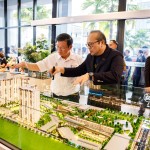
Official launch of AndaBreeze 1

Prominent and diversified property developer, Kerjaya Prospek Property Berhad(“KPPROP” or the “Group”) yesterday announced the official launch of AndaBreeze, its latest residential development in Batu Kawan, Penang. Developed by its wholly-owned subsidiary, Kerjaya Property Sdn. Bhd., AndaBreeze marks another milestone in the Group’s growing presence in one of Penang’s rapidly developing townships.

Batu Kawan is a strategically planned township by the Penang State Government and has emerged as one of the state’s fastest-growing development hubs. The township has evolved into an increasingly important centre for industrial and residential development, supported by the presence of several multinational companies that have invested significantly and established operations in that area. This is expected to create more employment opportunities and attract an expanding pool of highly skilled talent, further supporting demand for quality housing in this township.

As infrastructure, commercial and industrial development continues to advance, Batu Kawan is well-positioned to leverage its strategic advantages and strong growth potential to emerge as an increasingly attractive destination for both local and international homeowners and investors. The township is also rapidly establishing itself as one of Penang’s most promising emerging urban cities.

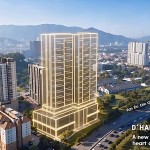
Located in the Central Business District (“CBD”) of Batu Kawan, AndaBreeze stands prominently as the tallest building in Bandar Cassia. The development is surrounded by an extensive array of education, healthcare, retail and recreational amenities, offering residents well-rounded convenience and connectivity, complemented by an urban lifestyle.

“AndaBreeze brings contemporary living, resort-inspired amenities and modern home features together within an integrated lifestyle environment, from the grand arrival to the doorstep. We aim to create more than just a place to live, but to introduce a lifestyle that brings together connectivity, convenience and a refreshing coastal environment,” said KPPROP executive chairperson, Datin Seri Toh Siew Chuon.

AndaBreeze comprises two residential towers offering a total of 1,406 units, with built-up sizes ranging from 636 sq. ft. to 1,302 sq. ft., catering to a variety of modern homebuyer needs. The freehold development features more than 80 lifestyle facilities, thoughtfully curated to cater to residents’ wellness, recreation, social interaction and everyday living.

Designed with functionality and comfort in mind, AndaBreeze introduces an elevated “Sky Semi-D” living experience, combining the spaciousness and privacy associated with landed homes with the convenience of high-rise living.

AndaBreeze also carries KPPROP’s signature design DNA, as each home thoughtfully designed as a peaceful retreat, featuring large windows and open balconies, with all windows facing outward to maximise natural sunlight, ventilation and stunning views throughout the home. The thoughtful integration of indoor and outdoor spaces creates a bright, comfortable and refreshing living environment, allowing residents to enjoy a seamless connection with the surrounding landscape.

“We have been in the industry for more than 30 years. Our experience has taught us that successful developments are built around more than just a strategic location. We must respond to the evolving needs and aspirations of the people who live there,” she added.

KPPROP introduces AndaBreeze with a “One Door, One Home” concept. Designed with privacy and comfort in mind, the concept provides residents with greater privacy, comfort and seamless living experience.

In addition, the parking levels at AndaBreeze feature a Speed Ramp design, allowing residents to move between parking floors more quickly and conveniently, making everyday living even more effortless.

PROPOSED: Gated & guarded homes in Tasek Gelugor

Tasek Gelugor/ 26 September 2026 No comments

proposed-gated-and-guarded-homes

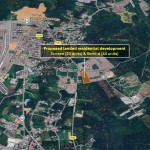
A proposed small gated and guarded residential development along Jalan Gelugor in Tasek Gelugor, on a 3.27-acre site. Located about 1km from the Tasek Gelugor KTM station, the development is also approximately a five-minute drive from Scientex Tasek Gelugor.

The proposed project will comprise 22 units of two-storey semi-detached houses and one two-storey bungalow, together with a guarded house within the gated and guarded scheme. Four units of two-storey shop offices are also planned outside the strata scheme.

The project is still in its planning stage and more details will be available upon official launch.

Project Name : (to be confirmed)
Location : Tasek Gelugor
Property Type : Gated & guarded scheme
Tenure: (to be confirmed)
Land Area: 3.27 acres
Built-up Size: (to be confirmed)
Total Units : 22 (semi-detached), 1 (bungalow)
Indicative Price : (to be confirmed)
Developer : (Follow us to find out more)

Subscribe here for updates on this project and other property news

(This information will be used to keep you updated on the project and future development.)
*By submitting this Form, you hereby agree to our PDPA Consent Clause.
LOCATION MAP

DISCLAIMER: This article is solely based on research done using publicly available data. This is not an advertisement. Any claim, statistic, quote or other representation about a project or service should be verified with the developer, provider, or party in question.
Penang to move ahead with PSD@5KM+ Campus II

Property News/ 25 September 2026 No comments

shopping-my-next-semicond-chapter

The Penang government will proceed with the development of Penang Silicon Design @5km+ (PSD@5KM+) Campus II, following the full occupancy of its first campus less than two years after its launch.

Chief Minister Chow Kon Yeow said PSD@5KM+ Campus I, established under Batches 1 and 2 at GBS TechSpace, is currently occupied by seven incubatees. The state is now exploring potential locations for Campus II, with GBS@Mayang in Bayan Baru identified as one possible site.

According to Chow, GBS@Mayang already houses several integrated circuit (IC) design companies, providing an existing cluster that could support the expansion of Penang’s silicon design ecosystem. Further details on the location and development of Campus II are expected to be announced later.

Speaking at the Shaping Malaysia’s Next Semiconductor Chapter forum held in conjunction with KL20@Penang 2026 at the Penang Waterfront Convention Centre (PWCC), Chow said the state would also provide additional core funding to strengthen local technology companies.

The funding is intended to help companies gain access to advanced semiconductor tools, infrastructure and technical capabilities, while supporting strategic partnerships, specialised engineering and technology collaboration. The broader objective is to help companies move from technology development towards commercialisation and eventually scale their businesses.

Chow also announced that the Penang state executive council had agreed to establish a Strategic Technology Fund, with a state government commitment of up to RM50 million. The fund is intended to support local technology companies and encourage greater participation from venture capitalists, institutional investors, strategic investors and the private sector.

He said the RM50 million commitment was intended as an anchor for further investment, with the state hoping the Federal Government and private investors would also contribute to expanding the fund.

Chow said sustained efforts over the next five years could help position Penang and Malaysia beyond semiconductor manufacturing, with greater emphasis on chip design, intellectual property ownership, technology development and taking locally developed products to global markets.

Separately, Economy Minister Akmal Nasrullah Mohd Nasir announced that a Malaysia Advanced Testing Equipment (ATE) Campus will also be established in Penang, supported by RM25 million in approved Federal Government funding.

Loan rejection, high prices, unreleased bumi units drive unsold homes

Property News/ 24 September 2026 No comments

gurney-bay

Nearly 60% of property developers surveyed by the Real Estate and Housing Developers’ Association Malaysia (Rehda) reported having unsold completed residential units as of June 30, 2026, with rejected end-financing applications, property prices and unreleased Bumiputera units cited as the main factors.

The findings were revealed during the media briefing on the Rehda Property Industry Survey 1H2026 and Market Outlook for 2H2026 and 1H2027. The survey gathered responses from 181 Rehda members across Peninsular Malaysia, with 59% reporting unsold completed residential units. Loan rejections were mainly attributed to buyers’ income eligibility, lower financing margins and adverse credit history.

Meanwhile, 54 respondents launched a total of 15,834 units during 1H2026, broadly similar to the 15,841 units launched in 2H2025. More than half (53%) of the newly launched units were priced between RM300,001 and RM500,000, with these launches concentrated in Perak, Pahang and Negeri Sembilan.

Sales recorded a modest improvement, with 5,260 units sold during the period compared with 5,098 units in 2H2025, representing a 3.2% increase. The overall take-up rate also edged up from 32.2% to 33.2%.

Apartments and condominiums recorded the highest sales at 3,032 units, followed by serviced residences with 1,114 units and two- to three-storey terrace houses with 610 units.

Rehda president Datuk Zaini Yusoff said the findings indicate that demand remains present, but developers continue to face pressure from rising construction and operational costs, financing constraints and wider economic uncertainties.