The opening of the second Penang bridge has stirred interest on Seberang Prai housing market.
The island, however, is seeing fewer residential property launches due to land shortage, higher land cost and a challenging property market environment. Nevertheless, Raine & Horne director Michael Geh says the gross development value (GDV) of the projects launched on the island this year will still be higher.
Of this RM4.56bil, about RM1.86bil will be residential and commercial projects planned in Seberang Prai, while the remaining RM2.7bil will be on the island.
Although in value terms the island will have a lion’s share, much of the focus is expected to be on Seberang Prai, located on Peninsular Malaysia.
To a large degree, the focus on Seberang Prai has been triggered by the announcement of the second bridge by Malaysia’s fifth prime minister and Penangite Tun Abdullah Ahmad Badawi in the Ninth Malaysia Plan in August 2006. Since then, property prices in Seberang Prai and on the island have risen significantly. One can consider 2006 as the watershed where Seberang Prai is concerned.
The opening of the RM4.5bil second Penang bridge on March 1 is also expected to spur a second wave of interest.
The connectivity is expected to boost retail, for a start. There are plans to develop a RM200mil premium retail outlet known as Penang Designer Village and an integrated shopping mall which will be anchored by an IKEA store in Seberang Prai.
PE Land Sdn Bhd will undertake the Penang Designer Village, while the integrated shopping mall with residential components will be developed by Aspen-Ikano.
Residential development is also expected to improve with the entry of big players into that area in terms of style and design.
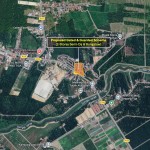
Last December, Mah Sing Group Bhd acquired 30.9ha in Jawi, comprising 20 pieces of prime freehold contiguous land, for RM400mil. Its group managing director and chief executive Tan Sri Leong Hoy Kum says the group plans to introduce an integrated township called Southbay East.
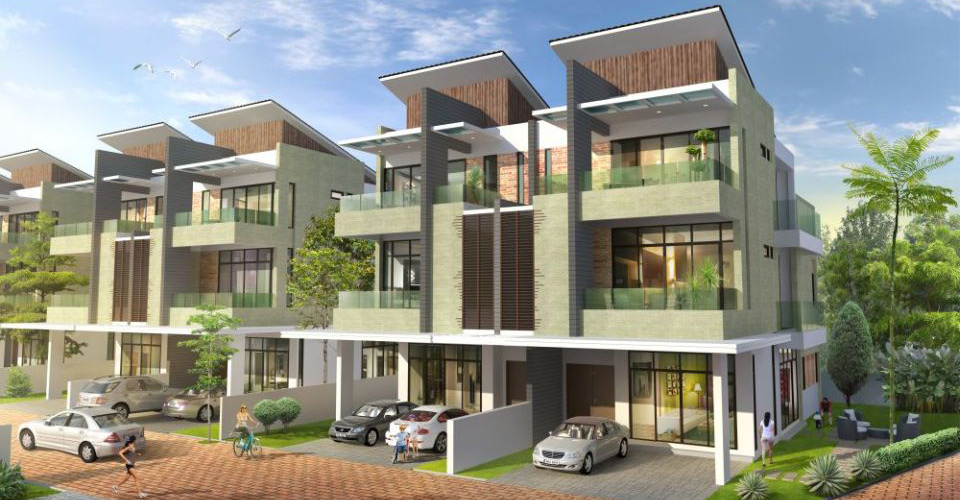
Leong says the township is currently at the planning stage. He says the freehold township located just 6.6km from the Jawi toll plaza on the North-South Expressway is expected to attract those who work and live in Southbay East’s immediate surroundings. The property developer is proposing linked homes, semi-detached units and town houses. There will also be a club-house.
But land prices may become an issue. Henry Butcher Seberang Prai’s associate director Fook Tone Huat says vacant land prices in the area, especially those in south Seberang Prai where the second bridge is located, are now hovering between RM40 and 50 per sq ft, a huge jump from 2006’s RM8-RM9 per sq ft.
Land prices in Central and North Seberang Prai were then between RM20 to RM40 per sq ft, compared with today’s range of between RM50 and RM100 per sq ft. The increase in land prices has translated into higher property prices.
“New landed properties such as double-storey terraced units in South Seberang Prai are now priced between RM350,000 and RM400,000 compared with between RM150,000 and RM200,000 prior to 2006,” Fook says.
Double-storey terraces in prime locations in Central and Northern Seberang Prai have doubled from RM200,000-RM270,000 range to RM400,000-RM600,000.
“We are also seeing a lot of life-style condominium projects being planned in Bukit Mertajam this year with new units priced at at around RM300 per sq ft,” Fook says.
As for the secondary or sub-sales market, double-storey terraced houses have a wide price range of between RM250,000 and RM500,000, depending on location.
Landed properties in the sub-sales segment command the best pricing in Bukit Mertajam and Butterworth town.
Despite the interest in Seberang Prai, Fook expects the volume of property transactions to soften this year, due largely to the difficulty in obtaining housing loans.
“There will definitely be fewer transactions this year compared with about 12,000 registered for 2013.
“Since January, we have seen fewer enquiries for primary and secondary market properties as the rejection rate of housing loans is currently at about 60%. Property prices are expected to remain more or less the same as last year,” Fook adds.
Real Estate and Housing Developers’ Association (REHDA, Penang) chairman Datuk Jerry Chan says due to the tightening of bank loans, he expects the volume of property transactions to decline by about 30% this year.
“The overall transacted value will also fall by about 20%,” he says. Raine & Horne’s Michael Geh expects properties in the secondary segment to remain stable, while those in the primary market might soften slightly.
“There will definitely be a dip in the volume of transactions, due to the stringent loan conditions,” Geh says.
Despite issues about buyers getting the margin of financing they would like to have, this does not seem to have deterred developers from entering the Seberang Prai market in a fairly big way.
DNP Land, which is part of Singapore’s Wing Tai group, will be developing a RM250mil condomonium project known as Bukit Mertajam Mahkota and the RM550mil Jesselton Hills landed property scheme in Bukit Mertajam, located in Central Seberang Prai. Tambun Indah Land Bhd is also planning RM616mil worth of landed property launches for Bukit Mertajam and Pearl City in Simpang Ampat, south Seberang Prai.
DNP Land (North) general manager K.C. Tan says the Bukit Mertajam Mahkota project will be the town’s first high-end condominium development. As for Jesselton Hills in Alma, it will have 200 units of semi-detached and terraced houses.
“The projects are strategically located between the first and second bridges, and is close to Jalan Song Ban Kheng, a prime residential district. They are also surrounded by the Prai and Bukit Minyak Industrial Parks and Penang Science Park.
“We expect buyers from Kedah, especially from Kulim High Tech Park, as Bukit Mertajam is the main connecting point between Penang and Kedah,” Tan says.
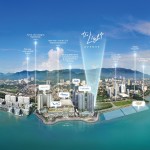
IJM Land, known for its Penang island Light project, is also launching RM236.5mil worth of properties comprising double-storey houses in Jawi, south Seberang Prai, and double-storey linked bungalows in Bukit Mertajam, central Seberang Prai. One of Kuala Lumpur’s heavyweight, Sunway Bhd is also planning to launch some RM150mil worth of residential and commercial projects for the second phase of Sunway Wellesley in Seberang Prai, a mixed-development project in Bukit Mertajam, at the end of this month, while the RM60mil third phase, comprising resort condominiums, will kick off in October.
Sunway Bhd general manager Tan Hun Beng says the group will be launching more properties in Seberang Prai as the lower land prices there has allowed the group to price its properties affordably. In June this year, Sunway will launch the RM80mil Sunway Cassia third phase, double-storey semi-detached and three-storey terraced houses, in Batu Maung, in Seberang Prai.
The focus on Seberang Prai, by no means, mean that there is less interest on the island. In fact, property prices have grown by leaps and bounds the last several years. This year, however, will see less launches of landed units, due largely to land shortage and high prices.
Raine & Horne Malaysia director Michael Geh says the price of vacant land has increased to around RM250 to RM300 per sq ft in Batu Maung in the southern part of the island, where the second bridge is located, from about RM50 to RM60 per sq ft prior to 2006. This effectively means that in just eight years, land prices have increased by 400%.
However, Geh also says land prices depend on what the land is being zoned for, whether it is agriculture, commercial or residential usage. This increase in land prices coupled with other factors have resulted in higher property prices.
New two- and three-storey terraced houses on Penang island now cost about RM1.2mil in the south of the island, compared with about RM450,000 prior to 2006.
“New condominiums in similar locations are now priced at RM700,000-RM800,000, compared with RM250,000-RM300,000 prior to the second-bridge announcement in 2006. In the prime locations of the north-east districts such as Tanjung Bungah, Tanjung Tokong, and Pulau Tikus, new lifestyle high-rise units start from RM800,000 onwards, doubled what it used to be in 2006,” Geh says.
How sustainable are these prices? The reponse to launches will be an indication.
Eastern & Oriental Bhd will be launching its RM800mil Andaman Edition 18 East condominium scheme on the island in the first half of this year. IJM Land will introduce its RM125mil Trehaus@Bukit Jambul. This comprises condominium villas and semi-detached villas, and a yet-to-be-named medium and low-medium cost project, which has a RM177mil GDV, in the fourth quarter of this year.
S P Setia will launch in the second half the RM300mil Setia Sky Vista, a condominium project, in Relau.
These launches will be keenly watched.
Source: StarProperty.my


 Penang will blacklist any developers found in cahoots with “gangster contractors” who intimidate home buyers into engaging them for renovations.