fbpx

Pressure on property, new ruling likely to impact housing loan growth

Property News/ 20 November 2013 52 comments

A new circular from the central bank that took effect last Friday will pile more pressure on an already hard-hit property sector, even if its merits are likely to be felt in the long-term, analysts and industry executives said.

In a bid to make the property market sustainable, the new rules have put the brakes on interest capitalisation schemes (ICS) and the developer interest-bearing scheme (DIBS).

It also calls for the use of the net selling price of a property as the benchmark for obtaining bank loans, which raises the amount to be paid upfront.

Alliance Research’s banking analyst Cheah King Yoong said the measures were “more onerous” than anticipated and posed downside risks to his 9% loan growth estimate for the banking sector next year.

“Although the guidelines on the prohibition of the DIBS was not a surprise, the new rule on using the net selling price to determine the loan-to-value (LTV) ratio is a negative surprise to us.

“While it is difficult to gauge the impact on banks, the fact that this new rule applies to all property financing, including first-time home buyers, means that property buyers’ affordability will be affected, and this will lead to lower property loan growth,” Cheah said in a report yesterday.

“We believe the latest policies illustrate the sheer determination of the authorities to contain the growth of household debt.

“These measures, together with potential rate hikes in 2014, fiscal tightening by the federal government and subsidy rationalisation next year, could further drag on loan growth in the retail segment, temporarily leading to a rise in credit costs, and dampen investor sentiment on the banking sector,” he added.

The circular prohibits financial institutions from granting end-financing facilities to individuals or non-individuals for the purchase of property offered under an ICS, including the DIBS.

Financial institutions are also barred from granting a bridging facility to finance a property development that offers ICS.

According to Alliance Research’s Cheah, this effectively removes any alternative incentives that developers might concoct to replace the DIBS.

“Nonetheless, our channel checks show that for the banking groups under our coverage, property loans with the DIBS only made up 1% to 3% of their outstanding mortgages,” he said.

Affin Bank is the exception, with some 7% of its mortgage loanbook comprising loans tied to the DIBS.

“Given that property loans with the DIBS are immaterial to overall outstanding mortgage loans as well as new mortgage loans approved, we do not expect the restrictions to have a significant impact on the banking sector,” Cheah said.

Public Bank has the highest exposure to housing loans at 56% of its gross loans, followed by Alliance Bank with 55% and Hong Leong Bank, 46%, company data showed.

Another key item on the circular requires banks to calculate the LTV ratio based on the net price of a property instead of its gross price.

To illustrate, a property with a list price of RM1mil, rebate of 5% and 90% financing would incur a down payment of RM50,000 after discount.

Under the new regime, the down payment increases to RM95,000 because the 90% loan will be computed using the discounted price tag of RM950,000.

While property executives expect a slowdown in sales, they believe that genuine buyers will remain undeterred.

Mah Sing Group Bhd group managing director and CEO Tan Sri Leong Hoy Kum toldStarBiz via email that demand for properties would continue to be robust, especially among those buying to own or for long-term rental income.

“There is still a large supply-demand gap as supply growth for properties has been on a decreasing trend since 2003, with Malaysia’s supply growth in the second quarter of this year at only 0.8%.

“The fundamentals driving the property market’s growth in recent years have not changed, for example a younger population leading to new household formation, a rising middle-income group, the supply-demand gap and stable employment.

“Initiatives in Budget 2014 may remove the speculative element, but not the fundamentals,” he said.

Leong noted that the lending environment was still conducive, with low interest rates and banks offering BLR minus 2.4%, from BLR minus 2.1%-2.2% a year ago.

Mah Sing had stopped offering the DIBS for most of its launches since the start of the year. None of its projects in Iskandar Malaysia feature the DIBS.

Source: StarProperty.my

Tags:

Goodfields Residence

Bukit Minyak/ 19 November 2013 260 comments

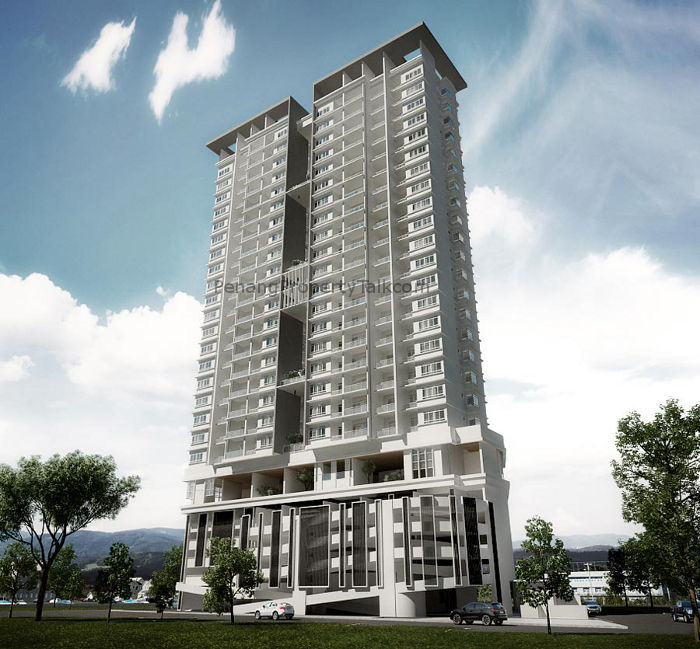
Goodfields Residence, featuring 2 blocks of low density luxury condominiums with only 72 and 76 units in each respective block. Strategically located within the established township of Bukit Minyak. It is only walking distance to AEON Big hypermarket.

The first and tallest building in the area, comes with full condo facilities including a swimming pool, gym, nursery, community hall and playground.

Project Name : Goodfields Residence
Location :
 Bukit Minyak, Penang
Property Type : Condominium
Built-up Area: 1,400 sq.ft. (Type A), 1,200 sq.ft.(Type B)
Total Units: 72 (Type A), 76 (Type B)
Indicative Price: RM288,000 onwards
Land Tenure : Freehold
Developer : Goodfields Development Sdn. Bhd. (WHH Land)

Location Map:


Tags:

Sierra Pinang

Balik Pulau/ 13 November 2013 39 comments

Sierra Pinang, a gated and guarded development by BSK Property in Balik Pulau, Penang. Strategically located next to SJKC Sin Min, only 10 minutes drive away from Balik Pulau town center. This development comprises 80 units of 3-storey Spanish homes link houses with built-up areas ranging from 2,150 sq.ft. onwards.

*Project to be launched in 2015

Property Project : Sierra Pinang
Location : Balik Pulau, Penang
Property Type : 3-Storey Link House
Tenure : Freehold
Total Units : 80
Built-up Area: 2,150 sq.ft. – 3,476 sq.ft.
Land Area: 880 sq.ft. – 2,636 sq.ft.
Indicative Price : RM 599,000 onwards
Developer : BSK Property
Sales Office Contact : 04-899 0316 / 04-866 1316
[streetview width=”100%” height=”250px” lat=”5.397885″ lng=”100.21423500000003″ heading=”55.313956906161174″ pitch=”2.6870530311915677″ zoom=”0″][/streetview]

Tags:

Via Residenz @ Bayan City

Bayan Baru/ 10 November 2013 55 comments
via-residenz

Picture for illustration only

Via Residenz, another high-rise development within the established township of Bayan Baru, Penang. This is part of Bayan City freehold commercial titled development, adjacent to Giant Hypermarket and Elit Avenue/Heights. Featuring shop offices, mall, serviced suites and hotel.

* UPDATE (May 2017): This is a joint venture development between Seal Concepts Sdn. Bhd. and  Koperasi Tunas Muda Sungai Ara Berhad. A new project plan is likely to replace the old plan submitted in 2013. Stay tuned, we shall keep you updated.

Project Name : Via Residenz (To be confirmed)
Location :
 Bayan Baru, Penang
Property Type : Mixed Development
Built-up Area: (to be confirmed)
Indicative Price:  (to be confirmed)
Land Tenure : Freehold
Developer : Seal Group of Company

Register your interest here. We will keep you updated!

(This information will be used to keep you updated on the project and future development.)
*By submitting this Form, you hereby agree to our PDPA Consent Clause.

Location Map:


* All pictures shown are based information published on 2013 and for illustration only.

Tags: ,

RPGT won’t hurt genuine buyers

Property News/ 9 November 2013 15 comments

Banning DIBS is the right move

FOR many years, the National House Buyers Association (HBA) has been urging the Government to take measures to stem the steep rise in property prices to avoid a “homeless generation” as current property prices are far beyond the reach of many low and middle-income families in urban and suburban areas.

This is a ticking time bomb that will result in many social problems if left unchecked.


Real Property Gains Tax (RPGT)

The announcement of the revised rate of tax on gains made in the disposal of properties, namely, the Real Property Gains Tax (RPGT), formerly known as the Anti Speculation Act, under Budget 2014 is far more superior to what had been proposed under Budget 2013 (See table above)

This is because, typically, if the property is purchased directly from the developer, it takes two years (for landed properties) and three years (for strata properties) to be completed.

Hence, under the previous RPGT, speculators could purchase properties from property developers upon their launch and then flip these properties on completion (after two years) and having to pay 10% (i.e. within the 3rd to 5th year).

It is hoped that the revised RPGT rate will deter speculators and, at the same time, not punish genuine house buyers who buy for their own stay or long-term investment. It is worth noting that buyers of residential property could seek a once-in-a-lifetime exemption from the tax.

Budget 2014 is best described as an “excellent mathematical formula” to curb the unbridled escalation of house prices, which has in the last three years skyrocketed. The Government has taken a step in the right direction with measures to slow down the steep rise in property prices due to false demand caused by excessive speculation fuelled by easy housing loans and the previously low RPGT.


Foreign purchasers to pay more

HBA applauds the move to increase the minimum price of property that can be purchased by foreigners from RM500,000 to RM1mil. Foreigners must be prevented from “snapping up” property meant for the lower and middle income.

This artificially inflates prices and creates a domino effect which can result in higher property prices across the industry. This is especially true for development corridors such as Iskandar Malaysia which has seen foreign purchasers arriving in droves and scooping up properties with their advantageous exchange rate.


Banning the Developer Interest-Bearing Scheme (DIBS)

DIBS is popular with speculators as they pay nothing to make a profit. Their initial down-payments and deposits are sometimes factored into the purchase price by the collusive developers, and some unethical financial institutions do not even require that the developer collect the deposit that has to be paid by the so-called purchaser.

This is one of the factors which induces “bogus” house buyers (which I have written about in this column on Aug 31 entitled: Of Speculators and bogus house buyers) who merely flip the property at the right time.

Kudos to Bank Negara for heeding our call and banning DIBS. It may be worth noting that Singapore banned DIBS in 2009.

Considering the deep pockets of property speculators, the effectiveness of these measures remain to be seen. However, they are expected to make speculation unworthwhile. HBA praises the Prime Minister for putting a stop to DIBS, which is one of the reasons attributed to the steep increase in property prices for three reasons:

1. DIBS encourages speculation as the house buyer does not need to “service” any interest/instalment during the construction stage. This will “lure” and tempt many house buyers to speculate and buy into DIBS projects hoping to flip on completion and make a quick profit with little or no capital upfront. Connivingly, the interest element is “serviced” by the participating developers.

2. DIBS artificially inflates prices as all interests borne by the developer are ultimately imputed into the property price. This in turn creates a domino effect which pulls up property prices in surrounding locations.

3. Bank and financial institution staff conniving with developers using the DIBS model should be investigated on their “modus operandi” in financing those artificially inflated prices (DIBS + sales price) and ignoring guidelines on prudent lending.

Banks and financial institutions are to be prudent and only provide mortgage financing up to the fair value/market value of the property. In this respect, a benchmark of fair value or market value is the current properties available. Somehow, properties sold under DIBS are always priced much higher; 15% to 20% higher compared with those without DIBS.

For standard condominiums costing RM500,000 without DIBS, should the developer market such properties under DIBS, the selling price could be as high as RM650,000. This creates a potential property bubble should the developer default in “servicing” the interest and the borrower/purchaser also defaults. The bank would only be able to recover up to RM500,000 if the said property is auctioned at market value.

In the event of an economic downturn, banks saddled with too much DIBS end-financing could collapse as the losses from such DIBS end-financing will erode the banks’ capital.

The collapse of just one bank/financial institution could cause a systemic collapse of the entire financial industry.

Bank Negara should take action against such bank and financial institution staff who have provided both project financing and end-financing to DIBS projects under the newly-minted Financial Services Act, 2013.

With the RPGT increase, banning of the DIBS and the Government’s aspiration to supply more ‘ownership housing schemes’ at affordable pricing, it is hoped that speculative demand for properties will stabilise to a more realistic level. I have heard that many businessmen do not do business anymore but indulge in property speculation as a livelihood and for income.

It is akin to the stock market dealings that were rampant during a ‘bull run’. Certain things have to be stopped before they become worse like the sub-prime crisis in the US.

If readers were to take a drive around completed projects, they will find signboards advertising units for sale upon the delivery of keys. If the purchaser is purchasing for his own occupation, why is there this need to put up these signboards or appoint estate agents to dispose of the units? It goes to show that some purchasers are merely speculators (not investors) from day one and the banks and financial institutions choose to “close one eye” despite knowing this.

Have the banks ever gone to the ground to check whether the units purchased and financed are actually “owner occupied”? If the property is “owner occupied”, the risk rating is lower and thus, he enjoys a lower interest rate. But if it is non-owner occupied, it should have higher interest rates. Borrowers of “owner occupied” properties are normally required to make a declaration to that effect to enjoy a lower interest rate.

But does the bank participate in this booking of credit risk?

If the property is non-owner occupied, the lending will fall under ‘real estate classification’ and not ‘housing’.

So, there may even be misreporting to Bank Negara and subsequent national statistics.

Source: StarProperty.my

Tags: