fbpx

Units priced from RM292,000 to RM390,000 will be built in Paya Terubong

Property News/ 30 April 2014 30 comments

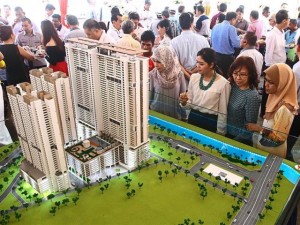
A man checking out the project’s revival and rehabilitation plan.

THE state government has managed to get a developer to build 7,658 affordable homes in Paya Terubong, Penang.

Chief Minister Lim Guan Eng said PLB Land Sdn Bhd had agreed to build the units ranging from 750 to 1,000sq ft priced between RM292,500 and RM390,000.

The developer is also the ‘white knight’ tasked to revive the abandoned 370 units of Taman Paya Terubong (Majestic Heights Phase 2A) which are scheduled for completion within 18 months.

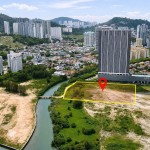
Lim said the affordable homes would be built on a 26ha piece of land, next to Majestic Heights Phase 2A.

He said the state was looking to not only end the woes of the abandoned units’ owners, but to also provide “shelter” to first-time house buyers in the north-east district.

The upcoming development will consist of 1,532 units with a build-up size of 750sq ft priced at RM292,500, 4,594 units of 850sq ft (RM331,500) and 1,532 units of 1,000sq ft (RM390,000).

“The affordable housing scheme is scheduled for completion in six years starting from the date of commencement of work.

“It will only be eligible to qualified applicants registered with the state Housing Department,” he said before inspecting the abandoned Majestic Heights project yesterday.

Lim said: “Traffic management will be an important factor once the vast development takes shape.”

He said the state would construct a paired road from the development site to Bukit Gambier to ease traffic burden.

On the revival and rehabilitation of the abandoned Phased 2A project, Lim said the move was seen as a small step towards achieving the state’s vision that every Penangite would get to a own a house.

“It has been a long 18 years’ wait for these buyers. Now, they need to contribute RM10,000 each for the revival of the project under PLB Land Sdn Bhd.

“It is my wish to see all of you (affected owners) move into the houses eventually but there are still many issues ahead.”

Meanwhile, Taman Paya Terubong (Majestic Heights Phase 2A) pro-tem committee secretary Khor Boon Peng said they had managed to contact about 80% of affected owners.

“Those who have yet to get in touch with us can call me at 016-4969690 or email me at khrbnpng@gmail.com,” he said.

The Majestic Heights project is the largest abandoned housing scheme in Penang and has caused hardship and financial losses to the housebuyers over the last 11 years.

It consists of several phases but only Phase 1 obtained the certificate of fitness on Dec 31, 2003, while Phases 2A, 2B and 3A were abandoned. When Phase 2A was abandoned, the physical completion was already at 70%.

Source: StarProperty.my
Tags:

No surprises in property report

Property News/ 29 April 2014 30 comments

PROPERTY experts say the findings of the Property Market Report 2013, released last week by the National Property Information Centre, came as no surprise, with the various cooling measures having their intended effect of curbing speculation and excessive price growth.

Less certain is whether demand will recover in earnest during the second half of this year, in what some expect to be a “pre-GST boom”.

CEO-Agency of property consultancy PPC International Sdn Bhd Siva Shanker tells StarBizWeek that he sees buyers making a beeline to snap up property in the two quarters prior to April 2015, when the GST takes effect at an initial rate of 6%.

Shanker, who is also president of the Malaysian Institute of Estate Agents, does not believe Malaysia will follow the example of Australia, where prices soared and then tumbled pre- and post-GST back in 2000.

“In Malaysia, what goes up does not come down. I think our property prices will rise ahead of GST and find their level there,” he says.

According to the Property Market Report 2013, volumes shrank 10.9% to 381,130 transactions but their value rose a marginal 6.7% to RM152.37bil from RM142.84bil in 2012, indicating that prices gained strength despite a raft of measures designed to rein in speculation, including a ban on interest-bearing schemes and a higher real property gains tax.

“Most people say 2014 and 2015 will be tough years for the property market. A slowdown usually lasts for two years.

“But looking at the report, my view is that 2013 and 2014 are the slowdown years. I expect the market to normalise in 2015 and make a full recovery in 2016 and 2017,” Shanker remarks.

“This year’s volumes will probably be flat, but prices are not likely to go down.”

As in the past, the report showed that the residential market dominated close to two-thirds of all transactions.

Approvals for housing loans, however, fell sharply compared with an expansion the year before. Total loans disbursed for the purchase of residential properties rose to RM74.4bil from RM64.1bil.

The report says construction activity stayed solid, backed by high-rise and high-end properties in the Klang Valley, Penang and Johor. The shop and industrial segments also saw higher starts and building plan approvals in 2013.

The occupancy rate for retail and office space remained firm, buoyed by a moderate increase in new supply, as well as fewer starts and new planned supply.

But the market showed evidence of softening across the board. All sectors posted reductions in transaction activity, led by commercial and industrial properties.

Most states fared worse save for Johor and Perlis, which recorded high single-digit improvements.

Five states experienced double-digit contraction in activity, with Putrajaya, KL and Kelantan topping the list.

According to the report, residential properties saw improved sales of new launches and more housing starts and completions, which helped pare down the number of “overhang” properties.

The all house price index jumped to 192.9 points against 172.8 points the year before. Average prices rose 10% to RM266,304 from RM241,591.

In terms of volume, most states posted a downturn except for Johor, which expanded 16.6%.

In value terms, all major states saw growth except for Kuala Lumpur, which declined by 9.7%. Johor was most improved with 63.2% growth, while Selangor recorded 2.8% growth and Pulau Pinang, zero growth.

Houses priced between RM250,000 and RM500,000 were the most popular, capturing 27.3% of all transactions, while demand for those in the low-cost RM100,000-RM200,000 category weakened.

Terraced houses made up the largest share of residential transactions, with Selangor, Johor and Perak contributing to more than half of the market share, followed by condominium and apartment units, most of them being transactions in Selangor and Kuala Lumpur.

The number of new launches fell last year after three straight years of growth to 48,290 units from 57,162 units in 2012, even as their take-up receded to 45.1% against 47.7%.

Kuala Lumpur, Selangor and Perak topped the list of new launches, commanding 57.4% of the national total.

From a price standpoint, the Kuala Lumpur market continued to be resilient. The report reveals that single-storey terraced homes at Bukit Bandaraya and Lucky Garden, both in Bangsar, saw 25.3% and 11.4% growth, respectively, pushing the value of a unit to upwards of RM1mil.

Spurred by the MRT factor, homes in Taman Bukit Anggerik and Salak South Garden posted 17.2% and 17.8% growth, while double-storey terraced units in Kepong’s Desa Park City ranged between RM1.31mil and RM2.48mil.

The report highlights that select condominiums in Kuala Lumpur, such as Bangsar Puteri, OBD Garden Tower and Casa Vista experienced growth of over 20%.

A downtrend was seen in Mont’Kiara Damai and Tijani 2, however, as prices tumbled by 5.7% and 12.4%, respectively.

Home prices also stayed firm in Selangor, but Johor’s landed residential segment jumped by double-digits in certain areas, particularly Johor Baru.

Condominium pricing in Johor Baru remained competitive, with the highest transacted price being RM500,000 per unit in Taman Pelangi. On average, units were priced between RM150,000 and RM350,000.

Up north in Pulau Pinang, residential properties were stable as the limited number of terraced houses on the island boosted demand for the Timur Laut and Barat Daya districts.

While Iskandar Malaysia was clearly a boon for Johor, CH Williams, Talhar & Wong managing director Foo Gee Jen says he is concerned if that performance is sustainable.

The veteran property consultant also expects a pre-GST rush for property.

“Buyers are concerned that prices will go up. If you are looking at a piece of property, now is the time to lock in your purchase,” he quips.

In Foo’s estimation, residential property could experience an 8%-10% jump in price after GST, and the landed segment a stronger 10%-15%.

“There is no oversupply in landed homes, but I can’t say the same for condominiums, especially the Soho (small office home office) or Sovo (small office versatile office) types.”

Kim Realty CEO Vincent Ng tells StarBizWeek that demand in the primary market remains firm and will likely continue apace unless interest rates go up.

“The primary market may gain traction in the second half as developers have been holding back on launches. Those with unsold stock will want to unload them before GST,” he points out.

“I don’t think prices will be cut drastically, but developers will make it attractive for buyers.”

Nonetheless, Ng acknowledges that the banks have tightened the screws on mortgages, leading to a mass of loan rejections.

“From what I understand, 30%-50% of the people who have put in deposits have had their loan applications denied for various reasons,” says Ng.

“The damage has already been done. More cooling measures will kill the market,” says another property agent.

Source: StarProperty.my

Tags:

E&O bullish about Seri Tanjung Pinang project

Property News/ 29 April 2014 6 comments

Artist’s impression of Seri Tanjung PInang phase two.

EASTERN & Oriental Bhd’s unit Tanjung Pinang Development Sdn Bhd can look forward to getting the go-ahead from the Penang government for its Seri Tanjung Pinang (STP) phase two project if it complies to all the technical and regulatory requirements for the project.

In an interview at the Chief Minister’s office in Komtar recently, Penang Chief Minister Lim Guan Eng says as long as the developer complies with the conditions and requirements, the state government will grant approval.

Under a concession agreement signed in 1990 by the previous state government and the company awarded the concession to undertake the reclamation and development of the land in Tanjung Tokong in the north-east coast of Penang, there are a number of terms and conditions for the project’s approval.

“If the terms and conditions are fulfilled by the developer, the state government will have to respect the sanctity of the agreement, otherwise it will have to pay compensation to the developer for non-compliance,” Lim says.

On April 10, the Department of Environment, Ministry of Natural Resources and Environment (DOE) granted a conditional approval for the detailed environmental impact assessment study and conceptual masterplan for the proposed STP phase two.

The proposed reclamation for STP phase two involves 760 acres of man-made islands and 131 acres of the Gurney Drive foreshore that will be handed over to the state government for infrastructure development of a new expressway, a new Gurney Drive Promenade and a parallel linear park for public recreational purposes.

Given that the state’s approval is still pending and the tender process yet to commence, analysts say the proposed reclamation work for the 891 acres of the STP phase two is expected to begin only early next year.

Reclamation works are expected to take two years and the first launch assumed to commence towards the end of the reclamation works, possibly in the second half of 2016.

Responding to queries from StarBizWeek, E&O managing director Datuk Terry Tham says E&O is now proceeding to make the necessary applications as required by the relevant authorities in respect of the proposed STP phase two development plans.

Tham gave the assurance that E&O will continue to give full compliance to all regulatory requirements, as it has done with the first phase of STP.

“Going forward, E&O is fulfilling its rights and obligations as set out in the concession agreement for the reclamation of STP phase two.

“The proposed STP phase two is of significant size, hence the conditions set out by the DOE are to ensure that the project is carried out in an environmentally responsible manner, consistent with the prevailing regulatory framework,” Tham points out.

The DEIA approval is conditional upon the following terms:

  • It is applicable only to the proposed reclamation of 760 acres of man-made islands and 131 acres of the Gurney Drive foreshore, and dredging activities at the “flushing channel”;
  • The provisions of the Environmental Quality Act, 1974, must always be complied with;
  • The proposed STP phase two must be in line with the project concept stated in the DEIA and is subject to the approval of separate environmental impact assessments by DOE for activities prescribed under the Environmental Quality Order (Prescribed Activities) (Environmental Impact Assessment) 1987;
  • The necessary approvals from the state government and relevant government departments must be obtained before the proposed STP phase two is implemented;
  • The DEIA approval conditions and recommendations of the DEIA consultant must be incorporated as conditions of tender documents and contractual agreements, to be fulfilled by any contractor/subcontractor involved in the implementation of the proposed STP phase two;
  • The DEIA conditional approval is valid for two years from the date of issuance; and
  • All works to be undertaken in the proposed STP phase two must further comply with specific work-related requirements and specifications as set out, including reporting obligations under the relevant laws and regulations.

New lease of life

Tham says that in addition to the 60 acres on STP phase two that will be reclaimed and surrendered to the state government, E&O is also reclaiming 131 acres along Gurney Drive to be handed over to the state.

“This land is for the state government to use for the benefit of the people of Penang. A linear park along Gurney Drive has been proposed as part of the 131 acres,” he says.

E&O is not the first developer involved in the reclamation and development of the land.

The project’s history can be traced back to 1980’s, when it started off as a joint venture between Permaijana Ribu (M) Sdn Bhd (owned by UEM Bhd, Penang Bumiputera Foundation and Magma Bhd) and Koperasi Gabungan Negeri Pulau Pinang and Penang Development Corp.

The original project proponent faced a challenging start and reclamation works were twice abandoned due largely to the Asian financial crisis.

In 1992, Tanjung Pinang Development Sdn Bhd was granted the concession to undertake the project. The reclamation of Seri Tanjung Pinang phase 1 commenced in 1997 (not by E&O). Within the same year, works were suspended due to the Asian financial crisis. In 1999, reclamation resumed only to halt again in 2000. The project was left idle for the next three years.

E&O came on board in 2003 to revive the existing but abandoned project, and Tanjung Pinang Development became a subsidiary of E&O. The project is now known as the masterplanned seafront development Seri Tanjung Pinang by E&O.

Reclamation for STP phase one comprising 239 acres was completed in 2005, and within the same year the first homes were launched. To-date, about 2,500 housing units have been completed at Seri Tanjung Pinang worth an estimated gross development value (GDV) of RM4bil.

In 2011, the Penang government granted in-principal approval to reclaim the proposed STP phase two. The second phase is expected to generate some RM25bil in GDV.

The project had been incorporated as part of the National Physical Plan 2007-2020 as well as the Penang State Structure Plan 2020.

During the interview with the Chief Minister on Penang’s development, Lim gave the assurance that the state government will ensure a holistic and balanced development model for the state, and one that is not too commercial.

“For example, we will preserve landmark historical and heritage sites, like the Penang Esplanade, and will not allow the development of this landmark historical site for commercial purposes,” Lim says.

The founder of Penang, Captain Francis Light, a former Royal Navy midshipman and trader, who founded Penang in 1786, had landed on a point somewhere at the Esplanade. The Esplanade, which can be regarded as the growth centre from which Georgetown developed and expanded, is today an important venue for many of Penang’s important events, including the Merdeka Parade on August 31.

The state’s efforts to preserve the heritage, cultural and historical sites will be in line with the 2008 inscription of the inner city of Georgetown as a Unesco World Heritage Site.

With the right concerted efforts between the state and industry players to ensure a proper balance between the built and unbuilt environment for Penang, and an integration of the old world charms with new neighbourhoods like Seri Tanjung Pinang, Penang will be assured of a place among the handful of well-regarded liveable international cities of the world.

Souce: StarProperty.my
Tags:

Cheer for unit owners

Property News/ 25 April 2014 33 comments

THE Penang Municipal Council has decided the reduce the annual property value (APV) for One World and One Sky small office/ home office units by 10%.

Council Financial Management Committee alternate chairman Joseph Ng Soon Siang said the 10% APV reduction had no bearing on the property’s 10.3% annual assessment rate.

“We reviewed only the APV. The 10.3% assessment rate for commercial property stays,” said Ng.

He urged buyers of commercial property to be prepared to pay commercial rates.

“Future buyers should know what property they are buying so they can know the category of their assessment,” he told reporters after the full council meeting at City Hall yesterday.

He said One World and One Sky residents were told at the dialogue session between the council and the residents committee on April 11 that the council’s decision would be final.

Owners of the 538 units in Bayan Baru, Penang, had been disputing the APV determined earlier by the council.

They had claimed that the APV was very high compared to that of some other commercial units in the municipality.

Citing the example of a commercial centre in Bukit Jambul, spokesman Brandon Oon said the APV there was just RM3,100 for a 730sq ft unit.

This was lower compared to theirs which was between RM22,800 and RM28,000 for units from 1,160sq ft to 1,450sq ft in size.

Oon said owners were willing to pay the assessment rates but felt that the APV was unjustified.

In another development at the council meeting, the fine for owners of dogs without a licence or a collar that had bitten or caused harm to others has been set at RM250 under the (Dogs) Penang Municipal Council 1977 by-law.

On another matter, councillor Tan Hooi Peng suggested that they come up with guidelines to care for trees by using the Tree Risk Assessment Form and Tree Management Form and come up with a Tree Care Report.

“This will allow the Village Security and Development Committee to oversee the well-being of trees in their area.

“The committee can report on any decaying trees or trees that need looking after,” he said.

Souce: StarProperty.my

Tags:

8 Babington Residence

George Town/ 24 April 2014 No comments

8 Babington, a low density gated and guarded development by DSG Development Sdn. Bhd. in heart of Georgetown. This development comprises 8 unit of 4-storey link houses with spacious parking space that can accommodate 4 cars. Each unit is also equipped with a private lift.

Property Project: 8 Babington
Location 
: Babington Avenue, Georgetown, Penang
Property Type : 4-Storey Link Houses
Tenure : Freehold
Total Units : 8
Developer : DSG Development Sdn. Bhd.


Tags: