fbpx

Why developer interest-bearing schemes should be banned

Property News/ 20 September 2014 17 comments

The Developer Interest-Bearing Scheme (DIBS) is marketed in such a way whereby the house buyers pay a small down payment during the signing of the sale and purchase agreement (SPA).

The developer will bear the interest due during the project construction period until the handing over of vacant possession where the house buyer will have to come up with the remaining payment.

Developers are fond of the DIBS because it is a smart marketing tool which can be used to entice potential house buyers into believing that they have found a good financing deal, especially those who do not know the implications or read the fine print of the terms of the agreement in the event of project abandonment.

Under the Built-Then-Sell (BTS) 10:90 concept, the law has been amended and is found in Form I (for landed properties) and Form J (for strata properties)  of the Housing Development (Control and Licensing) Regulations, 1989 (amended 2007). It has been in operation since Dec 1, 2007.

Spot the differences

Some developers have even equated DIBS as being the same with BTS 10:90. However, this is not true. If DIBS are not the same as BTS10-90, what then is the difference? Simple.

i) BTS 10:90 uses either Form I or Form J found in the HD Regulations. The BTS 10:90 is the financial model announced by the previous Housing Minister 2012 for financing housing projects come 2015. Under BTS 10:90, should the developer fail to complete the project as promised, the house buyer only faces trouble with the 10% deposit, which he/she may try to recover through the existing legal mechanisms.

ii) DIBS, on the other hand, are a “willing seller-willing buyer” SPA cunningly crafted by developers and are in contradiction with the current housing legislation. Under the DIBS, the house buyer has agreed to be responsible to the banks/financial institutions for the loans signed under the SPA whether the houses are delivered or not. This is the moral hazard the Government is trying to prevent the house buyers from getting into.

Developers, being entrepreneurs, have to be responsible and bear the risks that come with investment. They should not be allowed to enjoy profits at the expense of house buyers who have to bear the risks on their behalf.

Thus, when developers claim that the schemes are good because they “assist new purchasers”, they should be asked to use the BTS 10:90 instead if they are sincere in not wanting to shift the risks to the house buyers. Developers being profit-driven, merely want to sell their products by whatever means, even recommend the DIBS for “first time house buyers” on the guise of “assisting them”.

Are we saying that the Minister of Housing can’t spot the differences? If the Ministry of Housing promotes such DIBS schemes, then surely it must be the developers’ ideal marketing tool.

Interest element factored into DIBS “schemed” properties

DIBS properties are also priced much higher than non-DIBS properties as there is “no free lunch” as the saying goes. Whenever a developer says that expenses such as “interest during construction”, legal fees and/or stamp duty are absorbed by the developer, ultimately the cost of such “freebies” or “rebates” as they are called will be added back and factored to the purchase price of the property.

Based on past samples of comparison between DIBS properties and non-DIBS properties (see chart), the price difference is 10% to 20% and some even as high as up to 25%.

That would mean that if a property was proposed to be launched at RM500,000 and if the developer were to offer DIBS, the developer would be pricing the said property at RM600,000 to cover for so-called “interest cost during construction (say three years)” that the developer is absorbing.

This artificially inflates property price which has a push effect on:

  • Prices of subsequent new launches as future launches must be priced much higher than RM600,000, probably closer to RM700,000, thus making subsequent new properties more unaffordable.
  • Prices of existing properties can also increase overnight by up to RM100,000, thus making existing properties also more unaffordable.

Property prices also have a spillover effect and can push up prices properties in surrounding locations. Properties launched in Mont’ Kiara will immediately push up prices in surrounding locations including Kepong and Segambut which will eventually affect the cost of properties in Cheras, Kajang and Semenyih too.

High level

Once prices of properties have reached an artificially high level, it is very difficult to bring them down again without adversely affecting the owners and banking institutions. What we can do is to slow down the steep escalation of house prices due to excessive speculation and other artificially inflated pricing methodology such as the DIBS.

The DIBS also encourages syndicated speculators to enter the scene. Basically through DIBS, speculators can enter the market with very small capital outlays. In brief the following occurs:

Speculators approach developers to offer bulk purchases or developers offer syndicated speculators bulk sales with “seemingly attractive discounts.”

I stress on the words “seemingly attractive” discounts because in reality, the selling price is already being marked up. From this marked-up price, a discount/rebate is given by way of a credit note.

This credit note is then converted and deemed to be deposit/down payment paid by the speculator buyer.

Thus one can see that one can buy a property with near zero upfront payment. This scheme may not work without the collaborations of valuers and banks. Sometimes bogus sales based on inflated prices are executed to set elevated benchmarks so that valuers can justify the inflated values based on the price that was last transacted. Thus, it can be seen that houses prices are pushed up on two counts.

Firstly, developers have to factor in the interests that they have undertaken to pay on behalf of the buyers, secondly they do so to offset the rebate/ discounts that they have built into such schemes.

Banks traditionally base the quantum of loan against the valuers’ report. Being loan disbursements target-orientated, they pay scant attention to the actual values of properties that their clients have purchased.

Laughing to the bank

The chief beneficiaries of the DIBS are the developers – they can flock off their products quickly and the banks/financial institutions – they can give out higher loans to achieve their monthly target.

DIBS – dubious scheme

DIBS or any other permutation similarly “schemed” cannot be allowed to continue for the betterment of the housing industry as it risks creating a property bubble as the property prices have been artificially increased and they create a snowball effect. As property prices get more unaffordable, the younger generation cannot afford to own their own properties, social problems can also arise.

DIBS prohibition announced in Budget 2014 had been effective in curbing the unbridled escalation of house prices. DIBS must continue to be prohibited and outlawed. Do not allow first time house buyers to be deceived.

Imagine, these young adults are just entering the work force and these burdensome loans (with DIBS factored in) comes with a financial commitment to service a debt. The young people must diligently pay monthly instalments to the banks they are committed to.

They may be sued by the banks for breach of contract or non-performance or risk their home being foreclosed should they default in any of the periodical instalments. Do you want our young adults to be enslaved by the banks and financial institutions?

From another perpective, an undesirable household economic situation is created when a large proportion of household income is taken up to service a housing loan. Responsible individuals are compelled to ensure that they do not default on their loans. Malaysian household debts are already among the highest in the world. All these enticements will only worsen the situation.

Many households may fall victim to temptation and may overstretch themselves financially and eventually get into the “camel’s back” situation. It also creates an unbalanced economic situation in the country whereby in order to service the housing loans, families will drastically cut back on other expenses such as entertainment, holidays, clothing, education, etc.

In sum, families’ are compelled to lower the quality of life, all for the servicing of housing loans! Consequently, the other sector of the economy such as the entertainment, travel, food and beverage and garments will end up picking up the crumbs.

>> Chang Kim Loong AMN is the secretary-general of the National House Buyers Association, a non-profit, non-governmental organisation manned purely by volunteers.

Source: StarProperty.my

Tags:

The Ultimate Business Centre & Condominium

Prai/ 19 September 2014 2 comments

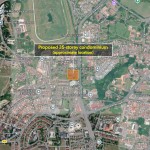
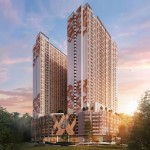
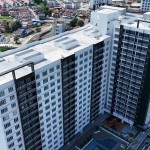
Another upcoming mixed development scheme along Jalan Baru in Prai, Penang. The development has three phases, the first comes with 8 units of 3-storey semi-detached showroom/shop offices while the second is a 25-storey residential tower with 149 condominium units. It is located immediately opposite the newly completed Frontage by UDA Land, next to Petron petrol station.

  • Phase 1 – 8 units of 3-storey semi-detached showroom cum shop offices
  • Phase 2 – 25-storey residential tower with 149 condominium units
  • Phase 3 – 12-storey hotel with 183 rooms.

More details and photos to be available upon project launch.

Project Name : (Pending approval)
Location : Jalan Baru, Prai, Penang
Property Type : Mixed Development
Tenure : Freehold
Total Units : 8 (shop offices), 149 (condo)
Developer : Aroma Development
Developer Contact : 012-938 9362 / 012-448 1117

Tags:

Affordable Housing Roadshow – Bayan Baru (20 Sept)

Property News/ 17 September 2014 No comments

In collaboration with state housing department, a new “Affordable Housing” section has been added to this website to bring further awareness to the affordable housing projects in Penang. You can now find out more about the latest affordable housing projects as well as its location. There are also some basic guidelines that can help you to determine your eligibility.

As of Aug 23, the state housing department has received more than 51K applications, but only 3,257 applied for affordable units (RM200,000 – RM400,000). The number of affordable unit applicants is relatively low comparing the number of units that are going to be built in the next 5 years.

>> Apply For Affordable Housing <<

Please note that the purchase of affordable housing (both government & private developer projects) MUST be applied through state housing department. All applications for affordable housing will be vetted by the eight-member panel in the Selection Process Enhancement Committee (SPEC) in accordance to the criteria set for low-cost, low-medium cost and affordable housing units. There is no shortcut to affordable housing other than going through the balloting process, subject to oversight by an independent auditing firm to increase the transparency in the system and to ensure more efficient allocation.

If you are available this weekend (20 Sept), officers from the state housing department together with PDC will be going to Giant Hypermarket in Bayan Baru for the ‘Mission: Home-Possible’ road-show, to showcase affordable housing projects, as well as assisting potential buyer to submit their completed application forms.

Tags:

Tambun Indah buys land worth RM150mil in Penang

Property News/ 16 September 2014 11 comments

Tambun Indah Land Bhd’s wholly-owned subsidiary, Palmington Sdn Bhd, has proposed to acquire 27 parcels of freehold land in Penang worth RM150 million from TPPT Sdn Bhd.

In a filing to Bursa Malaysia, Tambun Indah said the purchase of the land totalling 84.8 hectares would be satisfied by cash.

It said the proposed acquisition is in line with Tambun Indah’s strategy to expand its land bank in locations with growth potential and strengthen its foothold in the property market in mainland Penang.

Going forward, the group expects prospects for the property market in Penang to remain positive and the proposed acquisition to enhance the overall viability as well as value of the Pearl City flagship township and its vicinity.– Bernama

Tags:

EcoWorld to buy 190ha land in Penang for RM1.02bil

Property News/ 15 September 2014 7 comments

Eco World Development Group Bhd will take up the offer to buy 190.2ha in Batu Kawan from Penang Development Corp (PDC) for RM1.02bil.

PDC is offering the sale of the property to Eco World as the group is the only bidder. It is learnt that PDC will give Eco World the offer letter in two weeks to buy the property at RM50 per sq ft.

PDC has firmed up plans to turn the 190.2ha near the second Penang bridge into a golf course and a mixed development project.

Of the 190.2ha, Eco World will develop a golf course on 60.7ha and use the remainder for a mixed development project.

The group plans to build landed properties on the hilly portion of the land and a waterfront city, overlooking Penang island.

The development density for Batu Kawan is between 11 units and 60 units per acre, depending on the approval given for the development.

Eco World already owns 24.28ha in Bukit Tambun, on which it plans to launch a RM920mil mixed development called Eco Meadows next year.

With the acquisition of this 190.2ha, Eco World is set to be a major landowner and developer in Penang.

Since the announcement of the second bridge in 2006, property prices in Seberang Prai and on the island have surged significantly.

The price of vacant land in the area, especially in south Seberang Prai where the second bridge is located, is now hovering between RM40 and RM50 per sq ft, a huge jump from 2006’s RM8-RM9 per sq ft range, according to Henry Butcher Malaysia (Seberang Prai) Sdn Bhd associate director Fook Tone Huat.

Land prices in central and north Seberang Prai are now within the range of RM50-RM100 per sq ft, compared with RM20-RM40 per sq ft then.

In 2007, Asas Dunia Bhd bought 138 acres from TPPT Sdn Bhd for RM5.58 per sq ft.

In 2014, Tambun Indah Land Bhd purchased 200 acres agriculture land in Simpang Ampat for RM16.40 per sq ft.

If converted for mixed development, the property can be valued between RM20 and RM30 per sq ft at today’s market price.

Recently, PDC sold 99 ha in Batu Kawan to Aspen Group Holdings for RM45 per sq ft to develop the Aspen Vision City. It will have residential properties, offices, medical facilities, a large central park, international school, retail shops and an integrated central integrated hub for Seberang Prai.

On an adjoining land measuring 121.4ha, sources said, a large Kuala Lumpur-based resort and theme park operator had made a bid with an overseas developer that specialised in theme park development.

In May this year, Eco World president and chief executive officer Datuk Chang Khim Wah told StarBiz that the freehold land status and location near the second link and adjacent to the North-South Highway gave it great potential to be developed as a mixed development project.

He said the company was planning the development of a mini mall, comprising shops and offices in line with its “Eco” theme that emphasises sustainability and livability.

“Over time, we aim to build up our presence in Penang to consistently contribute between 10% and 15% to total group sales,” he said.

On Penang island, the group is planning a preview of the RM340mil EcoTerraces in Paya Terubong, which comprises luxury landed homes, condominium units and a private residents’ club on 5.26 ha.

Source: StarProperty.my

Tags: