fbpx

Goods & Services Tax and the Property Investor

Property News/ 20 November 2014 No comments

* Article by Richard Oon *

While presenting the recent Budget 2014, Prime Minister Datuk Seri Najib Razak announced the introduction of the Goods and Services Tax (GST) and when enacted, GST will be effective from 1 April 2015 and standard rated supplies will be subject to GST at a rate of 6%. With the introduction of GST, the current indirect taxation systems of sales tax and service tax will be abolished on the same date.

What is GST?

GST which is also known as the ‘value added tax’ (VAT) in many countries, is a multi-stage consumption tax on goods and services, which ultimately falls on the final consumer.GST is levied on the supply of goods and services at each stage of the supply chain from the supplier up to the retail stage of the distribution. Even though GST is imposed at each level of the supply chain, there is no compounding tax effect, regardless of the number of stages a product or service undergoes in the supply chain, as GST is only charged on the value added element at each stage in the supply chain. This is achieved through net of ‘output tax’ (the GST on the goods and services sold by you) minus ‘input tax’ (the GST you paid on the raw materials, equipment and services used in your business) mechanism adopted under the GST administrative process.

GST is a broad-based consumption tax covering all sectors of the economy i.e all goods and services made in Malaysia including imports except specific goods and services which are categorized under zero rated supply and exempt supply orders as determined by the Minister of Finance and published in the Gazette.

GST will be charged on any supply of goods and services if the following conditions are satisfied:

  1. it is made in Malaysia;
  2. it is a taxable supply of goods or services;
  3. it is made by a taxable person; and
  4. it is made in the course or furtherance of any business carried on by that taxable person.

A taxable supply is a supply which is standard rated (6% under current proposals) or zero rated, whereas exempt and out of scope supplies are not taxable supplies. GST can only be levied and charged if the business is registered under GST. A business is not liable to be registered if its annual turnover of taxable supplies does not reach the proposed prescribed threshold of RM500,000. Therefore, such businesses cannot charge and collect GST on the supply of goods and services made to their customers. Nevertheless, businesses can apply to be registered voluntarily.

So how will GST implementation impact property prices?

Properties from the primary and secondary markets will be treated differently when it comes to GST implementation. Even though it has been proposed that residential properties are deemed to be exempt supplies (ie. the developer cannot charge housebuyers GST), you will realise that the developers will still be subject to GST on the construction materials and supply of various services. As the developers will have to pay for the input tax (ie. GST) on those construction materials and other services, they are unable to claim output tax as GST is not imposed on residential properties. Consequently, the GST element of the costs of construction would eventually be passed on to the housebuyers. In the case of commercial properties, the developers will have the relief of claiming GST incurred as input tax as they are able to charge output tax (GST) on the buyers. In the case of a mixed development of both residential and commercial properties by a developer, the proportion of GST incurred in relation to the construction of residential properties cannot be passed on and absorbed by the construction of commercial properties either.

Some may argue that cost of construction may instead reduce, considering that the rate of sales tax in Malaysia which is currently 10%, will be abolished and replaced by the 6% GST come 1 April 2015 and this would in fact translate into some savings on the cost of construction materials. However, it would be worthy to note that pursuant to the Sales Tax (Rates of Tax No. 2) Order 2012, the sales tax rate on most building materials enjoy a preferential sales tax rate of either 0% or 5% as at 31 December 2013. So in fact, the tax element of construction materials would in reality, increase!

How about sub-sale properties?

Post-GST implementation, there will be no GST implications when you buy or sell a residential property from or to the secondary market, as it is an exempt supply.
So the question is how should we position ourselves as a property investor with this latest development and how can we take advantage of the pre and post GST implementation?
For those who like to know more, I have been invited to share about the impact of GST to the property market in Penang on 29th Nov 2014 at Evergreen Laurel Hotel. I will be sharing in more details about what it means to you as a property investor and property owner. At the same time, I will also go into details about GST in the broader sense and the introduction and implementation of tax related matters. In addition, I will also talk about the recent Budget 2015 announcement and highlights on what’s in store for us as an investor.
We are expecting a full house and as seats are limited, I would suggest that you to click here to know more and book your seat NOW: http://www.AboutPropertyInvestment.com/

>> Richard Oon is the National Tax Director of TY Teoh International, a member firm of the MSI Global Alliance, which is one of the world’s largest independent associations of accountancy and law firms. Richard is a member of the Malaysian Institute of Accountants (MIA), a fellow member of the Association of Chartered Certified Accountants (ACCA), a fellow member of the Chartered Tax Institute of Malaysia (CTIM) and also a Certified Financial Planner (CFP). He has more than 20 years experience in the taxation industry and holds a tax agent licence issued by the Ministry of Finance under Section 153 of the Income Tax Act 1967.

[ Sponsored Ads ]

Tags:

Setia Sky Cubes

Teluk Kumbar/ 20 November 2014 5 comments

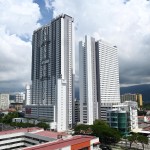
Setia Sky Cubes, an upcoming luxury condominium by SP Setia located along Jalan Bayan Lepas, next to Pavilion Resort Condominium. Within the established township of Teluk Kumbar in Penang, this development comprises 98 residential units with built-up size ranging from 1,119 sq.ft. onwards.

With a gross development value (GDV) of RM60 million, the estimated selling price would be around RM 600,000 per unit or more.

More details to be available upon project launch.


Property Project : Setia Sky Cubes (formerly known as The Qbees)
Location : Teluk Kumbar, Penang
Property Type : Condominium
Tenure : Freehold
Built-up Area: 1,119 sq.ft. onwards
Total Units : 98
Developer : Kay Pride Sdn. Bhd. (SP Setia)

* This project was first posted as The Qbees in April 2012 *

Location Map:


[streetview width=”100%” height=”250px” lat=”5.294144″ lng=”100.25332500000002″ heading=”-172.934754472428″ pitch=”5.710464700428053″ zoom=”0.009999999999999898″][/streetview]

Tags:

5 Property Feng Shui Features To Look Out For

Property News/ 18 November 2014 No comments

Today, feng shui has been inaccurately associated with the practice of understanding if a home, property or general area is considered “good”, “bad”, “auspicious” or “inauspicious”.

These terms get thrown around so much, people tend to lose logic and rationale in the rush to fulfil certain “feng shui criteria”. To optimise effectiveness of feng shui, it is important for one to understand that it is not just about making money or enhancing “good luck”, but so much more.

To begin understanding the subject, one should ask three simple questions when studying a property and its land – What exactly is bad? How bad is it? Why is it bad to begin with?

More often than not, knowing something to be simply good or bad creates a lot of misunderstanding, paranoia or fear. That is not what feng shui is about. Rather than getting absorbed into the fear of how having the wrong interior design in your house can affect the Qi, you should examine these five property feng shui features that are common to every home and the undesirable factors to avoid in your current or future property.

The main door

After the environment, the main door, along with the kitchen and bedroom, form the three important factors in feng shui. These are the three main features of a property that every feng shui consultant must evaluate.

The main door is an important key feature, as it is essentially the Qi mouth of the property. When evaluating this feature, do not just look into the property, but out as well. Simply stand at the door, look out from within the property and check if any negative forms are within sight in that view.

If you see a tall structure like a lamp post within sight from the main door, then you have a possible case of Piercing Heart Sha. This can affect the health and career of the occupants.

Another negative feature to avoid is the sight of a narrow gap between houses, usually as a result of two houses built close together. This is a mini version of Tian Zhan Sha (Crack in the Sky Sha).

It is also not recommended to have the main door overshadowed by thick foliage from trees, causing the property to be under a perpetual shadow. This creates Yin Sha, which affects the mental health of the residents.

These are some of the highly undesirable external factors affecting the main door and one should avoid buying a property with these factors present.

Kitchen

Since the kitchen represents life and health of the people living in the property, it is essential that the residents only consume good food to ensure great health. A badly located kitchen usually brings poor health for the residents. Hence, the kitchen should never be located in the central place or the Heavenly Heart of the home. Having a kitchen in these areas of the property is like giving the property a constant heartburn, creating instability and long-term nagging health problems. The kitchen should always be located at the side of the house, and never in the centre.

Aside from the general location of the kitchen, one should also evaluate the layout within the kitchen. Ensure that the stove is not located in front of any door or doorway entering the kitchen. This is like a mini T-junction causing the Qi to rush in the door, hitting the stove and imbuing the cooked food with Sha Qi. If possible, move the stove away from the kitchen door.

Bedroom

Sleeping is important as it impacts our vitality. Like the kitchen, the bedrooms should be located in suitable sectors of the property, based on the formulas in Eight Mansions, Xuan Kong Da Gua or Flying Stars.

Rooms that are round, triangular or oddly shaped with sharp corners should be avoided at all times. Instead, choose a square room as it can, to some degree, insulate any form of negative Qi that impacts the room.

Drains

Look outside the main door of a property and observe the location of the drain. If the drain runs parallel to the main door, the occupants may face a problem known as Cutting Feet Water. This negative Water feature adversely blocks the Qi from entering the property, cutting into the vitality of the Qi in the house.

Although this should be avoided at all cost, you will only have a Cutting Feet Water problem if the drain is visible from the main door of your property. If not, it should not be a cause for concern.

Roads

Most in-demand properties are those that are situated away from roads that are sources of extreme noise pollution and heavy traffic. From a feng shui perspective, what one needs to watch out for are the curves on the road leading to the property. This is called a Bow Formation and will cut into the flow of Qi into the property.

Also avoid properties that have narrow or wide alleys opposite them. This is because it can cause either a Pulling Nose Qi or Sky Crack Sha problem (depending on the type of alley) and this negativity is usually extremely hard to correct.

Other notorious negative features include the T-Junction. Living up to its unlucky reputation, even non-practitioners of feng shui know better to avoid purchasing properties “hit” by the T-Junction. However, if the T-Junction just misses the property by a margin, you can usually counter any negativity by planting trees or plants to act as a barrier for the bad Qi.

Unless you are financially able to custom-build your dream house, be prepared for the fact that any house will have a feng shui problem or two – though you should bear in mind that not every one of them are severe issue.

You should also be prepared for the fact that sometimes, not every one of these problems can be easily fixed by a consultant. The trick is to find a home without the problems in the first place. Do not give up as with some patience, effort and the right questions, you will be able to find it.

This article is contributed by Dato’ Joey Yap, the founder of the Mastery Academy of Chinese Metaphysics, a global organisation devoted to the teaching of Feng Shui, BaZi, Qi Men Dun Jia, Mian Xiang and other Chinese Metaphysics subjects. He is also the Chief Consultant of Joey Yap Consulting Group, an international consulting firm specialising in Feng Shui and Chinese Astrology services.

Source: iMoney.my

Tags:

Increase In House Prices Just Temporary After GST Implementation

Property News/ 17 November 2014 No comments

Any increase in house prices upon implementation of the Goods and Services Tax (GST) in April next year is just temporary, as a number of measures are already in place to curtail the rise.

Deputy Finance Minister Datuk Ahmad Maslan said among the measures are increasing the real property gains tax from 15 per cent to 30 per cent, enhancing the price of houses from RM500,000 to RM1 million for foreigners, and barring developers from undertaking projects based on the Developer Interest Bearing Scheme.

He told reporters this after officiating the closing of a GST information session and a briefing on current issues at the Masjid Tanah Parliamentary constituency here today.

Minister of Urban Wellbeing, Housing and Local Government Datuk Abdul Rahman Dahlan said recently that the price of houses can be expected to rise by three per cent based on a study by the Real Estate Housing Developers Association of Malaysia (REDHA), after the GST implementation.

Ahmad, however said, the figure could be just one to two per cent based on the calculation of the Finance Ministry and the Customs Department.

Meanwhile, he said he would propose to the government to reduce the RON 95 fuel price, if global oil prices fell to between US$70 to US$75 a barrel.

He said a reduction could be undertaken, as it would have passed the subsidy threshold of the government.

The price of Brent crude oil is at US$79.41 a barrel at present

Source: Bernama

Tags:

The Reality of Affordable Housing in Penang

by Ken Lim

Housing affordability is a common issue not only in Malaysia, but also in many other countries such as Singapore, Hong Kong, China and Australia. Recently I have also read the latest news about India inviting Malaysian developer to build affordable homes in India.

In some developed countries like Japan and United Kingdom, the availability of affordable homes, usually within the proximity of transportation hubs and at the same time linked to job distribution, is severely reduced due to rapid regional urbanization and growing population density primarily focused in a particular area. Today, they are still dealing with the same issue as we progressed with time.

Malaysia is only getting off the starting block. As our young nation continues to evolve and grow, it is a matter of importance for us to address the housing needs due to the distinctive disparity in household income. Affordability issue will always exist yet if the right and effective strategy is implemented, the implication can be less severe than expected.

While both government and private sectors have formulated various plans to deliver affordable housing, it seems to me that the people are not as excited as they should be. I can confirm this from the level of engagement in PenangPropertyTalk.com. A RM800K condominium in Tanjong Tokong has attracted twice more traffic and Facebook sharing compared to a RM300K affordable housing project in Mount Erskine. News about Ikea coming to Batu Kawan had almost thrice the traffic and Facebook sharing compared to affordable housing plans within the vicinity of Batu Kawan.

One of the possible reasons could be due to the slower pace in terms of paradigm shift of the mentality of the people with respect to the idea of affordable housing in Malaysia.  The general public perception of affordable homes is akin to aging dilapidated flat with little or no facilities at all. Many still harbour hopes that the government will be able to make the private homes more affordable, having the new private housing development to reduce their price within the range of 10-20% so that affordability is within grasp. But seriously, do you think that is a remote possibility?

Government and Bank Negara cooling measures are meant to control the housing price so that speculation activity would not reach an unhealthy level. However it is unlikely to reduce housing price to a great extent unless we are talking about an economy crisis where the stock market takes a plunge, many MNCs closing down, and a lot more people losing their hard earned jobs.

At this early stage, the introduction of affordable housing scheme is just not good enough. Instead of just waiting for people to accept it, a substantial effort should also be spent on marketing in order to bring the awareness to the people in a proactive manner. Today, affordable housing is targeting those professional workers with a monthly household income up to RM10,000 per month. They are not just looking for home with four concrete walls. It is a living solution that everyone is seeking. A place where they can stay in a comfortable manner, with primary basic amenities within close proximity  that can serve their daily needs, particularly in getting to work as well as fulfilling the  education needs of their children.

Financial institutions, developers and government can definitely work together to do much better by providing more affordable options, better first home ownership scheme and not to forget a stringent regulation to ensure the units are primarily meant for home owner ‘s occupation however not to derive profitability from rental yields.

For Penangites, it’s time for us to rethink all the possible affordable options available. There are also plenty of decent options available in the secondary market, which we should undertake to purchase before it gets out of our reach in the foreseeable future.

– Ken Lim
(Founder and Principal Reviewer, PenangPropertyTalk.com)

Tags: