fbpx

Traits of a responsible housing developer

Property News/ 31 January 2015 No comments

Chang Kim Loong is the honorary secretary-general of the National House Buyers Association.

Knock, knock! Any “good” housing developers out there?

I am reluctant to use the words “good developers” as the words are not in my vocabulary. However, there are responsible ones and more are joining this category.

The qualities of a responsible developer are to be emulated, if you can find them.

The housing industry has come a long way since the advent of large-scale housing development in the late 50s and early 60s. The players in those times were bona fide entrepreneurs. Most probably, conscience ruled and pride in workmanship, timely delivery of quality and affordable houses were their hallmarks.

The present delivery system of “sell-then-build” through progressive payments is fraught with risks for the unsuspecting house buyers.

These second generation housing developers, “good” or bad, are used to the lucrative profits from the housing industry. This is so because the post-independence period has been a period of high population and economic growth. Hence, the demand for housing is ever increasing. In a sellers’ market, the buyers are always at a disadvantage. When greed is inversely proportionate to conscience among industry players, the situation can get very bad indeed.

We often hear of developers lamenting about the shortage of workers (legal or illegal, skill or inexperienced), shortage of building materials, complying with new laws or regulations that made it hard for them to complete their projects on time. At the same time, we also hear of projects making multi-million ringgit in profits for the developers and we do not see or hear news of housing developers retiring or quitting the business entirely.

This would mean that the housing development is still a lucrative business. In fact, more rookie developers are joining the arena because the sell-then-build system allows them to make money from people’s money.

It has become a ‘riskless venture’ where profits are guaranteed, and in the worst scenario, the government will mop up the abandoned housing project, befitting the adage: Profit Privatised, Losses Nationalised’

Enough of the bad ones, we at HBA do keep our ears opened for the qualities of responsible developers to be emulated. In the first place, how do buyers judge if their developers have been responsible? The construction industry is a unique field. It is one of a few professions where no formal education is required.

There is no formal award giving ceremony by buyers to tell the world their developers have been ‘good’ and responsible.

There are also some other things the responsible developers do that prove they have a passion for their profession. Here are some of the traits practised by responsible developers.

Attention to environment and existing neighbourhood

Responsible developers do not just depend on their buyers to pass the word around about their reputation. No new project is an island. There are existing neighbouring projects, trees etc. A responsible developer ensures the existing neighbourhood is not disturbed by their new development.

If there are complaints, such as cracks, a landslide and floods that the new construction is causing to the existing neighbours, they are quickly attended to. They also ensure that the existing roads are kept clean regularly from construction activities.

Amenities, facilitiesand infrastructure

Developers who provide adequate amenities and facilities like playgrounds, schools, markets, community halls and even police booths are not only fulfilling the obligations imposed by the local council but also their social responsibilities to society. These developers are commendable as good corporate citizens. It enhances their image too. There are also developers who invest and build infrastructure first prior to selling their houses.

Takes pride in quality and timely rectification

Whether low-cost or high-cost houses, chasing the developer to rectify shocking defects, bad workmanship is a nightmare to buyers who lose out while waiting for repair works.

Responsible developers do their own quality checks before handing over their products. Caring developers do practise the following before handing over their products:

• Adopt quality checks at all stages of construction, test and commissioned utility supplies;

• Clear and clean individual units and construction site of debris;

• Ensuring the Certificate of Compliance and Completion (CCC) is obtained with the handover of units;

• Retain a team of competent workers to do rectification promptly if there are complaints on defects.

• Keeping sufficient stock of products like floor tiles of the same quality and make.

Some developers even extend the mandatory defects liability period of 24 months. We have also heard of developers providing alternative lodgings for their buyers while waiting for defects to be corrected.

Timely delivery

Time is the essence of the contract of sale and purchase. Houses should be delivered within the time stipulated in the sale and purchase agreement ie within 24 months for ‘land and building’ and 36 months for ‘building intended for subdivision’. If, for whatever reason, there are delays, compensation should be paid immediately to buyers without second thoughts or finding devious ways to ‘short-change’ the buyers.

Responsible developers keep their buyers informed of delays and tell them of the next expected delivery date. Some buyers even told us of the extras they have received at delivery time, which surely endear them to the developers. These are some of the ‘welcome packs’ that they have received: useful gifts like a key box; warranties from paint companies, auto-gates, pest control, electrical appliances; certificates of treatment for termites / pest control; a certified copy of the CCC issued by the architect and certified copy of the building plans and plans that relate to electrical wiring and water piping so as to facilitate future renovation.

Interest charged

One clause in the sales contract states that the buyer is responsible for late payment interest. It is a common complaint by buyers that their developers would charge interest for late payment even though it is the fault of the end-financier or their lawyers doing the legal documentation. Responsible developers assist in ensuring that the documentations are in order and the buyer is not burdened with any late payment interest.

Joint Management Body (in stratified projects)

Responsible developers assist their buyers to form committees and be prepared for the formation of the management corporation. These developers realise that the projects they have developed will eventually pass to the owners to maintain and manage.

Encouraging community living

Developers who encourage forming of resident/ owners association are a welcome lot. Some even go to the extent of contributing monies for the formulation of buyers representative group for a meaningful channel to voice grievances. Some even provide meeting facilities and allocate a multipurpose room for the elected representative group.

Good communication

The line of communication should always be open between buyers and their developers:

• Keeping buyers informed of the ongoing projects and their products;

• Developers not to appear having shun away from their responsibility;

• Treating the buyers with respect as buyers can serve as their marketing tool. Show respect and you will gain respect;

• Transparency and accountability on monies collected;

• Providing regular accounting reports and budgets;

• Voicing of any grievances rather than through the media, which will bring adverse effect to the detriment of both parties.

Build first then sell

There is no step that can be more pronounced than for housing developers to adopt the absolute ‘built first then sell’ so that potential buyers can see for themselves the finished product before buying. We believe that in this way, most of the present day ailments afflicting the housing industry can be avoided and the housing industry will be a lot more orderly.

In the interim period, responsible developers have embarked on the Built then Sell (BTS) 10:90 concept where the buyers pays 10% and the balance of 90% to be paid upon completion of the house. They are already big names among developers that find the BTS 10:90 concept workable and feasible and are targeting to achieve the Government aspiration of making BTS 10:90

There are responsible developers whose names are synonymous with quality and trust. They are able to win over buyer’s confidence. Today, they have created their own brand names. No wonder some developers do not advertise, yet all their units are sold out even before the official launch.

Chang Kim Loong AMN is the secretary-general of the National House Buyers Association.

Source: StarProperty.my

Tags:

AFFORDABLE: Bayan Lepas / Paramount Solaris

Bayan Lepas/ 30 January 2015 6 comments

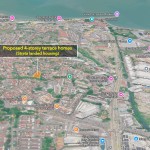
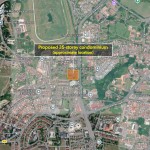
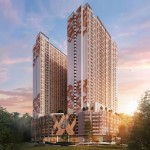
Another proposed affordable housing by Paramount Solaris (Ideal Property Group?) in Bayan Lepas, Penang. This is going to be the second affordable housing in Bayan Lepas after One Foresta. It is strategically located next to Jalan Tun Dr. Awang, only a few minutes away from Penang International Airport.

The residential component comprises 4 blocks of 49-storey towers, to be developed in 2 parcels:

  • Parcel 1: 2 blocks of 49-storey buildings (1,170 units)
  • Parcel 2: 2 blocks of 49-storey buildings (1,149 units)

Each affordable unit comes with a standard built-up area of 850 sq.ft.

READ MORE ABOUT AFFORDABLE HOUSING:

For registration details, you may refer to http://erumah.penang.gov.my/


Property Project: (Pending)
Location :
 Bayan Lepas, Penang
Property Type : Affordable housing, commercial & school
Land Tenure : Freehold
Built-up Area: 850 sq. ft.
Indicative Price : RM400,000 and below
Developer : Paramount Solaris (Ideal Property?)
[streetview width=”100%” height=”250px” lat=”5.307948″ lng=”100.26986599999998″ heading=”-22.42518052417132″ pitch=”-8.9079077538518″ zoom=”1″][/streetview]

Bank Negara sees lower inflation, maintains OPR

Property News/ 29 January 2015 No comments

Bank Negara Malaysia (BNM) forecasts inflation for 2015 to be lower than earlier anticipated due to due to the lower energy and commodity prices.

In a statement released on Wednesday, the central bank said at the Monetary Policy Committee (MPC) meeting, it was decided that the overnight policy rate (OPR) would be retained at 3.25%.

“At the current level, the stance of monetary policy remains accommodative and is assessed to be appropriate given the developments in monetary and financial conditions,” it said.

BNM said the MPC will continue to carefully assess the external developments and their implications on the Malaysian economy.

“The MPC will also continue to monitor the risks of destabilising financial imbalances. This is to ensure that the monetary policy stance is consistent with the sustainability of the growth prospects of the Malaysian economy,” it said.

On the inflation outlook, it said the projected lower energy prices will partially offset other domestic cost factors.

“With the implementation of the managed float pricing mechanism for fuel, the outlook for headline inflation would be subjected to the volatility of oil prices. Nevertheless, the expectation is for underlying inflation to remain relatively stable, amid the more moderate demand conditions,” it said.

BNM said volatility in the international financial markets has increased amid shifts in global liquidity and heightened uncertainty particularly with regard to global growth prospects and the decline in commodity prices.

“While the Malaysian financial markets have been affected by these global developments, there has been no disruption to financial intermediation. There remains ample liquidity in the domestic financial system with continued orderly functioning of the financial markets.

“The banking institutions are operating with strong capital and liquidity buffers, and continue to provide financing to the economy,” it said.

As for Malaysia, BNM said the economic activity continues to be supported by growth in domestic demand amid a moderation in exports in the fourth quarter of 2014.

“Going forward, domestic demand will remain as the key driver of growth. While private consumption is expected to moderate, it will remain supported by the steady rise in income and employment, and the additional disposable income from the lower oil prices.

“Investment activity is projected to remain resilient, with broad-based capital spending by both the private and public sectors cushioning the lower oil and gas-related investment activity.

“While export growth will be affected by lower commodity prices, the performance of manufactured exports is expected to improve. The prospects are therefore for the Malaysian economy to still remain on a steady growth path,” said BNM.

Source: StarProperty.my

Tags:

Penang’s cooling measure on properties has limited effect

Property News/ 29 January 2015 No comments

Lebuh Chulia, George Town, is going through a property boom with many owners selling their pre-war shoplots or raising rentals that are driving out tenants. – The Malaysian Insider pic by Hasnoor Hussain

As property owners in the city of George Town find their old buildings appreciating in value, the Penang government’s ruling to prohibit foreigners from buying landed properties on the island under RM2 million will only have a limited effect and may be counterproductive.

State local government exco Chow Kon Yeow said the level of effectiveness of the cooling measure, which was introduced last year to curb speculation in Penang’s property market, was questionable when some foreigner buyers still found prices above RM2 million attractive.

“If a building owner wants to sell his property to a foreigner, he can up the price from RM1.9 million to RM2.5 million. That kind of price is still considered cheap to buyers from countries like Singapore and Hong Kong.

“In that way, such a cooling measure may not be so effective, and may even result in the opposite by boosting property prices when local owners find that their properties have higher values if they sell to foreigners,” he said, adding that Malaysia was not like Thailand, where there was control on foreign ownership of properties.

Such a situation may be a problem in George Town, where the Unesco world heritage site is located, if owners of pre-war buildings sold off their premises to foreign buyers or increased their rental.

Chow said rental rates went up after the Rent Control Act was repealed in 1997, but some residents and businesses in the city managed to survive.

He admitted that some tenants were in for another wave of rental hikes and evictions resulting from the property boom in recent years, which encouraged property owners in the city to increase their rental or sell off their premises for profit.

“It is very difficult for the state government to control property transactions.”

In recent years, the city had also seen many of its old buildings refurbished and converted into hotels and chic cafes either by their original or new owners, or tenants, to attract tourists.

The latest of such projects is at Lebuh Chulia, where the owner of a row of shophouses is evicting her tenants by April 1 to refurbish the lots into a hotel. Some of the tenants, including a chemical supplier and a machine workshop, have been there for more than 50 years.

Some concerned citizens are seeing these new tourism and commercial-driven developments as a threat to the city’s remaining residents, old trades and businesses that give George Town its unique culture, character and charm.

In some cases, the evictions spell an end to the businesses and trades all together because the tenants could not find a new place in the city to set up shop because of high rental rates.

Although some of the trades are considered part of the city’s heritage, there is no law to protect intangible heritage.

Chow, whose state constituency of Padang Kota is partly made up of the world heritage site and its tangible and intangible heritage, said the state government was looking to the soon-to-be gazetted Special Area Plan (SAP) for the Unesco world heritage site as a preventive measure.

He said once the SAP was gazetted, all future applications for planning permission and others would have to conform to the type of activities prescribed for a particular area in the heritage site.

He said the heritage city would be divided into various precincts, and the land used for the different precincts restricted to certain types of activities.

“Any particular activity will have to conform to the plan, which will also ensure that there will not be too many of the same activity going on.

“The control the state can exercise to try to balance progress and heritage conservation in the heritage city is at the planning and development stages, using the SAP,” he said, adding that the plan will hopefully be gazetted this year after its Bahasa Melayu translation is completed.

The long-awaited SAP will guide and control development within the George Town World Heritage site, which has more than 90 Category 1 heritage buildings (monuments, ancient buildings gazetted under the National Heritage Act 2005 and formerly the Antiquities Act 1976) and more than 4,000 Category 2 buildings of special interest that need to be preserved.

The plan, which takes into account the existing characteristics of the different areas in the heritage city, covers seven different building and land use activity zones, including tourism and leisure, trade, waterfront and jetty.

Source: The Malaysian Insider

Tags:

Penang to see spurt in housing sales pre-GST

Property News/ 28 January 2015 5 comments

Michael Geh

Real estate agents see a spurt in property activity in Penang in the first quarter of this year, spurred by an urgency to get deals closed ahead of the implementation of the goods and services tax (GST) on April 1.

Raine & Horne Penang director Michael Geh said the uncertainty over the impact the consumption tax will have on property prices may lead to a flurry of investment activity in the state’s property sector.

He is of the view that many property investors will get caught in the “herd mentality” of buying properties pre-GST on concerns that property prices will rise an additional 6% under the new tax regime.

“People are psychologically affected by the GST even though it is understood that the sale and purchase of residential property is not subject to GST. However, the general view is that there would be GST impact on building material and labour costs, which inevitably give rise to higher property prices,” he told The Edge Financial Daily.

Conversely, the owner-occupier segment of the Penang housing market is likely to be sluggish given the tighter lending conditions.

“While there are many genuine homebuyers wanting to buy properties, they are not able to secure loans as housing prices have surged beyond [the average] person’s reach,” Geh said.

He noted that these homebuyers are holding out for more affordable properties built by the federal and state governments, as well as private developers.

On the developers’ front, Geh said: “Many developers in Penang are feeling the pinch [with rising costs] as they have to pay higher infrastructure development charges, conversion fees and drainage contribution.”

The Penang government increased the drainage contribution from RM15,000 to RM50,000 from January last year. This was in addition to infrastructure development charges, introduced in 2012, which were set at RM15 per sq ft for residential projects and RM21 per sq ft for commercial projects.

Geh also said Penang’s secondary residential market, which accounts for a 70% share of the property market, remains active and stable compared with the primary market.

In 2013, the state’s secondary market recorded RM5.89 billion in turnover from the sale of 14,950 units compared with the primary market, which totalled RM1.21 billion from the sale of 2,750 units.

According to the National Property Information Centre, in the first half of 2014 (1H14), the number of transactions for residential units in Penang stood at 9,023, out of the total number of transactions for all properties of 12,929. The sales value of the residential units was RM3.76 billion, which represented the largest portion of the Penang property market’s total sales value of RM7.2 billion in 1H14.

Real Estate Housing Developers’ Association (Rehda) Penang chapter chairman Datuk Jerry Chan said the drainage contribution, infrastructure development charges, a default compensation for non-provision for each low and low-medium cost housing unit and the re-zoning fee imposed in the state are the highest in the country.

He noted that Penang-based developers are finding it difficult to fork out RM120,000 for each low-cost housing unit they choose not to build in their projects on the island as well as non-Penang developers who are compelled to pay RM150,000 per unit.

“On the mainland, if a developer does not fulfil the low-cost quota, it is required to pay between RM50,000 and RM72,500. Nowhere in Malaysia are such charges imposed. Therefore, these costs get passed on to homebuyers,” Chan told a media briefing on Dec 3, 2014.

He sees property prices in Penang increasing by between 3% and 15% once the GST comes into play.

Ivory Properties Group Bhd chief executive officer Datuk Low Eng Hock told The Edge Financial Daily that the introduction of GST will definitely hit the construction sector.

“When construction cost goes up, it will also affect the price of properties in Penang since they are interrelated. For that, we are looking at about 3% to 4% increase in the state’s property prices following the implementation of GST.

“We also foresee that the property market in Penang will soften slightly this year due to difficulty for some purchasers in obtaining housing loans,” he said.

However, Low said despite land scarcity, factors such as Penang’s transformation to an international city, infrastructure upgrading and Penang being a preferred destination for retirees would neutralise the situation.

“Based on these factors and with scarcity of land on Penang island, we remain positive on the property outlook for next year and opine that properties priced between RM700 per sq ft and RM1,000 per sq ft will continue to be in demand,” he said.

Source: The Edge Markets

Tags: