fbpx

Debating DIBS for the property market

Property News/ 1 November 2015 No comments

wahidomar0111The Government is considering housing developers’ request to reintroduce DIBS (Developers Interest-Bearing Scheme) for first-time house buyers.

Minister in the Prime Minister’s Department Datuk Seri Abdul Wahid Omar says the Government is discussing whether to relax current buying and lending guidelines for first-time house buyers.

“It is still at the discussion stage,” he says after the opening of the 2015 Malaysia Property Exposition (Mapex) on Friday. Today is the last day of the expo, which is being held at the Mid Valley Exhibition Centre, Kuala Lumpur.

“As much as we want to promote home ownership, it is important that we make sure that home ownership comes with the ability to service the loans.

“The last thing we want is to force people to own homes and take up loans which they are not able to service later.”

But he says the Government recognises the request by the Real Estate and Housing Developers’ Association (Rehda) to see how they can help young families who are renting and, at the same time, are in the process of buying their first house.

“If they were to buy a house now, it takes three years to complete and they have to continue paying rental for the house they are staying in. But at the same time, once their loan is disbursed progressively for the house they bought, they have to service it, and some people can’t deal with both together (house rental and house loan instalment at the same time),” says Wahid, explaining why developers have requested for DIBS to be reintroduced for first-time buyers.

DIBS is a scheme in which the developer absorbs the interest of the housing loan during the construction period, which means that the house buyer does not need to service the loan until the house is completed, which usually takes about three years from the time the development is launched.

However, this has led to excessive ­property speculation, as people who could not really afford the loans were using DIBS to buy properties because they could do it without putting down any of their money, with the intention of selling – or flipping – the house upon its completion to make a quick profit.

The other widely acknowledged issue with DIBS is that when developers absorb the interest from loans for house buyers during the construction period, they ­inevitably pass that amount down to the house buyer in the form of higher prices for the completed house compared with prices for a house without DIBS.

In November 2013, Bank Negara tightened lending guidelines and curbed DIBS.

When the 2016 Budget was announced recently, the First House Deposit Scheme was introduced with RM200mil allocated to help first-time house buyers afford their down payment.

Wahid says the Government has not yet determined whether this will also apply to second-hand homes or be confined to newly-built property only.

“The main intention is to assist first-time home buyers. It is important to observe the spirit and intention. We appreciate that for many young families to come up with that 10% down payment can be challenging.”

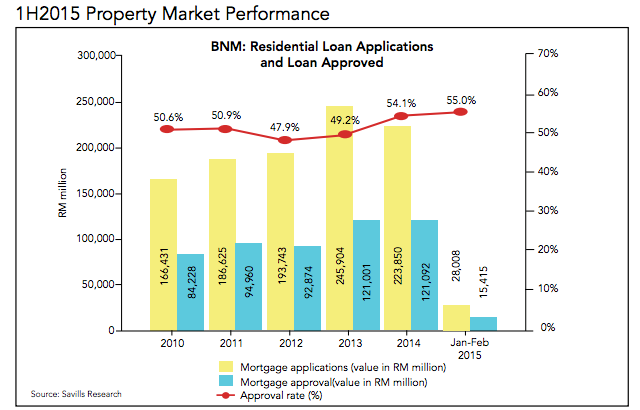
As for complaints that people are finding it hard to secure housing loans because the regulations have been tightened, Wahid says that when the Govern­ment surveyed the banks, the banks told them that the rejection rate for loans is less than 20%.

“This is where we need to look at the detailed data because there might be some screening at the developers’ end.”

He says the cooling measures the Government introduced over the past few years, such as responsible lending guidelines, have had their desired impact in curbing excessive speculation and moderating rapid growth in household debt.

He makes it clear that these measures are not meant for first-time house buyers but rather for those who are buying their third property onwards.

For Wahid, it is crucial for developers and those in the property sector to innovate and embrace new technologies to keep costs low.

He points out that the construction industry is facing productivity-related issues that need to be addressed.

These issues, according to Wahid, include a low-skilled work force, inadequate or a mismatch in training and development, over-reliance on low-skilled foreign labour, limited adoption of modern practices, mechanisation and industrialised building systems (IBS), the lack of data and information-driven decision-making, and a limited adoption of information technology such as building information modelling.

However, Rehda president Datuk Seri F.D. Iskandar Mohamed Mansor claims that 50% of housing loans are being rejected and urges the Government to relook some of its cooling off measures.

“It has taken a toll on developers. We are facing challenging times,” he says.

He says it would help if developers are given GST relief for constructing low-cost and affordable homes.

Iskandar also says another issue affecting the industry is rising “compliance costs”.

When they build something, he says, there are Federal Government and State Government regulations to comply with, and doing so can be costly.

Citing new infrastructure costs, he says this is now being passed down to the developers when it was not the case five to six years ago.

He says land takes up 15% to 20% of the development cost, and compliance costs, which used to be about 5%, now has gone up to 20% in some states.

Source: TheStar.com.my

Tags:

Penangites are hoping a rail-based transport system will be the answer

Property News/ 30 October 2015 2 comments
There are daily traffic jams in Jalan Masjid Negeri during the morning peak hours.

There are daily traffic jams in Jalan Masjid Negeri during the morning peak hours.

Slow-moving traffic has become the daily bane of road users on Penang Island and has recently gotten worse.

With a population of 752,800 people, the island had 1.03 million private car registrations in 2014 – a staggering increase of 32.9% in seven years from 2008.

Road users commute for various reasons and the most common is out of necessity. The existing roads have failed to keep up with the increasing number of vehicles and this has increased traffic snarls.

Daily congestion

Nur Ruzzana Md Hashim, 29, a customer service executive who works in a logistics company in the Bayan Lepas Free Industrial Zone (FIZ), battles traffic congestion daily.

“I spend an average of two hours daily on the road as there are bottlenecks in the FIZ area during peak hours, compared to only 15 to 20 minutes in the past.

“It is worse when it rains. I will need to leave home earlier in order to reach the office on time after dropping off my children to school,” she said.

Besides being wearied by the long commute and lack of rest, she lamented the impact of the time spent on the road.

“The long hours spent on the road leaves little time for me to have quality time with my family.

“Besides that, living expenses have gone up and so has my fuel consumption with the traffic congestion. I spend more than RM50 a week on fuel for a one-way distance of 6km.”

Those who have to endure the long commute from the mainland to the island for work or leisure are also feeling the impact.

While congestion and scarce parking are interrelated, insurance manager Gobal Narayanasamy, 42, finds this situation going from bad to worse.

“Coming from Bukit Mertajam, the daily traffic congestion is causing me delays in going to work.

“When I’m on the island, it’s very challenging to look for parking spots in town and at shopping malls. During the festive seasons, parking is a nightmare altogether,” he said.

Another mainland resident, Sher Ibrahim, 43, was not impressed with the current road conditions with not many alternative routes available.

“Road construction will not solve this issue in the long run, even the second Penang Bridge does not divert much traffic from the first bridge and in my opinion, is not the faster and cheaper route to the island,” he explained.

New infrastructure needed

The current traffic congestion calls for finding an immediatesolution besides strengthening the existing roads.

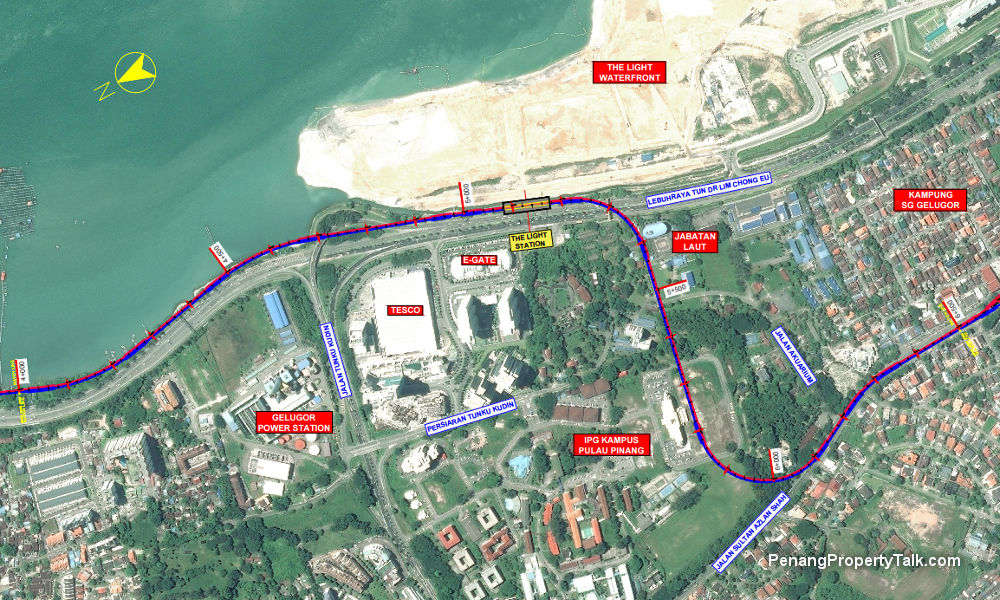
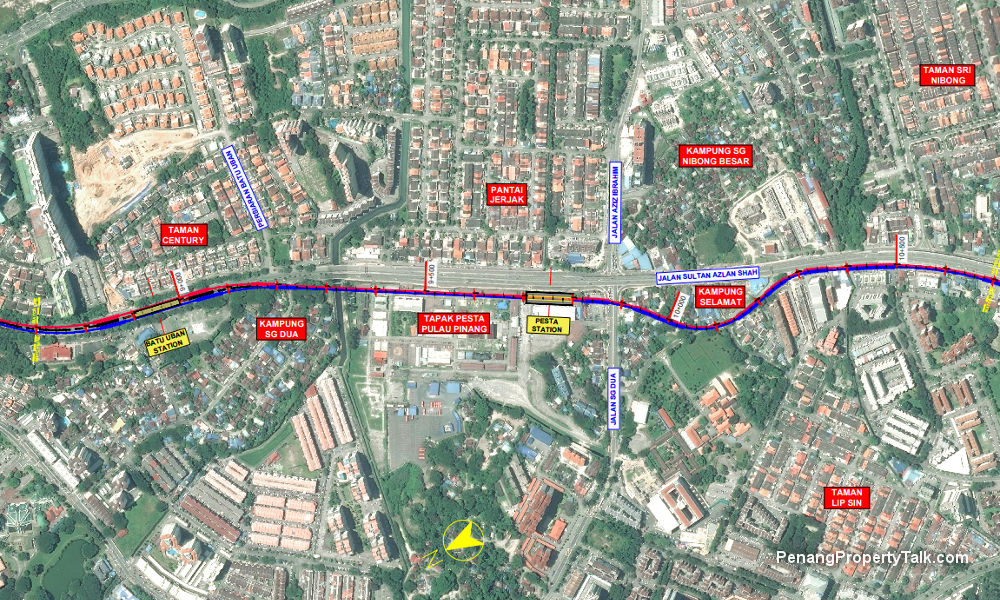
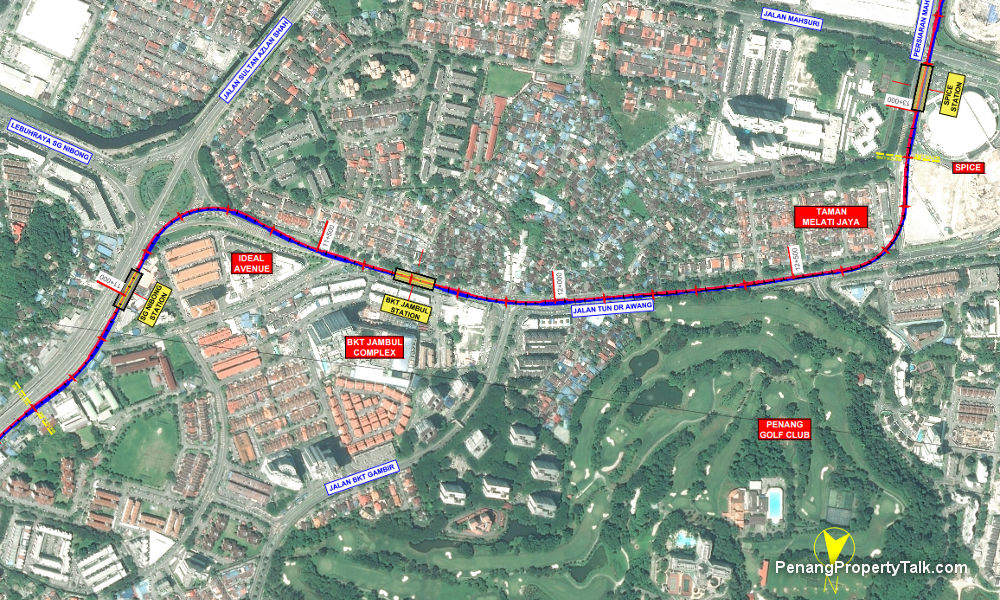
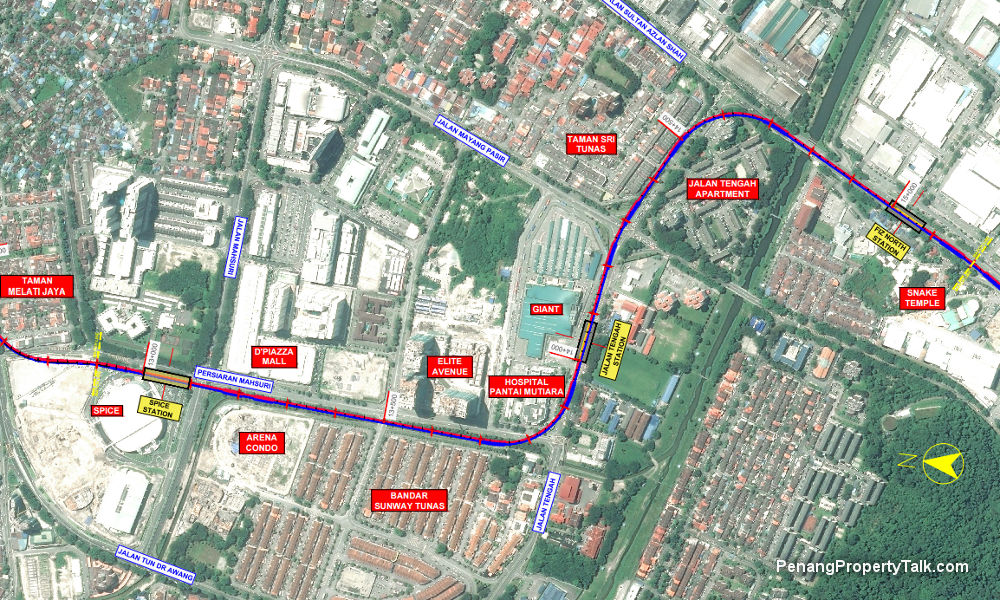
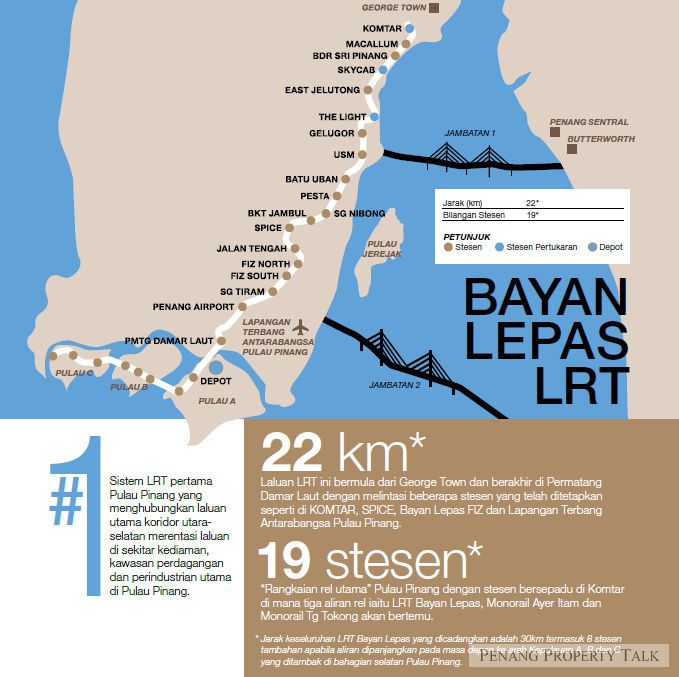
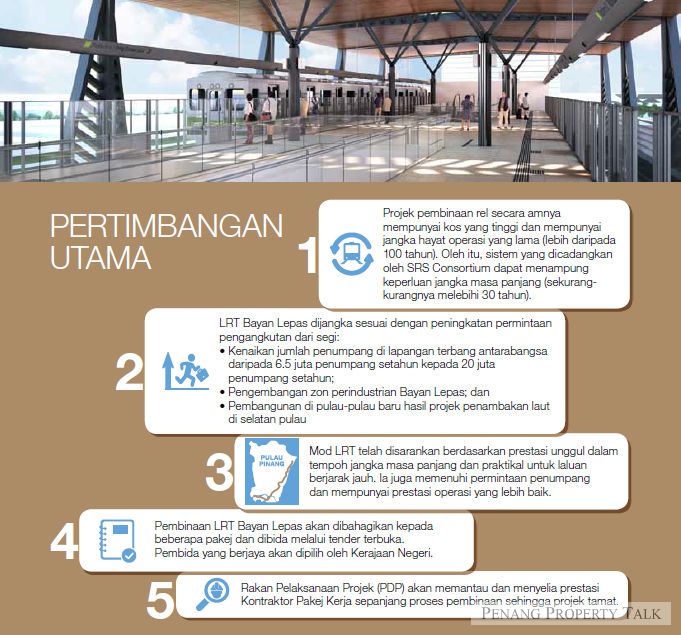
To the relief of Penangites, the state government recently unveiled the RM27bil Penang Transport Master Plan (PTMP) which is aimed at tackling the traffic congestion by 2030 and ensuring Penang’s prosperity beyond 2050.

Postgraduate student of Universiti Sains Malaysia, Nur Fatinah Abu Hassan, 24, resides on campus and relies heavily on public transport to get around the island during class-free days.

When asked about the state’s current public transport situation, she said it lagged behind other developing cities such as Kuala Lumpur, Petaling Jaya and Shah Alam, which has the Klang Valley Mass Rapid Transit Line 1 and 2, and the Klang Valley LRT Line 3, LRT Kelana Jaya Line, LRT Ampang Line, KL Monorail and KTM Komuter.

“I find the service of the local bus service operator Rapid Penang nowhere near satisfactory.

“The waiting time to go from Sungai Dua to the Sungai Nibong Terminal (approximately 2.3km) is around 30 minutes to one hour and the buses don’t really run according to schedule although it is one of the most used bus routes in Penang,” she said.

“The buses in Kuala Lumpur are much more frequent and on time.”

However, she welcomed the idea of the PTMP as a way to improve Penang’s transport system.

“It is good news for commuters like me when our government is taking measures to address the traffic issues while working towards making public transport more efficient as an alternative travel mode, especially with the proposed Light Rail Transit (LRT) and monorail,” she said.

Sustainable solution

To many Penangites, it is high time the state has a new form of land public transport besides buses and taxis.

Besides curbing traffic congestion, the rail-based public transport proposed by the government will be more reliable than other forms of public transport and reducereliance on private vehicles.

Mohd Yunus Yoon, 62, is concerned about the current state of congestion.

“It wasn’t like this 20 to 30 years ago. Traffic congestion started to worsen year by year about five years ago. How long more do we and the next generation have to endure before this gets worse?”

Mohd Yunus is looking forward to rail-based public transport on the island that is more environmental-friendly and provides good accessibility.

“I feel that this cost-efficient transport option will be a step in the right direction in changing the public transport scene in Penang.

“It will also reduce pollution caused by the many private vehicles on the road.

“It would be great if it covers major areas on the island such as George Town all the way to Bayan Baru. It is something people can look into,” he concluded.

Rashid Ismail, 42, who works in one of Penang’s well-known hotels, gave his thumbs up to the PTMP.

“It is timely for the government to introduce transport infrastructure that can cater for generations to come. They should go all out for it as it will benefit us all. It is a win-win situation for the residents and travellers as well.

“This will open up new opportunities for Meetings, Incentives, Conference and Events (MICE) tourism and leisure market for Penang.” he said.

Narayanasamy and Sher Ibrahim are also positive that the introduction of LRT will translate into shorter travelling time and also be cost-effective as they would not need to rely so much on their own private vehicles.

Addressing the traffic congestion could also mean a vast improvement in the quality of life.

“With an efficient public transport, I will be able to get to my destination quickly and without worrying about traffic congestion,” concluded Nur Fatinah.

Ending congestion in Penang is no longer an option and it is time for Penangites to live in a city where travelling between destinations become more convenient, accessible and stress-free.

Source: TheStar.com.my

Tags:

AFFORDABLE: Bukit Mertajam / Villa Acres Development S.B.

Bukit Mertajam/ 29 October 2015 5 comments

affordable-villa-acres-jalan-betek

A newly proposed affordable housing project by Villa Acres Development Sdn. Bhd. at Bukit Mertajam, Penang. If approved, this will be one of the very strategic affordable housing location in the mainland that I have known so far. It is strategically located along Jalan Betek, easily accessible via the ever bustling Jalan Song Ban Kheng. Amenities such as schools, market, banks, shopping malls and eateries are only a few minutes drive away.

This development comprises a 19-storey highrise building with 281 affordable units. Being an affordable housing project in the mainland, it is expected to be priced below RM250,000.

This is still pending for approval. Details to be available upon project launch.


Property Project : (pending for approval)
Location : Bukit Mertajam
Property Type : Affordable Housing
Total Units: 281
Indicative Price: Up to RM250,000
Developer : Villa Acres Development Sdn. Bhd.

Location Map:

E&O awards reclamation works to China firm

Property News/ 29 October 2015 1 comment

doc6mvml50s11y1f10ia3gcEastern & Oriental Bhd (E&O) has awarded a contract to China Communications Construction Co Ltd (CCCC) to undertake land reclamation works for Seri Tanjung Pinang Phase 2 (STP2) in Penang.

In a filing with Bursa Malaysia, E&O said its subsidiary Tanjung Pinang Development Sdn Bhd had issued a letter of award (LoA) to CCCC (M), a wholly owned Malaysian subsidiary of CCCC, to undertake the land reclamation works.

E&O group managing director Datuk Seri Terry Tham Ka Hon said the group had gone through an extremely rigorous tender process that included the pre-qualification of potential contractors prior to the tender submission.

“We believe that in terms of technical competency, track record, local project experience as well as contract competitiveness, the shortlist of reputable international firms has led us to finalise the award to CCCC (M),” Tham said in the statement.

He added that efforts to secure the financiers for the project were being pursued concurrently and would be finalised soon.

“With the reclamation contractor identified and financing arrangements soon-to-be firmed up, we look forward towards operationalising STP2 and bringing the project to fruition with mobilisation and commencement of works targeted by year-end,” Tham said.

He added that all relevant requirements and authorities’ approvals were already in hand, including the approval of the project’s Detailed environmental impact assessment study by the Federal Department of Environment, the endorsement of the STP2 masterplan and granting of the planning permission for STP2 reclamation works by the Penang state authorities.

CCCC is listed on the Shanghai Stock Exchange and the main board of the Hong Kong Stock Exchange. The group is the largest infrastructure construction and dredging company in China and the world’s largest dredging company in terms of both total capacity of trailing suction hopper dredgers and total cutter section dredgers, the key machinery in the reclamation dredging process.

The LoA comprises two parts. The first part involves the acceptance of the tender to reclaim Phase 2A of STP2 (Package 1) for a contract price of approximately RM1.035bil. Phase 2A of STP2 measures 384 acres comprising 253 acres to be reclaimed off Penang’s north-east coast and 131 acres on the Gurney Drive foreshore.

The second part of the LoA covers the conditional award for the proposed reclamation works for Phase 2B and Phase 2C of STP2 (Package 2) to CCCC(M) for a contract sum of RM1.285bil, subject to adjustments for exchange rate and fuel price fluctuations, and changes in cost if applicable.

Phases 2B and 2C measure 507 acres in total.

Source: TheStar.com.my

Tags:

Penang unveiling innovative housing packages in stages

Property News/ 28 October 2015 No comments
metn_2a_2810_pkk2_1

(From right) Jagdeep Singh and Ong going through the details of the Penang Property Summit 2016 to be held from Jan 8 to Jan 10.

A string of innovative housing packages to counter the high rate of bank loan rejections will be introduced in Penang soon.

State Housing, Town and Country Planning Committee chairman Jagdeep Singh said details of the packages, which would be introduced in stages, would help to cushion the loan rejections of most housebuyers.

He, however, declined to reveal the package details during a press conference on the upcoming Penang Property Summit 2016 at Jen Hotel in Penang on Monday.

“This is part of the state government’s initiative to help housebuyers acquire property under the affordable housing scheme.

“The recently introduced RM150,000 affordable housing scheme to allow housebuyers to secure bank loans by purchasing property of lower value is part of the package.

“We introduced this scheme as we found that loan rejection for these categories was much lower compared to the RM300,000 or RM400,000 affordable housing,” he added.

Jagdeep said he would be meeting with Bank Negara officials next week to discuss the high rejection rate issue.

Earlier, Penang Property Summit 2016 event director Ong Ban Seang said the three-day summit from Jan 8, to be held at the SPICE Arena in Relau, would feature some 200 participants.

The Penang International Property Expo (PIP) will also be held during the summit with 30 exhibitors promoting their projects.

He said the event, which is into its second year, would feature a ‘premier lecture series’ by state executive councillor Chow Kon Yeow, Penang Island City Council mayor Datuk Patahiyah Ismail and Seberang Prai Municipal Council president Datuk Maimunah Mohd Sharif.

“The lecture series will also have Penang Institute chief executive Dr Lim Kim Hwa and Penang Invest director Datuk Lee Kah Choon providing insights into Penang’s strategic plan to be a ‘high income’ state.

“The lectures will be attended by 100 guests comprising corporate leaders, senior government officials and trade associations’ executive committee members,” he said.

The property summit is organised by International Real Estate Federation (Fiabci) Penang Chapter in collaboration with the state housing committee and PenEvents.

Source: TheStar.com.my