fbpx

APDL for Affordable Housing Projects in Penang

Property News/ 20 November 2015 No comments

APDL (Advertising Permit & Developer’s License) approval has been a hot topic in Penang’s housing industry over the last couple of months.  The delay in approval not only is a challenge for developers, it is also a depressing experience for the first time home buyers.

So, to shed some light on the issue, here is a list of APDL approval obtained for the respective affordable housing projects in Penang.

affordable-housing-apdl

The list above was prepared based on information available in JPN (Jabatan Perumahan Negara), and is for reference only. Please refer to the developers for the latest update on their project.

* CLICK HERE for a full list of affordable housing projects in Penang *


Tags: ,

Mah Sing set to launch projects worth RM1.2bil in 2016

Property News/ 20 November 2015 3 comments

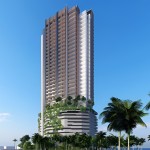
icon-residence-penangProperty developer Mah Sing Group Bhd is set to launch over RM1.2bil worth of projects in Penang next year.

Mah Sing (North) senior general manager Daniel Law Wei Keong said the upcoming launches include the RM735mil Ferringhi Residence 2, the RM350mil Icon Residence at Lebuh Pykett, and an unnamed RM150mil project in Southbay City, Batu Maung.

He said the group also expected the Penang properties to contribute between 10% to 12% to the group’s total sales for the 2015 fiscal year ending Dec 31.

“We still have about RM2.8bil worth in remaining gross development value and RM300mil in unbilled sales on the 33ha land bank in Penang,” he told reporters after the exclusive preview of the Ferringhi Residence 2 on Thursday.

He said the group had launched RM2bil worth of housing projects nationwide in 2015 with 84% of the units costing below RM1mil and the remaining 16% priced from RM1mil onwards.

The Ferringhi Residence 2 project, comprising three blocks of 632  resort-style units, would be launched in the first quarter of 2016, he said.

“With built-ups from 1,208 sq ft to 2,910 sq ft and priced from RM775,265, we strive to live up to our brand’s promise, which is to build a premier lifestyle,” he said.

He said the group would also introduce a RM150mil shopping mall in Southbay City, which is expected to begin operations in mid-2016.

“It will have 84 retail lots, which are all sold out, priced between RM1 million to RM2mil depending on the size,” he said.

Law said units in the unnamed project, with a built-up area of 750 to 1,000 sq ft, would cost below RM680 per sq ft.

Source: Bernama

Tags:

More than 607ha of sea land off Permatang Damar Laut, Penang, identified for reclamation

Property News/ 19 November 2015 1 comment
southern-penang

Southern part of Penang Island

More than 1,500 acres (607ha) of sea land off Permatang Damar Laut near Bayan Lepas have been identified for the proposed reclamation that forms part of the land-swap deal with SRS Consortium, the project delivery partner (PDP), for the RM27 billion Penang Transport Master Plan (TMP).

This confirmed rumours circulating lately that the site would be the proposed reclamation site for the land swap instead of the Middle Banks.

Penang State Local Government, Traffic Management and Flood Mitigation committee chairman Chow Kon Yeow told The Edge Financial Daily that the Gamuda Bhd-led consortium is currently carrying out a study in the area to ascertain the sustainability of the site for its project costings.

He said the development of the site, which is expected to have a five-time economic multiplier effect amounting to RM100 billion, would not only fund the TMP in phases, but also form a catalyst for growth for the state up to 2050.

“The reclaimed land is expected to house the new Penang International Airport and provide additional space for industries, hence the growth catalyst for Penang,” he said, adding that the sustainability of the TMP would depend on SRS Consortium fulfilling the conditions that include approval from state and federal agencies.

Chow’s confirmation of the site has finally ended rumours for the proposed land reclamation site to fund the TMP on a land-swap basis over the next 15 years.

Earlier, Pulau Betong assemblyman Farid Saad raised the consortium’s apparent link to the southern reclamation following Consumers Association of Penang’s (CAP) queries on onsite studies taking place in Permatang Damar Laut.

Speaking to reporters after his debate on the Penang Budget 2016 motion at the state assembly yesterday, Farid said “obviously” the site had been identified for reclamation previously.

Until now, neither the consortium, which is the PDP for the TMP, nor the state has revealed the actual site that would be reclaimed to fund the TMP featuring highways, public transportation and institutional plans.

The SRS Consortium, made up of Gamuda, Penang-based Ideal Property Development Sdn Bhd and Loh Phoy Yen Holdings Sdn Bhd, is expected to begin the integrated infrastructure projects following approval from the authorities.

It will be submitting its application for the light rail transit project to the Land Public Transport Commission by the end of the year.

SRS Consortium, a joint venture in which Gamuda holds 60%, with Ideal Property Development and Loh Phoy Yen holding 20% each, received its appointment letter on Aug 14.

Previously, a state official mentioned that 1,500 acres of the Middle Bank section between the island and mainland would be offered for reclamation, which led to a public outcry as it would impact the sensitive seagrass bed near Jelutong.

“The state government is aware of the reclamation site because the TMP was finalised in 2013, but they are not saying anything. An ongoing study in Permatang Damar Laut, which has raised fear among fishermen, was highlighted by the CAP.

“It is quite obvious that SRS Consortium is going to carry out the reclamation work there but the state feigns ignorance,” Farid said, adding that he was uncertain on the size of the land.

Last Wednesday, the CAP urged the state to announce the purpose of works being carried out by a company in that area, comprising survey and measuring works, marking the area and digging the seabed.

The CAP claimed that when asked about the study, the state agencies were unaware of the project or did not provide answers to questions.

“The state will finalise the agreement with SRS Consortium within six months of the appointment date. The method of payment would be through the award of rights to reclaim for development. Revenue from the land would be used to repay the consortium,” Chow said.

Gamuda closed nine sen or 2% lower at RM4.40 yesterday, with a market capitalisation of RM10.8 billion.

Source: TheEdgeProperty.com.my

Tags:

Will slowdown make houses more affordable?

Property News/ 18 November 2015 No comments

value of transactions 22The extraordinary boom in the property market in Malaysia is ending but high house prices and the middle-class obsession with home ownership are likely to persist for a long time to come.

Data from the National Property Information Centre’s (Napic) First Half Property Market Report shows that during the first six months of the year, the total value of property transactions declined 6% year on year to RM77.08 billion. In terms of volume, property transactions fell 3.5% to 186,618. The residential segment saw a 2.6% drop in transaction volume but its value took a 9.7% dive to RM36.4 billion.

The report will make sobering reading for many younger households who, for years, have seen property prices only move northwards. Between 2009 and 2014, the Malaysian House Price Index registered a compound annual growth rate (CAGR) of 10.1%. It marked a period of sharp acceleration compared with 5.6% for the period between 2000 and 2014.

This rapid growth in an otherwise sedate domestic property sector came on the back of ample liquidity that flooded the market following the global financial crisis in 2008. Predictably, grumbles that houses were too expensive for the hardworking middle class emerged. The government attempted to halt this price growth by stopping free-flowing mortgages and stepping efforts to combat speculative activities as early as 2011. Price growth slowed but it was not till 2015 that growth in residential property deals stalled.

This year, property developers are struggling with sales. Few are selling or building properties at rates seen during the housing boom and Napic reported that property stock, which stood at 4.87 million units in 1Q2015, grew to 4.89 million units in 2Q2015. At the same time, new launches fell 12.8% in 1H2015 year on year while unsold units under construction rose a whopping 32.7%.

These unsold residential units have started to subtly drive prices down. Napic’s numbers indicate that as at 2Q2015, the Malaysian House Price Index was at 220.2 points, up 5.9% y-o-y. The rate of increase of the index has been slowing since 3Q2015.

“House prices have definitely come down. If you don’t see them, it is because property developers have started to offer rebates, discounts or other incentives like free legal fees or stamp duties, which will lower the amount you pay for the property in the end,” says Chang Kim Loong, secretary-general of the National House Buyers Association.

If the additional supply is helping to moderate property prices, then some will find Napic’s data on incoming supply comforting. It reported that Malaysia had incoming supply of 795,372 residential properties in 1Q2015, which increased to 831,186 in 2Q2015.

While private developers are more cautious about adding on to that, the government is not. Based on the 11th Malaysia Plan, the government, through various housing programmes, targets to deliver 653,000 new housing units from 2016 to 2020. The sum excludes many state housing schemes.

For the middle class in particular, the 1Malaysia People’s Housing (PR1MA) programme should be adding an extra half a million affordable homes by 2018. The bulk of the promised 500,000 units should enter the market in 2017 and 2018. Lest we forget, there is also the government’s directive to government-linked companies to build 800 units in Bandar Kwasa Damansara and for Sime Darby Property to build 4,600 units of affordable homes.

Also reassuring for aspiring homeowners is that those in the business of building homes are not expecting property prices to see a surge. They tell The Edge that growth in house prices is likely to stagnate in the near term, as buyers looking for new properties and prepared for the added debt burden are denied owing to lending restrictions.

Bina Puri Holdings Bhd executive director Matthew Tee says, “I expect property prices to remain at current levels, with growth capped by the current regulatory environment. I don’t see prices coming down too much because the cost of development is very high. Land and other costs are still going up.”

Ken Holdings Bhd’s Sam Tan says, “The property development business is not as easy as it used to be. You have to offer more amenities, and provide connectivity and infrastructure to attract buyers. Developers’ profit margins are thinning due to rising costs and slowing market.

“It depends on what you build and how you price your product. The bread-and-butter properties — those priced between RM300,000 and RM500,000 — will still sell. But, generally speaking, you will not see a surge in prices anytime soon.”

value of transactions 22


So, are moderating residential property prices arising from an increase in supply the answer to the housing affordability woes of the middle class?

MIDF Research economist Izzuddin Yusuf doesn’t believe that is the case. Property prices have swelled too much over the last few years for a small tapering off to count. Affordability is still an issue for most middle-income earners looking to live under their own roof.

“I think the idea of affordable housing has changed recently for the public, to a point that it is considered affordable so long as you are eligible for a bank loan.

“Property prices are currently at a level that is still unaffordable for ‘real demand’, meaning those who buy in order to live in the property, even as speculative buying has slowed significantly. From here, property prices will probably grow at a very slow pace and it will be a while before they become affordable for most first-time buyers,” he says.

Indeed, Khazanah Research Institute’s (KRI) study, “Making Housing Affordable”, found that the the median price for the Malaysian housing market exceeded the three times median annual household — the threshold for affordability. The general median price stood at4.4 times in 2014 — a seriously unaffordable level. In cities like Kuala Lumpur and Penang, residential properties were “severely unaffordable”. Launches were priced way above the affordable threshold of RM274,320 for the capital city and RM168,272 for Penang.

Implicit in KRI’s statistics is that house prices — soaring or moderating — is not the only variable that determines if a middle-class household can afford to buy a property. It also has to do with income level and growth in disposable income.

“Housing affordability is not simply about having cheaper houses … For a house to be affordable, it means that the purchaser has the budget to pay for the home,” says Teh Lip Kim, managing director of Selangor Dredging Bhd.

Ken Holdings’ Tan says, “We try to build affordable homes and what is being sought after, but people still have to be able to buy them. People are now in a situation where banks are tightening lending requirements. [They also] have one or more banking loans to service and face a higher cost of living.”

“To buy a property, you need the additional disposable income. While wages in Malaysia are growing and the employment rate is good, they are not growing as fast as property prices. The higher your income, the more affordable a house will be to you.”

Further, socially popular regulations that stifle property price growth may help quiet public complaints about housing affordability, but won’t do more than that for the Malaysian economy. Not only does the construction sector contribute directly to the country’s gross domestic product (GDP) but it also has a strong multiplier effect. As it also affects sectors like finance, building materials, logistics, infrastructure development and job creation, it is unlikely that a prolonged sluggishness in property prices is what the government wants.

Rajiv Biswas, chief economist at IHS, says, “The construction sector in Malaysia accounted for 4.3% of GDP in 2014, based on government data. Therefore, the size of the sector is significant and any significant slowdown would act as a drag on GDP growth.

“Therefore, if the private sector residential construction sector experiences a downturn, the overall impact on total construction activity could be reduced by stronger public sector spending on affordable housing and public infrastructure projects.” But even as growth in home prices is losing steam, the dream of home ownership may still remain elusive to the middle class.

Source: TheEdgeProperty.com.my

Tags:

Banks: Eligible first time home buyers will get financing

Property News/ 17 November 2015 1 comment

PBBDM1-300x199The Association of Banks in Malaysia (ABM) says first time home buyers who are eligible will continue to be able to obtain financing.

It explained that it was crucial for these buyers to also recognise the need to make sound decisions of their own affordability based on their financial circumstances.

“The business of our member banks is in the main lending or extending credit. There is no intention whatsoever to make lending more difficult, particularly for first time home buyers,” ABM said in a statement on Monday.

ABM had issued the statement to clarify a recent report on banks being “overly cautious” on mortgage loans for first-time home buyers.

The association also pointed out that for first time home buyers, the bank would usually finance up to 90% of the price of the property.

“They may also want to consider applying for government schemes such as ‘Skim Rumah Pertamaku’ for assistance in their property purchase,” it said.

ABM added commercial banks had offered special housing loan packages to suit the needs of first time home buyers.

It encouraged them to shop around to find a suitable financing package.

“Additionally, applications for such mortgage loans are decided on a case to case basis and there is no blanket approval system,” it said.

ABM also encouraged consumers to fully and accurately disclose all material information with regard to their financial position when applying for a home loan.

“In conducting affordability assessments, commercial banks take into account the applicant’s income after statutory deductions, expenditure on necessities and all existing debt obligations from banks and non-bank lenders.

“For self-employed applicants, banks will also take into account their proof of savings and regular income sources.

“First time home buyers should work with their financiers when making the suitability and affordability assessments for any facility applied for to pave the way for more robust financial management on the part of the buyers. Commercial banks are committed to playing their role in this process,” it said.

ABM said the association and its council banks would be pleased to engage with all State Governments with regard to matters related to home ownership in the state.

It added members of the public with enquiries or complaints related to housing loan matters could contact the ABMConnect hotline by dialing 1-300-88-9980, or e-mail to eABMConnect by logging on to its website, www.abm.org.my.

Source: TheStar.com.my

Tags: