fbpx

AFFORDABLE: Balik Pulau / Ion Development Sdn. Bhd.

Balik Pulau/ 17 June 2016 8 comments

affordable-by-ion-development

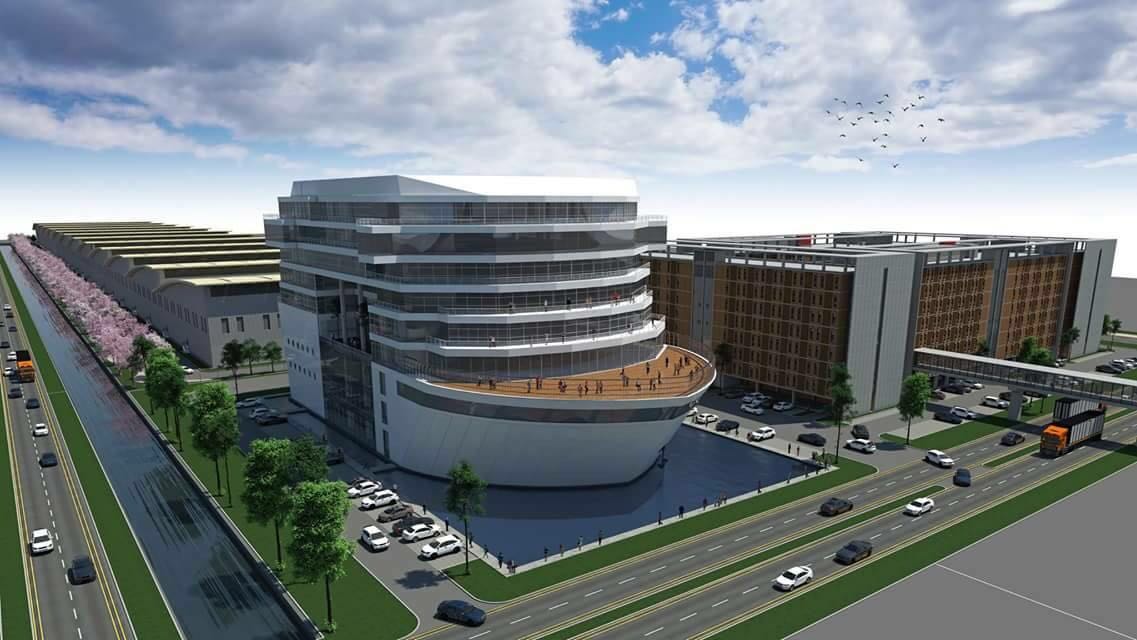
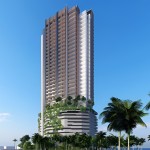
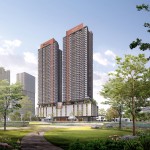
More options for those who are interested in affordable housing at Balik Pulau. Here is the proposal by Ion Development Sdn. Bhd., comprising a 10-storey low-rise condominium with 6 units of shoplots located at ground floor.

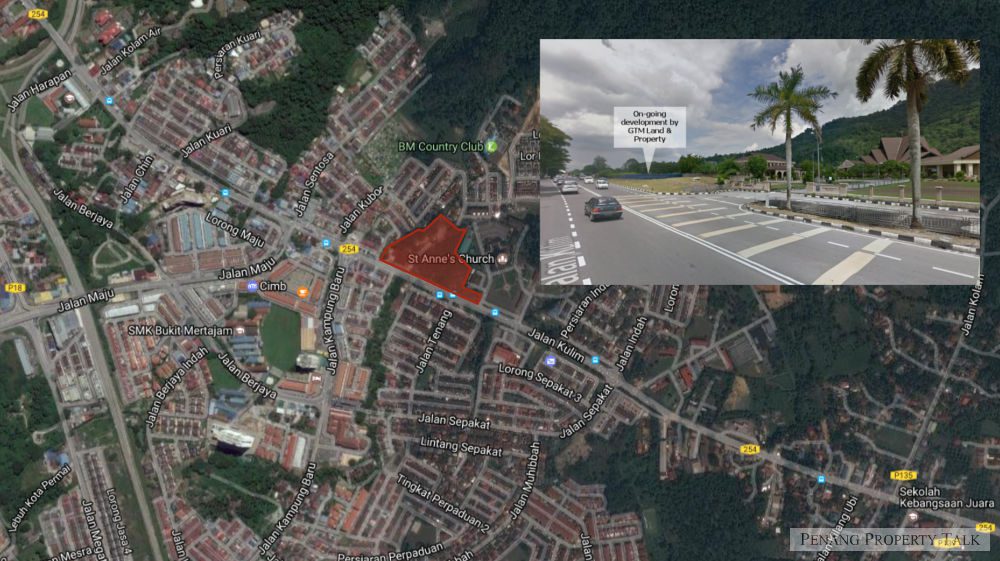
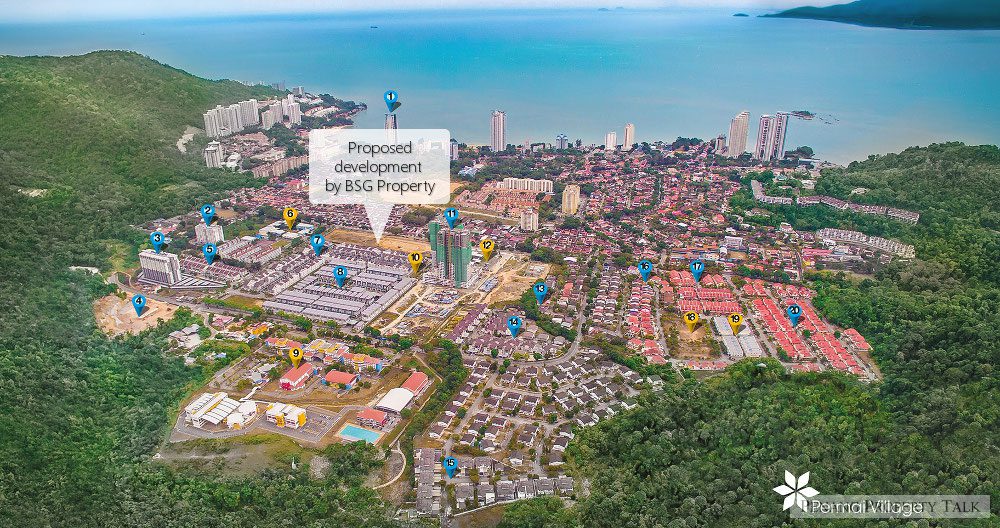
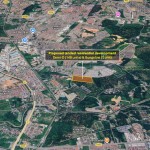
This development is located immediately opposite South West District Police Headquarters, it between Heliconia Garden and The Loft 23. The residential component will offer 226 affordable units.

This project is still pending for approval. More details to be available upon project launch.

READ MORE ABOUT AFFORDABLE HOUSING:

Property Project: (Pending)
Location :
 Balik Pulau, Penang
Property Type : Affordable housing
Total Units: 226
Land Tenure : Freehold
Indicative Price : RM400,000 and below
Developer : Ion Development Sdn. Bhd.

Register your interest here

(This information will be used to keep you updated on the project and future development.)
*By submitting this Form, you hereby agree to our PDPA Consent Clause.

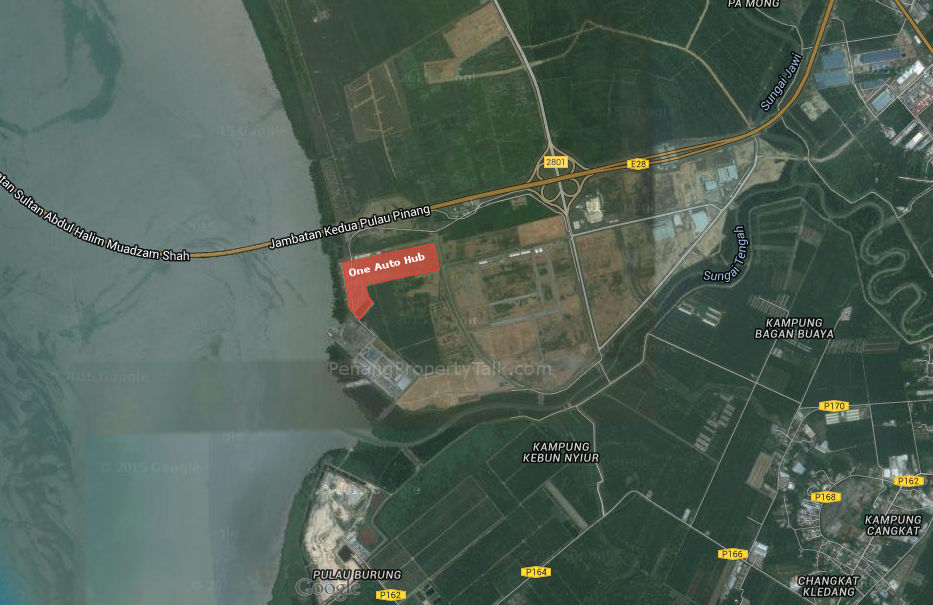
Location Map:


Firm claims mistakenly said Penang tunnel study on hold

Property News/ 15 June 2016 31 comments

tunnel-still-onThe feasibility study for the controversial RM6.3 billion undersea tunnel is proceeding and expected to be done in six months’ time, said Datuk Zarul Ahmad Mohd Zulkifli when correcting his statement to the contrary.

The Consortium Zenith BUCG chairman today claimed he mistakenly told the media in Kuala Lumpur yesterday that the study was put on hold.

“It’s the puasa month, so I might have mistakenly said that but we are continuing with the study as we are already 83 per cent done,” he said today in a press conference together with Penang Chief Minister Lim Guan Eng.

Lim earlier also clarified that the undersea tunnel and three paired roads project have not been cancelled or postponed.

“There are still 17 per cent left to completion of the study so the contractor will continue with it,” he said.

Yesterday, in a press conference announcing legal proceedings against Parti Cinta Malaysia’s Datuk Huan Cheng Guan over allegedly defamatory statements about Consortium Zenith, Zarul reportedly said the state government had asked them to stop the feasibility study for the undersea tunnel.

Lim today insisted the study was never halted, adding that there were also additional surveys needed.

“After the feasibility study, we still need to get the DEIA and if the DEIA is not approved, the project will not go on too and all costs will be born by the contractor,” Lim said.

One of the conditions for the award of the project to Consortium Zenith was that it must obtain the necessary approvals for the undersea tunnel and three paired roads, failing which it must bear the full costs of the feasibility studies.

He stressed that the undersea tunnel is a future plan to provide an extra link for when the first and second bridges become saturated.

“It will not be built now, construction for the tunnel might only start in 2022 and expected to complete by 2027,” Lim said.

As for the three paired roads, construction works are only expected to start next year and completed by 2022.

Zarul said their priority now is to start work on the three paired roads pending the completion of the feasibility study and obtaining approval for its detailed environmental impact assessment (DEIA) for the undersea tunnel.

Under the massive project, the 7.2km undersea tunnel will link Gurney Drive to Bagan Ajam in north Seberang Perai.

The three paired roads are from Tanjung Bungah to Teluk Bahang, Tun Dr Lim Chong Eu Expressway to Air Itam and Gurney Drive to the same expressway.

Source: TheMalayMailOnline.com

RELATED NEWS: Penang undersea tunnel project on hold

Tags:

Penang undersea tunnel project on hold

Property News/ 14 June 2016 12 comments

tunnel-on-holdThe Penang government has put a stop to the feasibility study on the proposed 7.2km undersea tunnel linking Penang to Butterworth.

Consortium Zenith BUCG Sdn Bhd’s (CZBUCG) chairman Datuk Zarul Ahmad Mohd Zulkifli said the company had stopped its feasibility study for the undersea tunnel following a request by the state government a month ago.

“They did not provide any explanation on stopping the feasibility study for the undersea tunnel, but want us to focus on the highway projects for now,” Zarul told a press conference yesterday.

He said the consortium had spent some RM100mil on the feasibility study, which could be claimed from the Penang government.

Asked if the project was shelved in preference to the construction of a third bridge for the island, Zarul was non-committal.

“We will cross the bridge when we get to it,” he said.

Although there was no compensation clause in the contract with the state if the undersea tunnel project was cancelled, he said the company could still make claims for work done.

The undersea tunnel and three paired road project was awarded to the company in 2013 and is estimated to cost some RM3.2bil, with financing coming from a land swap deal involving 45.5ha to be reclaimed.

On the three paired road project, Zarul said CZBUCG planned to start work this September after getting the nod from the state.

He claimed that the feasibility and detailed design fees for the three paired roads was RM220mil, of which the state had paid about RM135mil through a 1.485ha land swap deal.

On the financing for the three road projects, Zarul said CZBUCG had approached institutions for it.

“The funding for the project would be a mix of investors and bank borrowings. We have our own formula such as in the form of a property fund, where they will pay us first and then get the land later,” he said.

Zarul said the consortium will hold a roadshow and town-hall meetings in Penang in early August to explain the project to Penangites.

Source: TheStar.com.my

RELATED NEWS: Firm claims mistakenly said Penang tunnel study on hold

Tags:

Penang eyeing July approval for LRT project to begin 2017

Property News/ 14 June 2016 28 comments

komtar-lrtPenang hopes to secure a conditional approval for its first railway scheme connecting Bayan Lepas to Komtar by next month, state executive councillor Chow Kon Yeow said.

The local government committee chairman said SRS Consortium, the project delivery partner (PDP) for the Penang Transport Master Plan (PTMP), met with Land Public Transport Commission (SPAD) last week.

“The meeting went well and seemed favourable,” he told reporters after a PTMP briefing with Japanese delegates at Komtar this morning.

Chow added that a July approval for the proposed Bayan Lepas Light Rail Transit (LRT) would allow the state to proceed with a three-month public inspection beginning August, to allow public feedback.

The Bayan Lepas LRT project, along with the pan island highway link and the reclamation of two islands off southern Penang, are part of the first phase of the PTMP implementation.

Chow also said that once SPAD grants the approval, a Special Purpose Vehicle (SPV) will be set up to administer the implementation of these projects.

The SPV will be a government entity that that will also be tasked with facilitating city planning, development, promotion and management of the Penang South Reclamation (PSR)  project, he said.

Chow added that the state hopes to commence construction on the Bayan Lepas line – the first phase of the LRT project – by next year. Operations for the first phase should begin by 2023 while the full line should be operational by 2030, he said.

Earlier, during a question and answer session, SRS Consortium business development senior manager Andrew Chan said it will take up to three years before they could have land to sell under the PSR to fund the PTMP.

He said they can proceed with construction of the LRT and highway project first but would still need to time it with the sale of lands from the reclamation.

“We will depend on bridging financing first to fund the reclamation and construction of the LRT and after the third year, we will have lands to sell to fund the project,” he said.

When asked about sustainability of the future transport assets, Chow said the transport system will not rely strictly on farebox revenue and advertisements.

“We are looking at property development to generate another revenue source to sustain the transport assets, like in Japan and Hong Kong. I think Hong Kong’s MTR is known more as a property developer than as the LRT operator,” he said.

Source: TheMalayMailOnline.com

Strata management bodies – how do they work?

Property News/ 13 June 2016 8 comments

gng-faqAs a city grows, the development of high-rises becomes inevitable. So one can only expect more strata developments to be built in Malaysia in the future and strata living will become increasingly common. It is therefore imperative to understand the existence and function of the management bodies that ensure a comfortable and secure strata living environment.

Beyond the initial management period by the developer upon vacant possession, there are three bodies that a strata owner needs to know: the Joint Management Body (JMB), the Management Corp (MC) and the Subsidiary Management Corp (Sub-MC).

The members of the MC and Sub-MC are made up of solely strata owners while the JMB involves the joint participation of the developer and owners.

Both the JMB and MC have the same function — that is to manage the common properties of a strata development. The JMB is formed within one (1) year from when vacant possession is delivered to the strata owners pending the issuance of strata titles, while the MC is formed upon the issuance of strata titles. In other words, if a strata title is delivered together with the keys to the strata unit, the formation of the JMB is not applicable. If the JMB has been formed and strata titles are then issued thereafter, the JMB will cease to operate when the first AGM of the MC is convened.

The first AGM

According to the Strata Management Act 2013 (SMA 2013), the first AGM of the JMB must be convened no later than 12 months from the delivery of vacant possession. In cases where vacant possession was delivered before the SMA 2013 came into force, the first AGM must be convened within 12 months from the date the SMA 2013 was enforced. Take note that the date of commencement of the SMA 2013 in all states is on May 31, 2016 except for Penang which is on July 11, 2016. Sabah and Sarawak have no strata regime to date, unlike Peninsular Malaysia and Labuan.

On the other hand, the first AGM of the MC will be convened within one month when at least one-quarter of the aggregate share units are transferred from the original landowner to the unit owners.

The strata owners shall become proprietors once their interest in the parcels have been duly registered in their respective strata titles. Strata owners must be aware that they are eligible to vote and to become a member of the MC committee only when they have settled all dues and payable sums to the management body at least seven days before the first AGM.

The function of the management bodies is unquestionably to manage the development especially its maintenance, and to preserve the condition of its common property. Management bodies collect “Service Charges” and “Contributions to Sinking Fund”. They can also make additional by-laws. These are not exactly laws but more like house rules that apply to every parcel owner. They can also list defaulters on the general notice board.

The Sub-MC

Given the rise of mixed-use developments and their unique structure, where they share common infrastructure, the SMA 2013 introduced the Sub-MC to ease the management dilemmas that affect such developments. One common dilemma is whether the funds collected from the residential parcel should be used on the maintenance of the common property at the commercial parcel or vice versa.

The Sub-MC can also be formed for a wholly residential project when there is a need to have a separate management. An example would be penthouse unit owners who are entitled to an exclusive garden and infinity pool at the roof top, which are not accessible by other normal strata owners in the same development. Hence, a Sub-MC can be formed to maintain these exclusive facilities. The SMA 2013 allows a Sub-MC to manage the designated Limited Common Property in the development. A Limited Common Property refers to the common property designated for the exclusive benefit of certain strata owners but not all. The Sub-MC shall manage and maintain the Limited Common Property by separately collecting the “Contribution to Sinking Fund” and “Charges” from the entitled owners.

It is within the power of the MC to form a Sub-MC. However, it is not an easy task as it requires 2/3 of the aggregate share units of parcels of all the strata owners to agree with the proposition. Besides, there is also an issue of cost in engaging professionals in the submission as well as the legal compliances.

As you can see, the management bodies decide a series of matters, from managing funds to the recovery of damaged property. It works for the benefit, comfort and enjoyment of each strata owner. Hence, it is always wise to involve yourself in meetings called by the management bodies to have your say on matters that reflect your well-being in the development. Nonetheless, your presence will also act as a form of check and balance on the management body. Just like a public listed company, your unit would fetch better value if its management is well-run.

Chris Tan is a lawyer, author, speaker and keen observer of real estate locally and abroad. Mainly, he is the founder and now Managing Partner of Chur Associates.

Source: TheEdgeProperty.com.my

Tags: