fbpx

UPCOMING: Tanjung Bungah / Biopolis Global Sdn. Bhd.

Tanjung Bungah/ 6 November 2016 5 comments

upcoming-biopolis-global

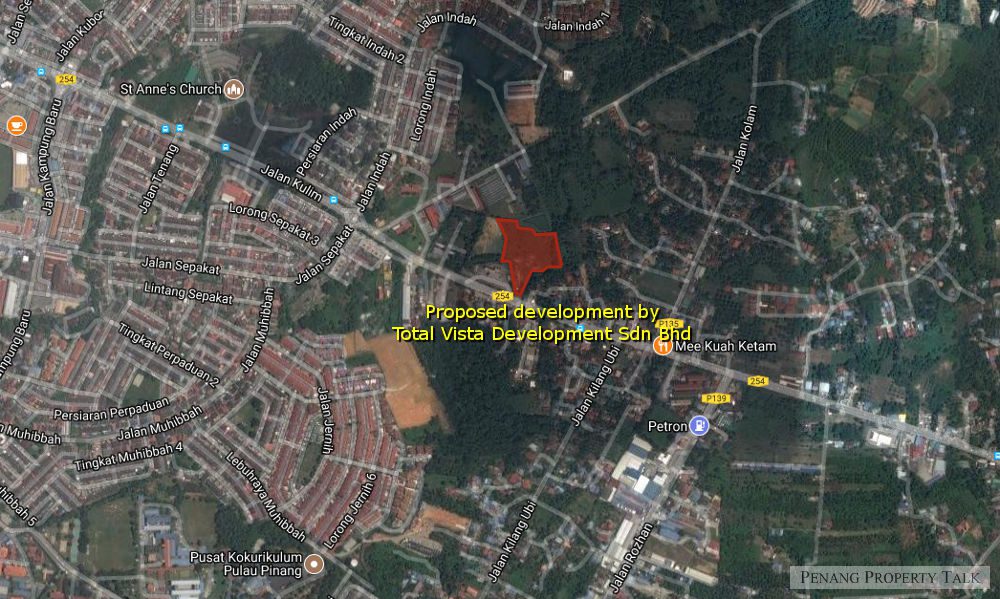
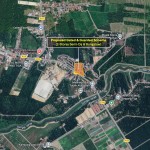
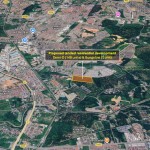
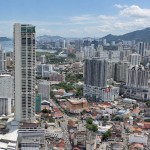
Another newly proposed project by Biopolis Global Sdn. Bhd. at Tanjung Bungah. Strategically lcoated along Jalan Chan Siew Teong, easily accessible via Solok Tanjung Bungah. It is adjacent to Chee Seng Garden, just a stone’s throw away from Leader Garden condominium.

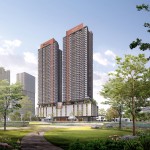
The proposed development will see the construction of a 8-storey low-rise building, offering 27 units of residential units.

More details to be available upon official launch.

Project Name : (to be confirmed)
Location : Tanjung Bungah, Penang
Property Type : Condominium
Total Units: 27
Built-up Area: (to be confirmed)
Indicative Price: (to be confirmed)
Developer : Biopolis Global Sdn. Bhd.
Last Updated: Dec 2019

Register your interest here

(This information will be used to keep you updated on the project and future development.)
*By submitting this Form, you hereby agree to our PDPA Consent Clause.

Location Map:

Amaris – The Premium Residential Address

Tanjung Tokong/ 4 November 2016 4 comments /中文版

Want to be part of Penang’s most desirable community? Amaris, superluxe terrace houses by-the-sea® presents a golden opportunity for any homeowner who wishes to become part of the community here within the Seri Tanjung Pinang masterplanned development.

Exclusivity is key and there are only 29 units of these lovely houses being built. Reminiscent of the old town houses in George Town’s UNESCO World Heritage Site, Amaris terrace houses are designed with courtyards for better air circulation and light penetration. Amaris is also spacious and deep, just like the terrace houses of old Penang.

In fact, the total built-up areas in these 3-storey houses are almost the size of the STP’s Super Semi-Ds and Villas, ranging from 5,262 square feet in an intermediate unit to 6,540 square feet in a corner unit. There is a thoughtful inclusion of a lift for the convenience and consideration of multi-generation living.

Read more about Amaris

Receive an exclusive gift from Penang Property Talk with your purchase

CLICK HERE TO FIND OUT MORE!

Register your interest for a private preview soon!

(This information will be used to keep you updated on the project and future development.)
*By submitting this Form, you hereby agree to our PDPA Consent Clause.

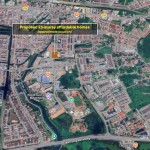
Location Map:

Tags:

UPCOMING: Bukit Mertajam / Airmas Synergy

Bukit Mertajam/ 3 November 2016 No comments

upcoming-bukit-mertajam-airmas-synergy

An upcoming residential development by Airmas Synergy at Bukit Mertajam. It is strategically located near Jalan Permatang Rawa, just a stone’s throw away from Sunway Wellesley development scheme by Sunway Property. Only mere minutes drive to Bukit Mertajam town centre.

This development comprises a 13-storey condominium offering 140 residential units, with underground carparks.

More details to be available upon official launch.

Project Name : (to be confirmed)
Location : Bukit Mertajam, Penang
Property Type : Condominium
Total Units: 140
Built-up Area: (to be confirmed)
Indicative Price: (to be confirmed)
Developer : Airmas Synergy

Register your interest here

(This information will be used to keep you updated on the project and future development.)
*By submitting this Form, you hereby agree to our PDPA Consent Clause.

Location Map:


The challenge of housing affordability

Property News/ 3 November 2016 No comments

Georgetown_urbanisation2910_620_411_100The right to shelter is an inalienable basic human right. Providing basic, sufficient and affordable housing for its people, particularly those with a low income, is one of the fundamental duties of the state.

However, if a government-linked research institute’s housing survey is any indication, it has validated the people’s suspicion that home prices in Malaysia have spiralled beyond the reach of common people in recent years.

Khazanah Research Institute (KRI), a government-linked research centre, conducted an in-depth survey and published the findings in its 2015 research report titled “Making Housing Affordable”. The report reveals that in Malaysia, the median house price is 4.4 times the median annual household income vis-à-vis an affordable market where the median house price is three times the median household income.

The report highlights Kuala Lumpur and Penang as the two “severely unaffordable” markets, with 5.4 times and 5.2 times the median household income respectively.

One would have thought that the lower-income group would be the most vulnerable section of society hit by this housing crisis.

But, the KRI report also says “gaps are beginning to appear in the system, exemplified by the growing concern of middle-income households who are neither eligible for social housing nor are able to afford private sector-supplied houses”.

In other words, today’s housing prices are so high that they are beyond the reach of even the middle-income group, which forms about 40% of the population, while the lower-income group, which forms the other 40% of the population, is facing an acute shortage of social housing.

This means that 80% of the country’s population is seriously affected by housing woes. And if urgent policy solutions are not taken to tackle the problem, this staggering 80% housing crisis-stricken population is clearly fertile ground for social and political discontents.

To be fair, this elephant in the room is well acknowledged by the government. Just recently, Deputy Finance Minister Datuk Othman Aziz expressed his concern over the serious mismatch, given the lack of supply of houses deemed affordable by most Malaysians. He was quoted as saying that only 21% of new housing launches were priced below RM250,000 in 2014 while developers are attracted to build high-end properties priced above RM500,000.

The developers obviously disagree with any suggestion, either explicit or implied, that they are to blame for the “seriously unaffordable” housing market. They say a lot of factors have to be taken into account in analysing this problem. For example, they stress the need for a single body that promotes and provides affordable homes, instead of having various agencies and schemes, such as the 1Malaysia People’s Housing programme and Syarikat Perumahan Negara Bhd, and the sometimes rather confusing guidelines and criteria adopted by the various government agencies.

Another valid point made by them is that the government should play its role in providing social housing and affordable homes for the people. For instance, when planning for development on government-owned land, the state should consider setting aside 50% of the land for affordable homes, instead of focusing on monetising its land bank.

Besides, there is one aspect that developers have been intensely lobbying the government — making property purchase financing more accessible to the buyers again. This financing woe has been the Achilles’ heel of the property market for quite some time now. Hence, reinstating developer interest bearing schemes and relaxing rules for foreign buyers are among the items on their wish list.

Apparently, the problem is so serious that the urban wellbeing, housing and local government minister had to chip in with a rather controversial proposal — allow property developers to provide financing to homebuyers.

Against this backdrop came the keenly awaited Budget 2017 announcement on Oct 21 where the government proposed various measures to increase access to financing for first-time homebuyers and make housing more accessible to the people.

In summary, under Budget 2017, the government is planning for more affordable homes by government-linked companies (GLCs). It also crafted a flexible financial scheme for housing loans and a subsidised housing programme for the B40 (bottom 40% household income) group.

However, on closer look at the budget, besides the rather novel plan to build about 10,000 homes in urban areas for rent to eligible youth with permanent jobs, other proposed measures seem to centre on creating a more debt-fuelled property market when our household debt has already reached a record high! Already, there is concern that Malaysians are borrowing too much and not saving enough, based on the latest report by KRI.

In its fourth publication of “The State of Households II” released recently, KRI says while household debt growth has been moderating since 2010 (2015: 7.3% year on year), the ratio of household debt to gross domestic product remained high, at 89.1% in 2015 against 87.4% in 2014. And most household debt was undertaken to finance house purchases.

Herein lies the danger. With the increased access to financing, homes suddenly look more affordable. But we should always bear in mind that there is no free lunch in a market economy. Buying a house, affordable or otherwise, and being able to afford the monthly instalments are two different matters altogether. Without a reasonable level of real income, a higher housing loan would have to be taken. That means a higher monthly repayment, which many cannot afford over the long run.

We, therefore, must never put the cart before the horse by talking about home ownership without first addressing the basic issues of affordability and sustainability — the financial capability of the purchasers to service the instalments throughout the loan duration.

Probably, that is why Bank Negara Malaysia, despite enormous pressure from various parties, has consistently insisted that increasing access to financing is not the way to resolve the affordable housing issue. Instead, finding alternatives to homeownership, including a well-functioning rental market, should be one of the policy solutions.

The challenges of providing basic, sufficient and affordable housing for the people require a holistic and long-term solution and never a knee-jerk reaction. For any piecemeal and short-sighted prescription not only can increase risks in the housing market but can also have far-reaching consequences for our country’s financial and political stability.

After all, if there is one lesson to be learnt from the 2007/08 global financial crisis, which had its origins in subprime mortgage lending, it would be this: A homeownership campaign can only be sustainable if it is anchored on real income, gainful employment and thriving businesses, and never an easy credit-fuelled housing bubble.

Source: TheEdgeProperty.com.my

Tags:

Property sales dipped further in first half of 2016

Property News/ 2 November 2016 10 comments

graphicchartsNapicNov1Market performance remained sluggish in the first half of this year as property transaction numbers in the country continued their downward trend.

According to the National Property Information Centre’s (Napic) data for 1H2016, a total of 163,528 properties were transacted averaging 27,255 properties a month, a decrease of 12.3% compared to the same period last year.

In terms of transacted value, the total dropped to RM64.59 billion in 1H2016 from RM76.61 billion in 1H2015.

Among all the segments, residential properties remained the main driver, constituting 62% of total transactions. In 1H2016, a total of 102,096 residential properties worth RM32.7 billion were sold. However, compared with 1H2015, the transacted volume and value for the residential segment had dipped 14.5% and 10%, respectively.

Interestingly, agricultural land emerged the second biggest contributor to total transaction volume in 1H2016 at 23%. There were 36,723 land deals worth RM6.33 billion sealed during the period. Compared with 1H2015, the transaction volume and value had increased 7.3% and 4% y-o-y, respectively.

Meanwhile, development land took up 6% with 10,249 deals worth RM8.56 billion, down 5.34% in terms of volume and 28.8% in value from a year ago.

The third most transacted property type was commercial properties. At 7%, it saw 11,660 properties sold in 1H2016 at a total value of RM11.32 billion. However, its transaction volume and value had dipped significantly by 34.5% and 21.85%, respectively, from the same period a year ago.

Selangor, Johor and Perak ranked top three

Of the various states, Selangor, Johor and Perak held the highest transaction volume in 1H2016 — remaining unchanged from 1H2015 — while Putrajaya, Labuan and Perlis recorded the lowest transactions in the same period among the 16 areas shortlisted by Napic. Selangor saw 32,007 properties worth RM18.2 billion sold in 1H2016, with the highest number of transactions coming from residential properties at 24,839, commercial properties at 2,719 and agricultural land at 2,059.

Johor was ranked the second highest state with 20,680 properties sold, which carried a total value of RM10.87 billion in 1H2016. Residential properties, agricultural land and commercial properties were the most traded segments in the state with transacted cases of 13,693, 4,242 and 1,583, respectively.

Perak, ranked third in terms of transaction volume, saw 19,782 properties worth RM3.9 billion sold in 1H2016. Residential properties and agricultural land were the most transacted segments in Perak with 11,965 and 5,944 deals closed, respectively.

However, the top three ranking states saw decreasing sales. Transactions in Selangor, Johor and Perak dipped 16.3%, 15% and 17% y-o-y in 1H2016.

On the other hand, Kedah and Kelantan have seen a significant increase in transaction volume.

Transacted properties in Kelantan totalled 6,447 cases, an increase of 38% y-o-y. Agricultural land and residential properties were the most transacted segments in Kelantan with 2,871 and 2,656 deals respectively, in 1H2016.

Kedah’s total transacted properties had surged 9.8% to 16,118 cases, with the highest number of transactions coming from the residential segment at 11,965 and agricultural land at 5,944.

Buyers looking for affordable properties

According to Napic’s data, 66% of the total transacted residential properties in the country were priced below RM300,000. Transactions of residential properties between RM300,001 and RM1 million stood at 30%, while houses with price tags of over RM1 million and above hit just 4%.

On commercial properties, 36% of transactions were for properties below RM300,000. Most transactions were for properties with price tags between RM500,001 and RM1 million. Properties with selling prices over RM1 million stood at 17%.

For industrial properties, 44% of the properties sold were below RM500,000 while 35% were closed at RM1 million and above.

The data also showed that 84% of the agricultural land were transacted below RM200,000 and most deals (46%) were sealed at below RM50,000.

Under development land, the performance was similar to the agricultural land segment, where 62% of the deals were below RM200,000, while 30% of land plots transacted were below RM50,000. However, 12% of the transactions were priced above RM1 million.

Source: TheEdgeProperty.com.my

Tags: