fbpx

Property market to stabilize as economy improves

JPPH) National Property Information Center (Napic) director Md Badrul Hisham Awang.

JPPH director Md Badrul Hisham Awang

The overall property market is expected to stabilise this year, underpinned by the improving Malaysian economy that had recorded 5.9% GDP growth last year, said Valuation and Property Services Department’s (JPPH) National Property Information Center (Napic) director Md Badrul Hisham Awang.

“The property transaction volume and value are expected to stabilise this year. The drop rate of the volume and value last year has narrowed to a lower single-digit figure. In 2018, I believe the prices will not drop while the number of transactions will remain stable,” he said at a sales and marketing conference organised by Real Estate and Housing Developers’ Association Malaysia (Rehda) Institute in Kuala Lumpur today.

According to him, transaction numbers only fell by 2.7% to 311,824 from 2016 to 2017, slower than the declines of 11.5% and 5.7% registered in 2015 and 2016.

Meanwhile, transaction values fell by 3.8% year-on-year to RM139.84 billion last year, compared with a decline of 8% in 2015 and 3% in 2016.

In 2017, the value of residential sub-sector transactions had risen by 4.4% despite volume shrinking by 4.1%.

“Looking at the numbers, it seems that our market is getting better and improving,” he added.

Themed “Utilising Data to Build Demand Driven Real Estate”, the conference saw industry experts sharing their insights on the property market and strategies to overcome current challenges.

Badrul was one of the speakers with his talk entitled “Overview of Napic Data and Transaction 2017 – Malaysia’s Property Market Performance Indicators”.

Source: EdgeProp.my


Tags:

Oh… I know why you are not buying, and why you can’t sell your properties

Property News/ 3 May 2018 Comments off
Source: Central Intelligence Agency, USA.

Source: Central Intelligence Agency, USA.

* Article by Freemind Works *

And yes, it has all got to do with GE14 which is around the corner.

To discover how the Malaysia’s 14th General Election affect the property market. Click here.

In many of my talks, I always ask the audience through a survey; and the result is always consistent. The market was and still is filled with fear.

Most people, generally, are taking the “wait and see” strategy, which explains the current soft market. And this is reflected in the data where market was moving sideway or ‘stagnant’.

How the property market will react post-election will be due more to fundamental factors than anything else. Let me elaborate.

POPULATION

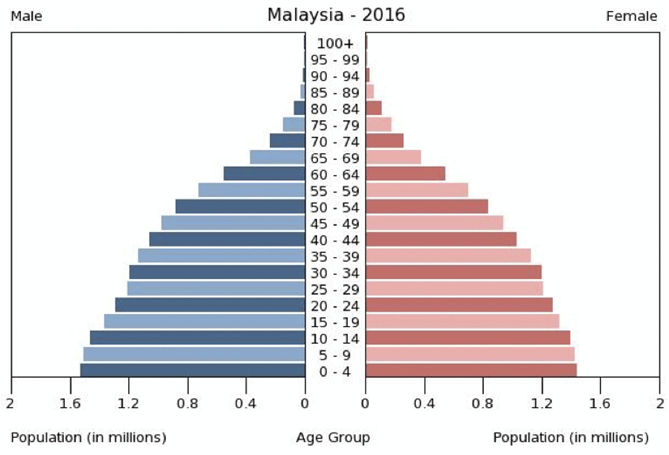
Malaysia is a young and growing nation; with healthy and increasing population.

Every year, tens of thousands of graduates’ leaves school and home for work.

Some eventually settles down and start a family. They will need to either rent or buy their own home.

Majority of Malaysian population are aged between 20-44 years old, the working age group who can afford to buy or invest in properties.

Looking at the medium to long term, the property market is very well supported by the locals, especially for properties priced below the RM500K range.

INFLATION

With petrol prices fluctuating and some subsidies removed, inflation is easily more than 4%.
One glass of teh tarik that cost RM1, 5 years ago is now between RM1.50 to RM2.00 at 100% price increase.

So, what has properties got to do with inflation? In fact, inflation is the #One Reason why property price increases over time. Building materials are more expensive; and land and labor cost are escalating.

Therefore, instead of complaining about everything getting more expensive, why not let inflation work in your favor instead of against you.

On average, property prices double every 10 years.

So, my advice to you is to buy property and wait, not wait to buy property.

SUPPLY/ DEMAND

It is important to evaluate the supply and demand in a specific location you want to invest in.

In the current property market sentiment, it may seem like supply is more than demand. Looking from another perspective, it is due to the weak demand in the buyers’ market.

The decision and action of the local and federal government, as well as policies introduced post-election is important to solve the problem of the overhang of properties in certain areas.

Changes and development such as new infrastructures – highways, bridges and LRT/MRT project will improve connectivity and marketability of projects in some area. This will in turn increase the demand and pushing properties prices to increase.

Incentives such as tax relief and stamp duty exemption given to buyers and investors, especially to 1st home buyers, will definitely boost the property market.

Conclusion:

If ‘ubah’ happens, how will the market react? Will there be chaos and uncertainty? I do not have a crystal ball, but the dust eventually will have to settle down.

The other scenario is the current government continues to rule the country; whatever was promised will need to be delivered.

Whichever the GE 14 outcome, whether “ubah” happens or status quo remains, the property market will be uncertain for the next 3 – 6months. Regardless, the 3 factors above are critical in determining the changes to the property market trend:

  • Will there be a property bull run similar to that in 2009/2010?
  • Or the property market continues its sideway movement with property prices remaining stagnant?
  • Or worse, will there be further correction and property prices continue to slump …

To discover more about the different scenarios and how to position yourself to profit in the current market, I will be sharing how can capitalize the post-election market using the Master Key Method® and how you can invest in Property With Under RM1,000 and make RM20,000 to RM60,000 A Year with high ROI, on the following date:

Date: 12 May 2018 (Saturday)
Time: 1pm – 6pm
Venue: Bayan Baru, Penang

It is important to vote for our country’s future and it is equally important to secure your own future for your family and children.

So do block your calendar and reserve your seat.

And now for the good news. For readers of Penang Property Talk, you get to attend this workshop for FREE. But only for the first 17.

As seats are limited, click here NOW to reserve your seat:

>>> http://bit.ly/proptalk17

– Kaygarn Tan

[Sponsored Ad]

Tags:

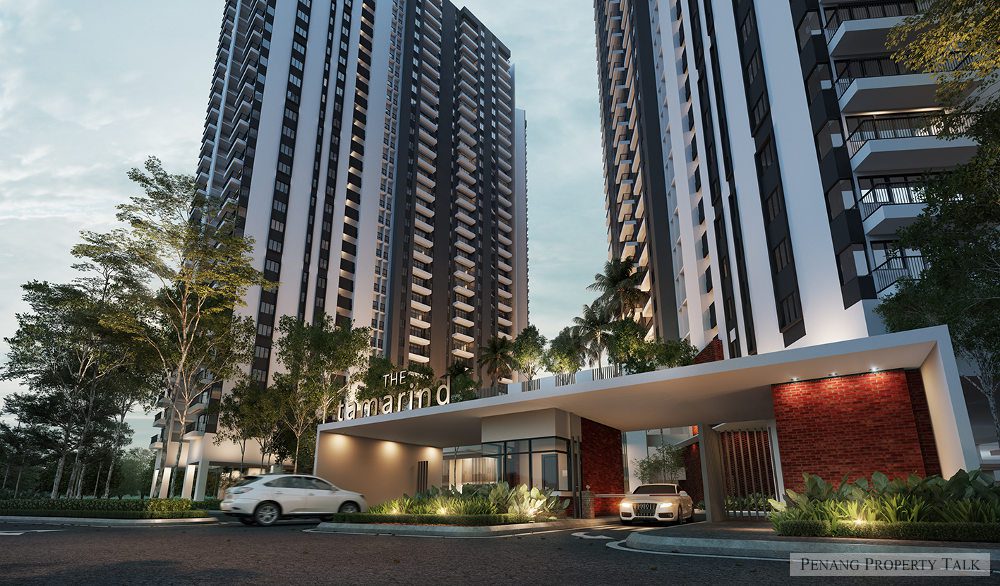
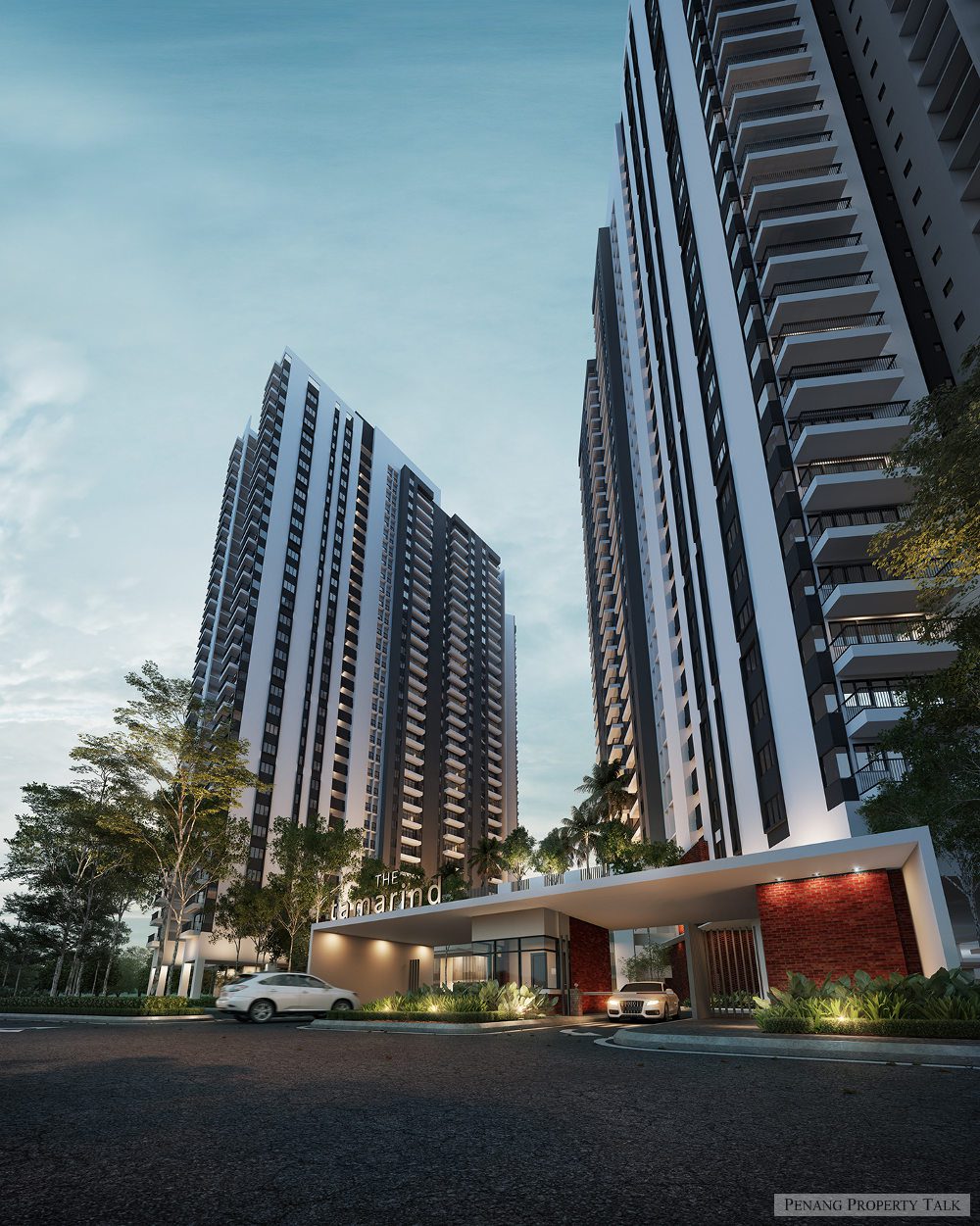
The Tamarind chosen as Best Condo in Penang

the-tamarind-award-f

Premier lifestyle developer Eastern & Oriental Berhad (E&O) scored three awards at the recent PropertyGuru Asia Property Awards (Malaysia) 2018.

At the black-tie awards ceremony, E&O’s executive apartments, The Tamarind in Seri Tanjung Pinang masterplanned development emerged tops in the Best Condo Development (Penang) category.

Receiving the award on behalf of the Group was E&O sales and marketing senior general manager Wayne Wong who said “It is a privilege for The Tamarind to be selected as Penang’s Best Condo Development.

“The Tamarind will be completed in 2019 and this award is a testimony of the distinctive product that our buyers will possess.”


Other than the project in Penang, the Group has also won two more awards for their projects at Kuala Lumpur and Iskandar, namely The Mews Serviced Residences and Avira Garden Terraces.

Wong said “We are grateful for the commendations that our projects have received. We thank our partners for their support as well as commitment, trust and belief in us and look forward to our continued partnership.”

The annual PropertyGuru awards recognise and highlight top quality developers, projects and innovations by encompassing construction, development, architecture and interior design, as well as green and sustainable building practices.

More than 20 golden trophies were given to developers and builders in Kuala Lumpur, Klang Valley, Penang, and Iskandar Malaysia.

All awardees, except one which was named by the editors, were chosen by the independent judging panel led by Jones Lang Wootton executive director Prem Kumar. Others on the judging panel include highly respected experts from the real estate, design, consultancy and related sectors.

The awards were audited by BDO, one of the world’s largest auditing and accountancy networks.

Find out more about The Tamarind *

Tags:

Readers Column – Write to us about property in Penang

share-your-view“It is not about wanting to be the best but it is about being better than who you were yesterday.” With this mindset, it has brought Penang Property Talk to where it is today. Today, we are the number 1 most popular property portal in Penang and we have more than 60,000 fans in our Facebook page. The continuous strong support mainly from from our fans, home buyers, investors, developers and property agents are indeed our main motivation factor. We truly appreciate each and every support that everyone has showered into our website. Thank you!

With that said, we are inviting all our readers to be part of us. We will be having a new section for readers to pen down their views and opinion about property. If you have an opinion that you have always wanted it to be heard, here is your opportunity. Write to us now! Your point of view on property analysis, property market, property pricing or any issues related to property can now be publish in the most popular property portal in Penang.

We are all anxious and just can’t wait to hear from you!

CLICK HERE to submit your write-up in Readers Column

Tags:

Strata Management Act at a glance

Property News/ 29 April 2018 No comments

gngIf you are a strata owner or occupier, you are the individual owner of your unit. Also, you play a role as the co-owner to all common property shared inside the development.

You are subjected to pay a monthly management fees to Joint Management Body (JMB). The maintenance and management charges for taking care of your common property under the Strata Management Act 2013 came into effect on June 1, 2015.

How well do you know the Strata Management Act? Do you understand your rights and the possible problem under this Act?
Here are the things you need to know about management fees as a strata owner or occupier.

What are management fees?

Management fees is an amount of money that strata owner pays to Joint Management Body (JMB) of the condo, apartment, gated-and-guarded community or any stratified property to properly manage and maintain the common property in the development.

What is common property?

Common property is the development areas used or capable of being used or enjoyed by occupier or owner of a strata property.
It normally includes green areas, public amenities and facilities, as well as common areas such as corridors, drainages and the roofs inside one development.

Who should pay the management fees?

Every proprietor or strata owner shall pay the management fees to the JMB for the maintenance and management of common property. Strata owners include:

  • The buyer of the property
  • A person who eligible to receive rental from the unit, whether as an agent, trustee or receiver
  • Developer of those unsold units in the development

Who manage the management funds?

JMB is established to be the steward of your property. They were being granted the power to collect and control the management fees. However, the funds can only be used for maintaining common property.

All fees collected from strata owners, occupiers, tenants or developer of the property will be deposited into the maintenance account of sinking fund account under the name of the JMB within three working days of receiving such money.

The things JMB do:

The Joint Management Body (JMB) is a corporate body comprised of developer and strata owners, a party responsible for the management and maintenance of the common property of one development project. The major duties include:

  • Determine and impose the management fees
  • Properly maintain and manage the common property in a state of good and serviceable repair
  • Insure the property and effect the insurance according to the Strata Management Act
  • Comply with notices or orders given by local authorities
  • Prepare and maintain register for the property of all owners
  • Ensure the management fund accounts are audited and provide audited financial statement for all members
  • Enforce the rules or by-laws

How is the management fees determined?

The amount of the fees to be paid by strata owners is initially determined by developer in proportion to the share units assigned to each parcel.

While the contribution of sinking fund used for painting of common premises, acquisition of movable properties and renewal of fixtures or fittings in common property shall be set at 10% of the sum of management fees.

A maintenance budget should be prepared by the developer before the first annual general meeting for the establishment of JMB, under consideration of annual budget that sufficiently paying for expected and estimated expenditure required to properly maintain and manage the common property.

In the first annual general meeting, the elected management committee (MC) can decide whether to confirm or vary the amount budgeted by the developer.

What if I am unhappy with the amount determined?

If any strata owner is not satisfied with the amount of the management fees determined by the developer or JMB, you may request a review from Commissioner. They may re-determine it or instruct the developer or JMB to appoint a registered property manager to recommend an amount for the management fees.

Who pays the management fees on unsold units?

For the unsold units, the management fees will be paid by developer as the strata owner of the development.

However, at any general meeting, including the first annual general meeting:

  • For the purpose of determining the quorum – the developer shall be considered as one person, regardless the numbers of the unsold unit.
  • For the purpose of determining voting rights – the rights of the unsold units can be exercised by the developer.


What happens if I withhold my payment?

The strata owner shall pay the management fees within 14 days of receiving a written notice from the JMB of their property. If the fees remain unpaid at the expiry or the end of the period of 14 days, the enforcement can take place without a minimum amount of outstanding fees.

Late fees: A late payment interest of 10% per annum on a daily basis based on the amount owes could be imposed on strata owners who failed to paid up.

Seizure of movable property: The commissioner has the authority to seize any movable property including TV, smart phone even home appliance such as rice cooker which could be found in the building or elsewhere in the state belongs to the defaulting strata owner.

The attachment will be executed by the developer or a member of Joint Management Committee (JMC) in the presence of the Commissioner during daytime.

In the case, developer or JMC has the right to retain possession of such property until the debt is paid within 14 days.

If the debt due is not paid within 14 days from the date of attachment, the property attached will be sold by auction conducted by the developer or JMC under the supervision of the Commissioner.

Fine and imprisonment: Strata owners failed to keep up with their management fees obligation could be a criminal offence. They may be liable to a fine not exceeding RM5,000 or to imprisonment for maximum three years or to both. In case of a continuing offence, a further fine not exceeding RM50 per day could be imposed, during which the offence continues after conviction.

Decreasing in property value: When it comes to management fees, it’s more than just a term of cost. The quality of management and maintenance of a property can seriously impact its value.

Generally, a well-maintained property could fetch a higher home price in long run.

If you repeatedly failure to contribute to management fees, it may adversely affected the value of property as it creates difficulties for timely maintenance and efficient management, ultimately resulting in bad living environment and decrease in the value of the property.

READ MORE: StarProperty.my

 

Tags: