fbpx

LTV imposition not likely to have big impact on home loans growth

Property News/ 30 March 2011 No comments

PETALING JAYA: Bank Negara’s move last November to introduce a loan-to-value (LTV) ratio for third and subsequent house financing facilities will not hamper residential mortgage loans growth this year or even reduce residential property prices significantly.

A local bank-backed analyst said residential home loans growth might see a slight slowdown as the measure by the regulator would curb speculative investment activities.

She said the slowdown would not be drastic, as 70% to 90% of banks’ mortgage loans were held by homeowners, who were not speculative investors but had purchased residential properties to live in.

“Our population has a high number of people below 30 years, who are purchasing properties to live in,” she said.

Bank Negara said in its “Financial Stability and Payment Systems Report 2010” that house prices in selected locations within and surrounding urban areas had shot up to four times higher than the national house price index.

It also added that there had been incidents of applications for financing of multiple residential units within a single development project from a single borrower.

To address this, the LTV ratio was placed into effect, aimed at promoting a stable and sustainable property market by deterring speculative activity through higher equity requirements for transactions of these nature.

Maybank Investment Bank Research said in a report earlier this month that housing loan applications had declined for the last three months on a month-on-month basis, partly due to recent measures to curb property lending, namely the LTV imposition.

Loans applications for residential purchases fell 3.8% month-on-month from December 2010 to January 2011, 7.1% from November 2010 to December 2010 and 9.6% from October 2010 to November 2010.

However, another local bank-backed analyst said the decline in housing loans applications could be seasonal and could pick up as the year progressed.

“I still think it is early days to attribute the decline to the LTV imposition only. Generally, I do not see this new measure having much of an impact on residential housing loans growth this year,” he added.

Zerin Properties group chief executive officer Previndran Singhe said the regulator’s cooling-off measure would have minimal impact on the property market, as individuals looking at third properties were usually cashed up and took a long-term view on real estate.

“Moreover, speculative activities in Malaysia are limited so the impact (on property prices) will be very minimal as prices are driven by domestic demand,” he added.

MIDF Research chief economist Anthony Dass said a curb on speculative investment of properties and slower loans growth could see a correction in property prices and the downside risk, more so for high-rise properties, would be contained.


SOURCE: The Star

Tags:

Don't over-borrow

Property News/ 30 March 2011 No comments

Although only two restrictions have been placed on borrowing for the purchase of a third or more homes and credit card eligibility, it does not mean that there won’t be more to come.

In fact, consumers should be vigilant as Bank Negara is believed to be putting more intensive supervision on certain aspects of the property and personal loans sectors.

For example, the 5:95 property loan scheme offered by certain companies falls under this category of supervision.

Under this arrangement that was implemented during the market doldrums, only 5% downpayment was required for the purchase of a property with the rest of the financing in the form of a bank loan.

There was talk that the 5:95 scheme was mainly extended to affluent housebuyers but the bulk of the repayments are coming onstream this year. Hence, the monitoring of these repayments as well as pockets of borrowing that are still available under this scheme.

Personal loans form 15% of the total loans portfolio but due to the higher borrowing rates, extra care and discipline are required to guard against over-borrowing.

The extension of credit by non-bank institutions is also being monitored amidst lessons gleaned from countries suffering from high indebtedness.

Credit schemes extended by cooperatives and cooperative banks are likely to be scrutinised for affordability on the part of the borrowers.

Covering all aspects of household loans, the upcoming guidelines on lending and affordability represent part of the internal controls that are put in place to monitor the situation.

Under this surveillance, over-lending to single borrowers is discouraged.

In fact, the entire credit scenario is being assessed via a holistic package of policies and measures that cover prudential, intensive supervision, standards on banking institutions and consumer education.

Household indebtedness, at 75.9% of Gross Domestic Product at the end of last year, may be on the increase but indications are that it has not become destabilising.

On the contrary, wealth accumulation remains healthy with liquid assets forming 64% of financial assets while delinquency levels remain low – the non-performing loans for credit cards is at 2%.

Nevertheless, it is not a time to be sanguine especially when high energy and commodity prices pose risks to the economy.


SOURCE: The Star

Tags:

Malaysia to allocate land for affordable homes

Property News/ 30 March 2011 No comments

title=THE government will allocate a portion of its landbank for the construction of affordable housing, especially for Malaysians eligible for the My First Home Scheme.

Housing and Local Government Minister Datuk Chor Chee Heung said the affordable housing project, which will likely be stratified properties or apartments, will either be built by the government or through joint ventures with the private sector.

"The government is looking at its landbank for the purpose of building houses for those earning RM3,000 a month and below.

"We also hope that the state governments will do their part by imposing quotas for developers to build affordable homes, besides low-cost houses," he told a news conference after launching Green Building Index Township Rating Tool and Residential New Construction Tool (Version 2) in Kuala Lumpur yesterday.
""
Chor also said that the government will start paying some RM1.4 billion annually to Alam Flora Sdn Bhd, SWM Environment Sdn Bhd and Idaman Bersih Sdn Bhd once the concession agreement is signed between the government and the three waste management companies.

He said local councils in Peninsular Malaysia will collect some RM900 million from households for waste management services provided by these concessionaires, while the federal government will top up about RM500 million.

Once the concession is signed, he said, the three operators must perform their duties according to the agreement and key performance indicators.

Chor said the operators will also be able to deliver better services as they can use the concession agreement as collateral to obtain financing for capital expenditure.

He said for the past 13 years, the three operators have been utilising their own resources in providing the services, besides not receiving full payment from the state governments.

"We are currently studying the intricacies of the contract, which will take between three and four weeks. Then, we will submit it to the Cabinet, before it is submitted to the National Council for Local Government," he said.

The minister, however, did not give the targeted date for the signing of the concession agreement.

Currently, Alam Flora is responsible for Selangor, Kuala Lumpur, Pahang, Terengganu and Kelantan; SWN for Negri Sembilan, Malacca and Johor; and Idaman for Perak, Kedah, Penang and Perlis.

Commenting on the statement made by Penang Chief Minister Lim Guan Eng to allow the state government to opt out of the Solid Waste and Urban Cleansing Management Act and choose its own contractor for the services, Chor said: "Let time convince those state governments that do not agree."

It is understood that there are three states that have yet to accept the taking over of solid waste services by the government-appointed concessionaires.

SOURCE: Business Times

Tags:

Nineten

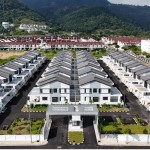
Nineten is part of Permai Village development located at Tanjung Bungah, Penang. It comprises 3-storey semi-detached house with a total 40 units. The semi-detached house come with 5+1 bedrooms and 5 bathrooms with a gross built-up area of 4,835 sq.ft. The land size of each 3-storey semi-detached house measuring from 3,218 to 12,712 sq.ft.

Property Project : Nineten
Location : Permai Village, Tanjung Bungah
Property Type : 3-Storey Semi-Detached
Tenure : Freehold
Built-up Area : 4,835 sq.ft.
Land Area : 3,218 – 12,712 sq.ft.
Total Units : 40
Developer : BSG Property
Indicative Price: RM 2,000,000 onwards

Tags:

Association to build 5,000 high-rise units in Malay heritage areas

Property News/ 29 March 2011 No comments

The Penang Malays Association (Pemenang) is planning to build 5,000 apartment units with a built-up area of not less than 1,000sq ft each in George Town.

Its president Datuk Seri Mohd Yussof Latiff said the units would be built on 11.33ha of land, among others in Kampung Makam, Kampung Dodol, Jalan Datuk Keramat, Jalan Perak, Jalan Sungai Pinang and Jalan Patani.

It was reported last year that the association, through its property arm PIEMPIPI (Pemenang) Bhd, was holding discussions with Amanah Raya Bhd (ARB) to develop the land in George Town and turn it into a Malay heritage area.

He said Pemenang would seek the cooperation of the state Islamic Religious Department and the state Islamic Religious Council to implement the project.

“The state government is also supportive of the plan. We will soon hold talks with the Federal Government on this.

“We are planning to recover land which have been mortgaged. This way, the Malay community would be able to live comfortably in the city with sufficient amenities,” he said at a press conference to commemorate Pemenang’s 84th anniversary.

At the function, he handed over a framed photograph featuring the country’s nine Rulers and the ‘7 Wasiat’ that was articulated in the The Federation of Malaya Agreement on Aug 5, 1957 to the association.

He said the photograph was an enlarged version of a similar one from his personal collection.


SOURCE: The Star

Tags: