fbpx

BM City Mall

Bukit Mertajam/ 17 January 2012 1,833 comments

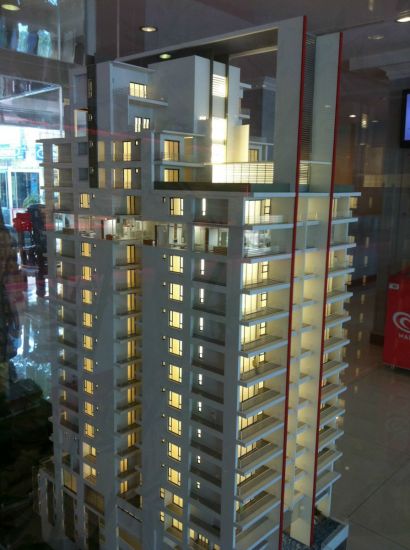
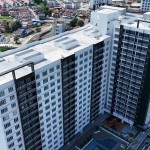
BM City is an interconnected, self-contained and thriving development that blends lifestyles with commercial in one elegant high-rise tower of designer suites perched above eight floors of retail outlets. The community here is set to herald in a new era of chic urban lifestyles with doorstep access to working, shopping, dining and entertainment options.

BM City Mall featuring a myriad selection of lifestyle facilities such as chic galleries and trendy boutiques. BM City Suites and its comprehensive range of facilities are designed to cater to three generations of Designer Suites. There is just so much to do in keeping one fully occupied in their urban retreat.

BM City Mall
40 Units of 2 storey shop office
(built-up area from 1,910 sq.ft. to 10,726 sq.ft.)

32 units kiosk
(built-up area from 164 sq.ft. to 6,871 sq.ft.)

BM City Suites
3 block of Designer Suites with 528 units
(built up area from 594 sq.ft. to 1,441 sq.ft.)

Podium floor
Facility – Landscape area
Approximately 80,000 sq.ft. (1.83 acre)

Car Park – 5 storey (2nd floor – 6th floor)
Car park bay – 1,450 nos.

Besides being surrounded by a host of public amenities and infrastructures, BM City is also within close proximity to the Penang Bridge and North-South Expressway to accord residents’ easy accessibility and total convenience.

  • 5 mins to North-South Highway
  • 10 mins to Penang Bridge
  • 15 mins to Juru Auto City
Property Project : BM City
Location : Bandar Perda, Bukit Mertajam, Penang
Property Type : Kiosks, Shop Offices & Suites
Land Tenure : Freehold
Built-up Area : 164 sq.ft. onward (kiosk), 1,910 sq.ft. onward (shop office), 594 sq.ft. onward (suites)
Total Units : 32 (kiosk), 40 (shop office), 528 (suites)
Indicative Price : RM 171,000 onwards (designer suites)
Developer : BM City Realty & Construction Sdn Bhd


Contributed by reader (Update 07/04/14)

[nggallery id=98]


Contributed by reader (Update 13/04/14)

[nggallery id=99]


Contributed by reader (Update 27/04/14)

[nggallery id=103]


Contributed by reader (Update 04/06/14)

[nggallery id=107]


Contributed by reader (Update 12/06/14)

[nggallery id=108]


Contributed by reader (Update 10/07/14)

[nggallery id=109]


Contributed by reader (Update 14/07/14)

[nggallery id=112]


Contributed by reader (Update 02/08/14)

[nggallery id=114]


Contributed by reader (Update 12/08/14)

[nggallery id=115]


Contributed by reader (Update 17/12/14)

[nggallery id=118]


Contributed by reader (Update 06/06/14)

Tags:

Affordable housing coming up

Property News/ 17 January 2012 2 comments

A DEVELOPER is building 554 low medium-cost apartment units along Lebuhraya Halia in Tanjung Tokong, Penang.

Currently 30% complete, the 38-storey Taman Bukit Erskine developed by Ivory Villas Sdn Bhd, a subsidiary company of Ivory Properties Group Berhad, is expected to be completed in 2014.

Ivory Properties Group Berhad executive director Ron Loh said each unit with a built-up area of 654sq ft comes with three bedrooms, a bathroom and a washroom.

“Despite being a low-medium cost project, the apartments offer good views,” he said in a press conference at Penang Time Square on Friday.

He added that the project was abandoned for 11 years due to the 1997 economic crisis and was revived when Ivory took up the project as a white knight in 2007.

Originally named Fettes Villa, the project was later renamed Mount Erskine Development which consists of The Peak Residences, The Latitude and Taman Bukit Erskine.

Loh said the group had since changed the initial 500sq ft layout plan to 654sq ft and increased the units from 363 to 554.

He also said former purchasers who had paid the deposit in the previous project can opt to purchase the units or get a full refund next year.

“According to a court order, we can only refund the deposit a year after we launch this project.

“So far, 30% of the 363 former purchasers wanted to continue with this project,” he said.

State Town and Country Planning, Housing and Arts Committee chairman Wong Hon Wai who launched the project said that he had contacted Rapid Penang to consider plying the route there.

“They used to ply the route but in 2007, they stopped due to poor response.

“I suggest that the bus company conduct a study on the need to service the route there since the apartments are coming up,” he said.

He added that the public could send their feedback to Rapid Penang at rapidcare@rapidpg.com.my.

Wong also said that since 2008, seven abandoned projects including Taman Bukit Erskine had been revived and were at different stages of completion.

The projects are Desa Aman in Paya Terubong, Taman Cemerlang in Bandar Baru Air Itam, Mengkuang Heights and Taman Guar Perahu Indah in Central Seberang Prai, Taman Orkid Indah in North Seberang Prai and Taman Pekatra in South Seberang Prai.

On a related issue, Wong said the request for proposal (RFP) period for the revival of the Majestic Heights project in Paya Terubong ended on Jan 6.

He added that the Malaysia Building Society Berhad and the property liquidator Deloitte Kassim Chan had called for the RFP on Oct 7 last year.

“Phase 2A, 2B and 3A have been abandoned.

“They are going through the submissions by several developers.

“We hope that the phases can be completed soon after being abandoned for more than 10 years,” he said.

Source: The Star

Tags:

Gurney Paragon set to welcome RM35m F&B investments

Property News/ 17 January 2012 No comments

title=GEORGE TOWN: Penang is set to welcome investments totalling RM35 million this year from food and beverage operators into phase one of the Gurney Paragon development on Gurney Drive.

The project’s developer, Hunza Properties Bhd (HPB), has already seen the entry of nine tenants into Phase 1B of its multi-billion ringgit waterfront development with capital investments in excess of RM10 million.

“We are working hard to continue bringing in established names which have yet to set up a presence in Penang to open their businesses in Gurney Paragon,” HPB executive chairman Datuk Khor Teng Tong told Business Times yesterday.

Phase 1B of the project comprises some 100,000 sq ft of lettable space, and its developers are touting the entire Gurney Paragon project as the only one in the country for now which integrates a restored heritage building amidst modern residential, retail and commercial spaces.

The company last night officially opened its “St Jo’s@Gurney Paragon” building, which is the restored heritage building built in 1918.

The building is flanked by two towers which house 220 high-end dwellings, along with eateries on its first three levels.

St Jo’s, which was formerly known as St Joseph’s Novitiate, was initially started by the De La Salle Brothers to train young Catholic men to enter the religious order.

The colonial building, which was restored by HPB for RM10 million, was also once the site for Uplands School now known as the International School of Penang.

The restoration works include retaining the building’s teakwood floors, roof trusses, window frames, stairways and clay tiles.

Khor said the current tenants surrounding St Jo’s are Goku Roku Ramen, Pacific Coffee Co, T.G.I.Friday’s, Brussels Beer Cafe, The Coffee Bean and Tea Leaf, and Meet Fresh.

The tenants who will open soon for business, he added, are Italiannies (serving Italian cuisine), Wong Kok Char Chan Teng (Hong Kong’s foods and treats eatery), Share Tea (Taiwanese bubble tea beverage) and Petite Millie (casual French cuisine).

Khor said HPB is expecting at least 30 per cent of its new tenants to be first-time investors in Penang where a lifestyle mall – the Gurney Paragon Mall – is due to be completed by the end of this year. By Marina Emmanuel

SOURCE: Business Times

Tags:

Volatile year for real estate investment trusts

Property News/ 16 January 2012 No comments

PETALING JAYA: Headwinds from the gloomy global economic and financial fronts, particularly in the United States and the eurozone, will pose challenges to the performance of the local real estate investment trusts (M-REITs) this year.

According to Malaysian REIT Managers Association chairman Stewart Labrooy, the M-REIT sector will face slower growth and competition for tenants as an oversupply situation emerges in the office market leading to lower rental yields.

“It is going to be a volatile year ahead with the eurozone uncertainty coupled with low growth in the European and US markets. These markets are very important to growth in Asia and the impact would be felt in all export-led countries. Capital market activity will remain muted worldwide in 2012,” Labrooy told StarBiz.

In Kuala Lumpur, property prices are expected to remain flat for 2012 with some weaknesses in the high-end residential and office markets.

In the office sector, the seven million sq ft of new office space scheduled for completion this year would result in softening in rental and occupancy.

Despite the gloomy outlook, Labrooy said the Malaysian capital markets were expected to remain healthy this year with a significant number of deals – notably the listing of Felda’s assets in the first half of 2012.

“We are fully aware of the issues involved as some of the M-REITs have been through the 2008 global financial crisis and are taking a pro-active stand to retain their tenants through this period and manage their gearing leverage conservatively.

“Most M-REITs have strong tenant covenants and long leases to counter cyclical financial events. They also practise very conservative valuations so we don’t see any downward pressure on them in 2012 and beyond.

In addition, the average gearing of most M-REITs are in the range of 20% to 40%, precluding any event of a default on their loan covenants,” he said.

Labrooy said a silver lining from the uncertainty and volatility of the global markets was that investors and fund managers had started shifting to dividend stocks with strong asset backing and renewed their interest in M-REITs as defensive stocks in uncertain times.

“I believe that we will continue to see a strong subscription in the M-REIT sector this year bearing in mind that the sector performed fairly well to outperform the KLCI in 2011,” he added.

He said the local market still faced liquidity problem as the size of M-REITs was still small by international standards with only five having market capitalisation of over RM1bil. This has contributed to the weak participation among retail investors.

Although the combined market capitalisation of M-REITs has climbed to over RM15bil, its market capitalisation is still way behind that of Singapore which has US$27bil in market capitalisation.

Labrooy, who is also the chief executive officer of Axis REIT Managers Bhd, said the recent listing of Sunway, CapitaMalls Malaysia Trust and Pavilion REITs had improved the liquidity of the domestic market.

Labrooy also said there was an absence of listing of foreign assets as REITs on the local bourse, adding that those who wanted to go for listing had opted to do so in Singapore due to its much higher liquidity and better tax structure. The local regulatory and tax framework must be improved to be on par with Singapore, and a comparable tax code would assist in getting greater retail participation.

On whether there was a scope for other types of REITs to come into the market, Labrooy said: “Malaysia probably has one of the most diversified REIT offerings in Asia. We are currently offering hospitals, plantations, office, retail, education, hospitality, industrial and diversified REITs.

“In addition three are syariah-compliant to cater to the Islamic investors.

“The sectors that will see growth are in industrial, medium cost housing, healthcare, education and tourism. These growth areas are in the Iskandar Malaysia in Johor, Greater Kuala Lumpur and Penang.”

Al-Hadharah Boustead REIT chairman Tan Sri Lodin Wok Kamaruddin concurred that the prospects for the REIT market has not been fully tapped in terms of awareness among potential investors.

He said M-REITs were viewed as a safer investment compared with other REITs in the region. This was due to the domestic-centric focus of their property investments, lower refinancing risks and relatively lower foreign shareholding.

“Malaysia is in a strong position for greater growth and has the potential to lead the REITs market in Asia given its good track record and stable market conditions in Malaysia.

“Generally, potential investors are not well informed about REITs. We believe the level of awareness can be increased nationwide as knowledge plays an important role,” he said.

SOURCE: The Star

Tags:

When informed decisions go awry

Property News/ 14 January 2012 No comments

Making investments with money you don’t have and with information you should not be privy to is both morally and legally wrong

LAST year, a young entrepreneur turned property investor lost his business outfit. Although his monthly income fluctuated somewhat month-to-month, he was able to get loans from the banks to finance his purchases, which he had incrementally amassed to about 10 over the years.

He was able to have a selection of properties because of the nature of his work which allowed him to source and research the sector and related industries. He was also a quick and adept student of the market and its trends, because like many Malaysians, he was interested in bricks and mortar as an investment instrument. It is uncertain how he will pay for all of them today.

Because of Malaysians’ great love for properties, there is the tendency to buy multiple units, each in succession when the previous purchase is not yet fully paid for. While there is nothing wrong with this strategy – some of us are more comfortable with properties than with other forms of investment instruments – these “assets” can become a financial millstone. Quite a number of Malaysians bought multiple units at one go, sometimes in the same project because they have faith in the developer. Or they buy into the same segment, for example, condominiums.

If one has the means to hold on to these investments over the long term, there may not be an issue. The danger of multiple property purchases – and ownership – comes during a down cycle.

A couple of years ago when the property prices were steadily moving up, Malaysians’ enchantment with the property market resulted in various courses being offered by property experts.

Nearly, if not all of them, were millionaires because of earlier property investments and they were offering courses to teach how one can become rich, like themselves.

However, the scenario then and the scenario today has changed drastically. It may not be possible to use the same strategy they had used. Like any investment, and at any one point in time, there are risks involved. But over and above taking a risk, there is something known as moral hazard. When risks become too high, the action taken by an investor may be hazardous and the probability of failure becomes very high. An action becomes morally hazardous when an investor makes a decision to do something assuming that he has a safety net.

Lately, there was a case where a spouse had bought two luxury condominiums with money that did not belong to him. Because properties at the time enjoyed high returns, he bought multiple units in Malaysia and Singapore. When the case came to light, he stressed that his wife, a public figure, is not involved.

A couple may not be a single entity from the legal standpoint. However, the reality is that the action of one will have a bearing on the other.

This was clearly seen early this week when the chairman of the Swiss National Bank, equivalent to our Bank Negara, resigned. Less than a week ago, he had denied any wrongdoing in a currency scandal that involved his wife.

The Financial Times reported that Philipp Hildebrand’s wife had in September 2011 bought US$500,000 before the Swiss National Bank, headed by her husband, imposed a ceiling on the appreciating Swiss francs to halt its rise. Because Swiss francs was appreciating so quickly, the greenback became “cheap” by comparison. The move by the central bank sent the Swiss francs down sharply. She sold the dollars one month later. She bought the US dollar cheap and sold high.

Hildebrand had earlier rejected calls to resign. When he did, he said: “I came to the conclusion that it’s not possible for me to deliver a definite proof that my wife requested the currency transation without my knowledge.”

His wife said she failed her husband because she had not considered the perception of a “conflict of interest.”

After his resignation, he asked rhetorically: “Can you live a dollar lifestyle, or a partly dollar lifestyle, like ours, and still be a central bank governor?”

That is an interesting question. It is a question of self examination that comes to each of us, at one point or another, sometimes many times over.


SOURCE: The Star

Tags: