fbpx

Taman Seri Juru

Juru/ 12 February 2012 81 comments

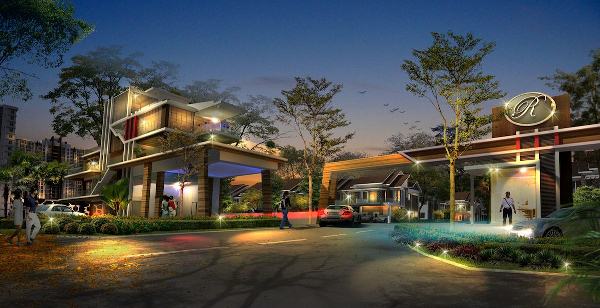
Taman Seri Juru, strategically located within the established township of Juru, Penang. 5 minutes drive to True Light primary school and 10 minutes away from Jit Sin High School. This project comprises 70 units of terrace and 24 units of semi-detached houses.

Location : Juru, Penang
Property Type : 2-Storey Terrace and Semi-Detached
Indicative Price : RM288,000 onwards
Developer : Loyal Commitment Sdn. Bhd.
Contact Number : 04-507 8980 / 04-507 8980 / 012-521 7988


READ MORE: Taman Seri Juru (Phase 3)


Tags:

Taking a closer look at the build-then-sell concept

Property News/ 12 February 2012 No comments

AFTER my last article on the beauty of having both build-then-sell (BTS) and sell-then-build (STB) concepts, I received some feedback regarding the topic during the Chinese New Year break. It is surprising to observe the interest people have towards this issue, especially on the implications of making BTS the only system in our housing development industry.

Many house buyers realised that they can also enjoy the benefits of BTS when they buy from the secondary market. As mentioned in my previous article, 84% of transactions in 2010 were on a BTS basis as purchasing a completed house from secondary market is synonymous with BTS concept. However, some may wonder why it is difficult for developers to adopt the same approach for new projects when it seems to attract more house buyers with BTS?

BTS concept allows purchasers to pay the initial 10% deposit and not pay a single cent until the project is completed. The absence of progressive payments from the house buyers means that the developers would most likely require a higher bridge-financing from the banks to develop the project. At the same time, there is lack of assurance that the purchasers will take ownership of the property upon project completion.

For example, house purchasers who have paid the deposit may later terminate their agreements by just forgo the 10% deposit if the economy turns down or stock market falls since they are not required to obtain loan in the initial stage under BTS concept. This will leave developers in a “tricky” financial condition when they need to deal with unsold units and repay their borrowings at the same time. This concept may also encourage rampant speculation during the good times.

In any business, there should be a binding agreement between buyer and seller to ensure the deal is fair for both parties, and neither party should take advantage of the other. As there is lack of commitment from the purchasers under BTS concept, it is too risky for any developer to undertake massive development and borrowing.

Under our existing Housing Development (Control and Licensing) Act 1966 for STB concept, purchaser has an option to terminate an agreement regardless the construction and billing status. However, under BTS concept, developer can only forfeit 10% of the selling price regardless of the progress of project.

In Australia, both developer and purchaser are obligated to comply with the sale and purchase (S&P) agreement under BTS concept. Purchaser must take ownership of the house and pay the remaining amount when developer complete the project, otherwise there are clauses that allow developer to take legal action if buyers decide to pull out after signing of the S&P agreement.

Therefore, unless it becomes a requirement in our country that the house buyers have to secure the remaining 90% of the property value with a mortgage loan (interest free during construction period) or other form of secured deposits until the project is completed, the banks are obviously subjected to a higher level of risk, and would most likely fund reputable developers with good financial status. And, even if the loan is approved, developers are likely to be charged with higher interests due to higher financing risks.

A chain reaction will come to play when it becomes difficult to obtain a bridging loan. Existing small and/or new property developers will gradually be pushed out of the property industry and the bar for new entries will be raised. The vacuum of property developers will then lead to limited supply of new projects and less competition in the property market.

With increasing demand due to population growth coupled with reducing supply of housing projects, the average price of properties will eventually spiral upwards making it difficult for both aspiring first time house buyers and investors to acquire a property or for the matter, a selection of properties to choose from. This will ultimately defeat and destroy the government’s effort of building affordable and choice homes.

Furthermore, a supply reduction in the housing sector would greatly impact the economy as the property industry contributes significantly to other business activities. According to National Property Information Centre, property industry recorded RM107.44bil worth of transaction in 2010. Residential property dominated the overall market, contributing 47.1% of the value of transactions, which is equalled to RM50.6bil in value. More than 140 other industries and trades such as construction, consultancy, engineering, banking industries, etc, would also be affected if the property industry was to slow down.

As we approach Vision 2020, we must remain steadfast on our goal to achieve a developed country status. Each industry will play a significant role in realising this goal. It is therefore crucial that there be no impediments that would either delay the growth and development of industries or, for the matter, send them a step backwards.

With sufficient rules and regulations in place, allowing the free market to dictate how the industry should be shaped will not only benefit all parties, it will equally help to steer the growth and development of the industry. Perhaps, there is more room for consideration before BTS is made mandatory by 2015. And those who want to have an assurance of their home should buy from reputable developers or in the secondary market, as what 84% have done in 2010.

*Datuk Alan Tong is the group chairman of Bukit Kiara Properties. He was the FIABCI world president in 2005-2006 and was named Property Man of The Year 2010 by FIABCI Malaysia.

Source: The Star

Tags:

Prestige III

Balik Pulau/ 11 February 2012 1,388 comments

Prestige III is strategically located in Balik Pulau, close to all the public amenities like new market, bus terminal, government offices, schools and also medical centre. It is 5 minutes driving distance from the town of Balik Pulau, 20 minutes to Penang International Airport, 30 minutes drive to Batu Ferringhi tourist belt and 40 minutes to Georgetown. Prince of Wales Island International School is just a stones throw from Prestige III.

Comprises of 198 units of single storey terrace, 224 units of double storey terrace, 40 units of double storey semi-detached, 57 units of double storey shop office, 5 storey medium apartment and 5 storey low medium cost apartment on lot 465 mukim D, Daerah Barat Daya, Balik Pulau, Penang.

Location : Balik Pulau, Penang
Property Type : Terrace, Semi-Detached, Shop office & Apartments
Developer PLB Homes
Indicative Price :

  • Single-storey Terrace – RM 360,000 onwards
  • 2-storey Terrace – RM 460,000 onwards
  • 2-storey Semi-detached – RM 600,000 onwards

[nggallery id=7]

Tags:

RM500 fine for not placing construction wastes in ‘Tong RoRo’

Property News/ 10 February 2012 2 comments

Property  owners in Seberang Prai, Penang, who want to renovate their premises are reminded to have specific garbage containers outside their housing and commercial units for their construction wastes.

Seberang Prai municipal councillor Soon Lip Chee said the rectangular-shaped bins, called Tong RoRo (Roll-on-Roll-off bins), measuring 3.6m-long, 2.1m-wide and 0.6m-tall, could be rented from private contractors.

“We have a list of private contractors that rent out these bins but property owners can also opt to find contractors of their choice to do the job.

“The ruling on the bins, which took effect since March last year, is aimed at controlling indiscriminate dumping of construction waste,” he said after inspecting a few houses under renovation off Jalan Raja Uda yesterday.

A private contractor, who declined to be named, said the bins could be rented at RM160 per week during which he would dispose off the waste material throughout the rental period.

Soon said high-rise unit owners were advised to get their respective management bodies to get the council’s consent to have the bins placed properly outside the compound.

“Those who fail to place Tong RoRo outside premises that are being renovated could be slapped with an initial fine of RM500.

“If they still fail to place the bins when the council officers make subsequent visits, they can be fined RM250 per visit,” he said.

Apart from the bin rental, he said property owners were required to pay a RM500 deposit for their renovation plan application as well as a RM250 deposit to clean up the premises after the renovations were completed. Both deposits are refundable.

Soon said applicants also had to pay another RM250 for a temporary permit to place construction materials within their premises as well as RM100 for a permit to dispose off their construction materials.

The payments for both permits are non-refundable.

Soon said the council received 90 applications to conduct renovations in north Seberang Prai from March 1 last year to Jan 31 this year while there were 82 and 37 applications respectively in central and south Seberang Prai.

He said of the total 209 applications, only an applicant’s deposit was forfeited for failing to clear construction debris from his premises.

Soon said all renovation work could be carried out from Monday till Saturday between 8am to 6pm, adding that the council disallowed such work to be done on Sunday and on public holidays.

He said those who came across construction waste dumped by the roadside, near open fields or near dumpsites, were advised to lodge reports with the council or call 04-5497555.


SOURCE: The Star

Tags:

Dijaya aims to launch RM1.1b worth of projects

Property News/ 10 February 2012 No comments

title=PROPERTY developer Dijaya Corp Bhd aims to launch RM1.1 billion worth of projects this year after accumulating land for development in the past 18 months.

Last year, the master property developer of Tropicana Golf & Country Resort and Tropicana Indah Resort Homes in Petaling Jaya only launched RM700 million worth of properties.

"For 2012, we are targeting sales between RM650 million and RM700 million. It is a conservative target but we hope to achieve more than that," Dijaya managing director Datuk Tong Kien Onn told pressmen after the company's extraordinary general meeting in Petaling Jaya yesterday.

Last year, Dijaya sold about RM420 million of properties.

"Dijaya will be launching many new projects this year and next year on lands that we have purchased over the last one-and-a-half years.

"The total gross development value (GDV) of these lands works out to around RM28 billion," said Tong, adding that the group's total undeveloped landbank area is 324ha.

Among the projects in the pipeline this year are within its flagship Tropicana project in Petaling Jaya as well as in Subang, Cheras, Johor Baru and Penang.

In the third quarter this year, Dijaya will be launching two new projects in Tropicana Indah Resort Homes, namely Golf Villas and Tropicana Gardens.

The RM1.8 billion Tropicana Gardens commercial centre features SoHo units, offices, service apartments, offices, a hotel and lifestyle retail space.

Dijaya aims to develop 5.6ha of the lakefront project over a period of between six to eight years, and the first phase will involve RM200 million GDV.

In Subang, Dijaya had bought 35.4ha for RM385.5 million in 2010 with plans to build three-storey link, semi-detached and bungalow houses, condominiums as well as commercial development.

Dijaya aims to make a huge footprint in Johor's property market with the second project called Tropicana Danga Cove with a total GDV of RM2.8 billion. The construction of the 10-year project is targeted to commence by first half of this year.

On the horizon, due to the limited landbank within the Tropicana development, Dijaya has plans to develop bungalows, link houses and semi-detached units at Tropicana Cheras and Tropicana Balakong.

The acquired landbank in Sungai Long, Cheras and Balakong have an estimated GDV of RM185 million and RM400 million, respectively.

Yesterday, shareholders of Dijaya approved the company's plans to enter into a joint venture with Ivory Properties Group Bhd to buy and develop a 41.02ha site in Bayan Mutiara, Penang.

Tropicana Ivory Sdn Bhd, 51 per cent owned by Dijaya, will invest RM10 billion in a mixed residential and commercial property project that will keep the company busy for eight to 12 years.

SOURCE: Business Times

Tags: