fbpx

Residential prices hardly fall On a per sq ft basis, it has risen

Property News/ 11 March 2012 No comments

THERE was a lot of talk late last year that property prices will tumble in 2012 after the steep rise in the residential sector over the past few years. So far, we have not seen any of that.

What we are seeing is:

● Bank Negara’s tightened guidelines on consumer lending have started to work. Loan applications and loan approvals have fallen in January;

● In certain locations, house prices and rental have started to ease; and

● Developers are offering very enticing terms since the beginning of this year.
Keep your finger on these three factors and let us now take a look at today’s launches. In some of these launches, buyers need only to pay about 1% downpayment of the property price instead of the required 10% on signing of the sale and purchase agreement. The stamp duty and legal fees are also waived and they need not pay anything else until after the property is completed. Such schemes have attracted many buyers.

The question to ask is: If the market is as good as many claimed it to be, why are developers offering such schemes? When a property is sold, it is registered as a sale. But the absolute revenue of the unit is yet to be paid.

For easy calculation purposes, 10% of a RM500,000 property is RM50,000. If the first 10% is paid, this RM50,000 is registered as revenue by the developer, but in the sales column, a sale of RM500,000 is recorded. That is why the sales and revenue figures vary considerably.

If a developer allows a buyer to pay only 1% of the purchase price, this does not mean he “loses” that other 9%. He will get it back after a certain period of time. The same goes for the waiver of the stamp duty and legal fees. The developer has to pay the lawyers for services rendered. All these charges and fees are packaged into the deal which the buyer will have to bear in due time. In this case, later rather than sooner.

Developers are offering such attractive terms in order to make a sale. Many of these schemes are offered in condominium projects because there is generally a glut in this segment. While such schemes may attract genuine buyers who need a roof over their heads and who are thankful that they can defer payment, it also attracts those who have no problem forking out that 1% downpayment and take a gamble that they will be able to offload it when the project is completed.

If one were to drive around certain parts of the Klang Valley today, there are some completed high-rise with large mobile numbers plastered on windows. It may not be so easy to offload units when there are so many of them.

What is noticeably absent, and which many would like to see are more launches of landed housing. But this is unlikely to happen. Only the secondary market is offering landed units, which may explain to a certain degree why the secondary market was rather robust last year. It applies not only for the Klang Valley, but for Penang as well and is a reflection of strong domestic demand despite the many negative predictions for this year.

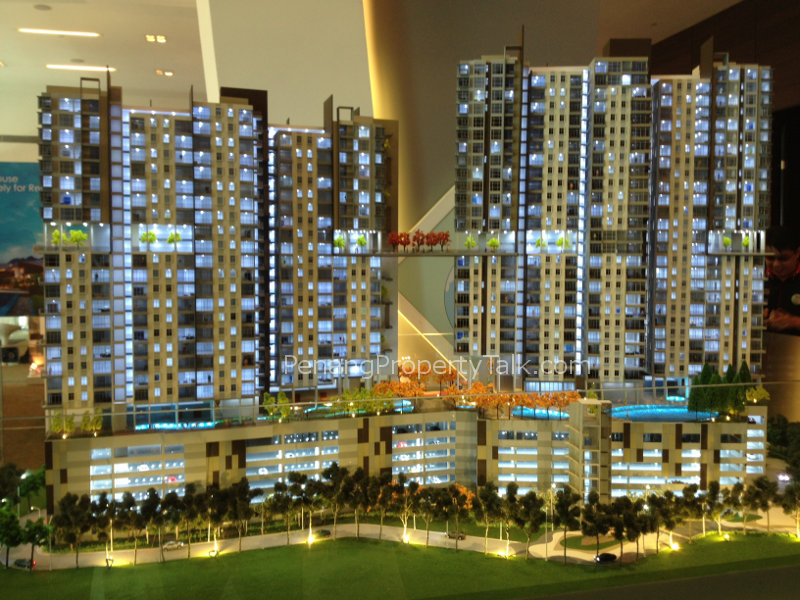
When a developer considers a piece of land, he thinks of how much he can make from it. If he were to build a condominium and throw in various facilities, he can sell more houses than if he were to build landed units. That is why most of the launches today are high-rise projects, be it condominiums or serviced apartments.

Developers are also limited by what they have. Increasinlgy, land in city centres and popular areas are getting smaller. Which explains why in highly dense areas, condominium projects continue to be sprout up in the most congested of areas.

The development of landed units can only take place when there is large tracts of land, which also explains why the big boys like Mah Sing and SP Setia are venturing further away from city centres.

The other obvious factor in today’s launches are the size and price of the condominium units. Most of the units are small. Studio apartments may be in the 500 sq ft range or thereabouts while those targeted at families may be three-bedroom units with built-up areas of 1,200 sq ft onwards. Most of the launches today are priced close to RM700,000 onwards. On a per sq ft basis, the price is still going up, whether it is a Petaling Jaya address or a Bukit Jalil one.

So, while sales volumes may stagnate in newly-launched projects (which explains why developers are offering units for sale with a 1% downpayment), on a per sq ft basis, prices does not seem to be stabilising. Developers are trying to maintain affordability by having smaller units, deferring payment and leveraging on low interest rates.

Assistant news editor Thean Lee Cheng is glad that Bank Negara is monitoring the household debt and lending in the property sector closely as this year promises to be an exciting one.

Source: The Star

Tags:

Bankers and lawyers should know better

Property News/ 11 March 2012 No comments

BUYING a property that eventually becomes abandoned is a painful experience for many house buyers. It not only hurts purchasers who have lost their hard-earned money but also affects the property industry’s reputation which has taken a beating due to unethical activities of a few culprits.

This is particularly so when the abandoned project is not caused by factors such as economic downturn or withdrawal of purchasers, but solely due to irresponsible people who claim to be “developers” but do not hold a licence to do so.

It was recently reported that our Housing and Local Government Ministry has identified 195 abandoned developments that were unlicensed in our country. I am puzzled as to how these “developers” are able to start their projects when they do not even have their licence to apply for financing if they require a bridging loan, and is their sales and purchase (S&P) agreement properly attested by a lawyer before they start selling?

In this context, what can be done and who should play a part in reducing these unlawful developers? Assessing our existing housing development process would provide us with some ideas.

When a developer plans for a housing project, he must first get the necessary approvals and licences from the relevant authorities such as the development order, building plan, advertising permit and developer’s licence. The developer then may need to source for a bridging loan from a financial institution and this is followed by getting lawyers to prepare the legal documents which include the S&P agreement.

When the project is launched to the market, the developer will require the purchasers to sign the S&P agreements in order to finalise the purchase. Should the purchaser acquire a housing loan from a bank, the bank will come into the picture to process the loan application submitted by the purchaser. Those are the basic procedures involved in developing and marketing a housing project in Malaysia.

For unlicensed development, the regulatory bodies are not in the picture. In such cases, it becomes apparent that the lawyers and/or bankers, both representing the house purchaser, have a role to play as the first line of defence to protect the interest of the purchaser.

Hence, there are questions that begged to be answered. How is it possible for financial institutions to approve the end financing loan for a property development in the absence of all or part of the required approvals and licences? The same questions are posted to lawyers who prepare the legal documents for unlicensed development.

I believe everyone has a role in identifying irresponsible players in the industry, especially the bankers and lawyers with their better access to information and strong regulatory network as compared to the general public. As a purchaser and a customer, you would have expected your banker and lawyer to carry out their due diligence duties to ensure that your interest is not compromised.

In other industries, professional practitioners who do not convey the right message and do not protect customers’ interests can be given stern punishment as their action may be deemed as negligence, fraud or even criminal breach of trust.

According to the record of National House Buyers Association, in the case of Keng Soon Finance Bhd (1996), a financial institution had granted a loan to an unlicensed developer, and it was decided that the loan and the security offered were invalid. The bank could not institute the foreclosure proceedings on the land and therefore could not recover its loan.

Under our Housing Development Act, a property developer that engages in, carries out or undertakes housing development without having been duly licensed can be fined between RM250,000 and RM500,000 or to imprisonment for a term not exceeding five years or both. This is an avenue to take action against unlicensed developers. While we have the law in place, it is equally important to ensure strong enforcement comes along.

For house buyers, you are strongly advised to purchase property from reputable developers and to do thorough “shopping” and analysis before signing on the dotted lines. Responsible developers are keen to work hand-in-hand with purchasers and appreciate the role of the National House Buyers Association which advocates the protection of house buyers in Malaysia. We should stand together as a team to fight against irresponsible developers.

And for anyone of you who think that you have bought into one of those unlicensed developments mentioned earlier in the article, it is time to write and call your banker or lawyer for clarification.

Datuk Alan Tong is the group chairman of Bukit Kiara Properties, he was the FIABCI World president in 2005-2006 and was named Property Man of The Year 2010 by FIABCI Malaysia.

Source: The Star

Tags:

Condo market challenging

Property News/ 10 March 2012 No comments

PETALING JAYA: With close to 2,600 high-end condominiums scheduled for completion in Kuala Lumpur this year, the outlook for the luxury condominium market in the capital city is expected to be challenging.

“Bank Negara is keeping a close eye on the mortgage loan market on concerns of rising household debt-to-gross domestic product levels and has issued new guidelines to further tighten lending with effect from Jan 1,” said property consultancy Knight Frank, in its Second Half 2011 Real Estate Highlights report.

“This will inevitably have a negative impact on this sector as demand turns cautious with further pressure expected on prices and rentals of high-end condominiums in selected locations and schemes.”

Concurring with the bearish outlook is DTZ Research. In its Property Times Kuala Lumpur fourth-quarter 2011 report, DTZ pointed out that the sizeable number of new condominiums entering the market – about 5,004 units in 2012 and another 4,502 units in 2013 – was expected to put downward pressure on the rental market, especially in the Kuala Lumpur city centre, as a majority of them are in this location.

“The rental market will continue to feel pressure from the significant new supply that will be completed in the next two years. In addition, the economic uncertainty and tightening of credit by banks will contribute to the cautious demand for luxury residential properties,” Property Times added.

The Knight Frank report said during the review period, prices and rentals of high-end condominiums in selected schemes in Kuala Lumpur and the city fringe continued to face downward pressures due the high number of existing supply and new completions as well as a weak leasing market emanating from low occupational demand from local residents and expatriates.

The projects that are scheduled for completion this year include Residensi Kia Peng, The Pearl @ KLCC (formerly known as Stonor 16), Crest Jalan Sultan Ismail, Setia Sky Residences – Phase 1A (Boheme Tower), St Mary Residences, Verticas Residensi (Towers A, B and C), Suasana Bukit Ceylon, 9 Madge, Amarin Wickham, Gaya Bangsar, and Matahari Desa Sri Hartamas.

Recent upmarket condominium projects that have been launched included Verdana @ North Kiara (Phase 1), Icon Residence Mont’Kiara, Mirage Residence, Laman Ceylon, 188 Suites, St John Woods Residence, Rimbun Condominium (formerly known as Amphill Residence) and Platinum Suites – Phase 1 of Platinum Victory Face project.

Other projects in the pipeline during the first half of this year include serviced apartments project KL Trillion, Royce Residence, SoHo units @ Arcoris Mont’ Kiara (formerly known as MK 20) and Damansara City 2 serviced apartments.

In the primary market, developers continued to offer attractive incentives such as rebates, discounts and a limited period of free maintenance fees to drive sales.

There was also a notable shift with more sales and leasing activities in the city fringe and suburban areas evident from several successful previews and launches of high-end condominiums at new benchmark prices commensurate with higher building specifications and improved level of facilities.


SOURCE: The Star

Tags:

Long queue to ownership

Property News/ 9 March 2012 No comments

FOREIGN workers are being paid up to RM1,000 to queue up for housebuyers to book hot properties in land-starved Penang island.

These professional queuers — mostly Bangladeshis and Indonesians — even bring along their wives and children to camp outside the developer’s office up to one week ahead of a project launch.

They are paid between RM200 and RM250 per day to stay in queue for numbers which are then passed on to buyers to enter the sales office to book their units.

Architect Jessica Tan said she forked out RM150 to a “local agent” of the foreigners for a Bangladeshi to stay in the queue from 8pm the night before the launch until 7.30am the next day.

The 30-year-old, who did not want to spend the night for safety reasons, said the foreigners brought along their children and wives to camp outside the developer’s office.

“My friend from Kuala Lumpur paid RM1,000 for a Bangladeshi to stand in line for five days,” she said, adding that some locals even offered such a service for a hot property in town recently.

Engineer Edward Wong claimed that foreigners camping overnight on behalf of buyers was a common sight since late last year but lining up as early as a week before the property launch was a new trend.

“Usually, there will be two of them who take turns queuing in front of the developer’s office,” said the potential buyer in queue.

Wong, however, said the professional queuers had irked genuine buyers who find themselves far behind the line despite turning up early to book their units.

“An elderly man was here at 5.30am on the launch day itself but only managed to get in at 4pm because the foreigners had started queuing days before.

“With foreigners lining up for property investors, common folk like us won’t get a chance to purchase the affordable units,” said Wong.

Sophie Low, 34, said Penang was a “developer’s market”.

The property investor said she was not surprised at people hiring foreigners to queue for them as new projects in Penang island were in such high demand.

“It’s a free market — if you have the money to pay someone to stand in line for you, that’s fine,” she said.

Real Estate and Housing Developers’ Association (Rehda, Penang) chairman Datuk Jerry Chan said there was “absolutely nothing wrong” with genuine buyers paying foreigners to stand in line for them.

“Those who are working cannot be expected to stand in line overnight, so engaging a property agent or even their maids to do it is fine.

“However, it’s unethical (though not illegal) for scalpers to line up and then sell their spots in the queue because it could deny genuine buyers the opportunity to purchase a unit of their choice.

“One way to eliminate scalpers is to require those lining up to come with a bank draft as evidence of their intent to purchase,” he said.

Source: The Star

Tags:

Dijaya in amalgamation exercise

Property News/ 7 March 2012 No comments

title=DIJAYA Corp Bhd will buy assets worth RM1.1 billion owned by its major shareholder, Tan Sri Danny Tan Chee Sing, under a consolidation exercise to spur its growth.

The exercise is specifically aimed at streamlining and rationalising a majority of land and properties held by Tan into Dijaya.

Both parties entered into a conditional amalgamation exercise agreement yesterday.

Under the deal, Dijaya will acquire 73 properties, including 24ha of land in Kuala Lumpur, Penang, Johor and Sabah, and investment assets held by Tan, excluding the liabilities incurred by these properties, for RM948.7 million.

The deal is expected to conclude by September this year.

Tan said the assets would give Dijaya good recurring income of eight per cent per annum.

The assets include Dijaya Plaza in Kuala Lumpur, Casa Square in Puchong, Intan Square in Petaling Jaya, Jaya Square in Subang and Wisma TT in Bandar Sunway.

The land acquisition, meanwhile, will increase Dijaya's land bank to 348ha, generating a gross development value of RM37 billion over the next 12 to 15 years.

Dijaya managing director Datuk Tong Kien Onn said the deal would benefit the company over the long term as all the assets would help improve its financial figures.

The exercise, upon completion, will increase Dijaya's market capitalisation to over RM1 billion at a price of RM1.50 per share. This will make the company one of the largest property developers on the Main Market of Bursa Malaysia.

The acquisition will be satisfied by RM250 million cash and the balance via the issuance of redeemable convertible unsecured loan stocks (RCULS), with a staggered conversion price range of RM1.30 to RM2.50 over a 10-year period.

As an integral part of the deal, Dijaya will undertake an equity fund raising exercise via a renounceable rights issue of up to 491.3 million new shares of RM1 each at an issue price of RM1.20 per rights share, together with a bonus issue of up to 122.83 million new RM1 shares.

Tan and the parties related to him will provide Dijaya with undertakings to subscribe for RM250 million in value pursuant to the proposed rights issue, which will constitute the minimum subscription level for the proposed rights issue.

Dijaya has also proposed a debt funding via the issuance of up to RM500 million guaranteed commercial paper/medium term notes programme (CP/MTN) with an option to issue detachable warrants to further meet the business investments and long-term capital requirement of the group.

In view of the proposed amalgamation exercise, Dijaya has cancelled its proposed private placement as announced on August 18 last year to mitigate any further dilution of shareholdings in the company.

SOURCE: Business Times

Tags: