5 Property Feng Shui Features To Look Out For
 Today, feng shui has been inaccurately associated with the practice of understanding if a home, property or general area is considered “good”, “bad”, “auspicious” or “inauspicious”.
These terms get thrown around so much, people tend to lose logic and rationale in the rush to fulfil certain “feng shui criteria”. To optimise effectiveness of feng shui, it is important for one to understand that it is not just about making money or enhancing “good luck”, but so much more.
To begin understanding the subject, one should ask three simple questions when studying a property and its land – What exactly is bad? How bad is it? Why is it bad to begin with?
More often than not, knowing something to be simply good or bad creates a lot of misunderstanding, paranoia or fear. That is not what feng shui is about. Rather than getting absorbed into the fear of how having the wrong interior design in your house can affect the Qi, you should examine these five property feng shui features that are common to every home and the undesirable factors to avoid in your current or future property.
The main door
After the environment, the main door, along with the kitchen and bedroom, form the three important factors in feng shui. These are the three main features of a property that every feng shui consultant must evaluate.
The main door is an important key feature, as it is essentially the Qi mouth of the property. When evaluating this feature, do not just look into the property, but out as well. Simply stand at the door, look out from within the property and check if any negative forms are within sight in that view.
If you see a tall structure like a lamp post within sight from the main door, then you have a possible case of Piercing Heart Sha. This can affect the health and career of the occupants.
Another negative feature to avoid is the sight of a narrow gap between houses, usually as a result of two houses built close together. This is a mini version of Tian Zhan Sha (Crack in the Sky Sha).
It is also not recommended to have the main door overshadowed by thick foliage from trees, causing the property to be under a perpetual shadow. This creates Yin Sha, which affects the mental health of the residents.
These are some of the highly undesirable external factors affecting the main door and one should avoid buying a property with these factors present.
Kitchen
Since the kitchen represents life and health of the people living in the property, it is essential that the residents only consume good food to ensure great health. A badly located kitchen usually brings poor health for the residents. Hence, the kitchen should never be located in the central place or the Heavenly Heart of the home. Having a kitchen in these areas of the property is like giving the property a constant heartburn, creating instability and long-term nagging health problems. The kitchen should always be located at the side of the house, and never in the centre.
Aside from the general location of the kitchen, one should also evaluate the layout within the kitchen. Ensure that the stove is not located in front of any door or doorway entering the kitchen. This is like a mini T-junction causing the Qi to rush in the door, hitting the stove and imbuing the cooked food with Sha Qi. If possible, move the stove away from the kitchen door.
Bedroom
Sleeping is important as it impacts our vitality. Like the kitchen, the bedrooms should be located in suitable sectors of the property, based on the formulas in Eight Mansions, Xuan Kong Da Gua or Flying Stars.
Rooms that are round, triangular or oddly shaped with sharp corners should be avoided at all times. Instead, choose a square room as it can, to some degree, insulate any form of negative Qi that impacts the room.
Drains
Look outside the main door of a property and observe the location of the drain. If the drain runs parallel to the main door, the occupants may face a problem known as Cutting Feet Water. This negative Water feature adversely blocks the Qi from entering the property, cutting into the vitality of the Qi in the house.
Although this should be avoided at all cost, you will only have a Cutting Feet Water problem if the drain is visible from the main door of your property. If not, it should not be a cause for concern.
Roads
Most in-demand properties are those that are situated away from roads that are sources of extreme noise pollution and heavy traffic. From a feng shui perspective, what one needs to watch out for are the curves on the road leading to the property. This is called a Bow Formation and will cut into the flow of Qi into the property.
Also avoid properties that have narrow or wide alleys opposite them. This is because it can cause either a Pulling Nose Qi or Sky Crack Sha problem (depending on the type of alley) and this negativity is usually extremely hard to correct.
Other notorious negative features include the T-Junction. Living up to its unlucky reputation, even non-practitioners of feng shui know better to avoid purchasing properties “hit” by the T-Junction. However, if the T-Junction just misses the property by a margin, you can usually counter any negativity by planting trees or plants to act as a barrier for the bad Qi.
Unless you are financially able to custom-build your dream house, be prepared for the fact that any house will have a feng shui problem or two – though you should bear in mind that not every one of them are severe issue.
You should also be prepared for the fact that sometimes, not every one of these problems can be easily fixed by a consultant. The trick is to find a home without the problems in the first place. Do not give up as with some patience, effort and the right questions, you will be able to find it.
This article is contributed by Dato’ Joey Yap, the founder of the Mastery Academy of Chinese Metaphysics, a global organisation devoted to the teaching of Feng Shui, BaZi, Qi Men Dun Jia, Mian Xiang and other Chinese Metaphysics subjects. He is also the Chief Consultant of Joey Yap Consulting Group, an international consulting firm specialising in Feng Shui and Chinese Astrology services.
Source: iMoney.my
 Any increase in house prices upon implementation of the Goods and Services Tax (GST) in April next year is just temporary, as a number of measures are already in place to curtail the rise.
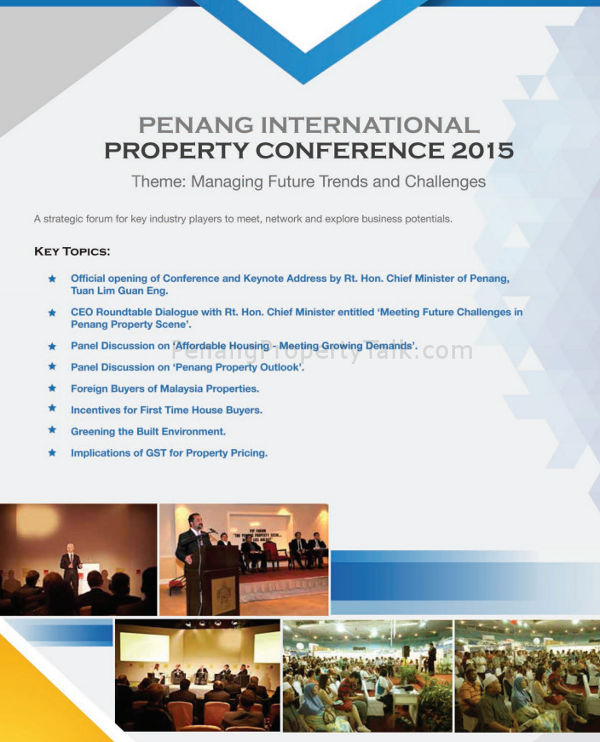
 The Urban Wellbeing, Housing and Local Government Ministry has decided that the plan to compel housing developers to adopt the concept of build-then-sell will not be implemented next year.