fbpx

Land prices continue to be on the rise in Penang

Property News/ 30 December 2014 No comments

DNP Land Sdn Bhd senior general manager Tan (centre) discussing with its staff on the company’s new commercial project in Alma, Bukit Mertajam.

Kuala Lumpur and Penang-based developers will launch approximately more than RM1.418bil worth of residential properties in Seberang Prai in 2015, a year in which the property market is expected to perform badly.

The developers launching the projects are Wing Tai Malaysia Bhd (RM300mil GDV), Tambun Indah Land Bhd (RM469.6mil), IJM Land Bhd (RM379mil), and Sunway Bhd (RM70mil).

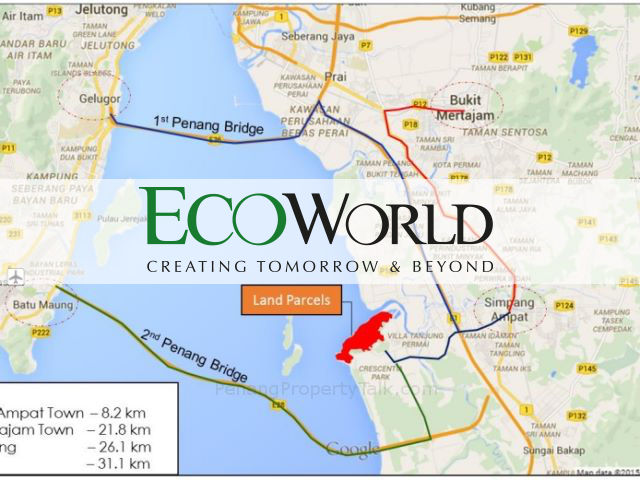
The projects are located in the prime locations of Central Seberang Prai and South Seberang Prai, where land and property prices have increased significantly since 2006, just before the announcement of the second bridge project in late 2006.

Henry Butcher Seberang Prai’s associate director Fook Tone Huat says the prices of vacant land in the area, especially in south Seberang Prai where the second bridge is located, are now hovering between RM42 and RM60 per sq ft, a huge jump from 2006’s RM8 to RM9 per sq ft.

Land prices in Central and North Seberang Prai were then between RM20 to RM40 per sq ft, compared with today’s range of between RM50 and RM120 per sq ft.

The increase in land prices has translated into higher property prices.

“New landed properties such as double-storey terraced units in South Seberang Prai are now priced between RM360,000 and RM450,000 compared with between RM150,000 and RM200,000 prior to 2006,” said Fook.

Double-storey terraces in prime locations in Central and Northern Seberang Prai have doubled from RM200,000-RM270,000 range to RM400,000-RM630,000.

“We are also seeing a number of life-style condominium projects being planned in Bukit Mertajam this year with new units priced at around RM300 to 350 per sq ft,” sFook says.

As for the secondary or sub-sales market, double-storey terraced houses have a wide price range of between RM300,000 and RM600,000, depending on location.

Landed properties in the sub-sales segment command the best pricing in Bukit Mertajam and Butterworth town.

Wing Tai’s projects are in Alma, a prime residential neighbourhood in Central Seberang Prai, comprising high-rise serviced suites, terraced, and semi-detached properties that are priced from over RM400,000 for serviced suites and RM600,000 to over RM1mil for landed properties.

The projects planned for launching via Wing Tai’s subsidiary, DNP Land, next year are Mahkota Impian Service Suites, BM Utama Phase 5 and Jesselton Hills Phase 3, which has a collective RM300mil GDV.

IJM Land projects, Permatang Sanctuary and Senjayu, totalling RM379mil GDV are in Alma and Jawi, South Seberang Prai, which will be launched from mid-2015 onwards.

In Alma, the projects are semi-detached and detached properties priced from RM600,000 onwards, while in Jawi, the projects comprise terraced, semi-detached, priced respectively from RM480,000 and RM620,000 onwards.

Sunway’s RM70mil condominium project, to be launched in the first half of 2015, is located strategically in the older section of Bukit Mertajam town, Central Seberang Prai.

Tambun Indah Land Bhd will launch in 2015 1,106 units landed and high-rise properties with a RM469.6mil GDV for its Pearl City mixed-development scheme in Simpang Ampat, South Seberang Prai a stone’s throw away from the second bridge.

Fook said there won’t be much price appreciation expected due to cautious market sentiment and stringent financing policies.

“The volume of transactions is unlikely to improve, but property prices are expected to remain high for those residential cum commercial schemes at popular areas such as Butterworth, Bukit Mertajam and Simpang Ampat neighbourhoods.

“For the residential segment, the trend of development would shift towards high-rises in view of high land cost especially in Central Seberang Prai,” he said.

On whether a price war would erupt in Seberang Prai, DNP Land (North) general manager KC Tan said the property prices Seberang Prai is unlikely to undergo correction, as developers had to factor the higher land cost, additional infrastructural development and compliance charges that needed to be paid to the state government.

“We don’t expect substantial increases in pricing in 2015, as most developers will try to cap the prices at reasonable levels to generate better sales,” Tan said.

Moving ahead, Tan said developers might resort to building smaller size houses to cushion the hike in land cost and development charges.

“In this way, they could cap the price of properties within the affordable range,” he said.

As properties within the range of RM400,000 to RM700,000 is easier to be absorbed in the market, more high-rise properties within the RM400,000 to RM600,000 range would be introduced in Seberang Prai, according to Tan.

Meanwhile, Sunway senior general manager Tan Hun Beng said the group’s launches were targeted at those with a monthly household income of over RM10,000.

“Your income need to fall around this range in order to secure a housing loan these days, given the stringent guidelines nowadays.

“The rejection rate of housing loans is over 50% nowadays.

“The demand for properties will always come from those with the disposable income who want to find a home in a secured, clean, and green environment.

“As there is always such demand, it is difficult to foresee the prices of properties dropping substantially in the future,” he added.

According to the Penang Institute (PI), some 40% of the Penang population are in the middle-income category earning between RM3,500 and RM7,100.

Under the new loan conditions from banks, which take into account a person’s net income and other commitments, this middle-income group is eligible to take up loans for properties priced between RM130,000 and RM245,000.

Meanwhile, Rehda Penang deputy chief Datuk Toh Chin Leong said for some projects, the rejection rate of housing loans was as high as 50%.

“It is very common nowadays for developers to return the deposit payment when the loan facility is turned down.

“This is something you don’t see happening three years ago, but started to happen more and more often in past 18 months,” Toh said.

Source: StarProperty.my

Tags:

Penang Property Outlook 2015

by Ken Lim

Property prices in Penang have been on the upward trend for the last seven years. However, the scale of growth in 2013 & 2014 has considerably slowed down as expected due to the cooling measures adopted by government and Bank Negara.

As we enter a brand new year in less than a week, growth is expected to progress at a slower rate in first half of the year against the backdrop of present cooling measures and the uncertainty in the property market. This does not mean that we are going to see a visible reduction in property value. Instead we shall see a better growth in second half of the year after all the cooling measures have been normalized and the doubts on GST issue are cleared.

Market Trends

The number of residential property transactions has been declining since 2011, mainly due to the slowdown of sales in the primary market. In 2013, the number of transactions in the primary market has dropped from its peak of 13,735 at 2011 down to an astonishingly low value of 2,750 in 2013, which is only 16% of total residential property transactions in Penang. The number has not improved much in 2014.

The continuous decline of sales in the primary market is mainly due to the fact that the average selling price is approaching the psychological upper limit of RM600k. This is the price which is generally considered affordable for young married knowledge workers in Penang however the cooling measure adopted by Bank Negara Malaysia are making it harder for these young couples to get the necessary amount of loan.

The downtrend in sales will force developers to seek alternative effective approach in their pricing strategy. In order to secure a respectable degree of interest from the home buyers, developers are likely to adopt a more conservative pricing strategy. Instead of positioning their projects based on price per square feet, the strategy will focus on the final selling price of the property, which falls within the range of RM500 – RM800k depending on areas. As the housing price continues to appreciate, people are now more receptive to a smaller unit as long as the price is within their reach of affordability.

On the other hand, secondary market remains very active with only a slight decrease in transactions over the past few years. This indicates that overall consumer confidence is still strong as many are searching for good buys in the secondary market within their purchasing capability. In fact, 2015 is still very much considered a buyer’s market and it is good time to hunt for one.

Affordable Housing

Housing affordability has been a hot topic in recent years. The heat continues to escalate in 2014. While both government and private sectors have formulated various plans to deliver affordable housing, there seems to be a constraint in the marketing effort from the government in elevating the level of awareness to the people. Although there are more than fifty one thousand applicants applying for government housing projects, only around 10% of them applied for projects with respect to the offering of affordable units (RM200,000 – RM400,000). This is way below the 13,851 affordable units planned by the government.

Affordable housing is going to be the primary theme in the local housing industry in 2015. As of today, a lot of affordable housing projects have been planned by government and private sectors however very few have actually commenced operations. It is therefore expected to observe a higher level of marketing activities and a greater degree of execution in affordable housing projects in 2015.

Mainland Penang

The landed properties in Mainland have appreciated significantly in the past few years. Seberang Perai Tengah area has benefited the most due to its strategic location, being in the centre of the two Penang bridges. Most of the new landed projects are now fetching a price of more than RM500k. A majority of the new 3-storey semi-detached prices exceeds more than RM1 million now. The price is believed to escalate to the next level as more major property players such as EcoWorld are expected to launch their new projects in the mainland in 2015.

When affordable housing started to flourish, it may be a challenging time for the condominium sector in the mainland as they will be competing within the same pricing range category with the affordable units in the island.

Today, as the concept of lifestyle gains momentum, gated and guarded housing projects in the mainland continues to be an attractive option as some of them still fall within RM500k-600k pricing bracket. There are also more choices of well-planned township due to the availability of large land bank in the mainland.

What about Batu Kawan?

Batu Kawan is a growing brand in the making. There may be some development going on however it is going to take many more years for it to develop into a full fledge township. Not much excitement is expected in 2015 except for some growing interest in the affordable housing project as well as the first phase of Aspen Vision City, driven by Aspen Group. If everything develops according to the initial proposed plan, the construction of an integrated shopping mall anchored by IKEA is expected to starts by the end of 2015. We can also expect some updates on the mixed development project by EcoWorld and the premium outlet mall.

Statistics of 1.2 million visits in PenangPropertyTalk.com in the current year of 2014 have formed the basis of my analysis and thinking process regarding this subject. However it is my firm belief that the critical and unbiased assessment shared in this article drives towards a possible pattern as we usher the beginning of a brand new year.

(Written on 28 Dec 2014)

– Ken Lim
(Founder and Principal Reviewer, PenangPropertyTalk.com)
*Article refined by Alex Tan (Writer at www.bokhooi.com)

Tags:

5 Factors To Consider For Your Buy-to-let Property Investment

Property News/ 26 December 2014 No comments

With the various property cooling measures in place, the market has inevitably stabilised. Property speculation has been slowed down tremendously.

According to the managing director of PA International Property Consultants (KL) Sdn Bhd on The Star, Jerome Hong, “A lot of the speculators have been removed with the various cooling measures and stringent banking requirements. Prior to this, developers took care of their own marketing and do not need the services of marketing agents.”

However, property investment is not dead. Even though property prices do not seem to be going down anytime soon, investors are still at large. The difference between an investor and a speculator is, investors buy to let, while speculator buy to flip.

Unlike speculators who look solely for capital growth, buy-to-let investors look for both good rental yield and capital growth.

If you are considering investing in property or improving your returns on a buy-to-let you already own — it’s important to do things right.

1. Choosing the right property

Should you buy a landed property or a high rise apartment? Is a low-cost apartment better than a high-end condominium when it comes to rental yield? How about capital gain?

Different types of property can help you achieve different goals. So, first you have to decide which objective takes precedent — is it high rental yield or is it capital gain that you are looking for?

Rental yield per annum is the percentage return based on rental income from the
property after deducting the expenses incurred to maintain the property versus the total purchase price of the property. Capital gain on the other hand is the gain or loss incurred after selling the property.

To decide on the property to get for buy-to-let, you need to find out everything about the location, target market and the property type to determine the best return for your money.

Search online to find out the rental demand and the market rental rate for that area and also the types of property that are in the rental market.

The general rule of thumb is that a high-rise usually will yield better rental, while a landed property has a higher rate of capital gain.

2. Do your math

Once you have done your research and have made a decision on what property to buy and where, then you need to ensure that you will get the rental yield that makes the investment worthwhile.

For example, if you are buying a 965-square-feet condominium unit in Cyberjaya, selling at RM455,000, the market rate for rental is RM1,800 for a partially furnished unit.

Some of the cost that may be incurred in a year are the maintenance fee (RM0.25 per square foot), assessment tax, quit rent and mortgage insurance. Let’s assume that the cost of maintaining a unit in Cyberjaya runs up to RM3,000 a year.

The net rental yield for this property is calculated as such:

Net rental yield

= ([(RM1,800 x 12) – RM3,000] ÷ RM455,000) x 100
= 4.08% per annum

However if you have to get the property with a home loan (like most people), it is important to include the annual interest incurred in the calculation as well. For example, you get a fixed rate loan for 35 years at 4.39% with a 90% margin of finance. Your interest for the first year is around RM19,356.

Net leveraged rental yield

= (RM21,600 – RM3,000 – RM19,356)/RM45,500 x 100
= 1.66% per annum

The above rental yield is not really promising. The monthly repayment for the home loan is already RM1,910. That’s RM110 more than the rental received. If you put your money into a fixed deposit account with an interest rate of 4.15%, you can probably get higher return than putting it into a property.

Calculate the rental yield before taking the plunge to ensure your money is working as hard as it should in the investment.

3. Manage your investments

Property investment is not something that you can just dump your money into and leave alone. There’s a lot of work involved, especially bearing in mind that it is a relatively illiquid investment.

If you decide to manage the property on your own you must be prepared to set aside time for it. From the beginning, you will have to bring your potential tenants to view the property, and then prepare the tenancy agreement, collect rental, pay maintenance fee and taxes, as well as any repairs that need to be done during the tenancy period.

However, if you don’t have the time to manage this, it may seem more worthwhile to get a real estate agent to do it for you. The fees charged by an agent are as follows:

If you decide to go with an agent, this cost may affect your rental yield slightly.

4. Know your target market

Identifying your target market will help you decide the kind of property you should be buying and the locations you should consider. Should you target single expatriates, expatriates with family, students, young professionals or corporate tenants?

If you are planning to engage a real estate agent, ask for their opinion. They can probably advise you on the best location to go for based on your target market, as they understand the market and may already have a database of potential tenants who are looking for property to rent in the area.

Most first time property investors make the mistake of imagining whether they would like to live in the investment property, instead of putting themselves in the shoes of the target tenant.

If you are targeting student tenants, you should look at properties near campus, have convenient public transportation, and a low rental. However, if you are targeting family, you should get a bigger property with at least three bedrooms.

For local families, they would prefer properties that are empty, as they usually have their own furniture and would like to decorate it according to their preference. However, expatriate families may prefer a bigger property that is fully furnished and near international schools.

Deciding on your target market can help you narrow down your investment and fine tune your strategy.

5. Tax implications

Being a buy-to-let property owner will bring new tax implications and you should make sure you fully understand them by seeking the appropriate professional advice. Here are some personal taxes that you need to be aware of:

Property tax

Property owners have to pay for assessment tax on residential property based on the annual rental value of the property, as assessed by the local authorities. It is generally levied at a flat rate of 6% for residential properties and payable in two instalments.

On top of that, quit rent is also payable once a year if you own a landed property. It is charged annually at a rate of RM0.035 per square foot per annum. If you own a 2,500-square-foot terrace house, you will have to pay RM87.50 in quit rent every year.

Income tax

Rental income is taxable in Malaysia. If you find that your total income for the tax year exceeds RM5,000, you may have to pay tax. However, the costs associated with the buy-to-let property, such as mortgage interest payments, property management costs and the cost of repairs can be offset against your rental income in order to reduce your tax payment to the minimum.

According to Public Ruling No. 4/2011, the allowable expenses for residential property investments are as follows:

Capital gains tax

Also known as the Real Property Gains Tax (RPGT), the capital gains tax was last increased in 2014.

Should you decide to sell the property, you may be liable to pay capital gains tax on any profit you make. However, property investors who are buying to let may not be affected much as they would probably hold on to the properties for a few years.

This does make property investment more illiquid than before, as it is not as easy to dispose of a property at a profit with the new ruling.

Whichever property you decide to get for your buy-to-let investment, the decision should be made based on a long-term view. Make sure you have enough money put away to cope with any unforeseen repairs and maintenance costs that may arise.

If you decide to go for variable home loan, make sure your finances will be able to cope should the rate increase. Your finances should also take into consideration periods when your property is untenanted. Without the rental income, you will have to fork out the monthly repayment from your own pocket.

With the right choice of property, in the right location and managed right, a future in buy-to-let can be extremely rewarding.

This article comes courtesy of www.imoney.my which compares between the various loans, savings and insurance schemes available in Malaysia.

Source: iMoney.my

Tags:

Secondary Properties May Be Cheaper Than New Ones

Property News/ 24 December 2014 2 comments

The secondary property market in the country has good potential as the prices of the houses could be 30-40 per cent lower than the new ones, said the Malaysia Institute of Estate Agents (MIEA).

Its president, Siva Shanker, said many people were unaware of the hidden ‘gems’ in the secondary property market.

The buyers should should explore them instead of complaining and whining about the escalating prices of new houses, he said.

“The data have proven that property prices in the secondary market are very much similar to those in the primary market and if comparisons are made in terms of location and size, they are much cheaper and affordable.

“So if you can compromise and buy an old house, you can still save more money, although you might need to spend some to renovate or beautify the house.

“I’m disappointed at the mass media for highlighting too much on new property launches and the people’s attitude that new properties are always the best options and forego the secondary market,” he told Bernama yesterday after the media briefing on the Property Outlook Conference 2015 (POC 2015), which would be held from Jan 10-11, 2015 here.

Siva said MIEA has organised the Malaysian Annual Secondary Property Exhibition in some major cities, offering affordable options and range for people from all walks of life to buy a property.

On going the auction property, Siva said they (homebuyers) needed to be more careful because there were many uncertainties.

“Sometimes you cannot even see the house, so you don’t know what damages have been done to the house, how much utility bills, quit rent and assessment that have not been paid.

“The owner of the property also won’t be easy on you because he has lost his house and cannot pay back to the bank, and for him, you are his enemy for buying his house,” he said.

Source: Bernama

Tags:

Mixed outlook for property market

Property News/ 23 December 2014 5 comments

Property guru and best-selling author Milan Doshi said the best time to buy a property is usually when others fear to do so.

Property analysts and experts are mixed in their property market outlook for next year due to the uncertainty that is looming ahead of the Goods and Services Tax (GST) implementation next year.

While many are expecting the property sector to dip, MIDF Research property analyst Ahmad Annuar Rahman said property prices are expected to hold and grow marginally for all residential types.

“We don’t expect the prices to fall but to remain flat for the low and middle range with a softening in the luxury property range instead.

“While the House Price Index is showing a slower growth at 6.6 per cent, the sector should remain sustainable as most of the potential buyers are in it for the long haul.

“We foresee that the property demand will remain, if not slightly increase next year,” he added.

The Housing Price Index decrea-sed to 6.60 per cent in the second quarter of this year from 9.60 per cent in the first quarter, averaging at about 3.77 per cent from 1997 until 2014, according to the report by Bank Negara Malaysia.

Property experts, however, are anticipating tough times ahead and are urging potential buyers to leverage on the lower prices now.

Property guru and best-selling author Milan Doshi said the best time to buy a property is usually when others fear to do so.

“That is the time when you can get good deals, which normally don’t come by during better times. As long as you know the locations that are good to invest in, you can secure good financing and can negotiate good deals. There would be many opportunities to benefit from.

“A smart investor should possess the know-how and the know; the two main ingredients to be a good property buyer,” said Milan at the 2015 Property Outlook Conference yesterday.

The two-day conference, to be held on January 10 and 11, is expected to attract about 1,000 participants, congregating real estate investors, home buyers, financiers, developers, master planners and property agents.

Meanwhile, on the implementation of GST in April next year, Ahmad Annuar said there should not be any increase in property prices post-GST as the taxes have already been factored in this year.

“Properties usually have two to three years to be developed, so the GST should not be a reason for property price hikes next year.

“While pricing might continue to grow and the sticker price might be slightly higher, units on sale might be reduced. However, it is always wise to meet the buyers halfway as obvious price increases would deter them from buying, and it also depends on the marketing strategies developers are adopting to attract buyers,” said Ahmad Annuar.

Syarikat Ong managing partner Agnes Wong said certain clarifications are still needed over the GST calculations in the property market.

“The Act is out, the guide and formula are also out, but developers need to seek further clarification on how to use it in the industry. The government will be announcing the Anti-Profiteering Act to the merchants that they are not allowed to introduce excessive price hikes.

The Anti-Profiteering Act 2011 will be enforced by the government in order to curb excessive price hikes upon the implementation of GST next year.

Source: New Straits Times Online

Tags: